11 Experiences in Kuala Lumpur

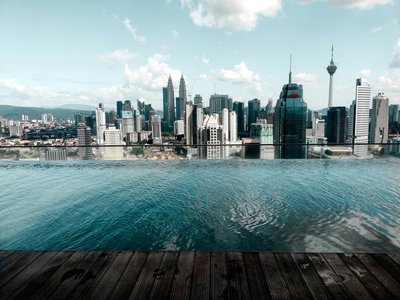
View of Kuala Lumpur skyline with Petronas Towers and KL Tower, reflected in an infinity pool.
Written by travel experts
Regularly updated
Verified on-site

Kuala Lumpur began as a small tin-mining settlement at the muddy confluence of the Klang and Gombak rivers in . Within decades, Chinese and Tamil miners, Malay traders, and British colonial administrators turned the outpost into a commercial crossroads. The city's name itself means "muddy estuary" in Malay, a humble origin for what would become Southeast Asia's most architecturally ambitious capital. Today that frontier spirit survives in the contrast between the Moorish-revival Sultan Abdul Samad Building, completed in , and the Petronas Towers, which held the world-tallest-building title from to . Between them sprawl Hindu cave-temples older than the federation itself, Art Deco shophouses in Chinatown, and hawker lanes that pour smoke and spice into the tropical night air. Kuala Lumpur rewards the traveler who looks beyond the skyline. A single monorail ride connects rooftop infinity pools to century-old wet markets. A ten-minute walk links a Taoist altar to a brutalist mosque. This is a city built on layers, each one revealing a different chapter of Malaysia's extraordinary multicultural story.

Top Things to Do in Kuala Lumpur

Visit the Petronas Towers
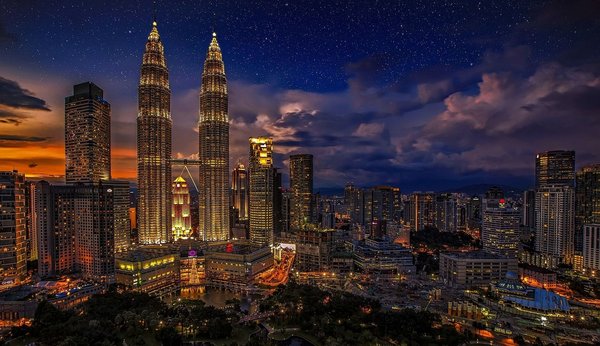
Night view of the illuminated Petronas Towers in Kuala Lumpur with a starry sky in the background.

Iconic symbol of Kuala Lumpur

When Argentine architect Cesar Pelli unveiled his design in , critics doubted that Kuala Lumpur could build the world's tallest structures. Six years and 36,910 tonnes of steel later, the Petronas Towers rose 452 metres above the city, holding the record until . The floor plan of each tower is an eight-pointed star, a geometry drawn from traditional Islamic rub el hizb motifs, while the facade's stainless-steel cladding was engineered to deflect Malaysia's intense equatorial sun. The 58-metre Skybridge on levels 41 and 42 sways gently in the wind, a deliberate engineering choice that absorbs differential movement between the two towers. From the Observation Deck on level 86, the panorama stretches from the Titiwangsa range to the Strait of Malacca on clear days. Below, KLCC Park spreads across 20 hectares of tropical landscaping designed by Roberto Burle Marx, with a wading pool, jogging track, and a nightly fountain show choreographed to music. The base houses Suria KLCC, a six-level mall containing the Petrosains science discovery centre and the Aquaria KLCC tunnel aquarium. Book Skybridge tickets online at least three days ahead: morning slots fill fast, but sunset visits offer the most dramatic light.
In the heart of the bustling Kuala Lumpur City Centre, 50088 Kuala Lumpur, Malaysia.
Open daily from 9:00 AM to 9:00 PM.
Tickets: 80 MYR for adults, 33 MYR for children.

Explore the Central Market

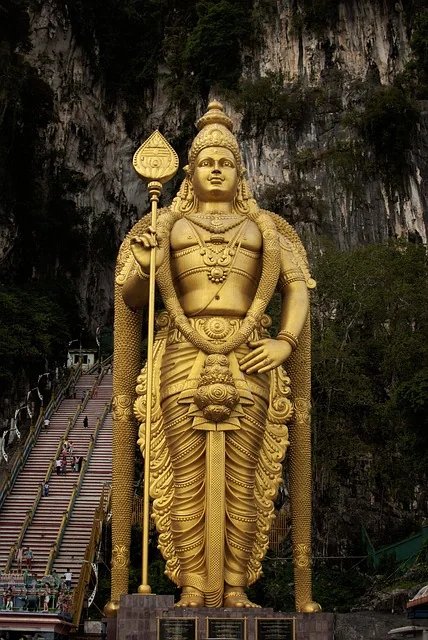
Golden statue of Lord Murugan in front of Batu Caves near Kuala Lumpur, with stairs and cliffs in the background.

The vibrant heart of local culture

A wet market selling fish and produce first opened on this spot along the Klang River in , serving the miners and merchants of a booming tin town. By the , the colonial government replaced the wooden stalls with the current Art Deco hall, designed by T.Y. Lee and notable for its clean geometric lines and reinforced-concrete roof spans. The building survived the Japanese occupation and post-independence redevelopment, earning heritage-protection status in . Today the Central Market is divided into cultural zones. The Lorong Melayu section sells hand-drawn batik, pewterware, and woven songket textiles. Lorong India stocks brass lamps, jasmine garlands, and Ayurvedic oils. Lorong Cina displays calligraphy brushes, jade ornaments, and antique porcelain. Upstairs, the Annexe Gallery hosts rotating exhibitions by Malaysian contemporary artists, live theatre, and independent film screenings. The food court on the upper floor serves reliable rendang, nasi lemak, roti canai, and freshly pulled teh tarik. Prices are fixed and posted, making it a less intimidating introduction to local cuisine than the night-market stalls. The market sits within walking distance of the Masjid Jamek LRT station, the confluence point where the city was founded.
In the heart of Kuala Lumpur, along Jalan Hang Kasturi, just steps from the Klang River.
Open daily from 10:00 AM to 10:00 PM, ideal for a morning or evening visit.
Free entry, with shopping options for every budget.

Discover the Batu Caves

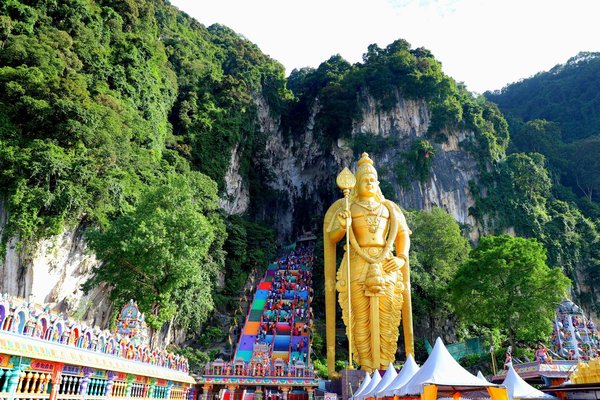
Golden Lord Murugan statue and colorful staircase leading to Batu Caves, surrounded by lush greenery.

Natural and spiritual wonder

Limestone karst hills riddled with caves have stood north of Kuala Lumpur for roughly 400 million years, but the site's religious history began in , when Tamil trader K. Thamboosamy Pillai installed a vel (sacred lance) inside the main cavern and consecrated it to Lord Murugan. The 272 rainbow-painted steps, repainted in , lead to Cathedral Cave, a vault with a 100-metre ceiling open to the sky through collapse holes that flood the space with equatorial light. At the foot of the staircase stands a 42.7-metre statue of Murugan, the tallest of its kind in the world, completed in after three years of work by 30 sculptors. During Thaipusam, usually in January or February, over a million devotees climb the steps in a procession of kavadi bearers, pierced with hooks and skewers in acts of devotion that have drawn global attention. Beyond the main cave, the Dark Cave branch is a 2-kilometre ecosystem of rare trapdoor spiders, fruit bats, and flatworms found nowhere else on Earth. Guided tours run on weekends and must be booked through the Malaysian Nature Society. The Ramayana Cave, opened in , displays painted dioramas of the Hindu epic across multiple chambers. Take the KTM Komuter from KL Sentral; the ride is 30 minutes and drops you at the cave entrance.
Located in Gombak, just 13 km north of Kuala Lumpur, in the Selangor district, Malaysia.
Open daily from 6:00 AM to 9:00 PM, ideal for a morning or sunset visit.
Free entry to the main temple cave. Dark Cave tour: 35 MYR for adults.

Stroll through the Perdana Botanical Garden
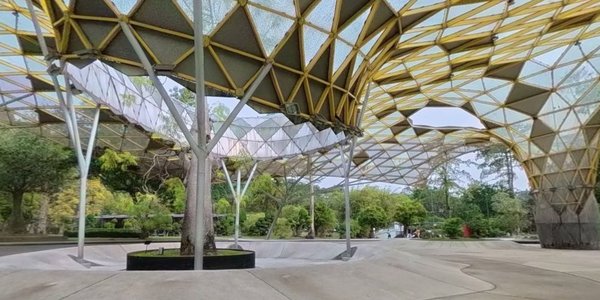
Geometric canopy structure at Perdana Botanical Garden in Kuala Lumpur, surrounded by trees and greenery.

Green oasis in the heart of the city

British Resident Alfred Venning established the Lake Gardens in as a recreational retreat for colonial administrators posted to the Federated Malay States. The 91.6-hectare site, renamed Perdana Botanical Garden after independence, sits on rolling terrain between Parliament House and the National Monument, making it the green lung of central Kuala Lumpur. The Orchid Garden alone cultivates over 800 species, including the rare Paphiopedilum rothschildianum slipper orchid endemic to Borneo. Nearby, the Hibiscus Garden showcases Malaysia's national flower in dozens of cultivars. Deer Park, a fenced enclosure of spotted deer, has been a family favourite since the , while the Butterfly Garden houses over 5,000 specimens representing 120 species in a climate-controlled mesh dome. The garden's network of paved and unpaved trails loops past Perdana Lake, where pedal boats can be rented on weekends. Early-morning joggers share the paths with long-tailed macaques and monitor lizards. The park also contains the National Monument, a bronze sculpture unveiled in to honour those who died during the Malayan Emergency. Entry is free, and the closest rail stop is Kuala Lumpur station on the KTM line.
Located on Jalan Kebun Bunga, in the Tasik Perdana district, just minutes from downtown Kuala Lumpur.
Open daily from 7:00 AM to 8:00 PM.
Free entry for all visitors.

Visit the Thean Hou Temple

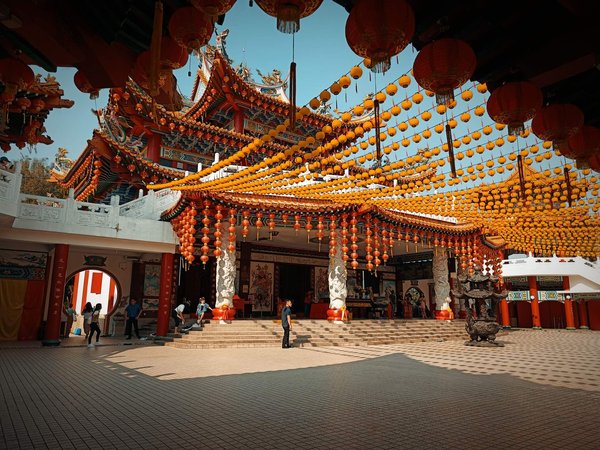
Thean Hou Temple in Kuala Lumpur with red and yellow lanterns and traditional Chinese architectural details.

Splendid example of Chinese architecture

Completed in by the Hainanese community of Kuala Lumpur, the Thean Hou Temple occupies a hilltop in Robson Heights and is dedicated to Mazu, the Taoist goddess of the sea. The Hainanese, who arrived in Malaya as fishermen and pepper traders in the 19th century, built the temple as both a spiritual centre and a community hall, a dual purpose it still serves today. The six-tiered pagoda structure blends Buddhist, Taoist, and Confucian design elements. Its sweeping rooflines are adorned with ceramic jian nian figures, a southern Chinese craft involving hand-cut clay tiles fired in dragon kilns. Inside, sandalwood incense spirals hang from the ceiling, slowly burning over weeks. The main altar houses statues of Mazu flanked by Guanyin (goddess of mercy) and Shui Wei Sheng Niang (goddess of the waterfront), reflecting the seafaring heritage of the temple's founders. The terraced gardens contain a tortoise pond, a medicinal herb plot, and a wishing well. Twelve zodiac animal statues line the lower courtyard, each with a plaque explaining its significance in Chinese astrology. The temple is busiest during Chinese New Year and the Mid-Autumn Festival, when thousands of red lanterns transform the compound into a sea of light. Visit at sunset for unobstructed views of the KL skyline from the upper terrace.
Located at 65 Persiaran Endah, in the Taman Persiaran Desa district, just minutes from downtown Kuala Lumpur.
Open daily from 8:00 AM to 9:00 PM, ideal for a morning or sunset visit.
Free entry. Donations welcome.

Admire the National Mosque

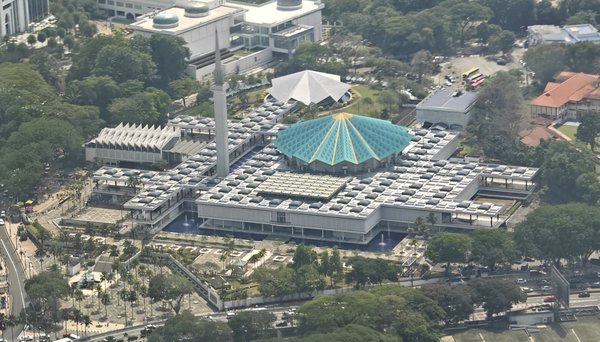
Aerial view of the National Mosque in Kuala Lumpur with its blue roof and minaret surrounded by trees and roads.

Masterpiece of Islamic architecture

When Malaysia gained independence in , the new government commissioned a national mosque that would symbolise the country's modern Islamic identity. Designed by a three-person team led by Baharuddin Abu Kassim, Masjid Negara was inaugurated on in the presence of the Yang di-Pertuan Agong. Its 16-pointed star-shaped roof, spanning 4,047 square metres, represents the 13 states of Malaysia plus the three Federal Territories, while the single minaret rises 73 metres in a style deliberately departing from traditional Ottoman forms. The prayer hall accommodates 15,000 worshippers and is floored in Italian marble. Surrounding it, 48 smaller domes punctuate shaded colonnades that open onto reflecting pools. The mosque's design was influenced by the Grand Mosque in Mecca, particularly in its use of open courtyards to manage tropical heat and monsoon rains without air conditioning. Non-Muslim visitors are welcome outside prayer times and are provided with purple robes and headscarves at the entrance. The guided tour explains the mosque's architectural symbolism and the five daily prayer rituals. Adjacent to the mosque, the Islamic Arts Museum is a five-minute walk through the Perdana gardens, making a combined visit practical. Photography is permitted in the courtyards but not inside the main prayer hall during services.
Located on Jalan Perdana, in the Tasik Perdana district, just minutes from downtown Kuala Lumpur.
Open daily from 9:00 AM to 6:00 PM, closed during prayer times.
Free entry for all visitors.

Discover the Bukit Bintang District

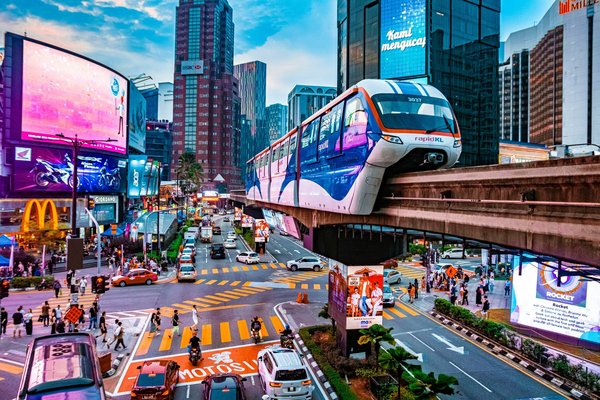
View of Bukit Bintang district in Kuala Lumpur with Rapid KL monorail and vibrant neon lights.

Shopping and nightlife hub

The name Bukit Bintang means "Star Hill" in Malay, and the area has been Kuala Lumpur's commercial spine since the , when its first cinemas and department stores opened along Jalan Bukit Bintang. Today the district packs an extraordinary density of malls, including Pavilion KL (housing 450 stores across 1.37 million square feet), Lot 10, Fahrenheit88, and Starhill Gallery, all connected by covered walkways and the air-conditioned Bukit Bintang Pedestrian Bridge. But the district's real energy erupts after dark on Jalan Alor, a 300-metre hawker street one block behind the neon-lit main road. Stalls set up by late afternoon and serve until past midnight, offering charcoal-grilled chicken wings, Hokkien mee, lok lok skewers, and durian with sticky rice. The street was once a red-light district in the ; its transformation into KL's most famous food alley is one of the city's great urban reinventions. Changkat Bukit Bintang, the sloping lane above Jalan Alor, is lined with pre-war shophouses converted into cocktail bars, jazz lounges, and rooftop restaurants. The area is served by the Bukit Bintang MRT and Monorail stations, making it one of the best-connected neighbourhoods in the city. For the least crowded shopping, visit weekday mornings; for the best street-food atmosphere, arrive after 7 PM on a weekend.
In the heart of Kuala Lumpur, Bukit Bintang is easily accessible and well-connected by public transport.
Open daily, 24 hours a day. Malls typically 10:00 AM to 10:00 PM; Jalan Alor food stalls from 5:00 PM to midnight.
Prices vary depending on activities and venues. Street food from 5 MYR per dish.

Visit the Islamic Arts Museum

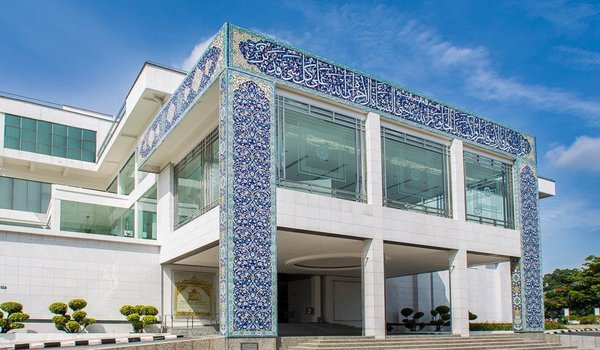
Facade of the Islamic Arts Museum in Kuala Lumpur with blue and white tile details under a clear blue sky.

World-renowned Islamic art collection

Opened in , the Islamic Arts Museum Malaysia is Southeast Asia's largest repository of Islamic art, holding over 7,000 artefacts spread across 12 permanent galleries in a purpose-built structure on the edge of the Perdana Botanical Garden. The building itself, designed by Italian and Malaysian architects, uses turquoise-tiled domes and inverted onion arches to create interior courtyards flooded with natural light. The Architecture Gallery displays scale models of 22 iconic mosques from Cordoba's Mezquita to the Masjid al-Haram in Mecca, each built with painstaking precision over months of work. The Quran Gallery houses illuminated manuscripts from the 8th century onward, including folios from the famous Blue Quran of Kairouan, written in gold Kufic script on indigo-dyed parchment. Galleries devoted to textiles, metalwork, ceramics, and arms trace trade routes that connected the Malay Archipelago to Persia, Mughal India, and Ottoman Turkey. The ground-floor Museum Shop is widely regarded as one of KL's best gift stores, selling hand-blown glass, calligraphy prints, and geometric-patterned homeware. The museum restaurant serves Middle Eastern and Malay dishes under a domed ceiling tiled in traditional zellige mosaic. Allow at least two hours for a thorough visit. The museum is a five-minute walk from Masjid Negara through the Perdana gardens.
Located on Jalan Lembah, next to the Perdana Botanical Garden, in the heart of Kuala Lumpur.
Open daily from 10:00 AM to 6:00 PM.
Entrance ticket: 14 MYR for adults, 7 MYR for children.

Explore Chinatown

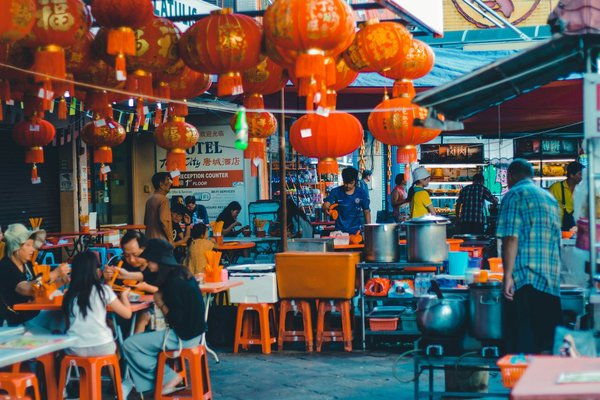
Vibrant scene of Chinatown in Kuala Lumpur with red lanterns and street food stalls.

Vibrant markets and Chinese culture

Kuala Lumpur's Chinatown took shape in the when Cantonese and Hakka tin miners settled around the junction of Jalan Sultan and Jalan Petaling. The colonial government assigned this quarter to the Chinese community under a kapitan system, and its street grid has barely changed since. Many of the two-storey shophouses lining the lanes date from the and , their Art Deco and Straits Eclectic facades recently restored with heritage grants. Petaling Street, the main artery, is covered by a green-and-red canopy and lined with stalls selling watches, bags, textiles, and dried goods. The lane's noisiest stretch is between Jalan Sultan and Jalan Hang Lekir, where bargaining is expected and prices can drop 40 percent from the opening ask. On parallel lanes, traditional Chinese medicine halls, goldsmiths, and coffin makers still operate out of premises their families have held for generations. Set back from the market bustle stands the Sri Mahamariamman Temple, founded in , with its 23-metre gopuram tower covered in 228 Hindu deity figures. A few blocks east, the Chan See Shu Yuen Temple, completed in , features Guangdong-style ceramic ridge sculptures and an ancestral hall still used by the Chan clan. Chinatown is best explored on foot from the Pasar Seni LRT station; come before 10 AM for the wet market or after 6 PM for the night stalls.
In the heart of Kuala Lumpur, along the lively Petaling Street, just steps from the city center.
Open daily. Wet market 6:00 AM to noon; Petaling Street stalls 10:00 AM to 10:00 PM; night stalls until midnight.
Free entry. Bargaining expected at market stalls.

Discover the Kuala Lumpur Bird Park

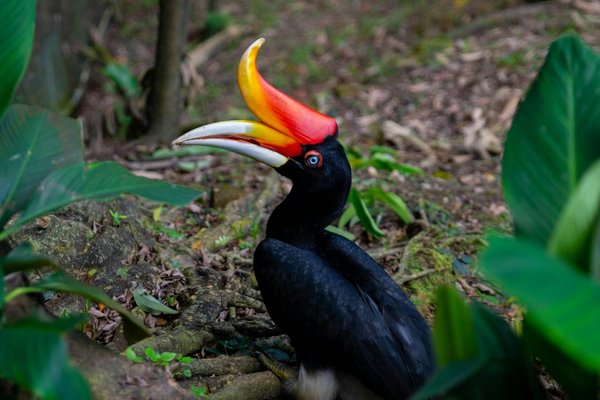
A rhinoceros hornbill in the greenery of Kuala Lumpur Bird Park, an iconic symbol of Malaysian wildlife.

Sanctuary for over 3,000 birds

Opened in within the Perdana Botanical Garden precinct, the KL Bird Park covers 20.9 acres and claims to be the world's largest free-flight walk-in aviary. Rather than caging birds individually, the park encloses entire valleys under a mesh canopy, allowing over 3,000 birds from roughly 200 species to fly, nest, and feed in a semi-natural environment of tropical hardwoods, ferns, and waterfalls. Zone 1 and Zone 2 are the free-flight sections, where Malaysian hornbills, brahminy kites, and milky storks move through the canopy overhead. Zone 3 houses the hornbill conservation centre, breeding endangered species like the rhinoceros hornbill, Malaysia's national bird. Zone 4 contains flamingo ponds, a parrot enclosure, and a feeding station where visitors can hand-feed rainbow lorikeets with cups of nectar provided at the entrance. The park runs daily feeding shows at 12:30 PM and 3:30 PM, which draw the most spectacular gatherings of pelicans, eagles, and hornbills. A small hatchery near the exit displays incubating eggs and newly hatched chicks. The park is a 15-minute walk from the National Mosque or a short Grab ride from KL Sentral. Wear comfortable shoes, as the terrain is hilly, and bring insect repellent for the shaded ravine sections.
Located at Jalan Cenderawasih, in the heart of Taman Tasik Perdana, just minutes from downtown Kuala Lumpur.
Open daily from 9:00 AM to 6:00 PM.
Entrance ticket: 63 MYR for adults and 42 MYR for children.

Visit the Sri Mahamariamman Temple

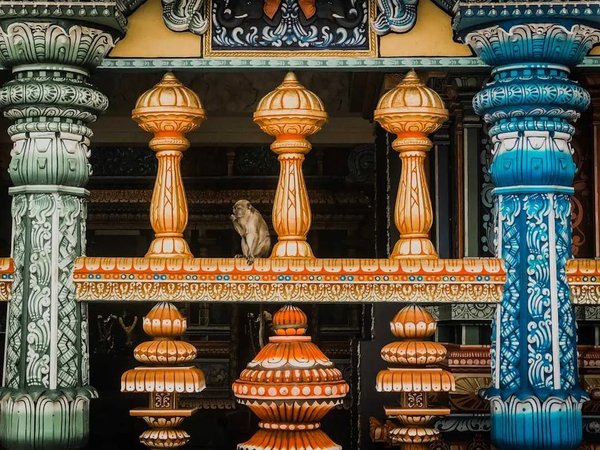
Colorful architectural detail of the Sri Mahamariamman Temple in Kuala Lumpur with a monkey sitting on a balustrade.

The oldest Hindu temple in Kuala Lumpur

In , Tamil community leader Thamboosamy Pillai built a small wooden shrine on Jalan Bandar (now Jalan Tun H.S. Lee) to house a statue of Sri Mahamariamman, the Hindu goddess who protects travellers. Over the following century, the shrine grew into Kuala Lumpur's foremost Hindu temple, rebuilt in granite and stucco, and crowned with a 23-metre gopuram tower in . The tower is the temple's most arresting feature: 228 Hindu deities sculpted in full colour cascade across five tiers, each figure hand-painted and repaired before every Thaipusam festival. Inside, the sanctum houses the original Mahamariamman statue alongside shrines to Ganesh, Lakshmi, and Murugan, all set against walls of polished Italian and Spanish tiles imported in the . The silver chariot used to carry the deity to the Batu Caves during Thaipusam is stored in a glass case near the entrance, a vehicle so elaborately decorated that its construction alone took several years. The temple sits at the edge of Chinatown, and the juxtaposition is itself a lesson in KL's layered identity: a Tamil Hindu shrine adjoining Cantonese shophouses, across the street from a Malay mosque. Visitors must remove their shoes at the entrance; a shoe-minding service operates for a small tip. Early morning, when the priests perform the abhishekam bathing ritual, is the most atmospheric time to visit.
Located at 163 Jalan Tun H S Lee, in the heart of Kuala Lumpur, near the lively Chinatown.
Open daily from 6:00 AM to 9:00 PM, ideal for a morning or evening visit.
Free entry. Small donation appreciated.

Recommended Itineraries in Kuala Lumpur

Heritage and Skyline

Morning — Start at Masjid Jamek, the Moorish-revival mosque at the confluence where KL was founded in 1857. Walk south through Merdeka Square, past the Sultan Abdul Samad Building and the Royal Selangor Club, then cross into Chinatown for a coffee and roti canai at a Petaling Street kopitiam.

Afternoon — Take the LRT to KLCC and ascend the Petronas Towers Skybridge (pre-book online). Afterwards, stroll through KLCC Park and cool off at the children's wading pool or sit by the musical fountain.

Evening — Head to Menara KL Tower for dinner at Atmosphere 360, the revolving restaurant at 282 metres. The city lights spread below as the restaurant completes a full rotation every 100 minutes.

Temples, Caves, and Street Food

Morning — Catch the KTM Komuter from KL Sentral to Batu Caves. Arrive before 9 AM to beat the heat and the tour-bus crowds. Climb the 272 rainbow steps, explore Cathedral Cave, and book the Dark Cave guided tour if you are interested in cave ecology.

Afternoon — Return to central KL and visit the Sri Mahamariamman Temple in Chinatown. Browse Petaling Street market, then walk to the Chan See Shu Yuen Temple on Jalan Petaling for its ornate Cantonese ceramics.

Evening — Make your way to Jalan Alor in Bukit Bintang. Start with satay and grilled chicken wings at the outdoor tables, then work through Hokkien mee, lok lok skewers, and mango sticky rice. Finish with a durian ice-cream from one of the fruit stalls near the top of the street.

Gardens, Art, and Local Flavours

Morning — Enter the Perdana Botanical Garden from the Lake Gardens gate and walk through the Orchid Garden and Hibiscus Garden. Continue to the KL Bird Park for the 12:30 PM feeding show, where hornbills and pelicans swoop down for fish.

Afternoon — Walk through the gardens to the Islamic Arts Museum. Spend two hours with the mosque-model gallery and the illuminated Quran collection, then have lunch at the museum's Middle Eastern restaurant.

Evening — Take a Grab to the Thean Hou Temple for sunset views over the KL skyline. Afterwards, head to Bangsar for dinner at one of its independent restaurants, where Malaysian-fusion menus pair local ingredients with international techniques.

When to Visit

The Best Time to Visit Kuala Lumpur

Kuala Lumpur has a tropical rainforest climate with temperatures between 27 and 28 degrees Celsius year-round. Rain falls in every month, but October and November are the wettest. The driest windows are May to July and December to February, when afternoon showers are shorter and less frequent. There is no true off-season, as the city never experiences cold weather or extreme heat.

Peak Season

June to August is the peak tourist season, with drier weather and school holidays drawing the most visitors.

Shoulder Season

January to February and September offer moderate crowds, occasional festivals, and reasonable prices.

Low Season

October to November is the quietest period, with the heaviest rainfall but significantly lower hotel prices.

Tips for Visiting Kuala Lumpur

I always carry a refillable water bottle and a compact umbrella. KL's humidity rarely drops below 80 percent, and afternoon thunderstorms roll in almost daily between March and November, often lasting only 30 minutes before the sun returns.
I rely on the RapidKL network, which combines the MRT, LRT, Monorail, and BRT into a single Touch 'n Go card system. A daily cap of around 6 MYR makes it cheaper than two Grab rides. The MRT Putrajaya Line, completed in 2023, now connects the airport corridor to the city centre.
I eat nasi lemak for breakfast, the way locals do. The best versions come from no-frills stalls: coconut rice wrapped in banana leaf with sambal, fried anchovies, a boiled egg, and cucumber slices, usually costing 3 to 5 MYR. Village Park in Damansara Uptown is a famous spot, but every neighbourhood has its own champion.

Local Experiences in Kuala Lumpur

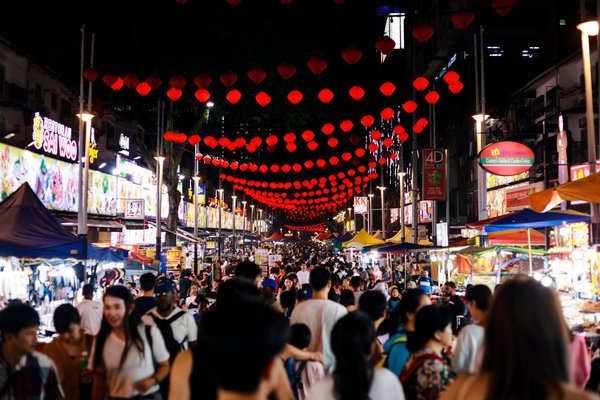
Jalan Alor Market in Kuala Lumpur with red lanterns, food stalls, and a bustling crowd of people at night.

Discover Jalan Alor Market

Jalan Alor runs parallel to Jalan Bukit Bintang and transforms every evening into KL's most concentrated open-air food street. Stalls set up around 5 PM and stay open past midnight, serving charcoal-grilled chicken wings, Hokkien mee, lok lok skewers, mango sticky rice, and durian in every form from fresh fruit to ice cream. Prices are posted on boards at each stall, and most dishes cost between 8 and 15 MYR. The northern end of the street tends to be less crowded, and the vendors there often have shorter queues for the same dishes. Go on a weeknight for the best seat-to-diner ratio.
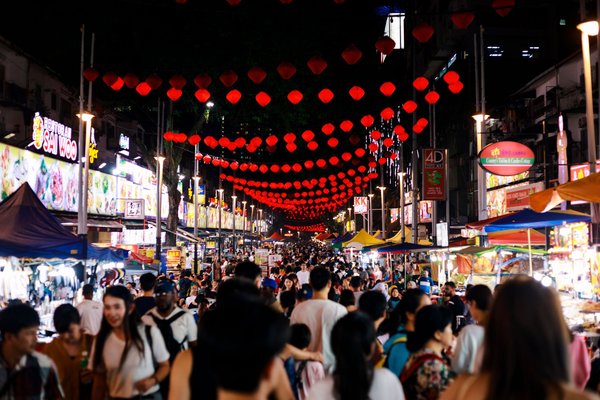
Night market with red lanterns and crowd in Kuala Lumpur, illuminated stalls and vibrant atmosphere.

Visit the Bangsar District

Bangsar started as a rubber estate in the early 20th century and became a residential suburb in the 1970s. Today it is KL's most walkable dining and nightlife neighbourhood, with independent cafes, wine bars, and fusion restaurants concentrated along Jalan Telawi. Bangsar Village I and II are low-rise malls with a curated mix of bookshops, homeware stores, and organic grocers. On Sunday mornings, the Bangsar Sunday Market sells fresh produce, flowers, and Malay kuih pastries from around 6:30 AM. The neighbourhood is a 10-minute Grab ride from KL Sentral or reachable via the LRT to Bangsar station.
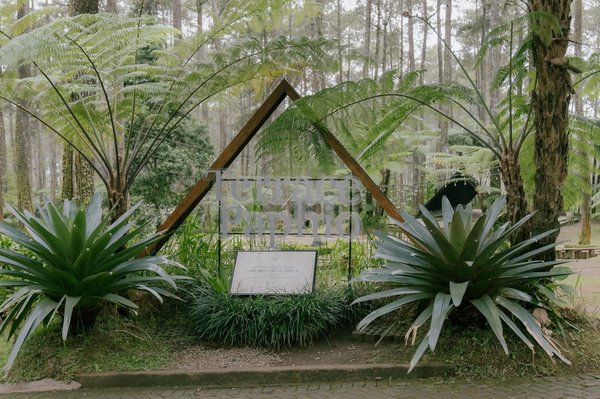
Entrance with 'Terrace Paphio' sign surrounded by plants and trees in a natural setting.

Explore Taman Tugu

Taman Tugu is a 66-acre urban forest in the centre of Kuala Lumpur, opened in 2019 after a reforestation project planted 4,000 trees across former wasteland behind the National Monument. The park preserves remnants of the original dipterocarp rainforest that once covered the Klang Valley, and its trails are home to long-tailed macaques, dusky leaf monkeys, and over 70 bird species. A 1.5 km boardwalk loop is accessible to wheelchairs and strollers, while a longer 3 km trail follows ridgelines through denser forest. Entry is free and there is a nature discovery centre with exhibits on KL's ecological history. The park is a 10-minute walk from the Perdana Botanical Garden.

Frequently Asked Questions about Kuala Lumpur

What is the best time to visit Kuala Lumpur?

I find that KL is a year-round destination thanks to its equatorial climate, but I prefer visiting between May and July or in December through February, when rainfall is slightly lower. Temperatures hover around 27 to 28 degrees Celsius every month, so pack light, breathable clothing regardless of when you arrive. The wettest months are October and November, though showers are usually short afternoon bursts rather than all-day rain.

What are the most convenient means of transportation in Kuala Lumpur?

I use the RapidKL rail network for most trips. The MRT, LRT, and Monorail lines connect the major tourist areas, KLCC, Bukit Bintang, Chinatown, and KL Sentral, and a Touch 'n Go card makes transfers seamless. For destinations off the rail grid, Grab is the local ride-hailing app and is usually cheaper than metered taxis. The KTM Komuter train to Batu Caves costs under 3 MYR each way.

Is it safe to travel to Kuala Lumpur?

I have always felt safe in KL, and it consistently ranks as one of Southeast Asia's safest capitals for tourists. The usual urban precautions apply: keep your phone and wallet secure on crowded streets and use ride-hailing apps rather than unmarked taxis at night. Tourist police patrol Bukit Bintang and KLCC, and most MRT stations have security screening at the entrance.

What are the typical dishes to try in Kuala Lumpur?

I always start with <strong>nasi lemak</strong>, coconut rice served with sambal, anchovies, and a boiled egg, which Malaysians eat for breakfast. Other essentials include <strong>char kway teow</strong> (stir-fried flat noodles with prawns and cockles), <strong>roti canai</strong> (flaky flatbread with curry dipping sauce), <strong>laksa</strong> (spicy coconut noodle soup), and <strong>satay</strong> (grilled meat skewers with peanut sauce). Jalan Alor and the Kampung Baru night market are the best places to try everything in one evening.

What are the main languages spoken in Kuala Lumpur?

I have never had trouble communicating in English in KL. It is widely spoken in hotels, restaurants, shops, and public transport, and most signage is bilingual. Bahasa Malaysia is the official language, and you will also hear Cantonese, Mandarin, Tamil, and Hokkien in different neighbourhoods. Learning a few Malay phrases like <em>terima kasih</em> (thank you) always gets a warm smile.

What are the main family-friendly attractions in Kuala Lumpur?

I recommend the <strong>KL Bird Park</strong> for younger children, who can hand-feed lorikeets during the daily shows. <strong>Aquaria KLCC</strong> has a 90-metre underwater tunnel, and <strong>Petrosains</strong> in Suria KLCC is a hands-on science centre. Outside the city centre, <strong>Sunway Lagoon</strong> combines water rides, a wildlife park, and an amusement park in one complex, while <strong>KidZania</strong> at Curve NX lets children role-play adult professions in a miniature city.

What currency is used in Kuala Lumpur?

The currency is the <strong>Malaysian Ringgit (MYR)</strong>. I find the best exchange rates at licensed money changers in Mid Valley Megamall and Bukit Bintang, not at the airport. Credit cards are accepted at malls, hotels, and chain restaurants, but hawker stalls and wet markets are cash-only. ATMs are widely available, and most accept international cards with a small withdrawal fee.

What are the main shopping areas in Kuala Lumpur?

I head to <strong>Bukit Bintang</strong> for international brands at Pavilion KL and Lot 10. For local crafts and batik, the <strong>Central Market</strong> on Jalan Hang Kasturi is the best single stop. <strong>Suria KLCC</strong> at the base of the Petronas Towers has a luxury slant, while <strong>Mid Valley Megamall</strong> and The Gardens Mall cater to a broader range. For bargain hunting, Petaling Street in Chinatown and the Taman Connaught night market offer the lowest prices.

What are the accommodation options in Kuala Lumpur?

I have stayed in all price ranges in KL. <strong>KLCC and Bukit Bintang</strong> have the highest concentration of five-star hotels, including the Mandarin Oriental and the Ritz-Carlton. Budget travellers will find well-reviewed hostels in Chinatown and along Jalan Petaling for under 50 MYR a night. Bangsar and Mont Kiara offer mid-range serviced apartments popular with longer-stay visitors. Airbnb options are plentiful, especially in condo towers near the Monorail line.

What are the main festivals celebrated in Kuala Lumpur?

I plan trips around KL's festival calendar whenever possible. <strong>Chinese New Year</strong> (January or February) fills Chinatown with lion dances and red lanterns. <strong>Thaipusam</strong> (January or February) is a massive Hindu procession from the Sri Mahamariamman Temple to Batu Caves. <strong>Hari Raya Aidilfitri</strong> marks the end of Ramadan with open houses and feasting. <strong>Deepavali</strong> (October or November) lights up Little India in Brickfields. During these festivals, public spaces are decorated and many attractions extend their opening hours.