
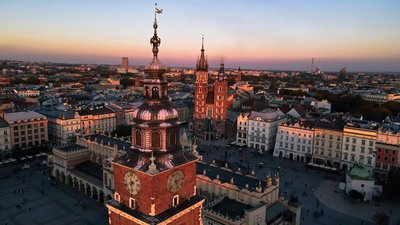
Krakow
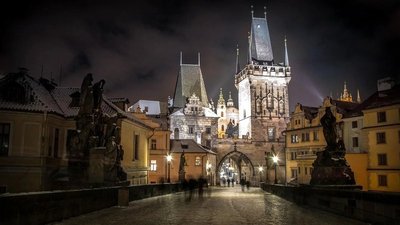
Prague
Krakow and Prague are two of the most loved destinations in Central Europe: historic centres that survived the wars almost intact, medieval squares, great beer and low-cost flights from across Europe, with direct connections from many airports.
Many travellers compare them to pick the perfect 3-4 day city break.The fundamental differences come down to three things.
Krakow is cheaper (3-star hotels €60-90 a night versus €80-120 in Prague) and more tied to the memory of the 20th century, with Auschwitz 70 km away.Prague is bigger, with its Castle and Charles Bridge, a larger nightlife scene and a more complete transport network, but it is more touristy and more expensive.In this guide you compare 12 criteria with prices in euros and hard data: daily budget, main attractions, food, climate, transport, nightlife, families, nature, shopping, safety, days needed and how to combine the two cities (about 530 km, 7-8 hours by train).
Krakow vs Prague
| Feature | Krakow | Prague |
|---|---|---|
| Daily budget | In Krakow a budget traveller spends €50-65 a day: dorm bed €15-25, a meal at a milk bar (bar mleczny) such as Milkbar Pod Temidą €4-7, city transport tickets about €1-1.5 a ride.In the mid-range you need €100-130 a day: 3-star hotel in the centre or in Kazimierz €60-90 a night, dinner with pierogi and a beer €15-25, admissions €10-20. Luxury starts at €220 a day, with rooms in the historic palaces around the Rynek Główny at €150-250. A 0.5 l beer costs €2.5-3.5 and a coffee €2.5-3. You pay in zloty (PLN), not euros.✓ Better | In Prague the budget level is €60-80 a day: dorm €18-30, a set lunch menu in a hospoda €7-10, a day transport pass about €5. In the mid-range you reach €120-160 a day: 3-star hotel in Staré Město, Vinohrady or Karlín €80-120 a night, dinner with svíčková and a beer €20-30, admissions €15-30 across the Castle and the Astronomical Clock Tower.Luxury starts at €250 a day.A 0.5 l Pilsner Urquell costs €2.5-4 in local pubs and €4-6 in tourist areas.You pay in crowns (CZK): avoid street currency exchanges. |
| Main attractions | The heart of the city is the Rynek Główny, the largest medieval square in Europe (about 4 hectares), with St.Mary's Basilica (about €3-4, 30 minutes) and the Cloth Hall.Wawel Castle costs about €7-12 per section (cathedral, royal state rooms, treasury) and takes 2-3 hours.Schindler's Factory (about €8-10, 1.5-2 hours) tells the story of the Nazi occupation, while the Rynek Underground Museum (about €9, 1 hour) reconstructs the medieval city.Outside the city: the Wieliczka Salt Mine (14 km, about €25-30, 3 hours) and Auschwitz-Birkenau (70 km, guided visit about €25-40). | Prague has the most spectacular historic centre in Central Europe.Charles Bridge (free, 30 minutes, best at dawn) links Malá Strana to Staré Město.Prague Castle is the largest castle complex in the world: Circuit B costs about €14 and includes St.Vitus Cathedral, Golden Lane and St.George's Basilica (3 hours).The Astronomical Clock Tower (Orloj) in Old Town Square costs about €11-12 (45 minutes) and gives the best view of the centre.Add the Jewish Quarter (Josefov), Petřín hill and free Vyšehrad.✓ Better |
| Food and restaurants | Polish cuisine is hearty and cheap.Try pierogi filled with cheese and potato or meat (€5-8 for 8-10 pieces), żurek served in a bread bowl (€4-6), bigos cabbage and meat stew and the obwarzanek krakowski, a ring-shaped bread sold at street corners for about €0.6-0.8. On Plac Nowy in Kazimierz you eat zapiekanki (€2.5-3.5), open-faced baked baguettes.Milk bars like Pod Temidą serve full meals at €4-7, while a mid-range restaurant like Hawełka on the Rynek costs €18-30 per person.For groceries, Stary Kleparz market sells fruit and local produce. | Czech cuisine revolves around beer and robust dishes.Svíčková (beef in a root-vegetable cream sauce with dumplings) costs €10-14, vepřo-knedlo-zelo (roast pork with dumplings and sauerkraut) €9-13, guláš with knedlíky €8-12. In traditional pubs like Lokál (Dlouhá) a meal with beer costs €15-22; U Fleků, a brewery open since 1499, is more touristy.The trdelník sold in the centre is not a traditionally Czech sweet.Lunchtime set menus (€7-10) are the cheapest way to eat well; for street food there is Havelské tržiště. |
| Climate and best time to visit | Krakow has a continental climate: winter averages are around -1°C in January (from -5 to +1°C), with frequent snow and winter smog from October to February.In spring it rises to 9-10°C in April and 15-16°C in May; summer is warm, with a 19-20°C average in July and highs of 25-27°C (rain is more frequent from May to August, about 700 mm a year).The best months are May, June and September (highs of 18-24°C).In December the Rynek Christmas market draws visitors even with temperatures around 0°C.October averages 9-10°C. | Prague has a similar climate but slightly drier, with about 500 mm of rain a year.In January the average is about 0°C (from -3 to +2°C), in April 9-10°C, in July 19-20°C with highs of 25-27°C and peaks above 30°C during heatwaves.The best seasons are May-June and September, with 18-24°C and long days until 9 pm.October brings an average of 9-10°C and fewer tourists.In December the Christmas markets in Old Town Square and Wenceslas Square liven up the city with temperatures between -2 and +3°C.April and October are changeable: bring a light raincoat. |
| Transport and how to get there | John Paul II Kraków-Balice Airport (KRK) is about 11 km from the centre: the direct train to Kraków Główny takes about 20 minutes and costs about €4, while a taxi or a ride-hailing app like Bolt costs €12-20. In the city there are trams and buses but no metro: the historic centre is compact and you can walk from Wawel to the Rynek in 20-25 minutes.A single ticket costs about €1-1.5 and a 24-hour ticket about €4-6. Kraków Główny station is next to the centre, with direct trains to Warsaw in about 2 hours 20 minutes. | Václav Havel Airport (PRG) is about 17 km from the centre.Bus 119 takes you to the terminus of metro line A (Nádraží Veleslavín) with a ticket of about €1.6 valid for 90 minutes; the Airport Express reaches Hlavní nádraží station in about 35 minutes for about €4. An official taxi costs about €25-35. The city has 3 metro lines (A, B, C), trams (line 22 passes the Castle) and buses: the 24-hour ticket costs about €5 and the 72-hour one about €13. Hlavní nádraží connects to Berlin in about 4 hours 30 minutes and Vienna in about 4 hours; for taxis use Bolt or Liftago. |
| Nightlife | Krakow's nightlife is cheap and concentrated in a few areas.Kazimierz, around Plac Nowy and Szeroka Street, has bohemian bars and live-music venues.The Rynek area and Floriańska Street are full of pubs, cellar bars and clubs open until 4 am at weekends.A 0.5 l beer costs €2.5-3.5 and a vodka shot €1.5-2.5. Club entry is often free or €5-10, but the student venues on Szewska Street are packed at weekends.For something different, try an underground bar in the medieval cellars.A pub crawl costs about €15-25, shots included. | Prague has a bigger, more international scene.Karlovy Lázně, in the centre, is one of the largest clubs in Europe over 5 floors, with entry of about €10-15. Žižkov is the district of alternative pubs and bars at local prices, while Vinohrady and Karlín offer cocktail bars like the Hemingway Bar (cocktails €10-14).Lucerna Music Bar hosts concerts and themed nights.Pubs serve a 0.5 l beer at €2.5-4 and close around midnight-1 am, while clubs stay open until 4-5 am.In the Old Town prices rise (beer €4-6), so watch out for venues that don't display their prices. |
| For families with children | Krakow is convenient for families: the centre is almost flat and pedestrian, with the Planty (a ring park of about 4 km) and Błonia (48 hectares) to play in.Kids enjoy the Dragon's Den below Wawel (about €3), the Rynek Underground Museum with its interactive stations and the Wieliczka Salt Mine (14 km, salt chapels and statues, about €25-30; strollers are not allowed on the stairs).The Krakow Zoo in Las Wolski costs about €6-8. On the Vistula, a boat trip costs about €10-15 per adult.The cobblestones in the centre make strollers awkward. | Prague has more family-friendly attractions.Prague Zoo (in Troja, about €11-13), often in the world's top 10, takes a full day.On Petřín hill you take the funicular (included in transport tickets) up to the Mirror Maze and the lookout tower.At the Castle there is the Toy Museum, while in summer kids can enjoy a boat trip on the Vltava (about €12-18).The city has large parks such as Stromovka (95 hectares).The centre has hills and cobblestones: strollers get around better by tram, and the metro has lifts at the main stations.✓ Better |
| Beaches and nature | Krakow has no beaches: the nearest sea, the Baltic at Gdańsk, is about 600 km away.In the city the green spaces are the Planty (a ring of about 4 km around the centre), the Vistula Boulevards for running or cycling and Kościuszko Mound (326 m, with 360° views).Zakrzówek lake, a former quarry 3 km from the centre, has a summer swimming area with entry of about €3-5 a day.Ojców Valley is 25 km away, while the Tatra Mountains with Zakopane are about 110 km away (2 hours by car), perfect for day trips. | Prague has no beaches either: the nearest sea is the Baltic, more than 500 km away.But the green spaces are in the heart of the city: Petřín (327 m, orchards and vineyards), Letná with its viewpoints, Stromovka (95 hectares) and the islands on the Vltava such as Kampa.In summer people sunbathe along the river around Náplavka, with a farmers' market on Saturdays.In the Divoká Šárka nature reserve, 8 km from the centre, there are trails and a natural swimming pool.Day trips: Karlštejn (30 km) and Bohemian Switzerland National Park about 110 km away.✓ Better |
| Shopping | Shopping in Krakow is artisanal and good value.The Cloth Hall (Sukiennice), the Renaissance hall in the middle of the Rynek, sells Baltic amber (jewellery €20-100), carved wooden boxes, wool and leather.Stary Kleparz is the fruit and vegetable market, while the flea market on Plac Nowy in Kazimierz runs on Sundays.Shopping centres like Galeria Krakowska (near the station) carry international brands at European prices.Typical souvenirs include Bolesławiec pottery (from €10) and flavoured vodka (€10-20 a bottle).Discounts in street-level shops are seasonal. | Prague combines fashion, crystal and antiques.Pařížská and the streets around Old Town Square host luxury boutiques, while Na Příkopě Street and the Palladium mall have international brands.Bohemian crystal is the most famous souvenir: Moser glasses start at about €50, while cheaper options at €15-30 can be found in Malá Strana shops.Other typical buys are Bohemian garnets, wooden toys and Becherovka liqueur (€10-15).Havelské tržiště sells fruit and souvenirs.Compare prices and pay in crowns to avoid unfavourable exchange rates.✓ Better |
| Safety and practical tips | Krakow is one of the safest cities in Europe.Pickpocketing happens on the Rynek Główny, on Floriańska Street and on crowded trams, especially in summer.In venues in the centre always check the bill and avoid unofficial taxi drivers at the station: use Bolt or Uber.The less recommended areas at night are outlying districts such as Nowa Huta (daytime visits aside) and isolated parks.The emergency number is 112.In winter smog can worsen air quality (check the Airly app).With the European Health Insurance Card (EHIC) you have access to public care in urgent cases. | Prague is safe, but it is among the European capitals with the most pickpocketing.Watch out on Charles Bridge, Wenceslas Square and tram 22, where organised groups operate.The classic scams are currency exchanges with hidden fees (avoid counters advertising "0% commission"), unofficial taxis (use Bolt, Liftago or a taxi with a posted fare) and tourist restaurants with inflated bills.The emergency number is 112.Some areas around Hlavní nádraží and Wenceslas Square are riskier after midnight.Always check the displayed prices and pay in crowns. |
| How many days you need | For Krakow 2 days are enough to see the essentials: day 1 with the Rynek, St.Mary's Basilica and Wawel, day 2 with Kazimierz, Schindler's Factory and Nowa Huta.The ideal length is 3 days, with half a day at the Wieliczka Salt Mine (14 km, 3 hours).If you add Auschwitz-Birkenau (70 km, about 1 hour 30 minutes by bus, 6-7 hours in total), you reach 4 days.A long weekend of 3 nights lets you see everything without rushing, at about €100-130 a day in the mid-range. | For Prague the minimum is 2 days: Old Town, Charles Bridge and the Castle, with Malá Strana.The ideal length is 3-4 days: on the third day you add Josefov, Vyšehrad and Petřín, on the fourth a day trip to Kutná Hora (70 km, about 1 hour by train, with the Sedlec Ossuary) or to Karlštejn (30 km, about 40 minutes by train).With a mid-range budget of €120-160 a day, a 4-day trip costs about €500-640 excluding flights.In high season it is worth buying Castle tickets online to avoid queues at the entrance. |
| How to combine the two cities | Krakow and Prague are about 530 km apart by road.The most convenient connection is the train via Katowice and Ostrava, taking about 7-8 hours, with prices from about €25-50 if you book ahead.The FlixBus takes about 8-9 hours and costs from €20-35. By car it takes about 5.5-6 hours (A4 towards Katowice, then the Czech D1): the Czech Republic requires an electronic motorway vignette, about €11-13 for 10 days.It is best to leave Krakow, stop in Ostrava or Olomouc and reach Prague in the afternoon.Direct low-cost flights are possible in some periods; check the seasonal schedules. | The reverse route, from Prague to Krakow, takes the same time and budget: about 7-8 hours by train or 8-9 hours by FlixBus, departing from Praha hlavní nádraží.A well-balanced itinerary is 6-7 days in total: 3 nights in Krakow, 3 in Prague and a transfer of about €25-50 in between, for a total cost of about €750-850 (accommodation, meals and admissions, excluding flights).To avoid doubling back, book an "open-jaw" flight arriving in Krakow and departing from Prague.The ideal season is May-June or September; December is ideal for the Christmas markets in both. |
The Verdict
Choose Krakow
Krakow is ideal for anyone looking for a 3-day city break with a mid-range budget of €100-130 a day, an interest in 20th-century history and a wish to eat well without spending much.The best time is May-June or September, with 18-24°C.Quick itinerary: day 1 Rynek Główny, St.Mary's Basilica and Wawel; day 2 Kazimierz and Schindler's Factory; day 3 the Wieliczka Salt Mine (14 km) or Auschwitz-Birkenau (70 km).Perfect for couples, friends and solo travellers who want pierogi at €5-8, beer at €2.5-3.5 and a centre you can cross on foot in 20-25 minutes from Wawel to the Rynek, with accommodation in the centre from €60 a night.
Choose Prague
Prague is the right choice for a 3-4 day trip devoted to architecture, photography and nightlife, with a mid-range budget of €120-160 a day.It works all year round, but May-June, September and December (Christmas markets) are the best times.Quick itinerary: day 1 Old Town and the Orloj; day 2 Prague Castle and Malá Strana; day 3 Josefov, Vyšehrad and Petřín; day 4 a day trip to Kutná Hora (70 km).Suited to families (Zoo about €11-13), couples and groups who want to see an almost intact Gothic-Baroque old town, with evening walks on Charles Bridge and views from the Castle and from Petřín.