10 Experiences in Quebec City
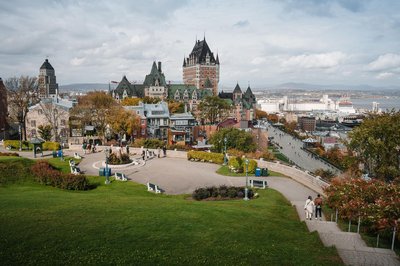
Quebec City stands as one of North America's oldest permanent settlements, founded by Samuel de Champlain in on a promontory the Algonquin called Kébec — "where the river narrows." For over four centuries this fortified capital has guarded the confluence of the St. Lawrence and Saint-Charles rivers, its stone ramparts and steep-roofed houses earning it UNESCO World Heritage status in . It remains the only walled city north of Mexico. The skyline is still crowned by the copper turrets of Château Frontenac, opened in as a railway hotel and now one of the most photographed buildings on earth. Below it the cobblestone lanes of Quartier Petit Champlain wind down to the river, while above the Citadel's star-shaped bastions survey the horizon exactly as they did when British and French armies clashed on the Plains of Abraham in . Today the city pulses with a culture that is unmistakably Francophone yet distinctly Canadian: from the ice-canoe races of the Winter Carnival to the farm tables of Île d'Orléans, from cutting-edge galleries in Saint-Roch to the thundering curtain of Montmorency Falls just fifteen minutes east. Whether you arrive under summer sun or January snow, Quebec City rewards with a depth of history, landscape, and flavour that few cities on this continent can match.
Top Things to Do in Quebec City
Explore Old Quebec City
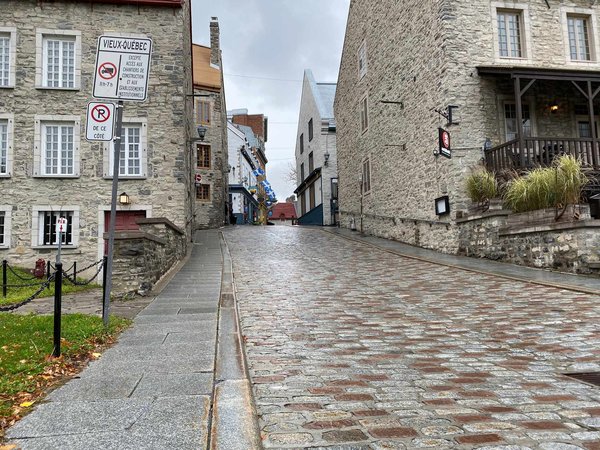
North America's only walled city, frozen in stone since 1608.
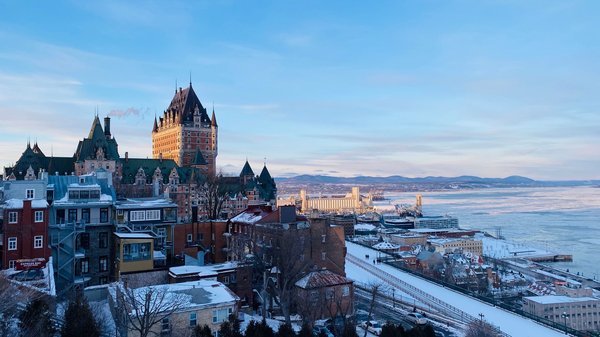
At its summit stands Château Frontenac, the copper-turreted railway hotel opened in . Below, Place Royale — where Champlain built his first habitation — anchors the Lower Town with Notre-Dame-des-Victoires, consecrated in and the oldest stone church in North America. The Breakneck Stairs have connected the two levels since .
Every season reshapes the experience. Summer fills the squares with buskers and café terrasses; winter drapes the ramparts in snow and light. Year-round, the quarter rewards slow wandering — through ateliers on Rue du Trésor, past the Governors' Garden, and along Terrasse Dufferin where the river panorama stretches to the Laurentian hills.
Visit Château Frontenac
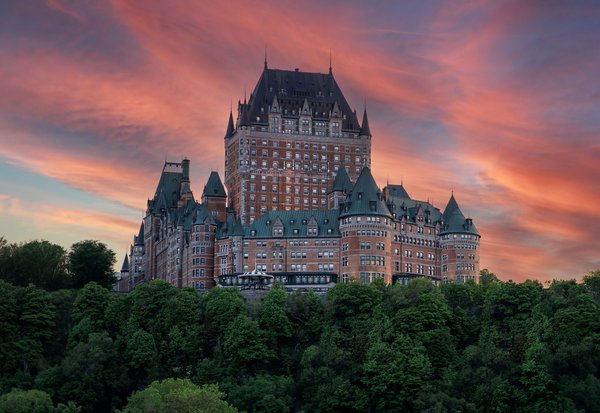
The world's most photographed hotel, perched above the St. Lawrence.
History unfolded within its walls. In and , Winston Churchill and Franklin Roosevelt met here for the Quebec Conferences, planning the Allied strategy that led to the D-Day landings. The suite where they conferred is preserved, and guided tours trace the story from railway ambition to wartime secrecy.
Even without checking in, the hotel rewards a visit. The lobby's oak-panelled halls display period photographs. Outside, Terrasse Dufferin stretches 671 metres along the cliff edge, offering an unbroken panorama of the river, Lévis on the far shore, and Île d'Orléans in the distance. At dusk, when the copper roof glows amber against a lavender sky, you understand why it has appeared on more postcards than any hotel on earth.
Stroll Along Terrasse Dufferin
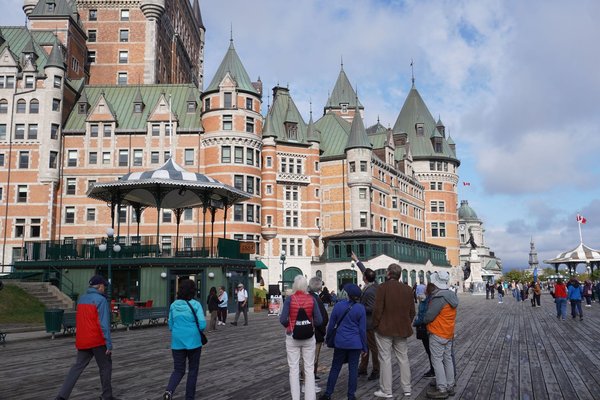
A boardwalk promenade with four centuries of river views.
The terrace commands a panorama drawn visitors for centuries: the broad sweep of the St. Lawrence River, Lévis across the water, the distant Laurentian mountains, and — in autumn — a carpet of crimson and gold stretching to the horizon. Interpretive panels trace the city's colonial history, from Champlain's founding to the British siege of .
In summer, street musicians and performers animate every stretch. In winter, a tradition dating to transforms the terrace into a toboggan run: wooden sleds hurtle down an ice track at up to 70 km/h, a thrill that has delighted families for over 140 years. Whether you come for history, the panorama, or the simple pleasure of leaning against the railing at sunset, this boardwalk remains the city's most democratic gathering place.
Discover Montmorency Falls
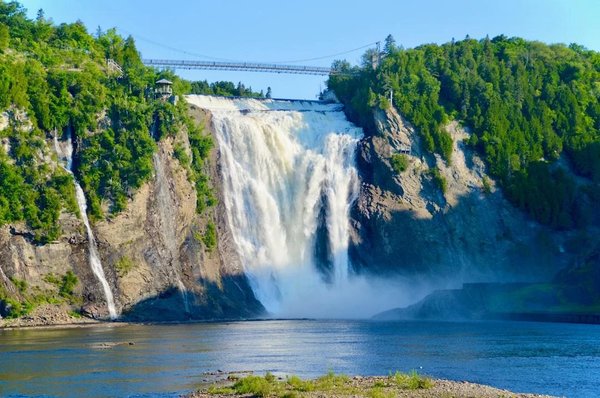
Eighty-three metres of thundering water, taller than Niagara.
Today the falls sit within Parc de la Chute-Montmorency, a provincial park accessible from every angle. A cable car glides from the base to the clifftop, where a suspension bridge spans the crest — spray rising around you, the roar drowning conversation. Staircase trails zigzag along the cliff face, offering viewpoints where the full cascade fills your vision.
Each season brings a different spectacle. Spring snowmelt swells the flow to its most powerful. Summer draws zipliners across the gorge. In winter, accumulated spray freezes into a massive ice cone called the Pain de Sucre (Sugar Loaf), which 19th-century residents climbed for sport. The park lies fifteen minutes from downtown — close enough for a morning visit, dramatic enough to anchor a full day.
Explore Quartier Petit Champlain
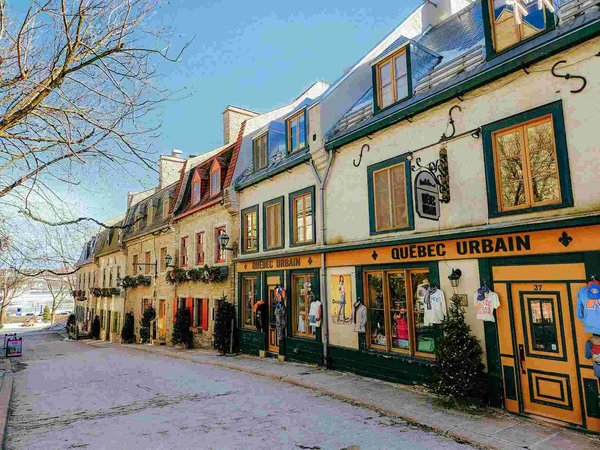
North America's oldest commercial street, alive since the 1680s.
A community-led restoration beginning in brought the quarter back to life. Today stone and half-timbered buildings house artisan ateliers, boutiques, and restaurants that spill onto terrasses in summer. The Fresque du Petit-Champlain, a 420-square-metre trompe-l'oeil mural painted in , depicts the neighbourhood's history across four centuries.
Access the quarter via the cliff-hugging Breakneck Stairs — North America's oldest stairway, dating to — or ride the glass-walled funicular installed in . At street level, buildings rarely exceed three storeys, window boxes overflow with flowers, and the hum of French conversation floats from every doorway. On winter evenings, strings of white lights drape the narrow lane, turning it into a scene from a Québécois folk tale.
Visit the Citadel of Quebec
A star-shaped fortress still garrisoned after two centuries.
Since , the Citadel has been home to the Royal 22e Régiment (the "Van Doos"), Canada's most decorated French-speaking regiment. Their museum displays regimental colours carried through both World Wars, Korea, and Afghanistan, alongside weapons, uniforms, and the regimental mascot — a goat named Batisse.
The Changing of the Guard, held daily in summer at 10:00 AM, follows a tradition inherited from the British garrison. From the ramparts the view stretches across the Plains of Abraham — where General Wolfe defeated Montcalm in , ending French rule in Canada — and down to the St. Lawrence. The Citadel also serves as the secondary residence of the Governor General of Canada since .
Discover the Museum of Civilization
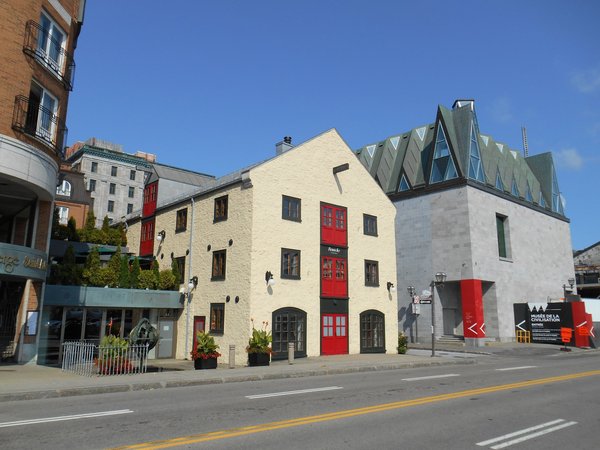
Twelve thousand years of human culture under one roof.
The permanent exhibition This Is Our Story traces the First Nations presence from long before European contact, presenting wampum belts, birch-bark canoes, and oral histories with a depth that has made it a benchmark for Indigenous museum practice. A companion exhibition charts Quebec's journey from New France through British rule to the Quiet Revolution of the , when Francophone Quebecers reasserted control of their cultural life.
Temporary exhibitions rotate every few months, ranging from global archaeology to contemporary design. Interactive installations engage younger visitors without patronising older ones — a balance refined over three decades. The gift shop stocks Inuit carvings, Wendat moccasins, and books in both official languages. Allow two to three hours; the museum regularly ranks among Canada's finest cultural institutions.
Take a Funicular Ride
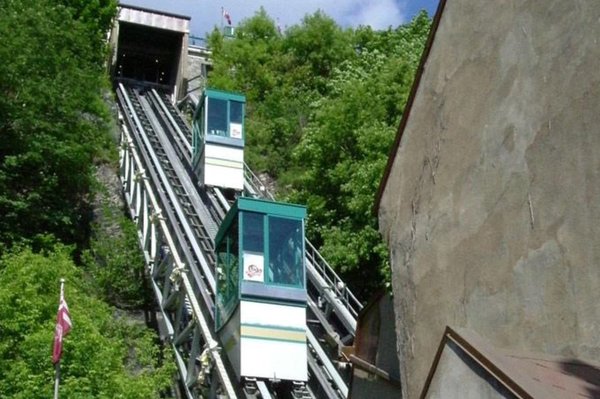
A 45-second vertical link between two centuries of city life.
The ride covers a vertical drop of 59 metres — roughly the height of a 20-storey building — between Terrasse Dufferin at the top and Maison Louis-Jolliet at the bottom, a stone house named after the explorer who charted the Mississippi River. Through the glass walls you watch the cliff face slide past, the rooftops of Petit Champlain rise beneath you, and the St. Lawrence open up in the background.
The funicular is more than a novelty: it remains a practical transit link used daily by residents commuting between the two levels of the old town. In peak season, queues can grow long — early morning or late afternoon rides are quietest. For the best photographs, ride downward: the widening panorama of the river and Lower Town unfolds in front of you the entire way.
Join the Quebec Winter Carnival
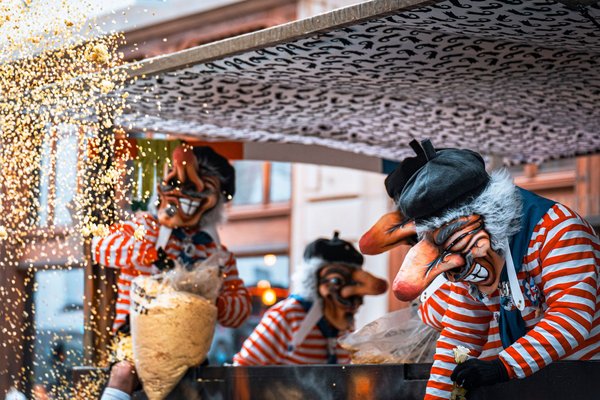
The world's largest winter festival, running since 1955.
The mascot, Bonhomme Carnaval — a grinning snowman in a red cap and ceinture fléchée — presides from his Ice Palace, rebuilt each year from 2,000 blocks of river ice. Events range from spectacular to slightly mad: international ice-sculpture competitions, nighttime parades lit by torches, snow-bath challenges at -20°C, and the gruelling ice-canoe race across the St. Lawrence, where teams paddle, drag, and push boats through shifting ice floes.
Beyond the headline events, the Carnival animates the entire city. Place George-V becomes an open-air dance floor. The Plains of Abraham fill with snow slides and sugar shacks serving hot tire d'érable (maple taffy on snow). For Quebecers, the Carnival is not a tourist spectacle but a communal act of defiance against winter — and an invitation for the world to join in.
Explore Île d'Orléans
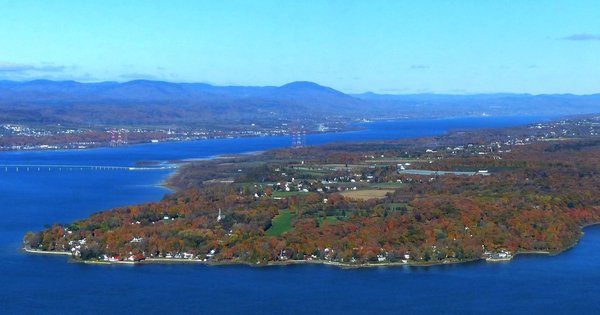
The cradle of French America, ten minutes across the bridge.
The 67-kilometre road circling the island links six villages. Sainte-Pétronille offers a painter's view of Quebec City across the water. Saint-Jean preserves the finest concentration of houses in the province. Saint-Pierre hosts the island's oldest church, built in . Between the villages, farmstands sell strawberries in June, apples in September, and maple syrup year-round. Vineyards and cider houses invite tastings, while chocolate makers and cheese artisans complete a terroir circuit.
Explore by bicycle or car over a leisurely half-day. Stop at the Manoir Mauvide-Genest, a seigneurial manor turned museum, for a glimpse of colonial gentry life. In autumn the forests blaze with colour and farmstands overflow with cider pressings. It is the rare place where you can taste, literally, the roots of Québécois culture.
Recommended Itineraries in Quebec City
Nature and Waterfalls Day
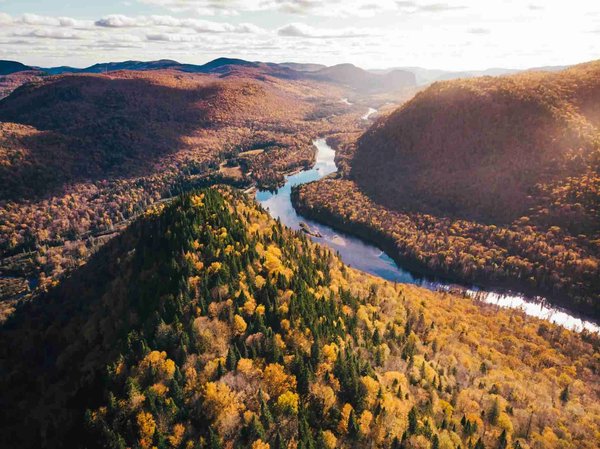
Afternoon — Continue north to Jacques-Cartier National Park (30 minutes). Hike the Vallée secteur trail along the river gorge, where moose and black bears roam boreal forest. In summer, rent a kayak for a paddle through the glacial valley.
Evening — Return via Route de la Nouvelle-France, stopping at Bois-de-Coulonge Park to walk the riverside trail as the sun sets over the St. Lawrence.
Québécois Food and Market Trail
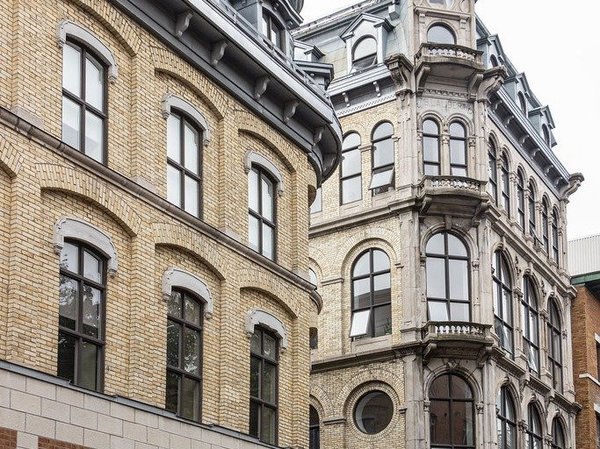
Afternoon — Cross into Saint-Roch for lunch at one of the neighbourhood's farm-to-table bistros. Sample a classic tourtière (meat pie) or soupe aux pois (split-pea soup). Afterward, visit La Maison Smith, the oldest coffee roaster in the city, for a third-wave espresso.
Evening — Reserve a table at a fine-dining restaurant in Old Quebec that reinterprets Laurentian ingredients — think venison tartare, foie gras from the Eastern Townships, and Île d'Orléans strawberry desserts. End with a nightcap of Québécois craft beer on a terrasse overlooking the river.
Art and Culture Beyond the Walls
Afternoon — Head to the Musée National des Beaux-Arts du Québec on the Plains of Abraham. The museum spans four pavilions from a former prison to the Pierre Lassonde Pavilion (opened ), with collections covering Québécois art from the to today. Allow 90 minutes.
Evening — Return to Saint-Roch for dinner at a neighbourhood bistro, then catch a live performance at Le Cercle or L'Anti Bar et Spectacles, two venues that anchor the city's indie music and spoken-word scene.
When to Visit
When to Visit Quebec City
Quebec City's continental climate delivers four distinct seasons, each with its own appeal. Summer (June to August) brings warm days perfect for terrasse dining and river walks. Autumn ignites the Laurentian hills in crimson and gold. Winter transforms the city into a snow-covered postcard — and the stage for its famous Carnival. Spring is short but sweet, with maple-sugar season and budding parks.
Peak Season
July and August draw the largest crowds with warm weather and major festivals, but accommodation prices rise 30-50%.
Shoulder Season
May, June, September, and October balance pleasant weather with manageable crowds and reasonable prices.
Low Season
January, February, and November offer the fewest visitors, lower hotel rates, and an authentic local atmosphere.
Compare Destinations
Quebec City VS Montreal
Choose Montreal for summer festivals (June–August), the STM metro (CA$7.50/24h) and iconic restaurants; go to Quebec Cit...
Quebec City VS Toronto
Choose Québec City for a UNESCO Old Town and a CA$70-140/day budget; choose Toronto for the CN Tower and world-class mus...
Quebec City VS Vancouver
Choose Quebec City for history and a European vibe, Vancouver for nature, urban beaches, and outdoor activities year-rou...
Tips for Visiting Quebec City
Local Experiences in Quebec City
Discover Jacques-Cartier National Park
Explore the Saint-Roch District