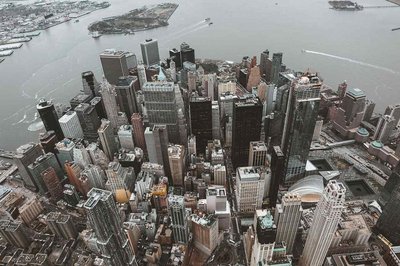
10 Experiences in Nosy Be

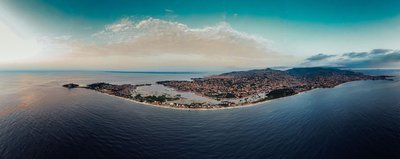
Panoramic view of Nosy Be with coastline, sea, and lush vegetation at sunset.
Written by travel experts
Regularly updated
Verified on-site

Fragrance of ylang-ylang, turquoise sea and green hills: Nosy Be, a gem of Madagascar, awaits you with a slow, embracing rhythm. On this island you’ll discover white-sand beaches, fishing villages, and sunsets in amber hues: alternate snorkeling, walks, and encounters with Sakalava culture. Your days start at the port of Andoany (Hell-Ville), among colorful dugout canoes and lively markets. From the Nosy Tanikely Marine Reserve to the forest of Lokobe National Park, every outing tells a story: reef fish, ebony trees, chameleons. At sunset, head up Mont Passot for the views. Respect the fady (local taboos), plan a budget in Ar for guides and excursions, and be won over by a grilled zebu steak and genuine smiles.

Top Things to Do in Nosy Be

Lokobe Reserve
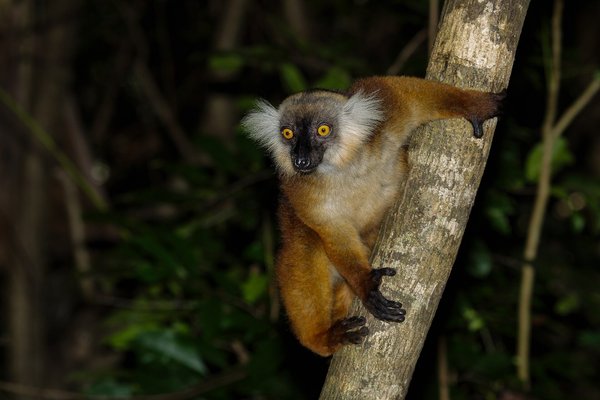
Lokobe Reserve, Nosy Be

Photo: Thomas Fuhrmann, CC BY-SA 4.0, via Wikimedia Commons

Primary forest, lemurs, and ancient ebony trees

Established as a strict nature reserve in , the Lokobe Reserve protects the last major fragment of primary forest on Nosy Be, a natural heritage that safeguarded endemic species and precious timber even during the colonial era. Reach Ampasipohy by traditional pirogue when the morning sea is calmer: the air smells of ylang-ylang and light filters in green shafts. You’ll walk among glossy ebony, tree ferns, and traveller’s palms while the calls of birds guide your steps. Local guides will help you catch the discreet movement of the black lemur (Eulemur macaco), the flash of the panther chameleon, and the perfect camouflage of leaf‑tailed geckos. Lokobe has played a key role in the island’s environmental history: created to curb deforestation and secure water resources for villages, today it’s part of the protected areas network managed by MNP and runs on a community‑based ecotourism model. Sakalava traditions, with their fady (taboos), still permeate trails and rituals, reminding visitors that conservation is also culture. Be ready to wear closed shoes, bring insect repellent, and follow the forest’s rhythm: here nature sets the pace, and you are a guest. Let yourself be guided with respect and curiosity: it’s the best way to support those who live beside the forest and to understand why Lokobe is a symbol of resilience for the island.
Ampasipohy, southeast edge of Nosy Be; traditional access by pirogue
Open daily 07:00–16:00, with limited entries and mandatory guided tours. Pirogue access subject to sea conditions. Hours subject to change: check the official website.
Ar60,000–90,000 for guide and permit; pirogue Ar20,000. Rates may vary seasonally.

Nosy Tanikely Marine Reserve

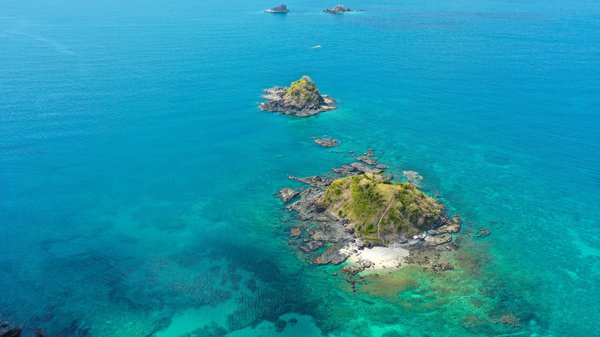
Aerial view of Nosy Tanikely with turquoise waters and rocky islets, an iconic Madagascar destination.

Snorkeling among corals, turtles, and butterflyfish

Since , when it was designated a marine protected area (MPA), Nosy Tanikely has safeguarded one of the most accessible and thriving reefs in the Nosy Be archipelago. The small round island is encircled by a coral ring that serves as a natural nursery: an open‑air laboratory where biologists and local guides monitor currents and fish repopulation. Put on your mask and the terrestrial world fades: green turtles graze on seagrass meadows, schools of surgeonfish shimmer, parrotfish nibble at coral while gorgonians and acropora sway in the current. Visibility is often crystal clear in the morning, with calm seas and warm waters. Snorkeling starts right from the shore and suits beginners; thrill‑seekers can follow the reef edge to the south side, where the outer drop‑off brings livelier currents and more varied encounters. On land, a trail leads to the lighthouse and a 360° view of the islands in the Mozambique Channel, framed by white sands and palms. After bleaching events in the late , the reserve became a symbol of resilience: no‑take measures, controlled anchoring, and outreach to fishers have spurred a tangible reef recovery. Boats depart from Andoany and Ambatoloaka; bring reef‑safe sunscreen and water, and follow the rules: do not touch coral and do not feed wildlife. It’s a simple yet intense experience that celebrates the richness of Madagascar’s seas.
Island off Nosy Be, between Andoany and Ambatoloaka
Open daily 08:00–16:00; landings regulated and stops limited based on tides. Hours subject to change: check the official website.
Boat trip Ar80,000–120,000; protected area ticket Ar25,000

Mont Passot

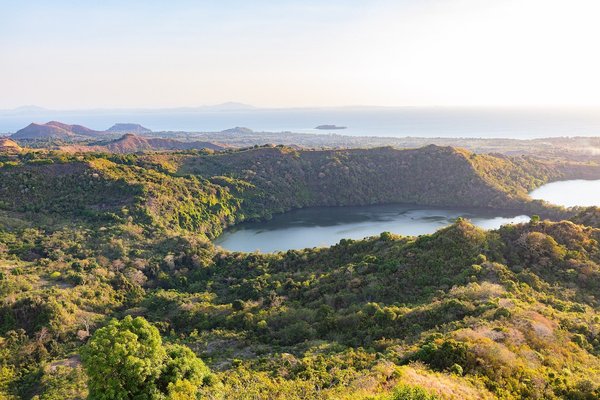
Mont Passot, Nosy Be

Photo: Diego Delso, CC BY-SA 4.0, via Wikimedia Commons

Views over craters and amber-hued sunsets

In , French Captain Pierre Passot signed a treaty with Sakalava Queen Tsiomeko that placed Nosy Be under a protectorate: the island’s highest point, Mont Passot (329 m), bears his name. In the early 1900s it served as a triangulation reference for the first colonial maps, and it remains the summit from which to read the whole island. Climb past villages, cane fields, and crater lakes; the road is paved but narrow, and the air smells of ylang‑ylang, an economic engine since the . During harvest season, small stills puff smoke across the fields and a sweet aroma accompanies the ascent. At the top you’ll find a panoramic platform: your gaze sweeps to the sister islands, from Nosy Komba to Sakatia, while volcanic basins sketch a blue mosaic among dark hills. Discreet panels explain the craters’ origins and Sakalava migrations; archival photos recall the first distilleries and the fragrance route to Grasse. Respect the fady, local customs: some bodies of water are considered sacred and swimming is discouraged. Arrive before sunset to find a spot; bring a sweatshirt, the wind at altitude is cool. With clear skies you can make out the archipelago stretching across the ocean; with scattered clouds, the light carves reliefs and waters into an ever‑changing play. It’s the ideal place to orient your trip: from above, nature and history intertwine and invite you to return to the valleys with fresh eyes.
On the highest peak of Nosy Be, access from Dzamandzar along a paved road
Open daily from 08:00 until sunset; access may close after 18:30. Hours subject to change: check the official website.
Lookout entrance Ar5,000; parking Ar3,000. Rates subject to change.

Andilana Beach

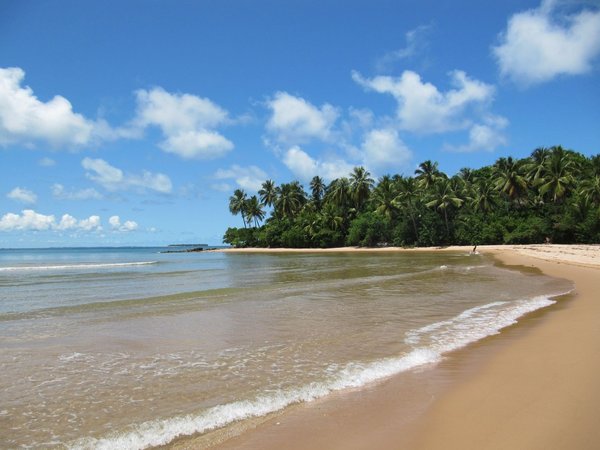
Andilana Beach, Nosy Be

Photo: JOSÉ ADRIANO DE CARVALHO, via Pexels

Powder-white sand and calm seas all day

In the wave of tourism development that, since the , has turned Nosy Be into Madagascar’s most visited Perfume Island, Andilana has become the elegant face of a coast that still lives by the sea. Two crescents of fine sand embrace placid, shallow waters: in the morning the sea is flat for swimming and snorkeling, at midday the trade wind cools the shore, and at sunset the sky blushes pink. Reach the bay by taxi or scooter from Dzamandzar or Andoany: the road runs between palms and ylang-ylang distilleries right to the shore. Stroll along the waterline as fishermen haul their lakana canoes ashore; stop at kiosks for a simple lunch and rent kayaks or stand-up paddleboards. Facilities remain low-key: a few loungers, a couple of restaurants with catch of the day, and plenty of quiet. Once exclusively a fishing area, it is now regulated to protect the seabed and fight erosion: co-management programs launched with institutional partners in involve Sakalava villages and promote sustainable practices. Respect local fady (taboos), don’t collect protected shells, and bring cash in Ar for services and rentals. From May to October the dry season brings clearer waters; from October to December the archipelago is known for whale sharks offshore. When the tide goes out, the beach redraws its profile and the island seems to breathe. If you’re looking for a symbol of how the island has balanced tourism and maritime identity, you’ll find it here: gentle nature, discreet hospitality, and care for the environment. Stay until the last ray: Andilana will make you want to come back.
On the northwest coast of Nosy Be, in the Andilana area, reachable from Dzamandzar by taxi or scooter
Free access year-round; kiosks, restaurants and rentals 09:00–18:00. Reduced services in low season; weather and tides affect conditions. Hours subject to change: check the official website.
Free access; sunbeds and umbrellas from Ar15,000–25,000. Water activities extra.

Hell‑Ville Market

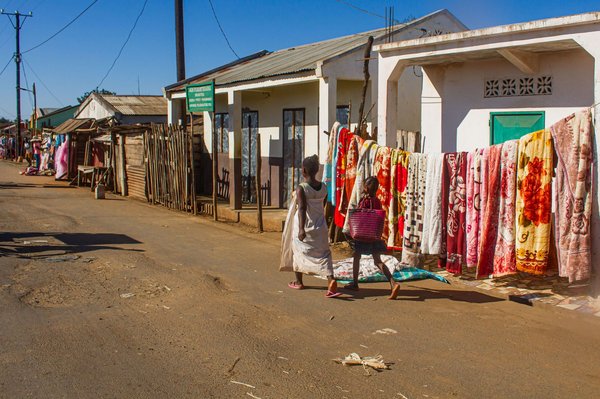
Market street in Hell-Ville, Nosy Be, Madagascar, with colorful textiles on display and people walking.

Spices, tropical fruit and local crafts

Born around the under French colonial administration, the Marché Central of Hell‑Ville (Andoany) is where the commercial history of Nosy Be takes shape. The town, renamed Hell‑Ville in honor of Admiral de Hell in , grew as a crossroads between plantations, distilleries and the port, earning the island the nickname “Perfume Island.” Step inside and you’re wrapped in intense aromas of vanilla, cloves and ylang‑ylang; stalls burst with red bananas and lychees, tailors line up colorful wax prints under clattering needles, and fishermen display freshly landed tuna and trevallies. Here you can watch polite bartering, hear scales chime, and see artisans carving wooden utensils. Between the late 19th and early 20th centuries, the introduction of ylang‑ylang made the island a name in perfumeries worldwide; the market became its daily showcase, a place of exchange and a symbol of the archipelago’s Creole identity. After the 2009 crisis, a network of women’s cooperatives and responsible tourism gave new momentum to these lively streets. Come in the morning, bring small cash, and always ask before photographing; wear closed shoes and watch for tuk‑tuks. If you want to understand how flavors, voices and customs have shaped local culture, stop here: you’ll see why this market is the island’s social compass.
In the center of Andoany (Hell‑Ville), along Rue de l’Indépendance, a few minutes’ walk from the port.
Mon–Sat 06:00–17:00; Sun 07:00–13:00. Some stalls close during the hottest hours. Hours subject to change: check the official website.
Free entry; spices from Ar5,000, fabrics from Ar20,000. Cash payments recommended.

Ylang‑ylang Distilleries

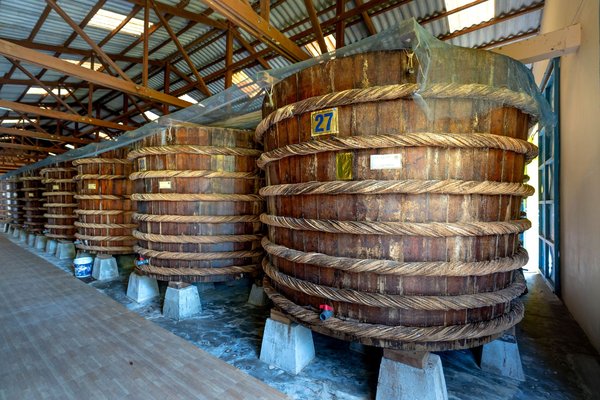
Large wooden barrels used for ylang-ylang distillation in a distillery in Nosy Be.

Fragrant essence among stills and yellow blossoms

Introduced by French colonists in the , ylang‑ylang has shaped the economic and sensory identity of Nosy Be, soon celebrated as the perfumed island. As early as the , essential oil left the port of Hell‑Ville (Andoany) for Europe, fueling a supply chain that still links the countryside to high‑end perfumery today. Step into a distillery and follow the flower’s journey: harvesting at dawn, when the petals release their fullest aroma; baskets brimming with golden blossoms; the copper still room, where slow steam rises and separates the different “fractions” of the essence. Guides show how time, temperature and yield vary, and how top notes, heart and base translate into grades destined for the major perfume houses. Discover documents and photographs that recount colonial plantations and local cooperatives founded to improve incomes after independence; hear how more efficient boilers, certified firewood and water recirculation now reduce environmental impact. Among fields and inland roads the air grows denser and warmer: it’s the essence of ylang‑ylang accompanying you through smelling tests, amber bottles and family stories. Let the fragrance and the stories guide you: you’ll understand why this artisanal know‑how still perfumes Nosy Be’s present.
Between Dzamandzar and Ambondrona, inland from Nosy Be (Andoany)
Mon–Sat 08:00–12:00 and 14:00–16:00. Visits by reservation only; possible seasonal closures. Hours subject to change: check the official website.
Guided tour from Ar30,000–50,000, often with tasting; packages with transport may be available.

Nosy Iranja Day Trip

Nosy Iranja Day Trip, Nosy Be

Photo: David Bruyndonckx, via Unsplash

Two islands linked by a ribbon of sand

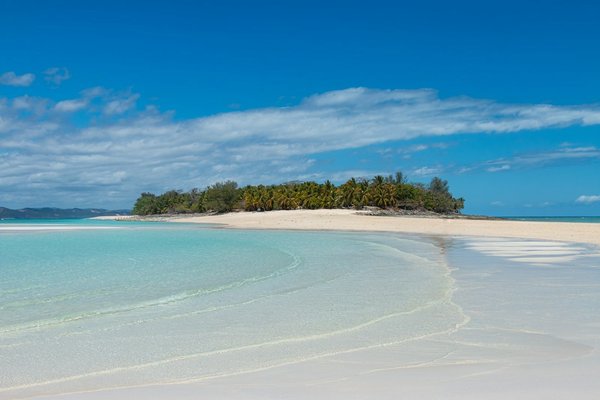
Brought to prominence in the colonial era as a maritime signaling outpost, Nosy Iranja preserves a lighthouse from the , often linked to Eiffel’s school and for decades a reference point for sailors in the Mozambique Channel. Today this twin islet is a Madagascar icon: two stretches, Iranja Be and Iranja Kely, joined by a rare natural phenomenon that appears and disappears with the tides, amid dazzling sands and shifting lagoons. Set sail in the morning from Ambatoloaka: the boat cuts through turquoise waters, dolphins sometimes appear, and when the tide drops the coral-sand tombolo unfurls for a postcard-perfect stroll. A path climbs to the lighthouse, where views sweep over green scrub and endless blue; in the village you’ll find grilled fish and coconut rice, and snorkeling among natural pools sheltered by the reef. Nosy Iranja is also a sanctuary for sea turtles: local communities watch over the nests and, since 2015, projects with NGOs have managed visitor numbers and reduced waste, strengthening a conservation culture that sets a benchmark across the Nosy Be region. The lighthouse’s historic role speaks to the island’s long relationship with safe navigation. Time your visit to the tides, walk between two islands, and let the light guide you: the magic of Nosy Iranja endures, if you respect it.
Southwest of Nosy Be, reachable only by boat from Ambatoloaka, in the Mozambique Channel
Day trips: departures 08:00–09:00 from Ambatoloaka, return 15:00–16:00. Tides dictate access to the sandbar.
Ar150,000–220,000 for a group excursion with basic lunch; supplements for snorkeling and local taxes.

Mahatsinjo Sacred Tree

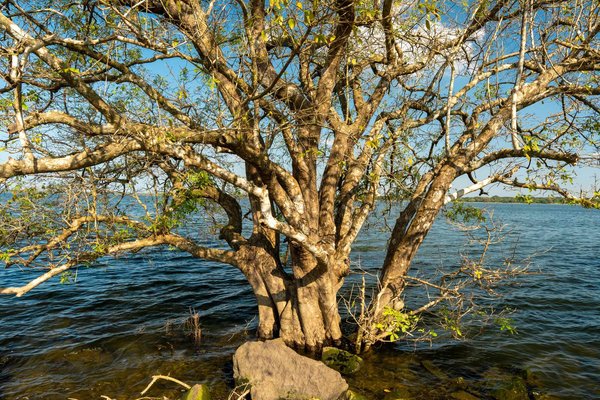
Large sacred tree by the water in Nosy Be, Madagascar, with intricate branches and a backdrop of sky and sea.

Ritual space in the forest, among interwoven roots

Rooted in the memory of the Sakalava kingdom since the mid-, the Mahatsinjo Sacred Tree is a monumental fig whose aerial roots trace a living labyrinth. During the French protectorate, when plantations were reshaping Nosy Be, the site remained an ancestor sanctuary, preserved by the community as a ritual space. You arrive along a dirt track and are welcomed by cool shade, crossed by colored ribbons and small offerings. Guides introduce you to the fady, the taboos that govern gestures and words, and explain how in tromba ceremonies mediums channel royal spirits to ask for protection, healing, guidance. Stories of kings and clan chiefs surface; among them, the figure of Queen Tsiomeko, the last of the Boina kingdom, whose symbolic legacy resonates in the roots that embrace the earth. Over the last century, while the Dzamandzar sugar factory drew workers from across the island, the site remained a cornerstone of identity: a one-of-a-kind place in the archipelago for continuity of worship and community value. Walk slowly, listen to the birds, watch the light filtering through the branches: it is a forest in time, where the present meets the voice of the ancestors. Respect the silence, dress modestly, and take photos only with permission. Let yourself be guided: here you’ll encounter a living fragment of Nosy Be’s culture.
In the interior of Nosy Be, between Mahatsinjo and the track to Dzamandzar
Open daily roughly 08:00–17:00, with access accompanied by local guides. Hours may vary: check the official website.
Suggested donation Ar5,000–10,000; some ceremonies may involve separate offerings.

Sunset Cruise

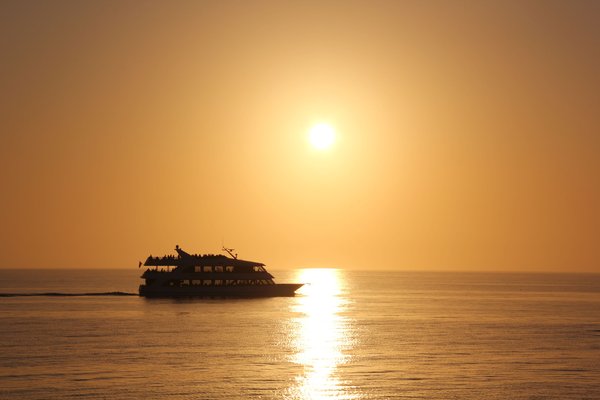
Sunset cruise in Nosy Be with a boat on the sea and the sun setting on the horizon.

Gentle sailing in the Baie des Russes

In , the Russian Empire’s Second Pacific Squadron, led by Admiral Zinovy Rozhestvensky, dropped anchor in this cove: since then the Baie des Russes has carried a name that evokes intercontinental routes and strategic waits. As early as , when the French founded Hell-Ville on Nosy Be, the bay was seen as a natural anchorage for merchant ships and colonial units, protected as it is by headlands and mangroves. Today you set sail at sunset on a catamaran or sailing pirogue; the water turns cobalt, the coastline glows, and a light breeze carries the scent of ylang-ylang from the “island of perfumes.” The captain talks about currents, artisanal fishing and old routes as you glide past deserted beaches and cliffs where turtles and dolphins sometimes surface. Between tacks you’ll learn how Sakalava fishers have used this anchorage for generations, following tides and seasons. Naval chronicles recall coaling stops, drills and commercial calls: the broad, stable, well-sheltered stretch of water was ideal for shelter and resupply, and it still is today. In the dry season the sea is almost a mirror; in the shoulder seasons a lively chop adds rhythm to the crossing. Bring a light sweater and protect your camera: when the sun slips behind the headlands and the sky turns gold, you’ll understand why this anchorage still shapes the maritime memory of Nosy Be and why it’s worth being here.
Boarding from Ambatoloaka or Dzamandzar, on the island of Nosy Be
Sunset cruise: departures 16:30–17:00, return 18:30–19:00 depending on season and weather. Hours may vary: check the official website.
Rates from Ar120,000–180,000 per person; snacks included. Possible surcharges for transfers or equipment.

Sakatia: turtles and snorkeling

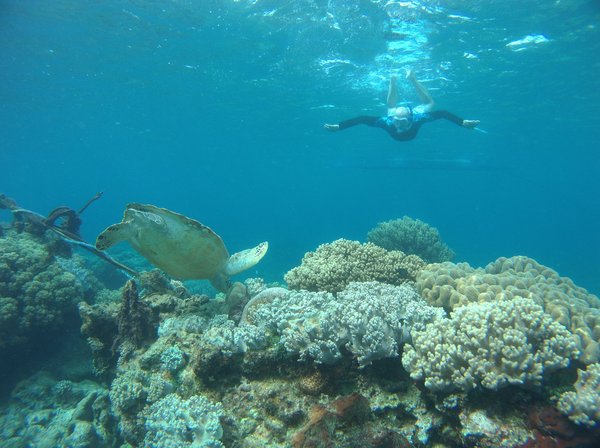
Sea turtle and snorkeler above a coral reef at Sakatia, Nosy Be.

Calm waters and seagrass meadows

Since the Nosy Sakatia area, off the west coast of Nosy Be, has become an open-air conservation lab: fishing cooperatives and local NGOs work together to safeguard green turtles in the seagrass meadows. Since , environmental education programs involve schools and guides, with measurable results: fewer accidental catches and greater community awareness. Depart from the landings at Ambondrona or Madirokely: a short boat ride and you slip into warm waters, clear and bright. Between ribbons of Posidonia seagrass, turtles graze peacefully; their calm movements invite you to slow down, while small silvery fish shimmer against the light. Local teams explain a simple code of conduct: keep your distance, do not touch, use short fins and reef-safe sunscreen; this keeps the encounter respectful and authentic. On the beach, huts and trees provide shade; a path leads to a village where artisans weave natural fibers and time seems to move at the sea's pace. Here, protection is not theory but daily practice: sighting logs, briefings before entering the water, patrols that liaise with fishers. It is an example of responsible tourism that values a fragile habitat and a living seafaring culture. Let those who call these waters home guide you and, to the rhythm of the turtles' breath, find the meaning of an essential and memorable experience.
On the west coast of Nosy Be, opposite Nosy Sakatia (embarkation at Ambondrona and Madirokely)
Daily excursions with departures 08:00–12:00 and 13:30–16:30, sea and weather permitting. Times subject to change: check the official website.
Tours from Ar90,000–140,000; equipment rental Ar10,000. Possible group discounts.

Whale shark safari

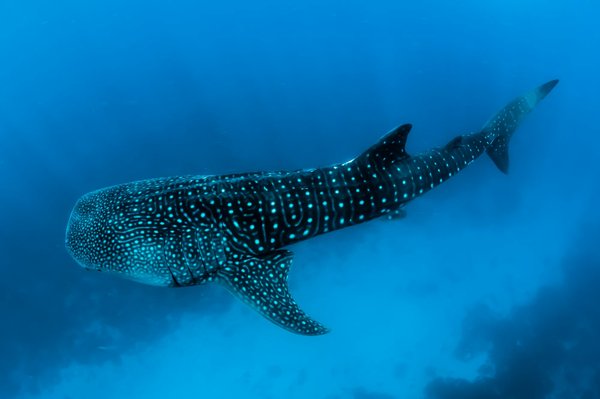
Whale shark swimming in the crystal-clear waters of Nosy Be, Madagascar, during a marine safari.

Gentle giants from October to December

Since citizen science programs have turned Nosy Be into an Indian Ocean reference point for encounters with the whale shark, a species classified as endangered by the IUCN. Set off at dawn from the lively port of Ambatoloaka: clear briefing, respectful guidelines, eyes on the horizon. The engine cuts out and you slip into the water; the water is warm, visibility is wide, your heart races as the spotted silhouette emerges from the blue. You swim alongside a gentle giant, watching gills open, slow tail beats, the unique pattern of spots that biologists use for photo identification. Between October and December, currents in the Mozambique Channel funnel abundant plankton: here, citizen science has built a wealth of data on routes and individuals, working with local fishers and skippers on sustainable practices. The island, historically known as the 'perfumed island' for its ylang-ylang distilleries, now links its identity to this pelagic fauna too, a symbol of more conscious tourism. You follow strict codes of conduct, keep your distance, give the giant room to turn. The thrill is pure, the memory vivid: come understand why this sea is a living laboratory, and take home a story worth more than a photograph.
Departures from the village of Ambatoloaka, on the west coast of Nosy Be
Seasonal outings between October and December: briefing at 07:30, return around 13:00–14:00. Times subject to weather.
From Ar250,000–350,000 per person; includes guide, basic gear, life jacket and snacks.

Recommended Itineraries in Nosy Be

Colonial Hell-Ville and Nosy Be’s southern bays

Start in Hell-Ville, among Creole facades and echoes of ; the scent of ylang-ylang accompanies the walk to the port. Continue along the coast to Ambatoloaka, where pirogues return and the atmosphere comes alive. Stop in Madirokely for a swim in calm waters and a grilled seafood lunch: a mixed plate costs about Ar25,000. In the afternoon, reach the southern bays, with pale sands and palms, ideal for a slow sunset. Renting a scooter for the day costs about Ar60,000. Night return to Hell-Ville for a simple dinner and rum arrangé. An itinerary for those seeking sea, color, and authentic snapshots of Nosy Be.

Snorkeling and artisan villages on Nosy Komba

Set off in the morning from Ambatoloaka to Nosy Komba, an island of black lava and artisan villages. Crystal-clear waters host corals and butterflyfish; the water is calm in the early hours. A local guide and gear cost about Ar20,000-30,000. After snorkeling, visit a weaving atelier and carved-wood stalls; remember bargaining is friendly yet respectful. Have lunch in a hut by the sea with grilled zebu, Ar18,000. In the afternoon, walk shaded paths to small viewpoints with vistas of Nosy Be. Return by boat before sunset, when the golden light makes the channel magnetic and the sea perfect for postcard photos.

Ambondrona mangroves and quiet beaches

Head to Ambondrona, where estuaries and mangroves create a mosaic of green and channels. By kayak, glide silently among roots and herons; rental costs about Ar25,000 for two hours. Guides explain how the forest protects the coast and share local history from the colonial era to Madagascar’s independence in . Stop at a little-frequented beach to swim in turquoise waters and breathe an atmosphere of total calm. Lunch on mofo gasy and tropical fruit bought in the village, Ar5,000. A slow afternoon of reading and shade, then return toward Madirokely, with soft light and gentle waves to close a sustainable day.

Sakalava flavors between Dzamandzar and Madirokely

Sample Sakalava flavors between Dzamandzar and Madirokely. Breakfast on freshly fried mofo gasy (Ar3,000), served with local coffee. Walk among colorful houses and workshops; the air smells of spices and coconut. For lunch, try zebu brochettes and grilled fish at beach stalls: a full plate Ar15,000. In the afternoon, a home-style cooking lesson reveals ravitoto and red rice; you can find informal classes by asking restaurateurs, Ar30,000. End the day with a sunset from the Madirokely shore, sipping artisanal rum arrangé, a tradition dating from to , in a convivial atmosphere.

When to Visit

July to October: dry season and ideal seas

Nosy Be has a tropical climate: rainy season from November to April, dry from May to October. The best months are July to October, with calm seas, excellent visibility for snorkeling and diving, and chances to spot humpback whales and whale sharks between the end of the dry season and the start of the rains. Temperatures range from 24–28°C; rainfall is rare in the austral winter. In low season (January–March) expect heavy rain, occasional cyclones, lower prices, and fewer crowds.

Peak Season

High season from July to October and during the December holidays: higher prices for hotels and excursions, limited availability; calm sea and excellent visibility.

Shoulder Season

Shoulder season in May–June and November: good balance of weather and prices; possible brief showers in November, intense green in May.

Low Season

Low season from January to March: lower costs, few crowds, lush vegetation; frequent rains, muddy roads, cyclone risk and cancellations.

Tips for Visiting Nosy Be

Bring cash: ATMs in Hell-Ville often run dry on weekends. Exchanging into Ariary in town offers better rates than at the airport. For small purchases in Ambatoloaka and Madirokely, vendors prefer Ar and rarely accept cards.
Buy a Telma or Orange SIM on arrival. A 4GB data package costs about Ar20,000 and coverage on Nosy Be is stable along the coast. Activate WhatsApp right away to coordinate boats and guides.
Repellent and light clothing are essential. Mosquitoes increase from November to April; I spray DEET at sunset and wear long sleeves. For snorkeling, reef shoes protect against urchins and corals in the bays of Madirokely and Ambondrona.
To get around, negotiate tuk-tuks during the cooler hours. By day a Hell-Ville–Ambatoloaka ride costs Ar5,000-8,000; at night it rises. Always agree on the price before hopping in and carry small change.

Local Experiences in Nosy Be

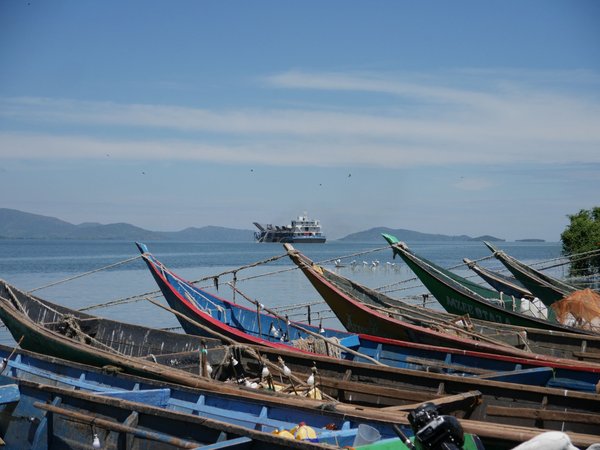
Traditional boats on the coast of Nosy Be with a ferry in the background and distant hills.

Getting between Ambatoloaka and Madirokely stress-free
The stretch between Ambatoloaka and Madirokely is short and pleasant, ideal on foot at dawn when the air is cool. Alternatively, tuk-tuks ask Ar5,000-8,000 per ride; agree on the price first. To return in the evening, I prefer walking along the beach lit by the venues. Scooters are handy (daily rental Ar60,000), but roads can be bumpy after rains. Keep a moderate speed and wear a helmet.
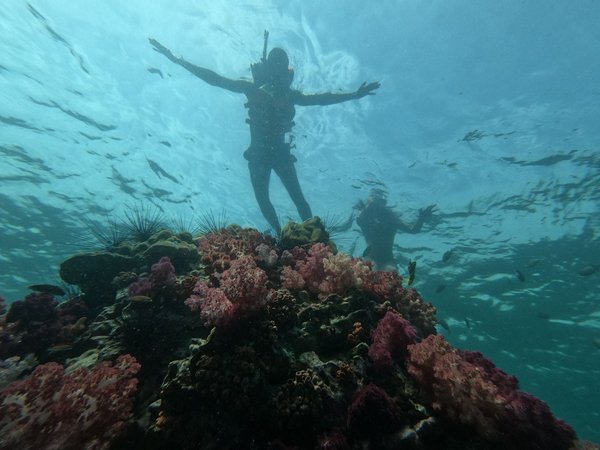
Morning snorkeling on Nosy Komba with colorful corals and two swimmers underwater.

Safe morning snorkeling on Nosy Komba
For snorkeling on Nosy Komba, the best conditions are between 8:00 and 11:00, when the sea is calmer and visibility high. Rely on local guides to pick sheltered spots: mask, fins, and life vest are often included (Ar20,000-30,000). Bring a rashguard for the sun and respect the corals. Return before early afternoon, when the wind picks up and currents strengthen.
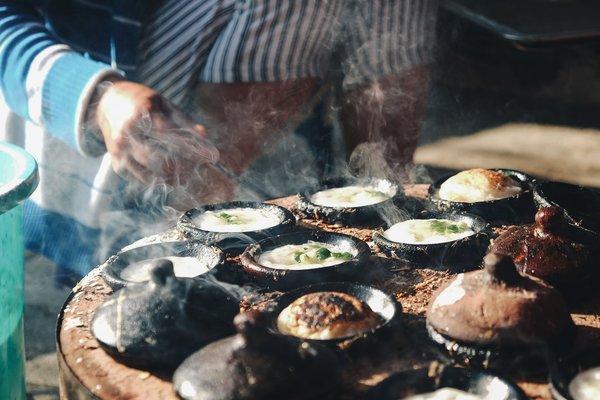
Preparation of local street food in steaming clay pots, typical of Nosy Be.

Street food and local breakfasts to try

Between Dzamandzar and Ambatoloaka, kiosks open at dawn with warm mofo gasy and robust coffee. It’s the ideal time to taste crispy sambos and zebu brochettes on the griddle. With Ar3,000-5,000, you can have a complete breakfast. Keep hygiene in mind: choose busy stalls, watch the cooking, and bring wipes. The street atmosphere brings you closer to daily life on Nosy Be without sacrificing flavor.

Frequently Asked Questions about Nosy Be

How much does it cost to rent a scooter in Nosy Be?

I usually rent a scooter in <strong>Ambatoloaka</strong> for Ar60,000-70,000 per day, helmet included. I always take photos of the vehicle and check brakes and lights. I prefer to fill up right away; Ar15,000 is enough for a day. I return it before sunset to avoid hidden potholes and evening traffic.

What is the best time to visit Nosy Be?

I prefer the dry season between May and October, with calm seas and steady sunshine. Rains increase from November to April, with downpours in the afternoon. In <strong>Nosy Be</strong> the climate is mild and the <em>atmosphere</em> relaxed. Remember that Madagascar has been independent since <time datetime="1960">1960</time>, but some infrastructure remains delicate in the wet season.

How do I get from Hell-Ville to Ambatoloaka?

I take a tuk-tuk from <strong>Hell-Ville</strong> to <strong>Ambatoloaka</strong> for Ar5,000-8,000 by day. The ride takes about 20 minutes, traffic permitting. In the evening the price can rise to Ar10,000, so negotiating first helps. Alternatively, a private taxi has a fixed fare of Ar20,000 for more comfort.

Do I need to book boat trips in advance?

I book the day before at the kiosks in <strong>Ambatoloaka</strong>, especially in high season. For <strong>Nosy Komba</strong> there are usually spots, but the best boats fill up early. I pay a deposit of Ar20,000 and the balance in the morning. I prefer departures at 8:00 for calm seas and a return by early afternoon.

How much does a seafood dinner cost in Ambatoloaka?

I usually spend Ar25,000-40,000 for a grilled fish plate with sides. In <strong>Ambatoloaka</strong>, beach restaurants also offer lobster at seasonal prices, often Ar70,000. I add a local <strong>THB</strong> beer for Ar6,000. I book a table at sunset for the best <em>atmosphere</em>.

Can I pay by card in Nosy Be?

I always carry cash because many places don’t accept cards. Some hotels in <strong>Hell-Ville</strong> and tourist restaurants accept Visa or Mastercard but apply a 3–5% fee. I withdraw during daylight hours and keep Ar in small bills. In villages, cards aren’t an option.

Is tap water safe to drink in Nosy Be?

I never drink tap water. I buy sealed bottles, Ar2,000-3,000, or use purification tablets to save money. I fill a filtered bottle before excursions. In <strong>Nosy Be</strong>, careful <em>attention</em> to hygiene avoids issues and keeps you ready for the sea.

How much is a guide for an easy trek?

For a light trek near <strong>Dzamandzar</strong> I pay Ar30,000-40,000 for a half day. It includes explanations about flora and local stories, with scenic breaks. I set off at dawn to avoid the heat and bring 1.5 liters of water. Leaving a tip of Ar5,000 is appreciated.

Do I need a power adapter and what’s the voltage?

I bring a type C/E adapter because some sockets differ. Voltage is 220V, 50Hz, so my European chargers work. If I forget the adapter, I buy one in <strong>Hell-Ville</strong> for Ar5,000-8,000. I charge devices in the afternoon to avoid evening drops.

Do I need a visa for Madagascar and how much does it cost?

For tourist stays I get a visa on arrival: 30 days at about Ar160,000. I carry cash in euros or Ariary and fill out the form on the plane. In <strong>Nosy Be</strong> checks are smooth, but I keep my hotel booking handy. I keep the passport stub until departure, as per rules updated in <time datetime="2023">2023</time>.