10 Experiences in Chiang Mai
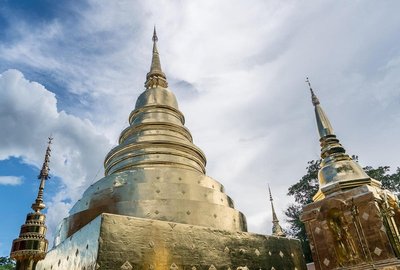
Chiang Mai rose from the banks of the Ping River in , when King Mangrai chose this valley ringed by mist-covered mountains as the capital of the Lanna Kingdom. For more than two centuries the city rivalled Ayutthaya in power and artistic achievement, filling its moated square-mile core with over 300 temples whose peaked roofs and gilded chedi still define the skyline today. Wander inside the old walls and you move from the 14th-century brickwork of Wat Chedi Luang to third-wave coffee roasters on the same block. Climb the 306 Naga-flanked steps to Doi Suthep at dawn, then spend the afternoon bartering for hand-woven textiles at Warorot Market, the trading hub locals have frequented since . When evening falls the city transforms: the Sunday Walking Street stretches a full kilometre through Ratchadamnoen Road, its lantern-lit stalls offering everything from sai ua sausage to intricate silver jewellery made by Hmong and Karen artisans from the surrounding highlands. Beyond the moat, Thailand's highest peak — Doi Inthanon at 2,565 metres — anchors a landscape of cloud forests, rice terraces, and rushing waterfalls reachable in under two hours. Whether you come for the spiritual calm of a monk chat at sunset, a hands-on khao soi cooking class, or the spectacle of thousands of lanterns lifting into the November sky during Yi Peng, Chiang Mai rewards curiosity at every turn.
Top Things to Do in Chiang Mai
Wat Phra That Doi Suthep
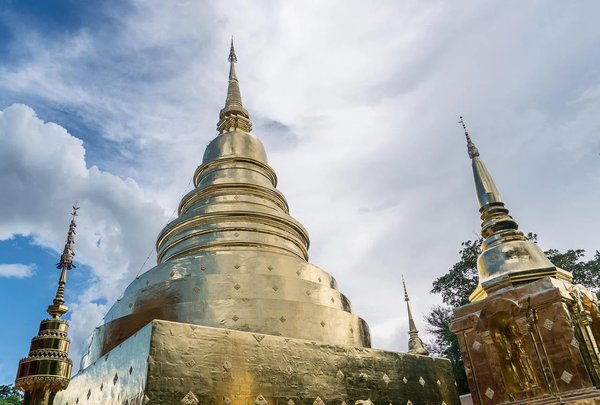
The sacred hilltop temple overlooking the city
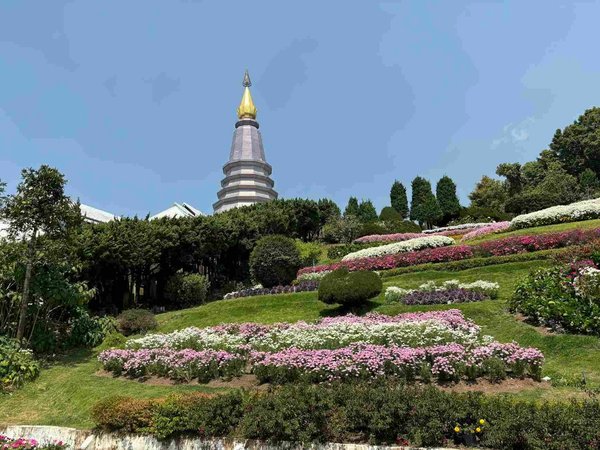
At the summit a cloistered terrace encircles a 24-metre gold-plated chedi believed to enshrine a fragment of the Buddha's shoulder bone. Devotees circle the stupa three times clockwise, burning incense and pressing squares of gold leaf onto its base. Along the perimeter, murals retell the Jataka tales in the distinctive Lanna palette of cinnabar and indigo, while bells hang from every eave, filling the compound with a continuous, wind-driven hum.
Step to the eastern balcony and the entire Chiang Mai basin opens beneath you — a patchwork of red rooftops, green paddy, and the silver thread of the Ping River stretching toward Lamphun. Time your visit for the minutes after sunrise, when mist still pools in the valley and the chedi burns copper-gold against the sky. Modest dress is required: shoulders and knees must be covered, and shoes removed before entering the inner terrace.
Chiang Mai Night Bazaar
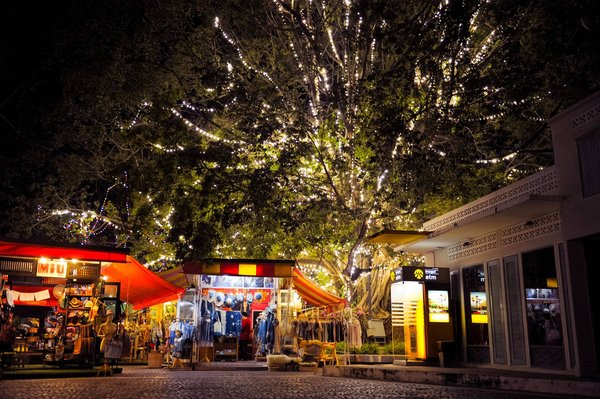
A centuries-old tradition of evening trade
The northern end clusters around handicrafts: hand-carved teak boxes, hill-tribe silverwork using techniques passed down through Hmong and Karen families, and bolts of pha sin fabric woven on backstrap looms in Mae Chaem district. Move south and the atmosphere shifts to food — charcoal-grilled moo ping skewers, banana-leaf packets of sticky rice, mango shakes, and sizzling pad kra pao served at communal tables under fluorescent light. Between the stalls, buskers and student bands perform on small stages, lending the bazaar a festival energy that peaks around 9 PM.
Bargaining is expected at textile and souvenir stalls; a polite opening offer of 60 percent of the asking price is standard. For food and drink, prices are fixed and remarkably affordable — a full meal rarely exceeds 80 THB. Arrive early for the widest selection of handmade goods, or come after dinner simply to absorb the atmosphere and hunt for one-of-a-kind souvenirs.
Thai Cooking Class
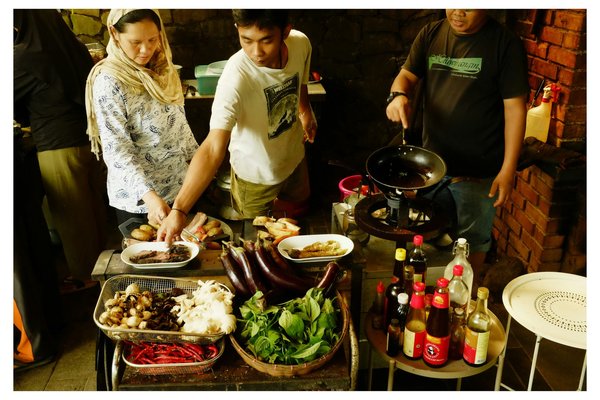
Master northern Thai flavors hands-on
A typical half-day session starts at Warorot Market or a smaller neighbourhood market, where your instructor identifies galangal, kaffir lime leaves, and the pea-sized prik kee noo chilies that give northern dishes their distinctive heat. Back at the school — often an open-air kitchen shaded by mango trees — you work through four or five dishes at individual wok stations. The curriculum nearly always includes khao soi, the coconut-curry noodle soup that defines Chiang Mai's culinary identity, along with som tam, a pad thai variation, and a curry paste pounded from scratch in a granite mortar.
What elevates the experience beyond mere recipe-following is the cultural context: instructors explain why northern Thai cooking favours sticky rice over jasmine, how the Burmese occupation influenced the use of turmeric, and which dishes are reserved for temple festivals. You leave with a printed recipe booklet and, more valuably, the muscle memory of balancing sour, sweet, salty, and spicy in a single spoonful.
Doi Inthanon National Park
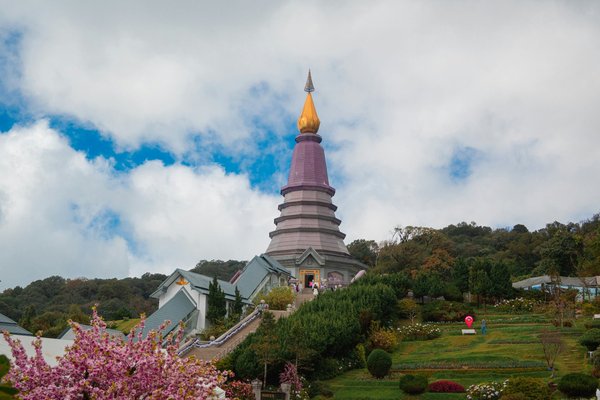
Thailand's highest peak and cloud-forest trails
The drive from Chiang Mai city takes roughly 90 minutes and climbs through three distinct ecological zones. At 1,200 metres, evergreen forest gives way to sphagnum bogs and epiphyte-draped oaks; by the summit the air temperature can drop below 10 °C, and the forest floor is carpeted in moss and rare terrestrial orchids. Two trails in particular reward walkers: the Ang Ka nature trail, a 360-metre boardwalk through cloud forest where over 400 bird species have been recorded, and the Kew Mae Pan trail (guided only), which traces a ridge above the clouds with views stretching to Myanmar on clear mornings.
Lower in the park, the Wachirathan and Sirithan waterfalls cascade over granite shelves into mist-filled pools — Wachirathan's 80-metre drop is loud enough to hear from the car park. Near the base of the mountain, Karen and Hmong villages maintain terraced rice paddies and sell hand-roasted arabica coffee grown in the park's shade. Bring layered clothing: the summit is routinely 15 °C cooler than Chiang Mai city.
Wat Chedi Luang
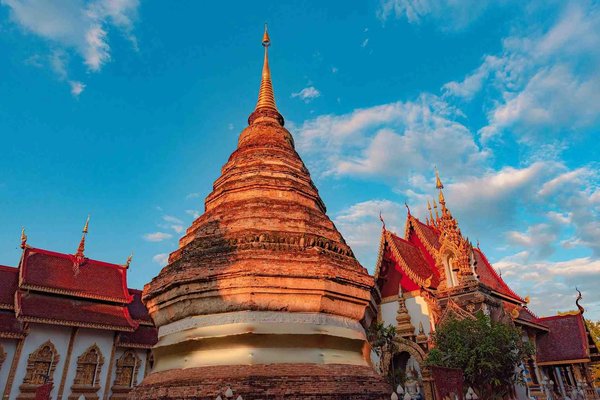
The ruined great stupa at the city's heart
Approach through the eastern gate and you face the chedi head-on, its stepped tiers partially reclaimed by moss and ficus roots. Restored elephant sculptures ring the base, their sandstone forms eroded but dignified, while four steep staircases flanked by five-headed Naga serpents climb each cardinal face. The main viharn to the east shelters a standing Buddha cast in Lanna style, and behind it lies a smaller hall housing the Inthakin — the city pillar, a teak post ritually bathed each June during the Inthakin Festival in a ceremony that dates to pre-Buddhist animist traditions.
Late afternoons bring the popular Monk Chat programme, where novice monks practise English with visitors beneath the compound's mature trees. It is an unexpectedly candid exchange: questions about monastic life, Buddhism, and Thai politics are all fair game. The temple grounds are open and free to enter; a small donation is customary.
The Old City Walls
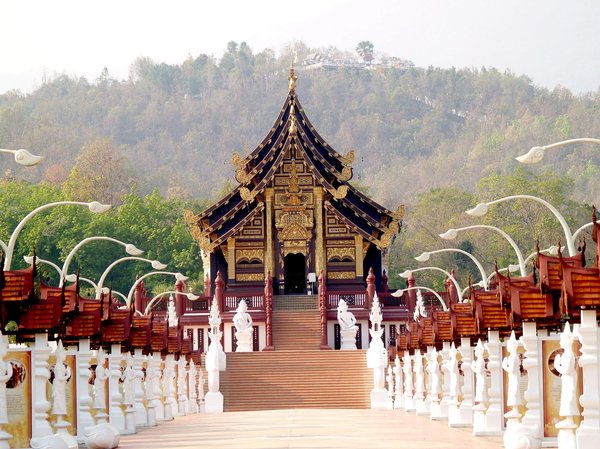
A walk through seven centuries of Lanna history
Begin at Tha Phae Gate on the eastern side, the most photogenic of the five, where the brick ramparts frame a wide plaza that hosts weekend markets and cultural performances. Walk south along the moat — which is still fed by the Ping River's canal system — to Chiang Mai Gate, the traditional entry point for traders arriving from the south. The adjacent morning market here is one of the city's most authentic: vendors sell kanom jeen nam ngiao (rice noodles in tomato-pork broth) and bundles of fresh herbs beginning at 5 AM.
Inside the walls the pace is deliberately slow. Lanes too narrow for cars thread between temple compounds, shophouse cafes, and guest houses draped in bougainvillea. Wat Phra Singh, near the western gate, houses the Phra Singh Buddha image in a viharn covered in gold-and-lacquer murals depicting 19th-century court life. By late afternoon, saffron-robed monks file through the streets collecting alms, a ritual unchanged since the city's founding.
Ethical Elephant Sanctuaries
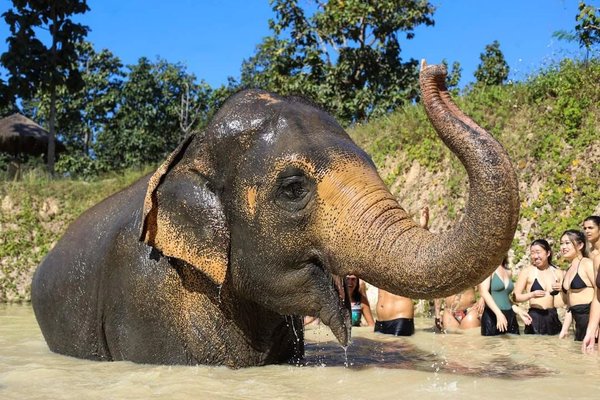
Observe rescued elephants in forested valleys
A visit to a reputable sanctuary typically lasts a half or full day. After a briefing on elephant biology and the history of human-elephant relations in the region, small groups walk into the forest to observe herds foraging, mud-bathing, and socialising. You may prepare food — slicing watermelon, bundling banana-stalk parcels — and offer it by hand, standing close enough to feel the dexterous tip of a trunk. Crucially, there is no riding, no chaining, and no forced interaction; elephants approach visitors on their own terms.
The best-regarded sanctuaries limit daily visitor numbers, employ local mahout families who have cared for elephants for generations, and reinvest fees directly into land acquisition and medical treatment. Book well in advance during the November-to-February high season, and choose operators accredited by organisations such as the World Animal Protection network. Expect to be moved — the intelligence and gentleness of these animals, observed at close range in a respectful setting, is genuinely unforgettable.
Doi Suthep-Pui National Park
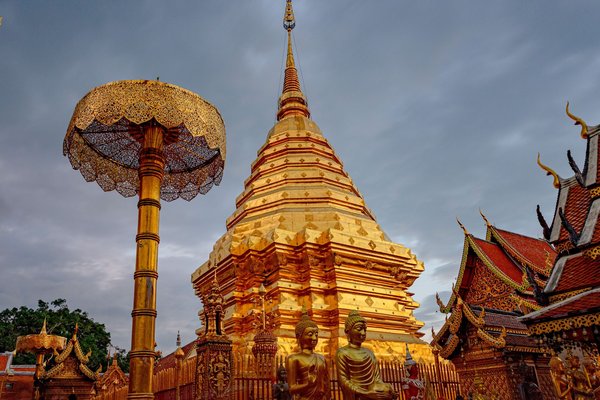
Waterfalls, birdlife, and Hmong highland culture
The main road winds uphill past the turnoff for Wat Doi Suthep (covered separately in this guide) and continues to Doi Pui, where a Hmong village has occupied the ridgeline for generations. Villagers sell hand-embroidered bags, silver jewellery, and packets of highland-grown coffee. Behind the village a well-marked trail descends through bamboo groves to the Monthathan Waterfall, a series of granite cascades that run strongest between August and October. The pools at the base are deep enough for swimming and refreshingly cold year-round.
For birders, the road between the 8 km and 12 km markers is legendary: mixed feeding flocks containing minivets, drongos, and leaf warblers move through the canopy in the early morning, and patient observers with binoculars often spot the rare Chestnut-tailed Minla. Pack a jacket even in March — the summit is typically 5-8 °C cooler than the city, and afternoon clouds can roll in without warning. No camping is permitted, but a network of day trails makes the park ideal for a half-day escape from the heat of the lowlands.
Yi Peng Lantern Festival
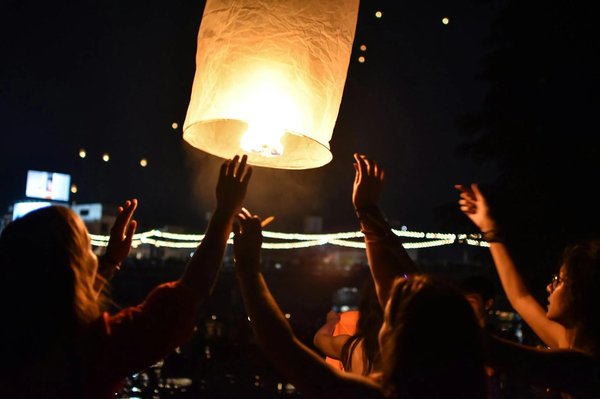
Thousands of sky lanterns above the Lanna capital
The tradition dates to at least the , when monks launched lanterns to honour the Buddha's hair relic at Doi Suthep. Today the largest organised release takes place at the Mae Jo University grounds north of the city, where participants — sometimes numbering 10,000 — light their lanterns simultaneously in a carefully choreographed countdown. The effect is staggering: a rising constellation of warm amber lights drifting slowly northeast on the prevailing breeze, reflected in the upturned faces of the crowd below.
Smaller, more intimate releases happen at temples throughout the Old City, accompanied by candlelit processions, dharma talks, and traditional Lanna music played on the salaw (a bowed string instrument). On the Ping River, meanwhile, hundreds of krathong floats bob downstream carrying candles, incense sticks, and coins. If you attend only one festival in Thailand, let it be this one — but book accommodation months in advance, as the city fills to capacity.
Hill Tribe Heritage
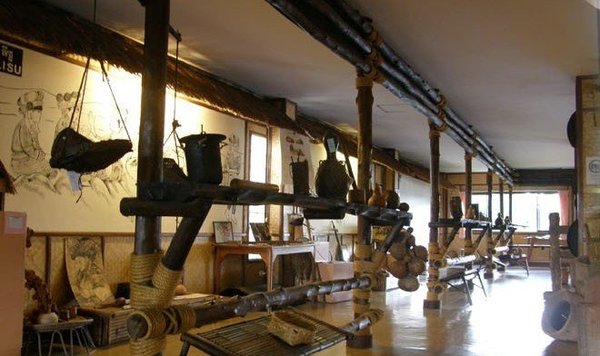
Karen, Hmong, and Akha culture in the northern highlands
The most accessible introduction is the Tribal Museum (officially the Hill Tribe Museum and Education Center), situated in Ratchamangkhla Park on the northern outskirts of the city. Established with support from the Thai government's Public Welfare Department, the museum displays traditional garments — intricate Hmong batik, Akha silver headdresses weighing up to two kilogrammes, Karen wrist-woven tunics — alongside farming tools, musical instruments, and photographic histories of each group's migration routes.
For a deeper encounter, guided day treks lead to Karen and Lahu villages in the Doi Inthanon and Mae Taeng valleys. Visitors are typically hosted by a village family, share a meal of jungle curry and bamboo-steamed rice, and observe craft demonstrations: Hmong women drawing wax-resist patterns on hemp cloth, Karen men forging silver into elaborate earpieces. These visits operate on a community-based tourism model that channels fees directly into village schools and healthcare. Approach with genuine curiosity and ask before photographing; you will be rewarded with warmth, strong tea, and stories that no museum can fully convey.
Recommended Itineraries in Chiang Mai
Temples and Street Food by Tuk-Tuk
Afternoon — Take a songthaew up the winding road to Wat Phra That Doi Suthep. Climb the 306 Naga-flanked steps, circle the golden chedi three times, and linger at the eastern terrace for a panoramic view of the city. On the way back down, stop at Khao Soi Khun Yai near Chang Phueak Gate for a bowl of the city's signature coconut-curry noodles.
Evening — Stroll the Night Bazaar along Chang Klan Road. Sample moo ping skewers, mango sticky rice, and fried banana from the food stalls, then browse the handicraft vendors for hill-tribe silverwork and handwoven scarves.
Mountains and Waterfalls
Afternoon — Descend to the Wachirathan Waterfall, where an 80-metre cascade throws mist across the viewing platform. Continue to a nearby Karen village for a lunch of jungle curry, bamboo-shoot soup, and locally grown arabica coffee. On the return drive, stop at the Sirithan Waterfall for a short trail through lowland forest.
Evening — Back in the city by 5:30 PM, head to Huen Phen on Rachamankha Road for a classic northern Thai dinner: sai ua sausage, gaeng hang lay pork curry, and laab muang served on a teak tray with sticky rice.
Art, Coffee, and the Ping River
Afternoon — Walk west to the Nimmanhaemin district, where a grid of narrow sois (lanes) hosts independent coffee roasters, contemporary art galleries, and design boutiques. Settle into Ristr8to or one of the neighbourhood's third-wave cafes for a single-origin pour-over from beans grown on Doi Chaang. Browse the galleries along Soi 1 and Soi 3, where emerging Thai artists show work that blends Lanna iconography with contemporary installation.
Evening — Rent a bicycle and ride south along the Ping River promenade to the iron bridge near Nawarat. Cross to the east bank for dinner at one of the converted-warehouse restaurants that line Charoenrat Road, watching long-tail boats drift past as the sunset turns the water amber.
When to Visit
The Best Time to Visit Chiang Mai
The cool season from November to February is ideal, with comfortable temperatures around 21-25 °C and almost no rain. March-April brings smoky haze from field burning. The monsoon (May-October) means lush greenery and lower prices but frequent afternoon showers.
Peak Season
November to February is peak season: cool weather, dry skies, and major festivals draw the most visitors.
Shoulder Season
March-April and October offer a balance — fewer tourists than peak, but warming temperatures and occasional rain.
Low Season
May to September is low season, with monsoon rains but significantly lower prices and fewer crowds.
Compare Destinations
Chiang Mai VS Pattaya
Choose Chiang Mai for temples and trekking (khao soi at €2–3, Doi Suthep 15 km away), and Pattaya for beaches and nightl...
Chiang Mai VS Phuket
Choose Chiang Mai for temples, trekking and a €20-35/day budget; opt for Phuket for beaches, islands and nightlife with ...
Chiang Mai VS Bangkok
Choose Bangkok for grand temples, shopping and nightlife; prefer Chiang Mai for nature, lower costs and cool weather bet...
Chiang Mai VS Ko Samui
Choose Chiang Mai if you want temples, trekking on Doi Inthanon and a budget of €35–90/day; opt for Ko Samui for beaches...
Tips for Visiting Chiang Mai
Local Experiences in Chiang Mai
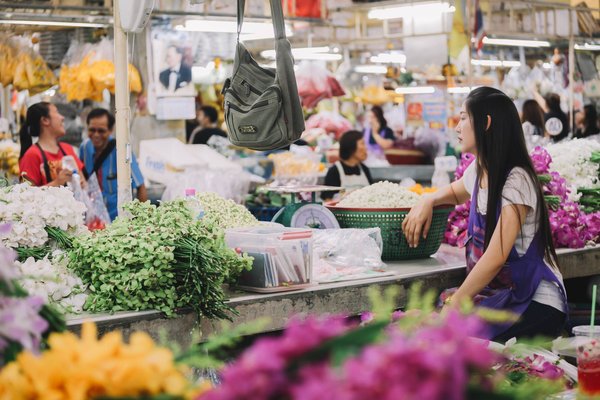
Warorot Market at Dawn
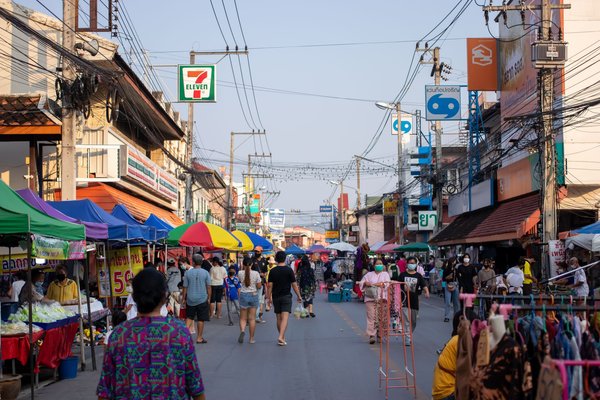
Nimmanhaemin and Third-Wave Coffee