
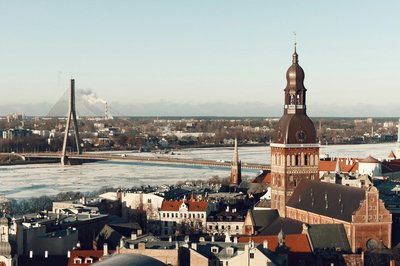
Riga
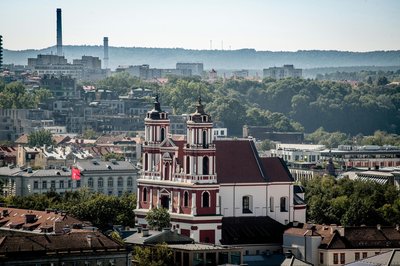
Vilnius
Riga and Vilnius are among the Baltic capitals most popular with European travellers: direct flights from Milan, Rome and other cities take about 3 hours, both use the euro and budgets are far lower than in Copenhagen or Stockholm.They lie about 300 km apart, so many people wonder whether to pick one or combine them.The differences are clear: Riga (about 600,000 inhabitants) is the bigger, more cosmopolitan city, with over 700 Art Nouveau buildings, a covered market in old Zeppelin hangars and the seaside of Jūrmala just 25 km away.Vilnius (about 600,000 inhabitants) has one of the largest baroque old towns in Eastern Europe, the bohemian republic of Užupis and Trakai Castle 28 km away.This guide compares 12 criteria with prices in euros, temperatures and travel times, then proposes a combined 5-6 day itinerary with a bus between the two cities (about 4 hours, €10-25).
Riga vs Vilnius
| Feature | Riga | Vilnius |
|---|---|---|
| Daily budget | In Riga a budget traveller spends €50-60 a day: dorm bed €15-25, a meal at self-service restaurants like Lido €7-10, a single public transport ticket about €1.50-2. Mid-range runs €100-130: a 3-star hotel in the Old Town €70-100 a night, dinner with a beer €20-30 per person.At the luxury end (€220+) 5-star hotels such as the Grand Poet cost €180-250 and tasting menus €60-90. In summer and during events prices rise 20-30%.Figures are per person per day, excluding admissions. | Vilnius is slightly cheaper: €45-55 a day on a budget, with a dorm bed €12-22, a cepelinai lunch €7-10 and public transport tickets about €1-2. Mid-range runs €90-120: a 3-star hotel in the centre €60-90, dinner with a beer €18-28. At the luxury end (€200+) 5-star hotels cost €150-230 and restaurants €50-80 a head.The average gap with Riga is about €5-10 a day, mostly on accommodation and restaurants, and prices also climb in July-August.✓ Better |
| Main attractions | The Vecrīga (Old Riga) is a UNESCO site: Riga Cathedral (about €9, 45 minutes) with one of Europe's largest organs, St.Peter's Church with a viewing tower at 72 m (about €9-10, 1 hour) and the House of the Blackheads (about €8, 45 minutes).Don't miss the Art Nouveau district around Alberta iela (free on foot, 1-2 hours) and the Art Nouveau Museum (about €12, 1 hour).The Central Market is free, but allow at least 1-2 hours.For the main sights budget about €25-35 per person. | Vilnius has one of the largest old towns in Eastern Europe (about 360 hectares, UNESCO).Don't miss the Gate of Dawn (Aušros Vartai, free, 20 minutes), the Cathedral and its belfry (free, tower about €6), Gediminas' Tower (about €5-10, 1 hour) for city views and St.Anne's Church.The Republic of Užupis and the Hill of Three Crosses are also free.The top day trip is Trakai Castle, 28 km away (about €8-12, half a day).For the main sights budget about €20-30. |
| Food and restaurants | Latvian cuisine is simple and rye-based: grey peas with bacon (pelēkie zirņi ar speķi), cold beetroot soup, smoked herring and salmon, and dark rye bread (rupjmaize).Try Lido (self-service, dishes €5-9), the medieval-themed Rozengrāls and a beer at Folkklubs ALA Pagrabs.The Central Market sells smoked fish at €15-25 a kilo.A meal in a mid-range restaurant costs €12-20, an à la carte dinner with wine €35-50 per person.Book ahead at weekends. | Lithuanian cuisine is hearty: cepelinai (big potato dumplings stuffed with meat, €8-12), šaltibarščiai (cold pink beetroot soup, €5-7), kibinai (pastries of Karaite origin, about €2-3 each in Trakai) and kepta duona (fried rye bread with garlic, €4-6).Typical venues: Lokys in the old town and the Halės Turgus market.A meal in a mid-range restaurant costs €10-18, an à la carte dinner with wine €30-45: Vilnius is 10-15% cheaper.Booking at weekends is advisable here too. |
| Weather and best time to visit | Riga has an oceanic-continental climate.July is the warmest month: average 18°C (highs 22-23°C), with the sea at Jūrmala around 19-20°C.Winters are harsh: -3°C average in January, with snow from December to March.Spring is cool (April 5-7°C, May 11-13°C) and autumn rainy, with October at 7°C.Best time: late May to early September, with up to 18 hours of daylight in June.Christmas markets in December are an alternative.In November daylight lasts under 9 hours. | Vilnius has a more continental climate, with slightly larger temperature swings.July: average 18°C (highs 23-24°C), with frequent summer showers.January: average -4°C (lows of -10°C or colder), with snow from December to late February.April 7°C, May 13°C, October 8°C.Best time: May to September for walking, but December, with the Christmas market in Cathedral Square, is also worth it.Here too October and November are rainy, with under 9 hours of daylight. |
| Transport and getting there | Riga Airport (RIX) is the largest in the Baltics and the hub of airBaltic, with direct flights from Milan, Rome and other cities in about 3 hours.It is 10 km from the centre: bus 22 costs about €2-3 and takes 30 minutes, a taxi via apps like Bolt €12-20. There is no metro: the city uses trams, trolleybuses and buses (single ticket about €1.50-2, 24-hour pass about €5-8).The old town is walkable.For Jūrmala, the train from the central station takes 30 minutes and costs about €2-3. | Vilnius Airport (VNO) is only 6 km from the centre: the train to the central station takes about 7-10 minutes (about €1-2) and a Bolt taxi costs €8-12. Direct flights from several Italian cities with airlines such as Ryanair and Wizz Air.There is no metro here either: buses and trolleybuses cover the whole city with a ticket of about €1-2. The centre is compact and walkable in 15-20 minutes.For Trakai, a direct train from the station takes about 30-35 minutes (about €2-3).✓ Better |
| Nightlife | Riga has the biggest nightlife scene in the Baltics.In the old town you'll find pubs, cellar bars and live-music venues like Folkklubs ALA Pagrabs (beer €3-5), while Miera iela and Čaka iela draw an alternative crowd.Rooftop cocktails (Skyline Bar, Radisson Blu Latvija) cost €10-14. Many venues close between 02:00 and 04:00; weekend clubs charge €5-15 entry.Beware of hostess bars in the Old Town: always check the menu and prices before ordering.✓ Better | Vilnius has a smaller, more bohemian scene, concentrated around Užupis, Pilies gatvė and Gedimino prospektas, with cocktail bars, craft beer pubs and live music venues.A beer costs €3-4.50, a cocktail €7-11. Most venues close between 02:00 and 03:00, weekend clubs stay open until 05:00 with €5-12 entry.There are plenty of students and fewer stag parties: the atmosphere is more relaxed and about 10-15% cheaper, but there are fewer venues overall. |
| With kids and families | Riga suits kids thanks to the Riga Zoo (about €10-12, 3 hours) in Mežaparks, the Ethnographic Open-Air Museum (about €7, 3 hours, about 30 minutes by bus from the centre) and the sandy, shallow-water beaches of Jūrmala 25 km away.The old town has cobbled streets, which makes strollers awkward: a baby carrier works better for little ones.Trams and buses have room for strollers and younger children travel free on public transport.✓ Better | Vilnius is more compact (the centre can be crossed in 15-20 minutes on foot) but has fewer kid-friendly attractions: the Energy and Technology Museum (about €5-8, 2 hours), the lawns of Vingis Park (160 hectares) and the TV Tower (326 m, about €10-12).The real highlight is Trakai Castle, 28 km away, with rowing boats on Lake Galvė (€8-12 for 30-60 minutes).The streets are cobbled as in Riga, and admission for little ones is often free or discounted here too.There is no sea or beach, however. |
| Beaches and nature | Riga's big asset is the sea.Jūrmala has 33 km of beaches of white sand, 25 km from the centre (trains every 20-30 minutes, about €2-3), with the resorts of Majori and Dzintari, Ķemeri National Park and Gauja National Park at Sigulda (about 53 km, 1 hour, castles and cable car).In July the sea reaches 19-20°C and swimming is possible.In town: Mežaparks and Bastejkalns park along the city canal.✓ Better | Vilnius has no sea: the nearest coast (Palanga) is about 310 km away.Nature is nearby though: Vingis Park (160 hectares) on the Neris river, Verkiai Regional Park, the Hill of Three Crosses and the Green Lakes (Žaliųjų ežerų) about 10 km from the centre.At 28 km, Lake Galvė at Trakai is where people swim and rent kayaks in summer (€8-15 an hour).Riga's beaches are clearly superior: the obvious choice for anyone wanting the sea. |
| Shopping | In Riga the Central Market (5 pavilions in old Zeppelin hangars) is the place to buy smoked fish, honey and dark rye bread.Typical souvenirs: Riga Black Balsam (€12-18), Baltic amber (rings from €25, necklaces €40-150), linen and Latvian woollen mittens.Main areas: Elizabetes iela, Galerija Centrs and Origo for international chains, while design shops are on Miera iela and in the Old Town.For a vintage touch, try the Berga Bazārs arcade with boutiques and cafés. | Shopping in Vilnius is less showy but cheaper.Pilies gatvė and Didžioji gatvė sell amber (from €15-20 for a small pendant to €100+ for necklaces), linen and ceramics; the Halės Turgus market offers cheese, honey and kibinai.Shopping centres: Akropolis and Gedimino 9 in the centre.Typical souvenirs: linen textiles (€20-60), liqueurs such as Starka (about €15-25) and Lithuanian chocolate.Prices are generally 10-15% lower than in Riga, and shops usually close at 20:00-21:00, with reduced hours on Sundays. |
| Safety and practical tips | Riga is safe by day and at night: watch out for pickpockets in the Old Town and at the Central Market, and for hostess bars that inflate the bill in Vecrīga.Avoid the Maskavas forštate (Moscow district) south-east of the station at night.For taxis use Bolt or another app, never cabs waiting on the street.Emergencies: 112.Currency: euro since 2014.Most venues accept cards and English is widely spoken among young people. | Vilnius is just as safe: violent crime is rare, with some pickpocketing on Pilies gatvė and near the station.At night avoid the poorly lit streets around the station and the Naujininkai district.Street taxis may charge higher fares: use Bolt or the local app.Emergencies: 112.Currency: euro since 2015.Cards are accepted almost everywhere and English is widely spoken.With ice and snow from December to March you need shoes with good grip: pavements are slippery.A basic travel insurance policy costs about €15-25 per person. |
| How many days you need | Riga needs at least 2 days: the first for Vecrīga (Cathedral, St.Peter's, House of the Blackheads) and the second for Art Nouveau and the Central Market.With 3 days (ideal) add the Ethnographic Museum or half a day in Jūrmala.With 4 days you can fit in Sigulda and Turaida Castle (about 53 km).A long weekend (2 nights) covers the essentials.An ideal 3-day stay costs about €300-400 per person excluding flights, mid-range. | Vilnius needs just 2 days for the old town, Užupis and the view from Gediminas' Tower.With 3 days (ideal) add a trip to Trakai (28 km, half a day) and the Museum of Occupations.With 4 days you can reach Kernavė (about 35 km) or Aukštaitija National Park (about 100 km).Two nights cover the essentials.An ideal 3-day stay costs about €270-360 per person excluding flights, mid-range: slightly less than Riga. |
| Combining the two cities | From Riga to Vilnius it is about 300 km along the Via Baltica (A7): the direct bus takes 4-4.5 hours with Lux Express, FlixBus and Ecolines, at €10-25, departing from the central bus station (next to the Central Market).There is also a direct LTG Link train, once a day, taking just over 4 hours (from €9.60).By rental car it takes about 4 hours, with a possible stop at Rundāle Palace (about 75 km from Riga, about €15-20).If you are flying in from Europe, an open-jaw ticket works well: arrive in Riga, fly home from Vilnius. | The return leg is the same: about 300 km, 4-4.5 hours by bus with Lux Express, FlixBus or Ecolines at €10-25, departing from Vilnius bus station, next to the railway station.By car you can add a stop at the Hill of Crosses near Šiauliai (about 215 km from Vilnius, free entry), which adds about 1 hour.A direct flight exists, but between transfers and check-in it saves no time over a distance of 300 km. |
The Verdict
Choose Riga
Choose Riga if you love Art Nouveau architecture, the sea and livelier nightlife.It is ideal for a 3-day city break between late May and August, when days last up to 18 hours and the sea at Jūrmala reaches 19-20°C.Indicative budget: €100-130 a day mid-range.Quick itinerary: day 1 Vecrīga (Cathedral, St.Peter's, House of the Blackheads), day 2 the Art Nouveau district of Alberta iela and the Central Market, day 3 half a day in Jūrmala by train from €2-3. Also great for families thanks to the zoo and the beach, and for anyone wanting a direct flight of about 3 hours from Italy.
Choose Vilnius
Choose Vilnius if you prefer a compact baroque centre, fewer tourists and lower prices.It is ideal for a weekend or 3 days between May and September, or in December for the Christmas market in Cathedral Square.Indicative budget: €90-120 a day mid-range, about €5-10 less than Riga.Quick itinerary: day 1 Pilies gatvė, the Cathedral and Gediminas' Tower, day 2 Užupis, the Gate of Dawn and St.Anne's Church, day 3 a trip to Trakai Castle (28 km, train about €2-3).The airport, just 6 km away, makes arrivals easy: a great choice for couples and history lovers.