
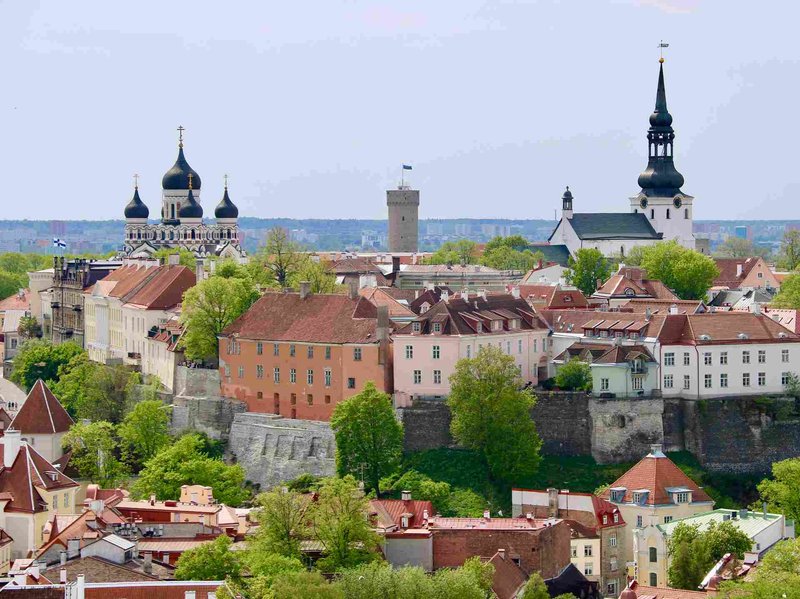
Tallinn
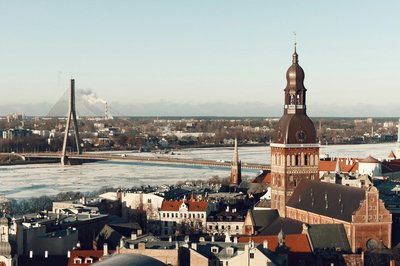
Riga
Travellers from all over Europe compare Tallinn and Riga because they are the two Baltic capitals easiest to reach on low-cost flights, both with a UNESCO-listed historic centre and only 310 km between them.If you have 3-5 days, you often wonder whether to pick one or visit both.The key differences: Tallinn is more compact, more Nordic and more expensive (average budget €120-150 a day), with an almost intact medieval Old Town and Helsinki just 2 hours away by ferry.Riga is larger and cheaper (€95-120 a day), famous for about 800 Art Nouveau buildings, the Central Market and the beaches of Jūrmala, 25 km away.In this guide you will compare 12 criteria with prices in euros, temperatures, distances and travel times, from budget to safety and from weather to transport.You will also find a verdict for each type of traveller, a combined itinerary and answers to the most frequently asked questions.
Tallinn vs Riga
| Feature | Tallinn | Riga |
|---|---|---|
| Daily budget | Tallinn is the most expensive capital in the Baltics.A dorm bed costs €22-35, a 3-star hotel in the Old Town €90-140 a night and a 5-star such as the Hotel Telegraaf €200-300. A meal in a mid-range restaurant costs €15-25, a beer €5-6, and a single tram or bus ticket about €2. The daily budget is €60-80 for budget travellers, €120-150 mid-range and over €250 for luxury.The Tallinn Card (about €35-45 for 24 hours) includes transport and dozens of museums, but only pays off if you visit at least three paid attractions a day. | Riga is clearly cheaper than Tallinn.A hostel bed costs €12-22, a 3-star hotel in the centre €65-100 a night, while a 5-star such as the Grand Palace or the Pullman Riga Old Town costs €150-230. A mid-range meal costs €12-20, a pint of local beer €3.50-5, and a single bus, tram or trolleybus ticket about €1.50-2. The daily budget is €45-60 for budget travellers, €95-120 mid-range and over €200 for luxury.For the same level of comfort you save about €25 a day compared with Tallinn.✓ Better |
| Main attractions | The Old Town (UNESCO World Heritage) is the main attraction: free to wander, allow 3-4 hours.On Toompea hill you will find Alexander Nevsky Cathedral (free entry, 20 minutes) and the Kohtuotsa and Patkuli viewing platforms.Climbing the tower of St.Olaf's Church costs about €5 (30 minutes), while the Seaplane Harbour, with the Lembit submarine, costs about €16-18 and takes 2-3 hours.Kadriorg Palace (about €10, 1 hour) is the best side trip.The TV Tower (314 m) offers a 360-degree view over the Gulf of Finland. | The heart is the historic centre (UNESCO), with Riga Cathedral, St.Peter's Church (tower ascent about €9-10, 45 minutes) and the House of the Blackheads (about €8-10, 45 minutes).The real speciality is the Art Nouveau district around Alberta iela and Elizabetes iela, with about 800 Jugendstil buildings you can see for free in 2 hours; the Art Nouveau Museum costs about €9. The Museum of the Occupation of Latvia is free (donations welcome), 1.5 hours.The Central Market, housed in 5 former zeppelin hangars, is an attraction in its own right, and free to enter.✓ Better |
| Food and restaurants | Estonian cuisine is Nordic and rustic: black bread (leib), verivorst (blood sausage with lingonberries), kiluvõileib (sprat open sandwich) and the dessert kama.For traditional dishes go to Leib Resto ja Aed (tasting menu about €40-60) or Vanaema Juures (about €15-22 a meal), while Olde Hansa is a touristy medieval restaurant with dishes at €20-30. Balti Jaama Turg and the Telliskivi district offer street food and fusion cooking at €8-14. A set lunch costs €9-13, dinner in a good restaurant €25-45 per person.The dining scene is more creative and is featured in the Michelin Guide. | Latvian cuisine is simple and hearty: grey peas with bacon (pelēkie zirņi ar speķi), rupjmaize (rye bread), aukstā zupa (cold beetroot soup, in summer) and sklandrausis, a carrot and potato tart.Try Lido, a large Latvian self-service restaurant with dishes at €5-9, and Folkklubs ALA Pagrabs for live music and traditional food.The Central Market is perfect for smoked fish and pastries at €2-5. Lunch costs €8-12, dinner in a good restaurant €18-30 per person.After dinner try the Riga Black Balsam liqueur (about €2-3 a shot). |
| Weather and best time to visit | The climate is cool and maritime.In July highs are about 21-22°C with lows of 13°C and about 18-19 hours of daylight, while in January average temperatures range from -6°C to -1°C with frequent snow.Spring is cold (April 4-9°C), autumn damp (October 4-9°C).The best period runs from late May to August, ideal for the Old Town Days festival (early June) and the white nights of June.In December the Old Town hosts the Christmas market in Town Hall Square, among the most beautiful in Europe.Sea temperature at Pirita reaches 17-19°C in July-August. | Riga has a continental-maritime climate that is slightly warmer in summer.In July highs are about 22-23°C with lows of 13-14°C and about 17-18 hours of daylight, while in January average temperatures range from -5°C to -1°C.April sees 3-10°C and October 5-10°C.The best period is June to September, with the Jāņi night (23-24 June, the solstice) as the signature event.July and August are the rainiest months (about 70-80 mm), so bring a rain jacket.In December the Christmas market in Doma laukums and the winter atmosphere are very evocative.The sea at Jūrmala reaches 18-20°C in summer. |
| Transport and how to get there | Lennart Meri Airport (TLL) is only 4 km from the centre: tram line 4 takes about 15 minutes and costs €2, a Bolt taxi €6-10. Air traffic is more limited (direct flights with Ryanair, airBaltic, Wizz Air and Nordic carriers), but Tallinn is linked to Helsinki by ferries in 2 hours (€20-50 with Tallink, Viking Line or Eckerö).The Old Town is walkable; for Kadriorg and Pirita you need trams and buses (single ticket €2, 24-hour pass about €5-6).There is no metro. | Riga International Airport (RIX), the hub of airBaltic and a Ryanair base, is the largest in the Baltic States and lies 10 km from the centre: bus 22 takes 30-40 minutes and costs about €2, a taxi (Bolt) €12-20. The city is explored on foot, while outer districts are served by trams, buses and trolleybuses (single ticket €1.50-2, 24-hour pass about €5-6).There is no metro.The central station is linked to Jūrmala by trains every 20-30 minutes (about €2-3, 30 minutes) and to Sigulda in about 1 hour.More direct flights means lower airfares and connections to dozens of destinations. |
| Nightlife | Nightlife is concentrated in the Old Town (pubs such as Hell Hunt and medieval venues), the Rotermann area and the creative hub of Telliskivi.The busiest clubs, such as Club Hollywood in the Old Town, close at 4-5 am, with entry at €5-15. A cocktail costs €9-13, a beer €5-6. The Old Town cocktail bars offer a more elegant atmosphere.On summer weekends many Finns arrive from Helsinki, so venues fill up after 10 pm.The scene is stylish and well-curated, but pricier than Riga. | Riga is the queen of cheap nights out in the Baltics.In the Old Town, around Līvu laukums and Kaļķu iela, a pint costs €3.50-5 and a cocktail €7-11. The Skyline Bar, on the 26th floor of the Radisson Blu Latvija, serves cocktails with a view at €10-14, while alternative venues are found in Miera iela and the Kalnciema Quarter.Clubs stay open until 5 am with entry at €5-12. Beware of venues with pushy promoters in the Old Town: always check the price before ordering.On Thursdays, Fridays and Saturdays the area is crowded until late.✓ Better |
| Families with children | Tallinn is very family-friendly.The Seaplane Harbour (about €16-18 for adults) with the Lembit submarine, the Open Air Museum at Rocca al Mare (about €12, 3 hours), the Tallinn Zoo (about €10-12) and the Energy Discovery Centre are great stops.Kadriorg Park has playgrounds and ponds.The Old Town has cobbled streets and stairs, so the lower part is better for strollers; trams are accessible.All trips between the main attractions take 10-25 minutes.Children under 7 travel free on public transport.✓ Better | Riga has fewer interactive museums but plenty of open space.The Riga Zoo in Mežaparks (about €10-12), the Ethnographic Open-Air Museum (about €7-9, 3 hours), the Motor Museum (about €10) and Mežaparks Park are the most popular stops.A 25-minute train ride takes you to Jūrmala with its shallow, sandy beaches and water parks (about €25-35 per person).The historic centre is cobbled and can be tiring with a stroller, while the districts outside the centre are easier.Children under 7 travel free on public transport. |
| Beaches and nature | The nearest beach is Pirita (about 6 km from the centre, 20 minutes by bus), with fine sand and pine woods; Stroomi is about 4 km away.The water is cold (17-19°C at the height of summer) and the swimming season runs from mid-June to August.For nature, Lahemaa National Park lies about 70 km to the east (1 hour by car), with forests, historic manor houses and trails of 3-5 km, while Nõmme and Kadriorg park are great for a walk.A guided excursion to Lahemaa costs €40-70. | Riga wins with Jūrmala, the seaside resort just 25 km away (train €2-3, 30 minutes) with about 33 km of fine white sand, the wooden villas of Majori and Dzintari and Ķemeri National Park (45 km) with boardwalks over the bogs.Vecāķi, a quieter beach, is 12 km from the centre.For hiking, Gauja National Park at Sigulda (about 50 km, 1 hour by train, €3-5) offers castles, caves and a cable car over the river.The sea is 18-20°C in summer and the swimming season runs from June to August.✓ Better |
| Shopping | Shopping is more refined and design-oriented.The main areas are Viru Street, the Katariina Käik passage with artisan workshops, the Rotermann Quarter and the Telliskivi hub with vintage shops.Balti Jaama Turg is the market most frequented by locals.What to bring home: wool sweaters at €60-150, Vana Tallinn liqueur (about €15-20), Kalev marzipan (€3-6), juniper wood and linen items.Shops in the Viru Keskus and Ülemiste shopping centres generally close at 9 pm, and the Old Town is the most expensive place for souvenirs. | The Central Market (5 hangars, over 3,000 stalls, open every day) is the iconic shopping experience: smoked fish, honey, fruit and souvenirs at low prices.What to buy: Riga Black Balsam liqueur (about €12-18), Laima chocolate (€2-5), Baltic amber jewellery (€20-150) and linen textiles.Boutiques of Latvian designers are on Tērbatas iela and Elizabetes iela, while the Origo and Galerija Centrs shopping centres offer international brands.With prices often lower than in Tallinn, Riga is ideal for souvenirs and handicrafts.✓ Better |
| Safety and practical tips | Tallinn is among the safest capitals in Europe.The main risks are pickpockets in the Old Town and on Viru Street in high season, and a few bars with inflated prices: always check the menu.Avoid isolated areas behind the port at night.The emergency number is 112.Use Bolt or metered taxis, never unofficial cabs.Estonia and Latvia use the euro and are part of Schengen.Credit cards are accepted everywhere, even for tiny amounts, and many services are digital.In winter you need non-slip shoes. | Riga is safe in tourist areas but requires a little more care.Watch out for pickpockets at the Central Market and in the Old Town, for bars with inflated prices and pushy promoters and, at night, for the areas around the railway station, Čaka iela and the Maskavas forštate district.Use Bolt or metered taxis and check the fare before the ride.The emergency number is 112, and tap water is drinkable.The euro and Schengen apply here too.In winter icy pavements are the real hazard: wear shoes with good grip. |
| How many days do you need | For Tallinn, 2 days are enough for a quality minimum: the first for the Old Town and Toompea (about 8 hours of sightseeing), the second for Kadriorg, the Seaplane Harbour and Telliskivi.With 3 days you can add Lahemaa (70 km) or a day trip to Helsinki by ferry (2 hours each way).A 2-night weekend is enough to see the main attractions; 4 days are only useful if you add Tartu (185 km, 2.5 hours by bus) or Pärnu.The ideal period for a 3-day stay is May-September. | For Riga, you need 2 days for the historic centre, the Central Market and the Art Nouveau district, but the ideal stay is 3-4 days.The first day covers the Old Town and St.Peter's, the second Alberta iela and the museums, the third a day at Jūrmala (25 km) or Sigulda (50 km), which takes 5-8 hours.With 4 days you can also add Rundāle Palace (about 80 km south, 1 hour 15 minutes by car, entry €10-14), one of the finest Baroque examples in the Baltic States.A short 2-night weekend works here too.✓ Better |
| How to combine the two cities | To get from Tallinn to Riga take the bus (about 4h30-5h, €12-30 with Lux Express, Flixbus or Ecolines) along the Via Baltica with a stop at Pärnu (130 km from Tallinn).Buses leave from Tallinna Bussijaam every 1-2 hours, with wi-fi and power sockets.The direct airBaltic flight takes about 1 hour and costs €40-120. There is no direct train, so the bus remains the best choice.The two cities are about 310 km apart by road: a rental car costs about €35-60 a day, but drop-off in another country carries a surcharge.Booking the bus in advance often saves money. | To go back from Riga to Tallinn, Lux Express buses leave from the Riga International Coach Terminal (Starptautiskā autoosta, next to the Central Market) every 1-2 hours, with journeys of 4h30-5h and fares of €12-30. Alternatively, the airBaltic flight from RIX to TLL takes about 1 hour (€40-120).An excellent solution is an open-jaw air ticket (arrive in Tallinn, return from Riga) so you never have to backtrack.By car you cover about 310 km in 4 hours, stopping at Pärnu for a beach break.At the Estonia-Latvia border there are no border checks thanks to Schengen, so an ID card is enough. |
The Verdict
Choose Tallinn
Tallinn is ideal for those looking for a long weekend of 2-3 days mixing medieval charm and Nordic design, for couples, and for those travelling in summer or in December for the Christmas market.The best period runs from June to August, with temperatures of 21-22°C and 18 hours of daylight.Plan on an average budget of €120-150 a day per person.Quick itinerary: day 1 Old Town and Toompea, day 2 Kadriorg, the Seaplane Harbour and dinner at Telliskivi, day 3 a trip to Lahemaa (70 km) or to Helsinki by ferry (2 hours, €20-50).It is also perfect if you arrive by air and want everything close at hand: from the airport to the centre takes just 15 minutes by tram.
Choose Riga
Riga is the right choice for those who love architecture, markets and cheap nightlife, for groups of friends and for anyone wanting to combine city and sea.The best period runs from June to September, with 22-23°C and the beach at Jūrmala.The average budget is €95-120 a day per person, about €25 less than Tallinn.Quick itinerary: day 1 the Old Town, the Cathedral and the House of the Blackheads, day 2 the Central Market, Alberta iela and Art Nouveau, day 3 Jūrmala (25 km, 30 minutes by train) or Sigulda (50 km, 1 hour by train), with an evening at the Skyline Bar.It is also great if you are short on time, thanks to the lower airfares of airBaltic and Ryanair.