
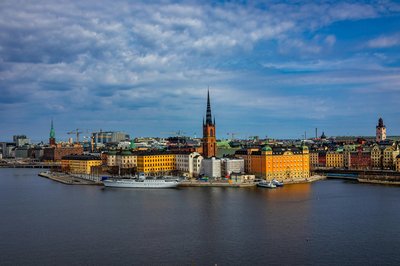
Stockholm
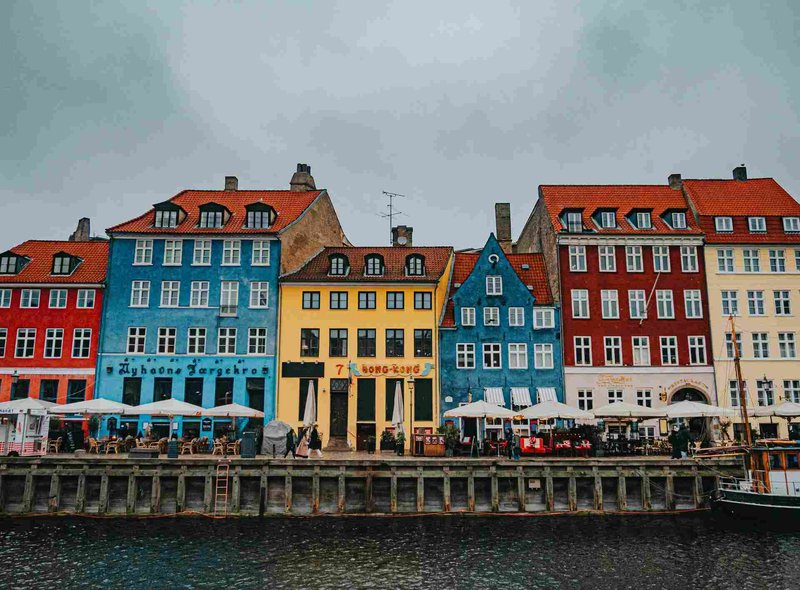
Copenhagen
Anyone planning a trip to Scandinavia almost always faces the same question: Stockholm or Copenhagen? The two capitals are about 520 km apart, connected by 1h15 flights and direct trains, and have similar prices: the daily budget differs by only €10-30.
The differences are clear.Stockholm is a city of islands and water, with the Vasa Museum, Gamla Stan and an archipelago of over 30,000 islands; Copenhagen is more compact, with Tivoli, Nyhavn, 390 km of cycle paths and Michelin-starred cooking.The daily budget is €85-110 in Stockholm and €95-125 in Copenhagen.Here you will find a comparison across 12 criteria, from budget to climate, from transport to nightlife, with prices in euros, temperatures and travel times, plus verdicts by type of traveller, a combined itinerary and answers to the most searched questions, to help you decide in a few minutes where to book your next trip to Scandinavia in 2026.
Stockholm vs Copenhagen
| Feature | Stockholm | Copenhagen |
|---|---|---|
| Daily budget | In Stockholm a low-cost traveller spends €85-110 a day: a hostel dorm bed €30-45, a dagens lunch set lunch at €11-15 and a 24-hour SL ticket at about €16. A 3-star hotel in Norrmalm or Södermalm costs €110-160 a night, so the mid-range budget rises to €170-240 a day, while luxury (Grand Hôtel, dinner at Frantzén) starts from €350.A pint at a pub costs €7-9 and take-away alcohol can only be bought at Systembolaget.On summer weekends hotel rates drop by about 10-20%, because business travellers are away.✓ Better | In Copenhagen the base budget is €95-125 a day: a hostel dorm bed €35-50, a smørrebrød lunch €20-35 and a 24-hour ticket at about €13. A 3-star hotel between Vesterbro and Indre By costs €120-170 a night, the mid-range budget is €190-270 a day and luxury (Hotel d'Angleterre, dinner at Geranium) starts from €400.A pint costs €7-10, but in Netto and Føtex supermarkets a beer costs €1-2. The Nationalmuseet is free, handy for cutting costs on rainy days.Paying by card is the norm everywhere. |
| Main attractions | The heart of the visit is the Vasa Museum (about €18, 2 hours), which holds the 1628 galleon recovered intact.Next come Gamla Stan (free, 1.5-2 hours) with Stortorget and the Royal Palace (about €17, 1.5 hours), then Skansen (about €20, 3 hours), the world's oldest open-air museum, opened in 1891.Pop fans can add ABBA The Museum (about €27, 2 hours).All the sights are concentrated on Djurgården and in the old town, 15-25 minutes' walk from one another, so two days is enough to see everything.✓ Better | Copenhagen's highlights are Tivoli (admission about €21, 3-4 hours), the amusement park opened in 1843, and the colourful canal of Nyhavn (free, 1 hour).Rosenborg Castle (about €19, 1.5 hours) houses the Danish Crown Jewels, while the tower of Christiansborg offers the highest view of the city, free, at 106 metres.The Nationalmuseet is free and takes 2-3 hours; the Little Mermaid is a quick 20-minute stop.Here the big sights are less spectacular than the Vasa, but more varied. |
| Food and restaurants | Swedish cuisine is best tasted with köttbullar (meatballs with lingonberry sauce) at Meatballs for the People in Södermalm, about €20-25 a plate, or at the historic Den Gyldene Freden in Gamla Stan, open since 1722.From Monday to Friday the dagens lunch costs €11-15 with salad, bread and coffee.For a standing bite head to Östermalms Saluhall, where toast Skagen costs €15-20. Don't miss a fika with a kanelbulle: coffee and a pastry cost about €8-9. An average dinner costs €30-50 per person.Frantzén is the city's three-star restaurant. | Copenhagen is the gastronomic capital of the North: the signature dish is smørrebrød (rye bread with herring, egg or roast beef) at Aamanns or Schønnemann (since 1877), at €8-14 a piece.The Torvehallerne market at Nørreport brings together over 60 stalls for lunches from €10-18, while a street hot dog (pølse) costs €5-7. An average dinner costs €40-60 per person.For fine dining the benchmark is Geranium, three Michelin stars, with a tasting menu above €400. The bakery scene, with names such as Hart Bageri, is among the best in Europe.✓ Better |
| Climate and best time to visit | Stockholm has a continental-Baltic climate: winter runs from -5°C to 0°C with only 6 hours of daylight in December, spring from 2 to 10°C, summer from 13°C to 22°C and autumn from 4 to 11°C.In June the sun stays up for about 18 hours, with the Midsommar festival on the weekend closest to the 21st.The best months are June-August for the archipelago and May-September for lower prices.Snow lovers can aim for January-February, with frozen lakes and ice skating at Kungsträdgården. | Copenhagen's winter is milder: from 0°C to 4°C, with about 7 hours of daylight in December; spring runs from 3 to 12°C, summer from 13°C to 22°C and autumn from 6 to 13°C.In June you get about 17 hours of daylight.The best time is May-September, when a swim at Havnebadet is possible with water at around 18-20°C.The sea wind is constant: always pack a windproof shell, even in July.In December the Christmas markets at Tivoli (from mid-November) are well worth a visit. |
| Transport and how to get there | Arlanda (ARN) airport is 40 km from the centre: the Arlanda Express takes 20 minutes to Stockholm Central and costs about €30, the Flygbussarna bus takes 40 minutes for about €12-14, and a fixed-fare taxi costs about €60-70. In the city the tunnelbana (T-bana) has 100 stations and 3 main lines, famous for decorated stations such as Kungsträdgården.The 24-hour SL ticket costs about €16 and the 72-hour one about €31, also valid on ferries to Djurgården.Distances are bigger: the centre spreads over 14 islands. | Kastrup (CPH) airport is only 8 km from the centre: the M2 metro reaches Nørreport in 15 minutes for about €5, a taxi costs €35-45. The metro is automated and runs 24 hours a day (M1, M2, M3 Cityringen and M4) and the 24-hour ticket costs about €13. The real weapon is the bike: over 390 km of cycle paths and rental from about €15-25 a day.The centre can be covered on foot or by bike in 10-20 minutes.Both the airport and København H station are very close to the centre, a clear advantage over Stockholm.✓ Better |
| Nightlife | In Stockholm the evening splits between Södermalm (bars on Götgatan, Mosebacke and SoFo, beer €7-9) and Stureplan, where clubs such as Spy Bar charge about €15-23 at the door and enforce a strict dress code.Bars close between 1:00 and 3:00, clubs at 5:00.Strong alcohol can only be bought at Systembolaget, closed on Sundays and after about 15:00 on Saturdays.For cocktails, Tak and Mosebacke Etablissement offer city views.The mood is elegant and more formal, with evenings that start around 22:00. | In Copenhagen you go out in Vesterbro, in the Kødbyen (the former meatpacking district) with bars such as Jolene and Warpigs, and in Nørrebro, around Jægersborggade and Sankt Hans Torv.A pint costs €7-10, but supermarket purchases make street drinking very cheap.The live music venue is Mojo Blues Bar (since 1991), and for techno Culture Box is open until 6:00.Many clubs don't charge entry before midnight.The atmosphere is more informal and cheaper at the door than at Stureplan.✓ Better |
| Families with children | In Stockholm children love Junibacken (the world of Pippi Longstocking, about €22 for adults), Skansen with bears, wolves and moose (about €20 for adults) and the Vasa Museum (free under 18).At Gröna Lund, the amusement park on Djurgården open from April to September, admission costs about €13-15 plus rides.Children under 7 travel free on SL services and the main T-bana stations have lifts.Djurgården is reached in 10 minutes by ferry from Slussen.The distances between museums, however, call for careful planning with little ones. | In Copenhagen the first stop is Tivoli (admission about €21, free under 8), with historic rides and the 1914 wooden roller coaster.Experimentarium (interactive science in Hellerup, about €33), the Copenhagen Zoo (about €30) and Den Blå Planet, Denmark's largest aquarium, reachable in 10 minutes on the M2 metro to Kastrup, are also winners.The metro is automated and step-free, ideal with a stroller.For brick fans, the LEGO store on Strøget is a free stop; Legoland Billund, by contrast, is 260 km away. |
| Beaches and nature | The strong point is the archipelago: over 30,000 islands reachable by boat.Fjäderholmarna is 25 minutes from Nybroplan, Vaxholm about 50 minutes and Sandhamn about 2 hours.In the city there is the Royal National City Park (Ekoparken), the first in the world, which includes Djurgården 3 km from the centre and Haga.In summer you can swim in lakes such as Långholmen and Smedsudden, with water at 19-21°C.The UNESCO castle of Drottningholm, 11 km away, can be reached by boat in about 50 minutes.✓ Better | Copenhagen has the advantage of having the sea and beaches in the city: Amager Strandpark (5 km, 4.6 km of coastline, 10 minutes by metro), Islands Brygge Havnebadet (free harbour swimming, 1.5 km from the centre) and Bellevue at 10 km.For nature, Dyrehaven in Klampenborg (12 km) is home to about 2,000 deer and is reached in 20 minutes by train.Outside the city, Kronborg in Helsingør (46 km, 46 minutes) and the Louisiana museum in Humlebæk (35 km) make great day trips.Still, nothing compares to the Swedish archipelago. |
| Shopping | The main street is Drottninggatan, pedestrianised for about 1.2 km, with H&M and Åhléns, while NK (Nordiska Kompaniet) is the luxury department store.For design go to Svenskt Tenn (Josef Frank textiles) and the shops of Biblioteksgatan, where you'll find Acne Studios and Filippa K.In SoFo (Södermalm) there are vintage shops, record stores and independent ceramics.The classic souvenir is the Dala horse (€10-30), followed by Orrefors glass.VAT is 25%, but non-EU tourists can claim a tax-free refund.Many shops also open on Sundays, usually from 11:00 to 17:00. | The most famous area is Strøget, about 1.1 km long and partly pedestrianised, where you'll find Magasin du Nord and Illum.For Danish design go to Illums Bolighus and HAY House, while Royal Copenhagen sells porcelain with its characteristic blue pattern, from about €40 a piece.In Nørrebro, Jægersborggade is full of independent shops, and for fashion Ganni is the best-known local brand.On summer Saturdays there is the Frederiksberg flea market.VAT is 25% in Denmark too.Nordic design is broader and more accessible here.✓ Better |
| Safety and practical tips | Stockholm is very safe in tourist areas.Pickpocketing is concentrated at T-Centralen, on the Arlanda Express and at Stortorget in Gamla Stan.Some suburbs far from tourist routes have problems with organised crime, but they are not on any itinerary.In Sweden you pay almost only by card or Swish: many venues do not accept cash.The tap water is excellent and free.The emergency number is 112.In winter icy crossings call for non-slip shoes, especially in Gamla Stan. | Copenhagen is one of the safest capitals in Europe.Pickpocketing affects Strøget, Nyhavn, Tivoli and København H station.In Christiania (Pusher Street) photography is forbidden and you should not buy cannabis, which is illegal in Denmark.The biggest hazard is bicycles: never walk on the cycle paths (the red markings show where they run), and check for traffic before stepping off the pavement.Card payment is accepted almost everywhere and the tap water is drinkable.The emergency number is 112. |
| How many days do you need | In Stockholm you need 2 days at a minimum: the first for Gamla Stan, the Royal Palace and Stadshuset, the second for the Vasa Museum and Skansen on Djurgården.The ideal is 3-4 days, to add an archipelago trip to Vaxholm or Drottningholm and the Södermalm district, with the view from Fjällgatan.With 4 days there is room for Fotografiska (about €22) and ABBA The Museum too.More than 5 days are only needed for a real archipelago excursion or a trip to Uppsala (70 km, 40 minutes by train). | In Copenhagen 2 days are enough for the essentials: Nyhavn, Rosenborg, Christiansborg and Tivoli in the evening.The ideal is 3 days, to add the Vesterbro and Nørrebro districts, Christianshavn with the tower of the Vor Frelsers Kirke and an afternoon at a museum.With 4 days you can fit in a trip to Roskilde (30 km, 25 minutes by train, Viking Ship Museum) or to Helsingør, with Kronborg.The city is more compact than Stockholm: it takes 15 minutes on foot from the centre to Vesterbro, so in 3 days you see almost everything without rushing, even at a relaxed pace. |
| How to combine the two cities | From Stockholm to Copenhagen it is about 520 km as the crow flies and about 650 km by rail.The direct SJ train takes about 5 hours 15-30 minutes, with tickets from about €45 if booked in advance up to €110 at the last minute.The plane (SAS and other airlines) takes about 1 hour 15 minutes and costs €50-150, plus €30 for the Arlanda Express.The train leaves from Stockholm Central and arrives at København H, right in the centre, crossing the Øresund Bridge.It is best to start in Stockholm if you arrive from the north and continue to Copenhagen. | From Copenhagen to Stockholm the journey is identical, but it is better to finish in Copenhagen if your return flight leaves from Kastrup: the airport is 15 minutes from the centre for just €5. The SJ train has several direct services a day of about 5 hours 15 minutes; book 2-3 months ahead for the lowest prices.The Øresund Bridge (8 km) also leads to Malmö in 35 minutes.If you are travelling from Italy you can book an open-jaw flight (arriving in Stockholm and returning from Copenhagen) and then move between the cities by train. |
The Verdict
Choose Stockholm
Stockholm is the right choice for anyone looking for water, history and nature in a single city: couples and friends aged 25 to 50, or families with children over 6 who will enjoy Skansen and Junibacken.The ideal period is June-August, with temperatures up to 22°C and about 18 hours of daylight in June.Budget €170-240 a day with a 3-star hotel.Quick 3-day itinerary: day 1 Gamla Stan and Stadshuset, day 2 Vasa Museum and Skansen on Djurgården, day 3 a boat to Vaxholm (about 50 minutes) with a seafood lunch and a swim in the archipelago.For evenings pick the venues of Södermalm, where a full dinner costs €30-50.
Choose Copenhagen
Copenhagen suits those who want food, design and a relaxed atmosphere: foodies, couples, architecture fans and long-weekend travellers, because the airport is only 15 minutes from the centre.The best period is May-September, with 15-22°C, while in December there is Tivoli with its Christmas markets.The mid-range budget is €190-270 a day.3-day itinerary: day 1 Nyhavn, Rosenborg and Christiansborg, day 2 Torvehallerne, smørrebrød at Aamanns and Vesterbro, day 3 Christianshavn by bike (about €15-25) and Tivoli in the evening, or a day trip to Kronborg in Helsingør (46 km, 46 minutes by train).To sleep, aim for Vesterbro or Indre By, where a 3-star hotel costs €120-170 a night.