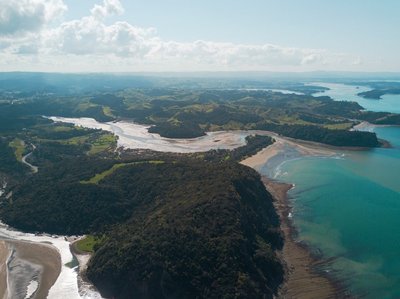
10 Experiences in the Aeolian Islands

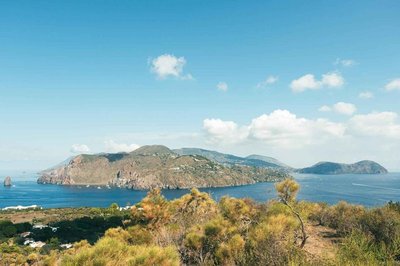
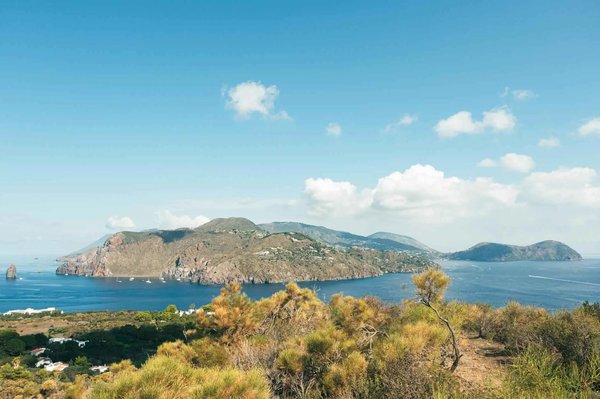
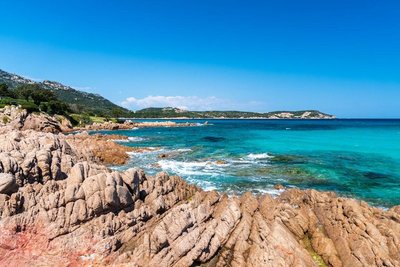
Panoramic view of the Aeolian Islands with rocky coast, blue sea, and Mediterranean vegetation.
Written by travel experts
Regularly updated
Verified on-site

The Aeolian Islands rise from the Tyrrhenian Sea like a geological textbook written in basalt, pumice, and obsidian. This volcanic archipelago, positioned roughly 40 kilometers north of Sicily, has drawn settlers since Neolithic obsidian traders arrived around , and it earned UNESCO World Heritage status in for the scientific importance of its ongoing volcanic processes. Seven inhabited islands make up the chain: Lipari, the largest and most developed; Vulcano, whose sulfurous fumaroles gave volcanology its name; Stromboli, erupting in rhythmic bursts every 15 to 20 minutes; Salina, the greenest, producing the celebrated Malvasia dessert wine; glamorous Panarea; and the remote, car-free outposts of Alicudi and Filicudi, where mule tracks replace roads. Beyond the geology, the Aeolians sustain a living Mediterranean culture of caper harvests, pumice quarrying, and fishing traditions stretching back millennia. What follows are ten experiences that reveal the full breadth of this extraordinary archipelago, from crater-rim hikes to candlelit seafood dinners overlooking the Sciara del Fuoco.

Top Things to Do in Isole Eolie

Hike to Stromboli's Crater
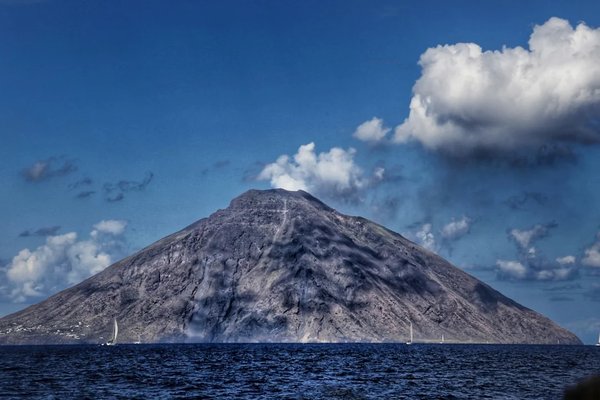
View of Stromboli volcano with blue sky and clouds, sailboats in the foreground.

Watch lava erupt beneath the stars from 924 meters.

Few volcanoes on Earth allow you to witness eruptions at such close range. Stromboli has been in near-continuous activity for at least , a record that earned it the nickname "Lighthouse of the Mediterranean" from ancient Greek mariners who navigated by its glow. The phenomenon is so consistent that volcanologists coined the term "Strombolian eruption" to describe its rhythmic bursts of incandescent lava every 15 to 20 minutes.

The guided ascent begins in the late afternoon from Stromboli village, climbing 924 meters through Mediterranean scrub, volcanic scree, and increasingly barren lava fields. The trail is demanding, roughly three hours up, and since regulations require a certified alpine guide for the final 400 meters to the crater terrace. At the summit, the group settles on a ridge overlooking the active vents. As darkness falls, each eruption paints the sky in orange and red, molten bombs arcing against the stars before tumbling down the Sciara del Fuoco into the sea.

Bring a headlamp, long trousers, sturdy ankle-high boots, and at least two liters of water. The descent follows a different path down a steep ash slope, arriving back in the village around 11 PM, in time for a late-night granita at one of the harbor bars.
Stromboli, Aeolian Islands, Italy
Guided summit hikes depart daily in the late afternoon from April to October; winter departures are weather-dependent. Advance booking required.
Guided summit hike from €30 to €50 per person depending on group size and season.

Swim in Vulcano's Thermal Waters

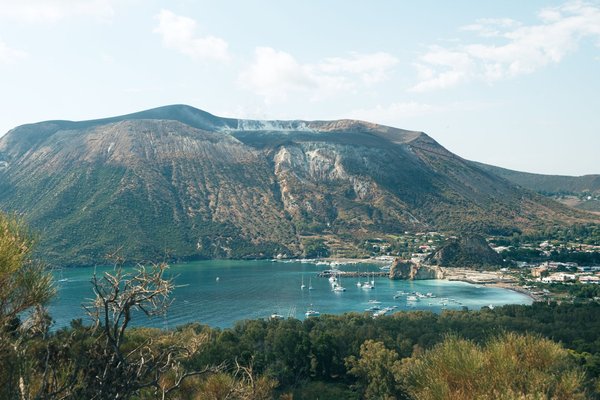
Panoramic view of Vulcano Island with the crater and harbor, part of the Aeolian Islands.

Soak in volcanic mud pools beside the Fossa crater.

The island of Vulcano gave its name to every volcano on Earth; the Romans believed the god Vulcan kept his forge beneath this very crater. Today the island's most accessible geological spectacle is the open-air mud pool at Pozza dei Fanghi, a shallow basin of warm, sulfurous clay just steps from the Porto di Levante ferry dock. Bathers coat themselves in the grey-green mud, rich in sulfur, silicon, and other minerals, then rinse in the adjacent sea where underwater fumaroles create pockets of startlingly hot water.

The thermal tradition here is ancient. Pliny the Elder recorded therapeutic bathing on Vulcano in the , and the island's hot springs attracted visitors throughout the Middle Ages. The current pool formed after the last major eruption in altered the hydrothermal system, creating the distinctive bubbling vents visible along the shoreline today.

A practical warning: the sulfur stains swimwear permanently and the hydrogen-sulfide smell lingers on skin for hours. Wear an old bathing suit you do not mind discarding, and avoid the mud if you have open cuts or silver jewelry. After your soak, walk ten minutes south to the Spiaggia delle Fumarole, a black-sand beach where thermal vents warm the sand underfoot and the seabed releases streams of tiny bubbles.
Pozza dei Fanghi, Porto di Levante, Vulcano, Aeolian Islands
Open daily, typically from 7:00 AM to sunset. Seasonal closures may apply; check locally before visiting.
Entrance approximately €3–5 per person. Facilities (showers, lockers) cost extra.

Boat Tour of Sea Caves

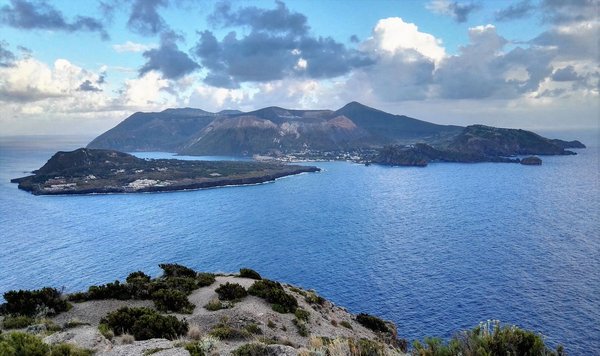
Panoramic view of the Aeolian Islands with volcanic landscape and blue sea under a partly cloudy sky.

Glide through grottoes carved by millennia of waves.

The volcanic geology of the Aeolian Islands has created a coastline riddled with sea caves, arches, and rock stacks that are accessible only by water. A half-day or full-day boat tour, departing from Lipari or Salina, threads through some of the Mediterranean's most dramatic coastal scenery. The Grotta del Cavallo on Vulcano opens into a cathedral-like chamber where light refracts off submerged lava formations, while the Grotta Azzurra near Lipari's western shore fills with an electric blue glow when the midday sun penetrates its narrow entrance.

These caves were well known to ancient navigators. Bronze Age pottery fragments have been recovered from several caverns, and Greek colonists used the sheltered inlets as emergency harbors during storms. When UNESCO inscribed the archipelago in , the submarine volcanic features visible from these caves were cited as a key reason for the designation.

Most tours include swimming stops at otherwise inaccessible coves, snorkeling over volcanic reefs teeming with damselfish, and a pass beneath the Faraglioni di Lipari, twin sea stacks rising 50 meters from the water. Operators typically provide masks and snorkels; bring reef-safe sunscreen and a waterproof phone case. Tours running clockwise around Lipari catch the afternoon light in the western caves, which produces the most vivid color effects.
Departures from Lipari (Marina Corta) and Salina (Santa Marina)
Half-day tours typically depart at 9:30 AM and 2:00 PM from May to October. Limited winter availability.
From €25 for a half-day to €60 for a full-day tour with lunch stop.

Visit the Archaeological Museum of Lipari
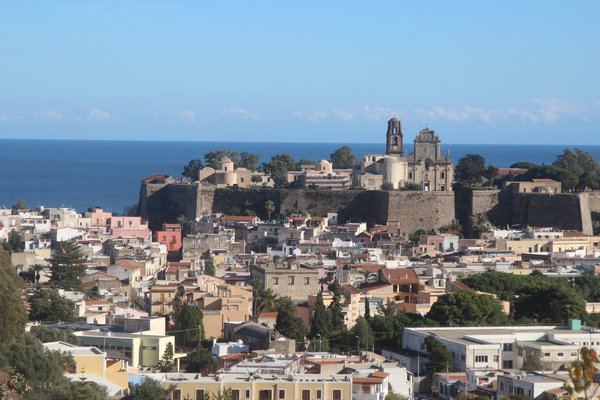
Panoramic view of Lipari's historic center with the castle and sea in the background, Aeolian Islands.

Trace 6,000 years of island civilization in a clifftop castle.

Housed inside the fortified Castle of Lipari, a citadel whose walls incorporate Greek, Roman, Norman, and Spanish masonry, the Museo Archeologico Regionale Eoliano ranks among the finest archaeological collections in the Mediterranean. Its holdings span from Neolithic obsidian workshops dating to around through Greek theatrical masks, Roman amphorae, and medieval ceramics, all excavated from the Aeolian Islands and surrounding seabed.

The museum's obsidian gallery is particularly significant. Lipari was one of the ancient world's primary sources of this volcanic glass, and the island's obsidian has been found at archaeological sites as far away as mainland France and the Dalmatian coast, evidence of a trade network operating as early as the . Another highlight is the collection of Greek theatrical masks from Lipari's necropolis, the largest such assemblage ever found outside mainland Greece.

The underwater archaeology section displays anchors, cargo, and hull fragments from ancient shipwrecks along the archipelago's treacherous straits, demonstrating the islands' role as both a navigation hazard and a crucial waystation on Mediterranean trade routes. Allow at least two hours, and visit the outdoor archaeological park behind the cathedral, where stratified excavation trenches reveal occupation layers reaching back six millennia.
Via del Castello, Lipari, Aeolian Islands
Open daily from 9:00 AM to 6:30 PM (last entry 6:00 PM). Reduced hours on Sundays and holidays.
Entrance €6 per person. Reduced rates for EU citizens under 25.

Hiking in Salina

Panoramic view of the Aeolian Islands with Salina, green hills, and blue sea under a clear sky.

Summit the archipelago's highest peak through fern forests.

Salina is the greenest of the Aeolian Islands, a distinction owed to its twin volcanic peaks that trap moisture-laden clouds and sustain dense forests of chestnut, oak, and the giant ferns that give Monte Fossa delle Felci its name. At 962 meters, it is the archipelago's highest point and the centerpiece of a nature reserve established in to protect the island's unique microclimate and endemic plant species.

The main trail begins in Valdichiesa, the saddle village between Salina's two volcanoes, and climbs steeply through Mediterranean scrub into a canopy of fern-draped forest. The geological history underfoot is layered: Fossa delle Felci last erupted roughly , and its slopes show alternating layers of ash, pumice, and hardened lava flow. Near the summit, the forest thins and the panorama opens to a 360-degree view encompassing all seven Aeolian Islands, the northeast coast of Sicily, and on clear days, the snow-capped peak of Mount Etna.

Salina's other great claim is Malvasia delle Lipari, a golden dessert wine produced from grapes sun-dried on reed mats. After descending, reward yourself with a glass at one of the family-run cantinas in Malfa. The island also served as the principal filming location for Michael Radford's film Il Postino, and the house used by the fictional Pablo Neruda still stands in Pollara.
Monte Fossa delle Felci, Salina, Aeolian Islands
Trail accessible year-round. Allow 3 to 4 hours for the round trip from Valdichiesa.
Free access. Optional guided hikes available from local associations for approximately €20 per person.

Malvasia Tasting in Salina

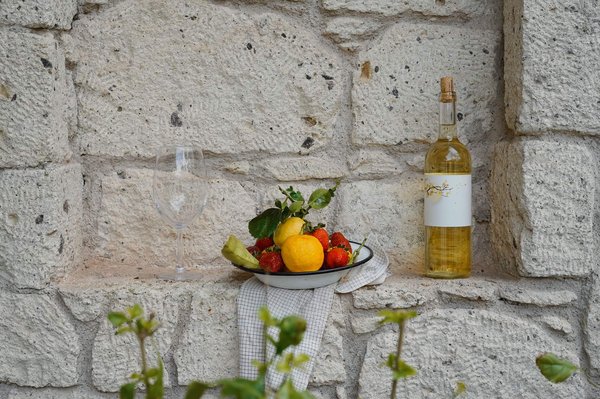
Malvasia wine bottle, empty glass, and fresh fruit against a rustic stone background.

Sip a golden dessert wine with 2,500 years of heritage.

Malvasia delle Lipari is one of Italy's oldest continuously produced wines, its origins traced to Greek colonists who planted the first vines on Salina around the . The variety nearly vanished in the phylloxera epidemic that devastated Aeolian vineyards, reducing the island's population from 10,000 to fewer than 2,000 as families emigrated to Australia and the Americas. A handful of stubborn growers kept the tradition alive, and today roughly a dozen producers on Salina craft this amber-colored passito from hand-harvested Malvasia grapes dried for two weeks on traditional cannizzi (cane mats).

The leading estates offer tastings on covered terraces overlooking the sea. Hauner, founded by the Brescian artist Carlo Hauner who moved to Salina in the and almost single-handedly revived Malvasia production, pours its flagship passito alongside a dry white and a caper-infused olive oil. Fenech and Virgona are smaller family operations where the winemaker often conducts tastings personally, walking visitors through the vineyard and the drying loft.

Malvasia pairs beautifully with almond pastries, aged pecorino, or the local cucunci (mature caper berries pickled in sea salt). A glass on the terrace at sunset, watching the light catch the sea between Salina and Lipari, is one of the Aeolian Islands' quietest but most memorable pleasures.
Wineries in Malfa, Lingua, and Santa Marina, Salina, Aeolian Islands
Most wineries open for tastings from 10:00 AM to 7:00 PM, May through October. Advance booking recommended.
Tasting sessions from €15 to €30 per person, typically including 3 to 4 wines and local accompaniments.

Pollara Beach in Salina

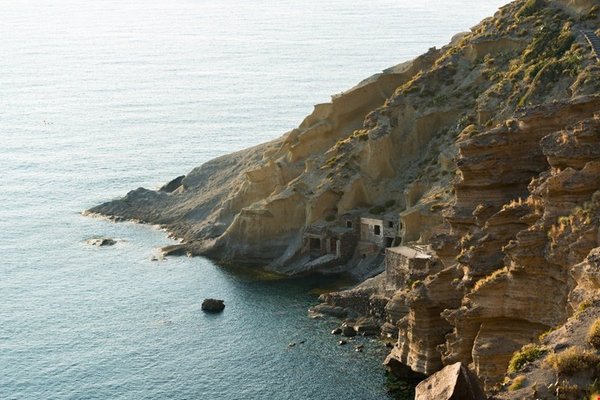
Pollara Beach in Salina with rocky cliffs and coastal structures, part of the Aeolian Islands.

A half-crater bay immortalized in <em>Il Postino</em>.

Pollara occupies the collapsed western half of an ancient volcanic crater on Salina, creating a dramatic semicircular bay framed by near-vertical cliffs of stratified pumice and tuff rising 100 meters above the water. The beach gained international recognition as a filming location for Il Postino (), the bittersweet film about a fictional friendship between a Salina postman and the Chilean poet Pablo Neruda. The house used in the film, perched on the cliff above, remains a pilgrimage site for cinephiles.

Access is via a steep footpath descending from the village of Pollara through terraced caper fields. The beach itself is a narrow strip of pebbles and boulders at the base of the cliffs, with the sea deepening rapidly to a vivid cobalt blue. Snorkeling along the cliff wall reveals underwater arches and volcanic rock formations colonized by sea fans and octopuses. A natural stone arch on the southern end of the bay, visible only from the water, is one of the most photographed features in the archipelago.

Timing matters at Pollara. The beach faces due west and receives direct sun only in the afternoon, making it ideal for a late visit culminating in what locals claim is the finest sunset in the Aeolian Islands. Arrive by 4 PM in summer to secure a spot on the rocks, and bring water and snacks since there are no facilities on the beach itself.
Pollara, western coast of Salina, Aeolian Islands
Free access year-round. Best visited in the afternoon for sunlight and sunset views.
Free. No facilities; bring your own water and supplies.

Fresh Seafood Dinner

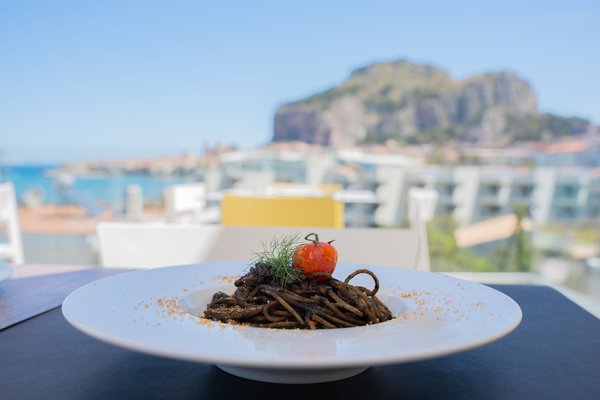
Seafood pasta dish with coastal background, perfect for Aeolian Islands guide and fresh seafood dinner.

Dine on the day's catch at a harbor-side trattoria.

Aeolian cuisine is built on whatever the fishing boats bring in that morning, and the best way to experience it is at a harbor-side trattoria where the menu changes daily. The archipelago's signature seafood dishes reflect centuries of Sicilian, Greek, and Arab culinary influence. Pasta con le sarde (sardines with wild fennel, pine nuts, and raisins) dates to the Arab period around the , while totani ripieni (squid stuffed with breadcrumbs, capers, and olives) is a technique passed down through Lipari fishing families for generations.

The local specialties worth seeking out include pesce spada alla ghiotta, swordfish braised with tomatoes, capers, and Salina's famous olives, and ricci di mare (sea urchin), served raw on bruschetta or tossed with spaghetti when in season from November to April. Capers from Salina carry a DOC denomination and appear in nearly every dish, from the insalata eoliana to the caper-and-tomato bruschetta served as an aperitivo.

For the full experience, choose a restaurant on Lipari's Marina Corta or Salina's Lingua waterfront, order the antipasto del pescatore (fisherman's platter), and pair it with a chilled Salina bianco. Finish with granita di mandorle and a brioche, the traditional Aeolian breakfast repurposed as dessert. Budget around €30 to €45 per person for a three-course dinner with wine.
Waterfront restaurants across Lipari, Salina, and Panarea
Dinner service typically from 7:30 PM to 10:30 PM. Reservation recommended in July and August.
Average €30–50 per person for a full dinner with wine.

Explore Alicudi and Filicudi
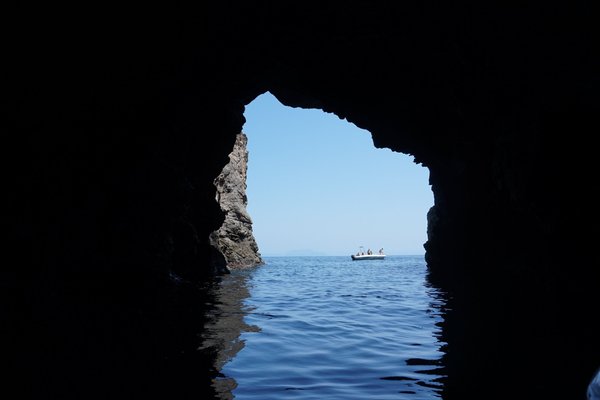
View of a sea cave with a boat on the water near the Aeolian Islands, Alicudi and Filicudi.

Step into car-free islands where mule tracks replace roads.

Alicudi and Filicudi are the westernmost and least developed of the Aeolian Islands, places where daily life unfolds at a rhythm closer to the than the present day. Alicudi has no roads, no cars, and no motorbikes; supplies arrive by boat and are carried up the mountainside by mule. Fewer than 100 permanent residents live on terraced slopes connected by ancient stone staircases, and the silence at night is broken only by the sea.

Filicudi is slightly more accessible but equally atmospheric. Its prehistoric village at Capo Graziano, perched on a promontory above the sea, was inhabited from the early (around 2000 BC) through the Greek period and is one of the archipelago's most important archaeological sites. Below the village, the Grotta del Bue Marino (Monk Seal Cave) extends 30 meters into the cliff face, its name recalling the Mediterranean monk seals that sheltered here until hunting drove them to extinction in these waters during the .

A day trip combining both islands is possible by hydrofoil from Lipari, but spending a night on Filicudi, in one of its handful of family-run guesthouses, transforms the visit entirely. Without the pressure of a return ferry, you can hike to the summit of Filo dell'Arpa at 774 meters, swim off the deserted Spiaggia delle Punte, and watch the sun set over open ocean with nothing between you and the coast of Tunisia.
Alicudi and Filicudi, western Aeolian Islands
Hydrofoils from Lipari run 1 to 3 times daily depending on season. Check Siremar and Liberty Lines schedules.
Hydrofoil ticket approximately €15–25 each way from Lipari.

Shopping for Handcrafted Ceramics

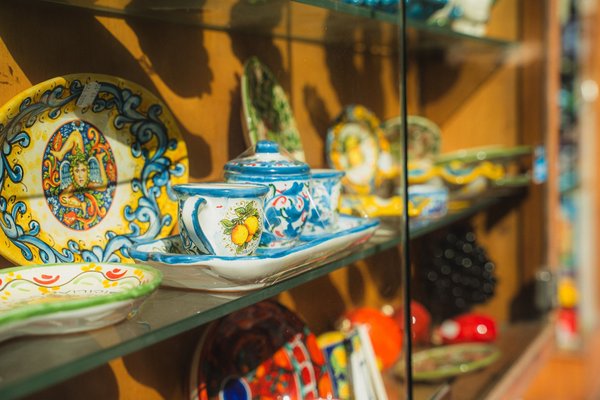
Colorful handcrafted ceramics on display, typical of the Aeolian Islands, featuring traditional patterns and vibrant details.

Bring home hand-painted pottery from Lipari's artisan workshops.

Ceramic production in the Aeolian Islands traces its roots to the Neolithic period, when early inhabitants shaped clay vessels for storing obsidian, grain, and fish. The tradition evolved through Greek colonization, which introduced the red-figure painting techniques visible in the theatrical masks now displayed in Lipari's archaeological museum. Today a handful of artisan workshops in Lipari and Salina maintain a craft lineage stretching back thousands of years, producing hand-thrown and hand-painted ceramics that draw on both ancient motifs and contemporary Mediterranean design.

The best shops cluster along Lipari's Corso Vittorio Emanuele and the alleys branching off toward the castle. Look for the characteristic Aeolian palette: cobalt blue, terracotta orange, and the yellow-green of Salina's caper flowers. Plates decorated with volcanic patterns, fish, and stylized pumice stones make distinctive souvenirs, while functional pieces like olive-oil cruets and espresso cups decorated with traditional geometric borders serve as daily reminders of the islands.

Prices reflect the handmade nature of the work; a medium decorative plate runs €25 to €60 depending on complexity. Several artisans welcome visitors into their workshops, where you can watch the entire process from wheel-throwing to the final kiln firing. Pieces purchased directly from the maker are often signed and dated, adding provenance to a souvenir that connects modern craft to the archipelago's deep ceramic heritage.
Artisan workshops along Corso Vittorio Emanuele, Lipari, Aeolian Islands
Most shops open from 10:00 AM to 1:00 PM and 5:00 PM to 9:00 PM in summer. Reduced hours off-season.
Handmade pieces from €15 for small items to €60+ for decorative plates.

Recommended Itineraries in Isole Eolie

Three Days in Lipari and Vulcano

Morning — Arrive in Lipari by hydrofoil from Milazzo and settle into your accommodation in the town center. Walk the Corso Vittorio Emanuele to Marina Corta, then climb to the Castle of Lipari for a first orientation view of the archipelago. Spend the afternoon at the Archaeological Museum, focusing on the obsidian gallery and the Greek theatrical masks.

Morning — Take the 20-minute ferry to Vulcano. Start with the sulfur mud baths at Pozza dei Fanghi, then rinse in the bubbling thermal waters along the shoreline. After lunch, hike to the rim of the Gran Cratere (roughly 1 hour up) for views stretching from Lipari to the Sicilian coast and, on clear days, to Etna. Return to the port area for a swim at the Spiaggia delle Fumarole, where underwater vents warm the sand.

Morning — Book a half-day boat tour circling Lipari's western coast: the Grotta Azzurra, the Faraglioni, and the pumice quarries at Porticello, where white cliffs meet turquoise water. Spend the afternoon browsing Lipari's ceramic shops and close the trip with a seafood dinner at Marina Corta as the lights of Vulcano flicker across the strait.

Romantic Weekend in Panarea

Morning — Arrive on Panarea, the smallest and most exclusive of the inhabited Aeolian Islands. Drop your bags at a boutique hotel in San Pietro and rent a golf cart (the only motorized transport allowed) to explore. Walk to the Bronze Age village at Capo Milazzese, a clifftop archaeological site overlooking the sea, then descend to Cala Junco, a natural rock pool with emerald water sheltered by lava walls.

Morning — Hire a small boat and circumnavigate the island, stopping at the islet of Basiluzzo to swim over submerged Roman ruins visible in the clear water. Continue to the fumarolic vents on the eastern shore where bubbles rise from the volcanic seabed. Return for a long lunch on a terrace in Drautto, then spend the afternoon at Spiaggia della Calcara watching Stromboli smoke on the horizon.

End each evening with an aperitivo at one of Panarea's candlelit bar-terraces, where the conversation is quiet and the view of Stromboli's nighttime eruptions across the water provides all the entertainment you need.

Seven Days Exploring the Aeolians

Morning — Days 1 and 2: Base yourself in Lipari. Visit the Archaeological Museum, explore the castle citadel, and take the boat tour of the western sea caves. On day 2, ferry to Vulcano for the mud baths, the crater hike, and the black-sand beach.

Morning — Days 3 and 4: Move to Salina. Hike Monte Fossa delle Felci from Valdichiesa (allow 4 hours round trip), then spend the afternoon on a Malvasia tasting at Hauner or Fenech. Day 4, head to Pollara beach for swimming and snorkeling inside the half-crater bay, followed by sunset with a glass of wine above the cliffs.

Morning — Day 5: Take the hydrofoil to Filicudi. Explore the Bronze Age village at Capo Graziano, swim into the Grotta del Bue Marino, and if time allows, continue to Alicudi for a few hours of silent walking on its mule-track paths.

Morning — Day 6: Ferry to Stromboli. Spend the morning on the black-sand beach at Ficogrande, then join the late-afternoon guided summit hike. Watch the eruptions at nightfall from the crater terrace and descend by headlamp.

Morning — Day 7: Return to Lipari for final shopping and a farewell seafood lunch at Marina Corta before the hydrofoil back to Milazzo.

When to Visit

When to Visit the Aeolian Islands

The Aeolian Islands sit in the southern Tyrrhenian Sea with a mild Mediterranean climate: hot, dry summers and cool, wet winters. Sea temperature rises above 20°C by June and remains swimmable through October. Hydrofoil services from Milazzo run year-round but increase dramatically from May to September. Winter sees rough seas that can strand visitors for days, though the islands take on a stark, atmospheric beauty.

Peak Season

July and August bring temperatures above 26°C, calm seas, and every restaurant and boat tour in full operation, but accommodation prices double and Panarea in particular feels overcrowded.

Shoulder Season

May, June, September, and early October strike the best balance: warm enough to swim, few enough visitors to find empty coves, and Stromboli summit hikes running on full schedule.

Low Season

November through March offers solitude and lower prices, but rough seas frequently disrupt ferry connections and many hotels, restaurants, and dive centers close entirely.

Tips for Visiting Isole Eolie

Bring sturdy ankle-high shoes for volcanic trails — the scree on Stromboli and Vulcano's crater rim is loose and sharp, and flip-flops are genuinely dangerous.
Visit in late May or September for the best balance of swimmable seas, running ferry schedules, and uncrowded beaches — July and August prices double and Panarea becomes standing-room only.
Try cassatelle eoliane, ricotta-filled pastries dusted with powdered sugar, at any bar in Lipari or Salina — they are best eaten warm in the morning alongside a lemon granita.

Local Experiences in Isole Eolie

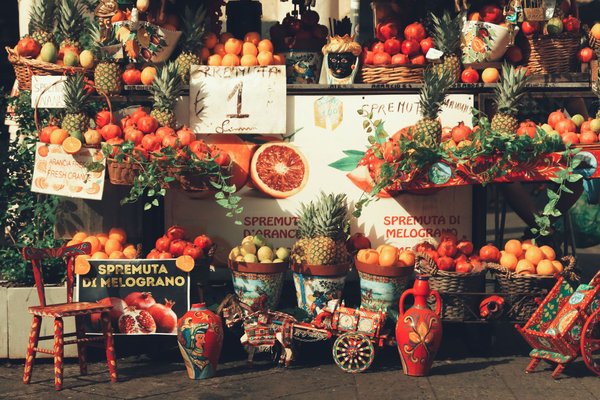
Local market with fresh fruit, pineapples, pomegranates, and colorful Sicilian decorations, perfect for exploring Aeolian Islands.

Discover Local Markets

I always start a Lipari morning at the small daily market near Via Garibaldi, where fishermen sell the night's catch directly from styrofoam boxes — tuna steaks, swordfish, red mullet, and whatever else the nets brought in. The adjacent stalls carry Salina capers, sun-dried tomatoes, local honey, and jars of pesto eoliano (capers, tomatoes, basil, and almonds). Prices are lower and quality higher than anything in the tourist shops, and the vendors are happy to recommend recipes.
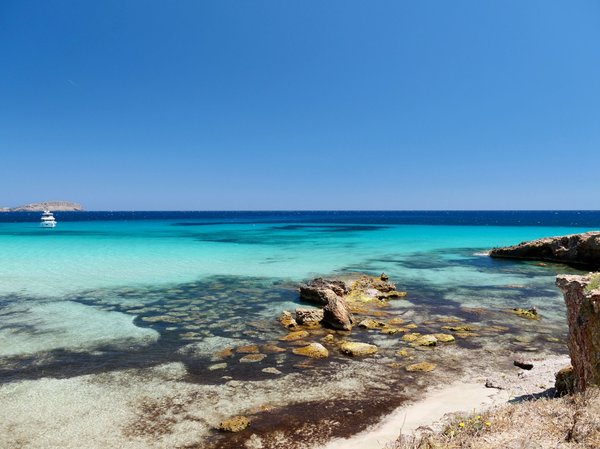
Beach with crystal-clear waters and rocks, white boat in the distance, clear blue sky.

Explore Hidden Coves
I rent a small inflatable boat (available from about €60 per day at Lipari's Marina Corta) and spend an entire day exploring coves that have no land access. My favorites are Cala Fico on the southwest coast of Lipari, where a narrow slot between cliffs opens into a sheltered turquoise pool, and Punta Perciato on Salina, a natural stone arch you can motor through at low swell. Bring a snorkel, a cooler of water, and a hat — there is no shade and no help if you run out of either.
Close-up of green peppercorns and a potato on a wooden cutting board.

Join Traditional Festivals

I time my visits to coincide with the Festa di San Bartolomeo on in Lipari, when a procession carries the saint's silver reliquary through town, fireworks explode over the castle, and every restaurant sets up outdoor tables in the piazza. The Sagra del Cappero in Salina (early June) celebrates the caper harvest with tastings, cooking demonstrations, and folk music. These festivals are where you see the islands at their most communal — locals and visitors eating together, children running through the streets until midnight, and the kind of spontaneous warmth that no hotel concierge can arrange.

Frequently Asked Questions about Isole Eolie

What is the best time to visit the Aeolian Islands?

I recommend late May through June or September. The sea is warm enough for swimming, Stromboli summit hikes run on full schedule, and you avoid the peak-season crowds and doubled accommodation prices of July and August. April and October are good for hiking but too cool for comfortable swimming.

How can I reach the Aeolian Islands?

I take the hydrofoil from Milazzo, which is the fastest and most frequent connection — roughly 1 hour to Lipari, with departures every 1 to 2 hours from early morning. Siremar and Liberty Lines operate the routes. Slower car ferries also depart from Milazzo, and in summer there are seasonal hydrofoil connections from Messina, Palermo, Reggio Calabria, and Naples.

What are the main islands of the Aeolians?

There are seven inhabited islands: Lipari (the largest, with the best infrastructure), Vulcano (mud baths and crater hike), Salina (greenest, famous for Malvasia wine), Stromboli (active volcano), Panarea (smallest and most exclusive), Filicudi (Bronze Age ruins, sea caves), and Alicudi (car-free, the most remote). Each has a distinct character, and I suggest visiting at least three or four to appreciate the variety.

Is it necessary to rent a car to visit the islands?

No, and on most islands it is not even possible. Alicudi and Panarea have no roads for cars. On Lipari and Salina, local buses connect the main villages, and scooter or bicycle rental is widely available. Inter-island travel is by hydrofoil or ferry. I find a combination of walking and the occasional bus or rented boat covers everything comfortably.

Are there sandy beaches in the Aeolian Islands?

Some, though not in the classic golden-sand sense. Vulcano has striking black volcanic sand beaches, Lipari's Spiaggia Bianca has white pumice pebbles, and several coves have coarse grey sand mixed with volcanic gravel. Most swimming spots are rocky or pebbly, which keeps the water exceptionally clear. I always bring reef shoes for comfort.

What are the typical dishes of the Aeolian Islands?

I never miss <em>pasta con le sarde</em>, swordfish alla ghiotta (braised with capers, tomatoes, and olives), and raw sea urchin on bruschetta when in season. Salina's capers appear in almost everything. For dessert, <em>cassatelle eoliane</em> (fried ricotta pastries) and almond granita with brioche are essential. Pair meals with Malvasia delle Lipari, the local passito wine.

Is scuba diving possible in the Aeolians?

Absolutely. Several PADI-certified dive centers operate on Lipari, Vulcano, and Panarea. I have dived the underwater fumaroles off Vulcano, where gas bubbles stream from the volcanic seabed, and the marine reserve around Panarea's islets, which teems with grouper, barracuda, and moray eels. Visibility regularly exceeds 30 meters from May to October.

Are the Aeolian Islands suitable for children?

They can be, with planning. Lipari and Salina have the best infrastructure for families, including accessible beaches, gelato shops, and gentle walks. I would avoid the Stromboli summit hike with young children (minimum age is typically 12) and the steep path to Pollara beach. Boat tours are a hit with kids of all ages, and the Archaeological Museum in Lipari has enough dramatic volcanic artifacts to hold a child's attention.

How much time is needed to visit all the islands?

I recommend a full week to visit all seven islands at a comfortable pace, with two nights on Lipari, two on Salina, one on Stromboli, and day trips to Vulcano, Panarea, Filicudi, and Alicudi. With only three to four days, I would focus on Lipari, Vulcano, and either Salina or Stromboli.

Are there special events during the year in the Aeolians?

The biggest is the Festa di San Bartolomeo in Lipari on August 24, with a procession, fireworks, and communal feasting. The Sagra del Cappero in Salina (early June) celebrates the caper harvest. The Salina Doc Fest, a documentary film festival held in September, draws filmmakers from across Europe. In winter, the islands are quiet, but Christmas and New Year see small local celebrations with midnight mass and fireworks over the harbor.