10 Experiences in Boston

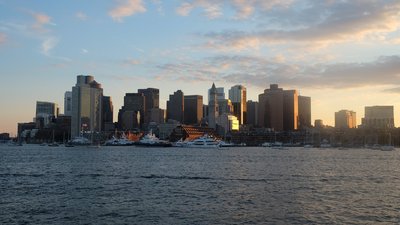
Boston skyline at sunset with skyscrapers and boats in the harbor.
Written by travel experts
Regularly updated
Verified on-site

Boston is where the American story began. Founded in by Puritan settlers from England, this compact city on the Shawmut Peninsula has witnessed the Boston Massacre of , the Tea Party of , and the battles that launched a revolution. Four centuries later, the cobblestones of Beacon Hill still echo with that defiant spirit, while the red-brick campuses of Harvard and MIT — just across the Charles River — push the boundaries of what comes next. I have walked the Freedom Trail in every season and each time the city reveals something new: cherry blossoms framing the Public Garden in April, the roar of Fenway Park on a summer night, crimson foliage blazing along the Charles River Esplanade in October, ice skaters gliding across Frog Pond in December. Between stops, the North End serves cannoli that rival anything in Naples, and the waterfront restaurants dish out clam chowder so thick a spoon stands upright. Boston is walkable, historically layered, and stubbornly original. This guide covers the ten experiences I consider essential — from revolutionary landmarks to a world-class symphony hall — with honest advice on timing, costs, and the details that make each visit count.

Top Things to Do in Boston

Walk the Freedom Trail
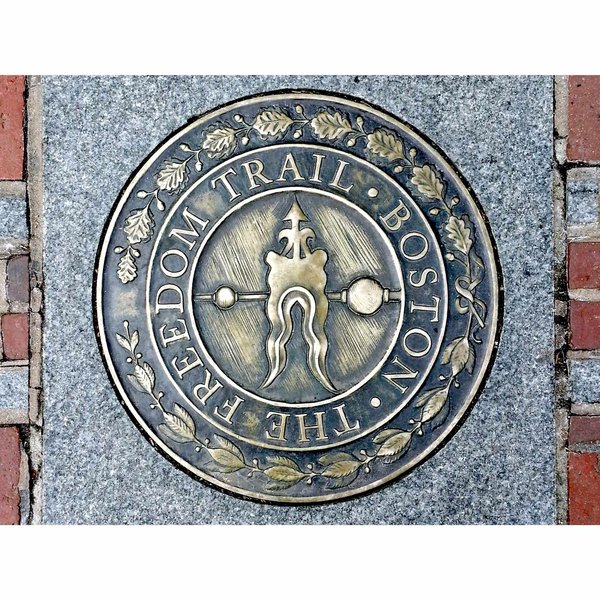
Close-up of the Freedom Trail marker in Boston, engraved on a bronze plaque set into a sidewalk.

Four Kilometers Through the Revolution

A red-painted line on the pavement connects sixteen sites that changed the course of a nation. The Freedom Trail, established in by journalist William Schofield, begins at Boston Common — the oldest public park in the United States, set aside for communal grazing in — and threads north through the city for roughly four kilometers. Along the way you pass the gilded dome of the Massachusetts State House, completed in to a design by Charles Bulfinch; the Old South Meeting House, where colonists debated the tea tax before marching to Griffin's Wharf; and the Old North Church, where sexton Robert Newman hung two lanterns on to warn that British troops were crossing by sea. The trail ends across the harbor at the Bunker Hill Monument in Charlestown, a 67-meter granite obelisk marking the first major battle of the Revolutionary War. I recommend starting early on a weekday morning — by 9 AM most tour groups have not yet formed — and allowing three to four hours at a comfortable pace. Wear sturdy shoes; the cobblestones in the North End are uneven but reward you with a cannoli stop at the halfway point.
Begins at Boston Common, Tremont Street, Boston, MA — ends at Bunker Hill Monument, Charlestown.
The outdoor trail is accessible 24 hours a day, every day of the year. Indoor sites keep individual hours.
The trail itself is free. Guided ranger tours from the NPS are free; private tours cost $14–$18.

Explore the Museum of Fine Arts

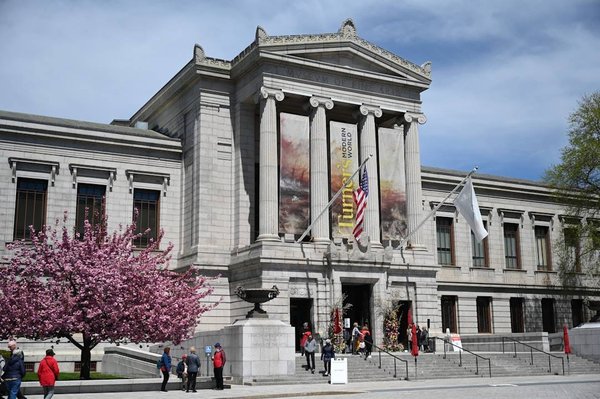
Facade of the Museum of Fine Arts in Boston with blooming cherry tree and visitors.

450,000 Works Spanning Five Millennia

The Museum of Fine Arts opened on — the nation's centennial — and moved to its current Beaux-Arts building on Huntington Avenue in . Today it holds more than 450,000 objects, making it one of the most comprehensive art collections in the Western Hemisphere. The American Wing alone traces the country's visual culture from colonial silverwork by Paul Revere to John Singer Sargent's luminous murals in the rotunda, commissioned specifically for this building. Upstairs, the Impressionist galleries house the largest collection of Monet paintings outside France — 35 canvases that track his career from early plein-air studies to the late water-lily series. The Art of the Ancient World wing displays Egyptian mummies excavated by the museum's own expeditions in the early , while the recently renovated Japanese galleries present one of the finest collections of ukiyo-e prints outside Tokyo. Wednesday evenings after 4 PM the museum is noticeably quieter, and the natural light flooding the European galleries at that hour is particularly striking. The sculpture courtyard in warm months is a peaceful place to sit before continuing through the second floor.
Located at 465 Huntington Avenue, Boston, MA 02115, in the Fenway cultural district.
Open Monday to Wednesday and Saturday–Sunday from 10:00 AM to 5:00 PM. Thursday and Friday until 10:00 PM.
Admission: $27 for adults. Free for children under 17 on weekdays and all day on weekends.

Wander Through Beacon Hill

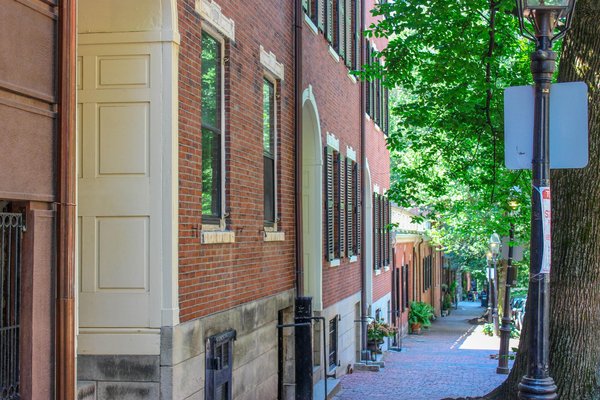
Beacon Hill street in Boston with red brick buildings, gas lamps, and cobblestone sidewalks.

Gas Lamps and Cobblestone Since 1795

Beacon Hill is the Boston you picture before you arrive: narrow lanes paved with original cobblestones, Federal-style rowhouses with purple windowpanes made by impure glass that has aged for two centuries, and gas street lamps that still flicker on at dusk. The neighborhood was laid out in after the Massachusetts State House was completed at its summit, and the wealthy families who built here — the Cabots, Lowells, and Lodges — established the social fabric that gave Boston its "Brahmin" reputation. Charles Street, running along the western slope, is the neighborhood's commercial spine: independent bookshops, antique dealers, and cafes occupy ground-floor storefronts beneath residential bow-front windows. Walk uphill to Louisburg Square, a private oval park ringed by iron fencing where Louisa May Alcott lived at number 10. Then find Acorn Street, scarcely two meters wide and often called the most photographed street in America — arrive before 8 AM to capture it without other visitors in the frame. The African Meeting House on Joy Street, built in , is the oldest surviving Black church building in the United States and anchors the Black Heritage Trail, a walk that reveals a history of the neighborhood most visitors miss entirely.
Beacon Hill sits between Boston Common and the Charles River, bounded by Cambridge and Beacon Streets.
The neighborhood is open at all hours. Charles Street shops typically open 10:00 AM to 6:00 PM.
Exploring is free. Budget $15–$30 for a coffee and browsing the antique shops.

Visit the New England Aquarium

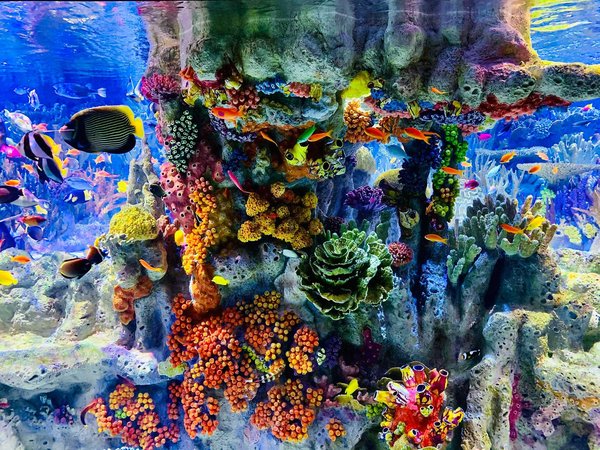
Aquarium with colorful coral reef and tropical fish at the New England Aquarium in Boston.

20,000 Marine Creatures on Central Wharf

When the New England Aquarium opened on Central Wharf in , it introduced a radical concept: a four-story cylindrical ocean tank at the center of the building, surrounded by a spiraling ramp that lets visitors ascend alongside sharks, sea turtles, and moray eels. That Giant Ocean Tank — holding 757,000 liters of saltwater — remains the centerpiece today, recently rebuilt with a redesigned coral reef replicating an Indo-Pacific ecosystem. Around it, more than 20,000 animals inhabit themed galleries. The penguin colony at the base of the tank is one of the largest in any American aquarium, home to African, rockhopper, and little blue penguins. On the top floor, the open-air tidal pool lets children touch sea stars and horseshoe crabs under a docent's guidance. The aquarium also runs whale-watch cruises from through , departing from the adjacent pier for a three-hour trip to Stellwagen Bank, a feeding ground for humpback and fin whales. I recommend visiting on a weekday morning — weekends draw long queues by 11 AM. The harbor seal exhibit on the front plaza is visible without a ticket, a worthwhile stop even if you only have fifteen minutes.
Located at 1 Central Wharf, Boston, MA 02110, on the downtown waterfront.
Open Monday to Friday 9:00 AM to 5:00 PM, Saturday and Sunday 9:00 AM to 6:00 PM. Extended summer hours.
Admission: $34 for adults, $25 for children 3–11. Whale-watch cruises cost $55 extra.

Relax at Boston Common

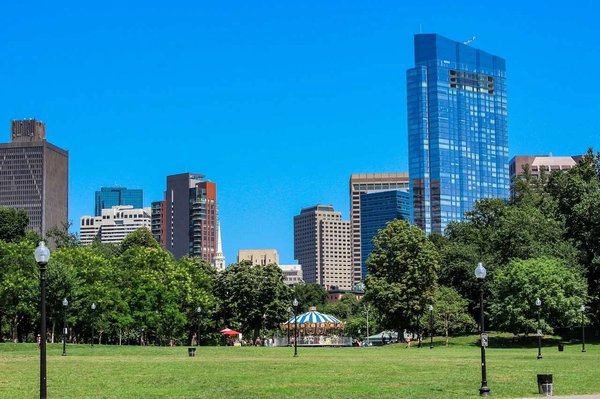
View of Boston Common with skyscrapers in the background and a bright blue sky.

America's First Public Park Since 1634

Boston Common has been public land since , when the Puritan town set aside these 20 hectares for cow grazing and militia training. British redcoats camped here before marching to Lexington in ; abolitionists rallied against slavery in the ; Martin Luther King Jr. spoke on the green in . Today the Common is the starting point of the Freedom Trail and the northern anchor of the Emerald Necklace, Frederick Law Olmsted's chain of parks stretching seven miles to Franklin Park. In winter, Frog Pond becomes a public ice-skating rink — rental skates cost $6 and the experience of gliding beneath bare oaks with the State House dome gleaming behind you is one of Boston's most photogenic moments. In summer, the same pond is a wading pool for toddlers while the Parkman Bandstand hosts free concerts. Cross Charles Street into the adjacent Public Garden, established in as the first botanical garden in America, where the famous Swan Boats have circled the lagoon every spring since . The two parks together take about an hour to stroll without hurrying, and in October the sugar maples along the central path turn a deep amber that stops joggers mid-stride.
Between Tremont, Charles, Beacon, and Park Streets, central Boston, MA.
Open every day, 24 hours. Frog Pond skating: November through mid-March, 10 AM to 9 PM.
The park is free. Swan Boat rides cost $4.50 for adults; skating rental $6.

Cheer at Fenway Park

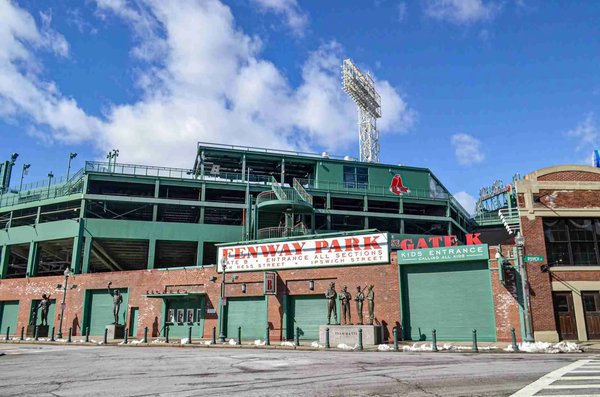
Entrance to Fenway Park in Boston with a blue sky and statues in front.

Baseball's Oldest Ballpark Since 1912

Fenway Park opened on — the same week the Titanic sank — and has hosted Red Sox baseball continuously ever since, making it the oldest active Major League ballpark in the country. Its most famous feature is the Green Monster, the 11.3-meter left-field wall that turns routine fly balls into doubles and has defined the park's character for over a century. Above the Monster, a manual scoreboard still updated by hand displays American League scores with metal number plates, a tradition unchanged since . In the eighth inning of every home game, the crowd rises to belt out Neil Diamond's "Sweet Caroline" — a ritual born spontaneously in that the organization eventually made official. Even if your visit does not coincide with a game, the ballpark offers hour-long tours year-round: you walk the warning track, stand atop the Green Monster, and sit in the press box where generations of sportswriters narrated Red Sox triumphs and heartbreaks. The surrounding Fenway-Kenmore neighborhood has transformed in recent years into a dining district; Lansdowne Street fills with live music after games. Arrive an hour early if attending a game — the streets around the park on game nights have an energy unlike anywhere else in Boston.
Located at 4 Jersey Street, Fenway-Kenmore, Boston, MA 02215.
Tours run daily year-round, departing every hour from 9:00 AM to 5:00 PM (game days may vary).
Tours from $22 for adults. Game tickets range from $20 (standing room) to $200+ (premium seats).

Cruise the Charles River

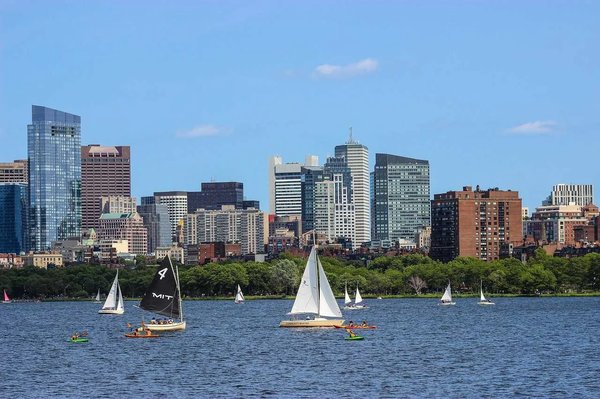
View of the Charles River with boats and Boston's skyline on a sunny day.

Boston and Cambridge from the Water

The Charles River bends for 129 kilometers from Hopkinton to Boston Harbor, but the stretch between the Longfellow Bridge and the Harvard Bridge is where the city shows its most photogenic profile. Sightseeing cruises depart from the CambridgeSide dock or the Museum of Science pier and last about 70 minutes, looping past the golden dome of the State House, the sail-shaped towers of the Esplanade pavilion, and the red-brick sprawl of the MIT campus. On a clear afternoon in late or early , the foliage along both banks turns copper and scarlet, and rowers from Harvard and Boston University slice through reflections of color. In summer, smaller electric boats can be rented by the hour from Community Boating — the oldest public sailing program in the country, founded in — for a self-guided tour that lets you idle beneath the bridges at your own pace. From the water you notice details invisible from shore: the carved keystones of the Longfellow Bridge salt-and-pepper towers, the herons standing motionless along the mudflats, and the way the Prudential Tower catches sunset light and holds it long after the riverbanks fall into shadow. Bring a light jacket; it is always a few degrees cooler on the water.
Departures from CambridgeSide Galleria dock or Museum of Science pier, between Boston and Cambridge.
Cruise season runs from early April through late October. Departures typically 11:00 AM to 6:00 PM.
Sightseeing cruises: $25 per adult. Electric boat rentals from $35 per hour.

Eat Through Quincy Market

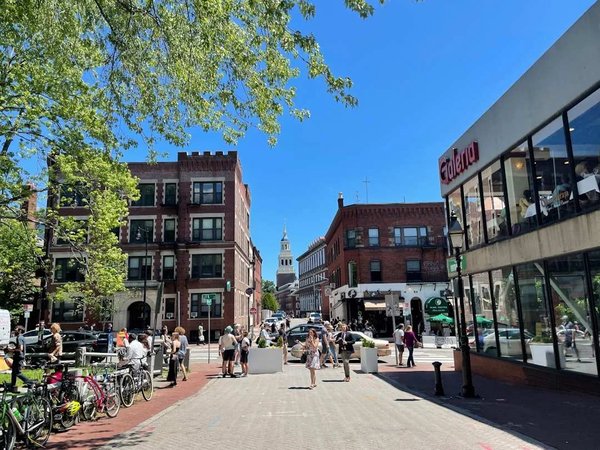
Pedestrian street in Boston with historic buildings, parked bicycles, and people strolling on a sunny day.

New England Flavors Since 1826

Quincy Market opened in as a commercial expansion of Faneuil Hall, designed by Alexander Parris in the Greek Revival style — its 164-meter granite colonnade was the largest in the country at the time. After decades of decline, the complex was restored in as one of America's first "festival marketplaces," a model later copied in Baltimore, New York, and dozens of other cities. The central hall houses a food corridor where vendors have served New England clam chowder since the restoration — the thick, cream-based version ladled into a sourdough bread bowl is the dish most visitors eat first. At the eastern end, a lobster roll stand sells split-top buns stuffed with claw and knuckle meat tossed in warm butter, a preparation that dates to Connecticut in the but that Bostonians have enthusiastically adopted. Beyond food, the flanking North and South Market buildings contain independent shops and craft stalls, and the cobblestone plaza in front of Faneuil Hall itself hosts street performers year-round. Samuel Adams — the brewer-turned-revolutionary, not just the beer brand — delivered speeches in the hall above. Visit at lunchtime on a weekday for the widest vendor selection; weekend afternoons are lively but crowded.
Located at 4 South Market Street, Boston, MA 02109, adjacent to Faneuil Hall.
Open Monday to Saturday 10:00 AM to 9:00 PM, Sunday 12:00 PM to 6:00 PM. Restaurant hours may vary.
Entry is free. Expect to spend $12–$25 per person on food.

Discover the Museum of Science

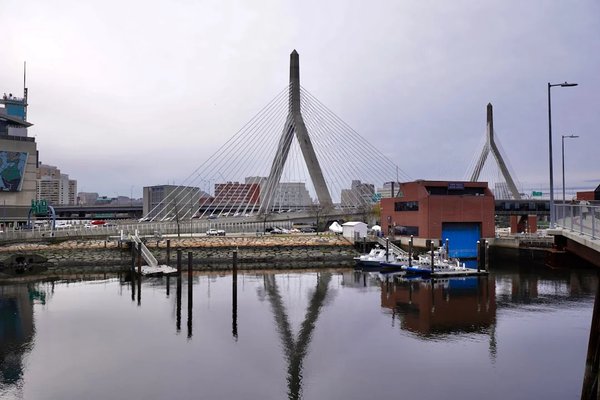
View of the Zakim Bridge and waterfront near Boston's Museum of Science.

Hands-On Learning on the Charles River

The Museum of Science traces its origins to the Boston Society of Natural History, founded in , making it one of the oldest scientific institutions in the country. It moved to its current location — a bridge-like building spanning the Charles River dam between Boston and Cambridge — in . The collection spans 700 interactive exhibits across five floors. The centerpiece is the Theater of Electricity, home to the world's largest air-insulated Van de Graaff generator, built at MIT in . During live demonstrations, two-million-volt lightning bolts crack across the room, a spectacle that has awed visitors for decades. The Hayden Planetarium projects a digital sky so detailed it can simulate the view from any point in the solar system at any date in history, and the Mugar Omni Theater wraps a five-story domed IMAX screen around the audience. For younger children, the Discovery Center on the ground floor lets them build dams, launch air rockets, and dig for replica fossils. The museum tends to be busiest on rainy weekends and school holidays; Tuesday and Wednesday mornings are noticeably quieter. Allow at least three hours — most families end up staying four.
Located at 1 Science Park, Boston, MA 02114, straddling the Charles River dam.
Open Saturday to Thursday 9:00 AM to 5:00 PM, Friday 9:00 AM to 9:00 PM. Closed Thanksgiving and Christmas.
Admission: $29 for adults. Planetarium and IMAX are each $6 extra.

Attend a Concert at Symphony Hall

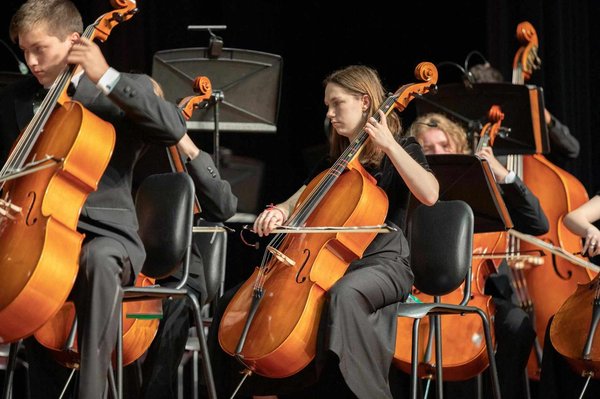
Musicians playing cello during a classical music concert.

World-Class Acoustics Since 1900

Symphony Hall opened on , designed by McKim, Mead & White with acoustics engineered by Harvard physicist Wallace Clement Sabine — the first concert hall in the world designed using scientific acoustic principles. Sabine calculated the ideal reverberation time at 1.8 seconds, and the hall consistently ranks among the top three acoustic spaces on the planet alongside Vienna's Musikverein and Amsterdam's Concertgebouw. The Boston Symphony Orchestra, founded in by philanthropist Henry Lee Higginson, has been the resident ensemble since the hall opened, and its roster of past music directors — Koussevitzky, Munch, Ozawa, Nelsons — reads like a history of 20th-century conducting. The interior seats 2,625 in a rectangular shoebox design, with leather seats, 16 replica Greek and Roman statues in niches along the upper balcony, and a pipe organ installed in with 4,800 pipes. From through , the BSO performs Thursday through Saturday evenings and Friday afternoons; in summer the musicians decamps to Tanglewood in the Berkshires, and the Boston Pops take the stage for lighter programming. Rush tickets go on sale at the box office on Friday mornings for $10 — a remarkable way to hear a world-class orchestra without a premium price.
Located at 301 Massachusetts Avenue, Back Bay, Boston, MA 02115.
Season runs September through April. Performances typically at 8:00 PM; Friday matinees at 1:30 PM.
Tickets range from $30 to $150. Friday rush tickets available for $10 at the box office.

Recommended Itineraries in Boston

Back Bay and the Cultural Mile

Morning — Begin on Newbury Street, eight blocks of brownstones converted into galleries, independent boutiques, and sidewalk cafes. Walk the full length from Arlington to Massachusetts Avenue, pausing at Trident Booksellers for coffee. Turn south to Copley Square and step inside Trinity Church, completed in , whose interior murals by John La Farge took six years to finish.

Afternoon — Cross the square to the Boston Public Library, the first publicly funded municipal library in America (). The McKim Building's courtyard, modeled on a Roman palazzo, is one of the quietest spots in the city. Continue along Commonwealth Avenue Mall, a tree-lined promenade dotted with bronze statues, to the Museum of Fine Arts for the late-afternoon galleries.

Evening — Walk to nearby Symphony Hall for a performance, or return to Newbury Street for dinner at one of the rooftop restaurants overlooking the Back Bay skyline.

A Day Across the River in Cambridge

Morning — Take the Red Line to Harvard Square and walk through Harvard Yard, the original campus core dating to . Visit the Harvard Art Museums, three collections unified under a single Renzo Piano glass roof, where Rothko canvases hang two rooms from medieval altarpieces.

Afternoon — Walk east along Massachusetts Avenue to MIT. The campus architecture alone is worth the trip: Eero Saarinen's Kresge Auditorium, Frank Gehry's Stata Center, and the infinite corridor that aligns with the setting sun twice a year. The MIT Museum, reopened in a new building in , features kinetic sculptures and holography exhibits.

Evening — Head to Central Square for dinner — the stretch of Massachusetts Avenue between MIT and Harvard has some of the best Ethiopian, Korean, and Salvadoran food in Greater Boston. Finish at a live-music venue; the Middle East club has launched careers since .

Revolutionary Boston in a Day

Morning — Start at the Old North Church in the North End, where the lantern signal launched Paul Revere's midnight ride on . Walk two blocks to the Paul Revere House, built around and the oldest surviving home in downtown Boston. Grab an espresso and a lobster tail pastry on Hanover Street before crossing into the Haymarket area.

Afternoon — Visit the Boston Tea Party Ships & Museum on Congress Street Bridge, where actors in period costume reenact the protest. The interactive exhibit lets you hurl a tea chest into the harbor. Continue along the waterfront to the Seaport District and the Institute of Contemporary Art, a cantilevered glass building with free admission on Thursday evenings.

Evening — Return to the North End for dinner at one of the Italian restaurants on Salem Street, then walk to the harbor for a nighttime view of the Custom House Tower illuminated against the skyline.

When to Visit

The Best Time to Visit Boston

Boston's continental climate delivers cold, snowy winters and warm, humid summers. Spring and autumn offer the most comfortable conditions for sightseeing, with fewer crowds and moderate temperatures between 10°C and 19°C.

Peak Season

Summer (June–August) is peak season, with the highest prices, longest queues, and temperatures around 21–24°C.

Shoulder Season

Spring (April–May) and autumn (September–October) offer the best balance of mild weather, manageable crowds, and reasonable prices.

Low Season

Winter (December–February) is low season, with fewer tourists, lower hotel rates, and average temperatures from -1°C to 1°C.

Tips for Visiting Boston

Try a bowl of clam chowder at a historic spot near the harbor. This delicacy is a must for lovers of New England-style cuisine.
Take the ferry to the Boston Harbor Islands and spend the afternoon on one of the tranquil beaches with breathtaking views of the city skyline.
If you want to avoid crowds, visit Boston's main museums on weekdays, preferably early in the morning, for a more relaxed and personalized experience.

Local Experiences in Boston

Plate of penne pasta with tomato sauce, cherry tomatoes, and parsley on a wooden table.

Dine in North End Restaurants

The North End has been Boston's Italian quarter since the , and the culinary tradition runs deep. Mike's Pastry on Hanover Street draws a line out the door for its ricotta cannoli, but locals often prefer Modern Pastry next door for a shorter wait and equally good shells. For a sit-down dinner, Mamma Maria on North Square serves refined Tuscan-inflected dishes in a townhouse overlooking the Paul Revere statue. Reservations fill quickly on weekends — I book at least a week ahead for Friday or Saturday evenings, or walk in at 5:30 PM on a Tuesday when the dining room is half-empty and the service more personal.
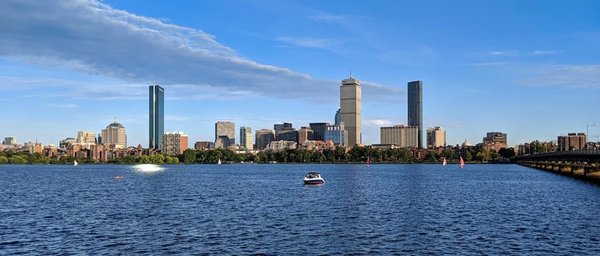
View of the Charles River with sailboats and Boston skyline, iconic spot for outdoor activities.

Cycle Along the Charles River Esplanade
The Charles River Esplanade stretches five kilometers along the Boston bank between the Museum of Science and Boston University Bridge, with a paved path shared by runners, cyclists, and strollers. Bluebikes, the city's bike-share system, has docking stations every few hundred meters; a single ride costs $2.95 for 30 minutes. I ride from the Hatch Shell — where the Boston Pops play their free Fourth of July concert — westward past the community sailing docks and the Storrow Lagoon, returning along the Cambridge side for a full loop of roughly 10 kilometers. In , the foliage along the Esplanade peaks and the path becomes one of the most scenic urban cycling routes in the Northeast.
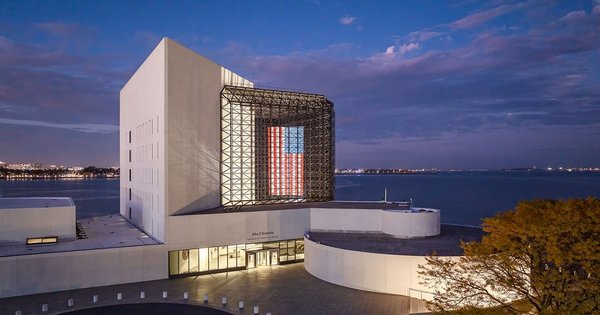
John F. Kennedy Presidential Library in Boston at sunset, overlooking the ocean with an illuminated American flag.

Visit the John F. Kennedy Presidential Library

The JFK Presidential Library sits on Columbia Point in Dorchester, a site Kennedy himself selected for its sweeping views of Boston Harbor and the open Atlantic. Designed by I.M. Pei and opened in , the building is a study in geometric minimalism — a nine-story concrete tower beside a glass-walled pavilion that floods the exhibition space with natural light. Inside, 25 multimedia exhibits cover Kennedy's presidency from the campaign through the Cuban Missile Crisis and the space program. The most moving room recreates the Oval Office as it appeared on . Take the free shuttle from the JFK/UMass Red Line station; allow two hours for the museum and another half hour on the waterfront terrace.

Frequently Asked Questions about Boston

What is the best time to visit Boston?

I find late September through mid-October the ideal window — daytime temperatures hover around 13–19°C, the foliage is spectacular, and summer crowds have thinned. Spring (April–May) is also excellent once the trees bloom, though rain is more frequent. Summer brings warm weather and outdoor festivals but also peak prices and long museum queues. Winter appeals if you enjoy ice skating on Frog Pond and holiday markets, but expect temperatures around -1 to 1°C in January and February.

How do I get around Boston?

I walk most of the time — Boston's core is compact enough that the Freedom Trail, Beacon Hill, the North End, and the waterfront are all within a 20-minute radius on foot. For longer distances, the MBTA subway (known locally as the "T") covers the main areas; a single ride costs $2.40 with a CharlieCard. The Bluebikes bike-share is excellent along the Charles River. Ride-shares and taxis are widely available but often slower than walking in downtown traffic.

What should I eat in Boston?

I always start with clam chowder — the New England version is cream-based and thick, best served in a bread bowl at the waterfront. Lobster rolls come two ways: cold with mayo (Maine-style) or warm with butter (Connecticut-style); both are available citywide. North End Italian restaurants serve handmade pasta and cannoli worth the wait. For something less expected, try the Korean bibimbap in Allston or the Salvadoran pupusas in East Boston. And Boston cream pie — invented at the Parker House Hotel in 1856 — is custard cake with chocolate glaze, not a pie at all.

What are the best activities for children?

I recommend the Boston Children's Museum on Congress Street, which has hands-on exhibits designed for ages 0–10 and a three-story climbing structure. The Museum of Science keeps older kids engaged with the lightning shows and planetarium. The New England Aquarium is a reliable hit for all ages. On warm days, the Swan Boats in the Public Garden and the splash fountain on the Rose Kennedy Greenway are free and entertaining. The Franklin Park Zoo is a quieter alternative to the downtown attractions.

Where are the best areas for shopping?

I head to Newbury Street for independent boutiques, galleries, and designer shops — prices decrease as you walk from Arlington toward Massachusetts Avenue. The Prudential Center mall has major brands under one roof, useful on rainy days. Faneuil Hall Marketplace offers souvenirs and New England-made goods. For vintage clothing and vinyl records, I browse the shops around Harvard Square in Cambridge. The SoWa Open Market in the South End runs Sundays from May to October with local artisans and food trucks.

What are the best parks in Boston?

I consider the Boston Common and Public Garden duo the essential starting point — the Swan Boats, the garden's weeping willows, and the Make Way for Ducklings statues are all within a few minutes' walk. The Charles River Esplanade is my favorite for running or cycling. Arnold Arboretum, a 107-hectare Harvard-managed landscape in Jamaica Plain, is magnificent during Lilac Sunday in May. For a wilder setting, the Boston Harbor Islands — accessible by ferry from Long Wharf — offer beaches, trails, and Civil War-era fort ruins.

Are there worthwhile day trips from Boston?

I frequently recommend three. Salem, 30 minutes by commuter rail, has the Peabody Essex Museum and the witch trial memorial — go in October for the full atmosphere. Concord and Lexington, 30 minutes by car, are where the first shots of the Revolution were fired in April 1775; the Minute Man National Historical Park connects both towns by a walking trail. Cape Cod, about 90 minutes by car, offers wide beaches, seafood shacks, and the Cape Cod National Seashore — best from June through September.

Is Boston a good destination for couples?

I think so. The gas-lit streets of Beacon Hill are genuinely romantic after dark, and the Charles River Esplanade at sunset is hard to beat. North End restaurants like Mamma Maria and Giacomo's have an intimate atmosphere, especially at corner tables upstairs. A Symphony Hall performance followed by dessert at Flour Bakery makes an elegant evening. In spring, the Public Garden's tulip beds and Swan Boats offer an old-fashioned charm that feels personal rather than touristy.

What annual events should I plan around?

The Boston Marathon on Patriots' Day (the third Monday in April) electrifies the entire city — line Boylston Street near the finish for the most dramatic atmosphere. Harborfest around the Fourth of July includes fireworks over the Charles River and the Boston Pops concert at the Hatch Shell. The Head of the Charles Regatta in mid-October draws rowers from around the world and turns both riverbanks into a festival. In December, the Enchanted Trolley Tour in the South End and the tree lighting on Boston Common mark the start of the holiday season.

Is Boston safe for tourists?

I have walked Boston's central neighborhoods at all hours and always felt safe. The tourist areas — Back Bay, Beacon Hill, the North End, the waterfront, Cambridge — are well-lit and well-patrolled. Standard urban precautions apply: keep valuables secure in crowds at Faneuil Hall, stay aware on the T late at night, and avoid isolated areas in unfamiliar neighborhoods after dark. Overall, Boston has a lower violent crime rate than most comparably sized American cities.