Free Turin

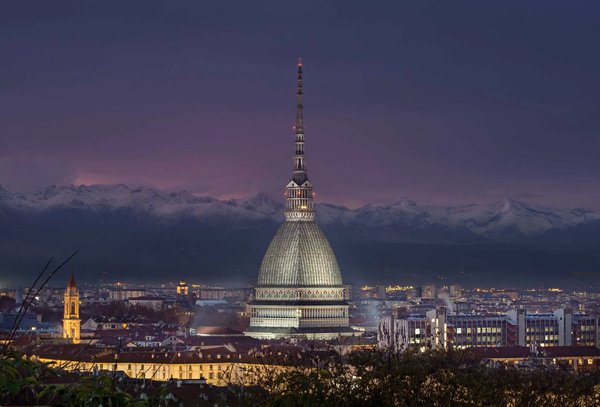
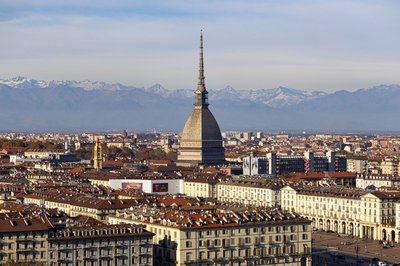
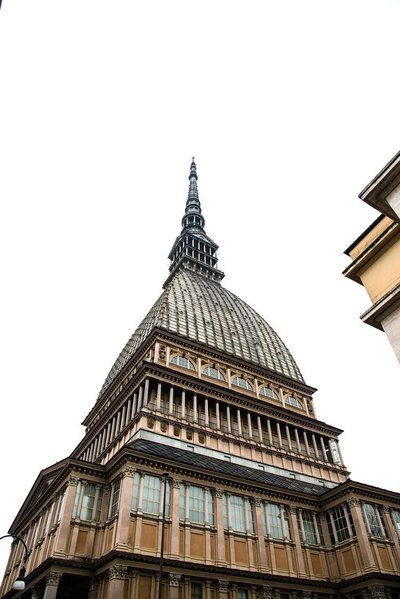
View of the Mole Antonelliana in Turin with a cloudy sky in the background.
Written by travel experts
Regularly updated
Verified on-site

Turin served as Italy's first capital from to , and the city still carries that regal weight in every porticoed avenue and frescoed ceiling. What surprises most visitors is how much of it costs nothing at all.

Baroque squares, riverside parks, a hilltop basilica with Alpine views, and Europe's largest open-air market are all free every day of the year. Several world-class museums — including the Egyptian Museum and the Galleria Sabauda — open their doors at no charge on designated days each month.

This guide maps out the ten strongest free experiences in the city, organised so you can string them into a full day on foot. Comfortable shoes and an empty camera roll are the only investments required.

Top Things to Do in Turin

Piazza Castello and Palazzo Reale
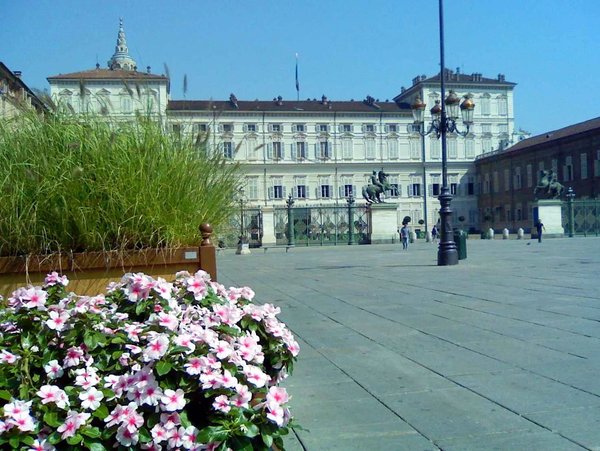
Piazza Castello in Turin with the Royal Palace in the background and flowers in the foreground.

The power centre of Savoy Turin

Every path in Turin eventually leads back to Piazza Castello. The square was laid out in the as the formal forecourt of the Royal Palace, and it still functions as the city's civic crossroads four centuries later. The palace facade, the baroque church of San Lorenzo with its extraordinary Guarini-designed dome, and the rebuilt Teatro Regio frame a single open space that compresses centuries of Savoy ambition into one glance. Walk through the iron gates behind the palace to reach the Royal Gardens, a shaded parterre with fountains, gravel paths, and rows of horse chestnuts that stays remarkably quiet even at midday. The gardens were designed in by André Le Nôtre, the same landscape architect who created Versailles, and they still follow his formal geometry of clipped hedges and axial sightlines. The square itself is entirely pedestrianised, so you can linger without dodging traffic. On weekends, street musicians set up near the porticoes that wrap the northern side, and the acoustics under the vaulted stone ceilings give even amateur performers a concert-hall resonance. Stand at the centre of the square at dusk and watch the palace facade turn amber as the last sunlight catches the upper windows — it is one of those fleeting Turin moments that costs nothing but stays with you.
Piazza Castello, 10122 Turin TO, Italy
Always open
Free

Parco del Valentino

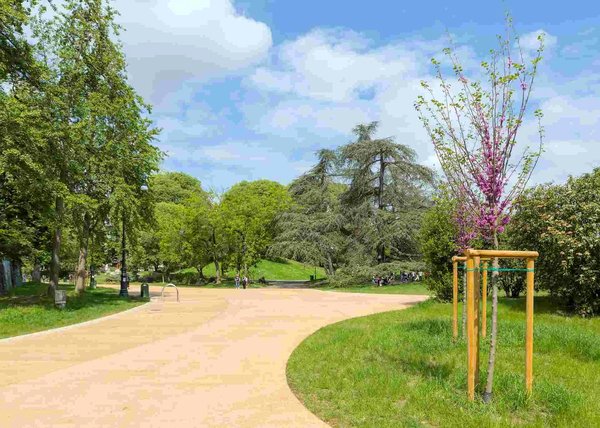
Tree-lined path in Parco del Valentino in Turin with blue sky and blooming trees.

A riverside park older than unified Italy

Parco del Valentino stretches along the west bank of the Po for nearly a kilometre, shaded by plane trees planted when the park opened in . Joggers loop the gravel paths in the morning; families colonise the lawns by afternoon; rowers from the city's three historic clubs cut across the river in racing shells at first light. The park's centrepiece is the Valentino Castle, a 17th-century Savoy residence with distinctive French-style corner towers now used by the University of Turin's architecture faculty. Just south of the castle sits the Borgo Medievale, a full-scale reconstruction of a 15th-century Piedmontese village built for the General Italian Exposition. Its courtyard, frescoed facades, and working drawbridge are free to wander year-round. The botanical garden near the park's northern entrance, established in , opens its grounds at no charge. From the park's southern end, a footbridge crosses to the east bank and a quieter cycling path that continues toward Parco del Meisino, a semi-wild stretch of riverbank where herons fish in the shallows. The entire loop — Valentino, Borgo, botanical garden, and east-bank return — takes about 90 minutes on foot and covers some of the most photogenic ground in Turin without ever passing a ticket window.
Corso Massimo d'Azeglio, 10126 Turin TO, Italy
Always open
Free

Mole Antonelliana

Night view of the Mole Antonelliana in Turin with the Alps in the background and city lights.

Turin's 167-metre signature landmark

Architect Alessandro Antonelli began the Mole Antonelliana in as a synagogue for Turin's Jewish community; by the time it was finished in , costs had spiralled, the congregation had moved on, and the city inherited what was then the tallest masonry structure in Europe at 167.5 metres. The National Cinema Museum inside requires a ticket, but the building's real drama is external and entirely free. Its needle-like silhouette is visible from virtually every street in the city centre and photographs best from two spots: Via Po, where the Mole rises perfectly centred at the end of the porticoed avenue, and the east bank of the Po near Ponte Umberto I, where the full height reflects in the river at sunset. After dark the dome frequently hosts coloured lighting projections — the city runs seasonal installations that turn the brickwork blue, green, or tricolour depending on the occasion. Check the schedule posted at the tourist office on Piazza Castello or on the Città di Torino website. Even without a special event, the Mole glows warm amber against the night sky, and a slow walk around its base on Via Montebello reveals details — carved capitals, iron balconies, a tiny ground-floor cafe — that you miss when you only look up.
Via Montebello, 20, 10124 Turin TO, Italy
Always visible from the outside
Free

Egyptian Museum (Free Entry Days)

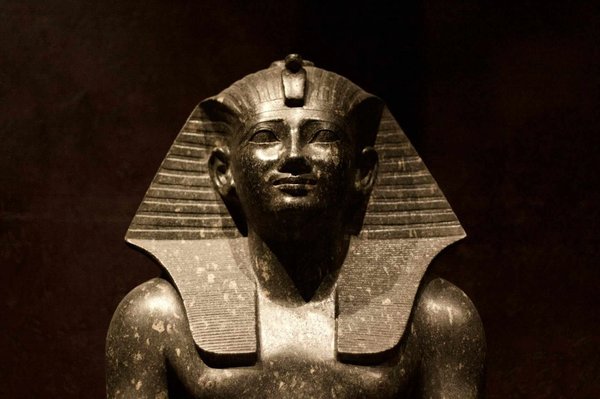
Iconic Egyptian statue displayed at the Egyptian Museum in Turin, illuminated with warm light on a dark background.

The world's oldest Egyptian collection

Founded in , Turin's Museo Egizio holds the largest Egyptian collection outside Cairo — over 40,000 artefacts spread across four floors of a 17th-century palazzo on Via Accademia delle Scienze. The collection began when King Carlo Felice purchased the entire cabinet of French consul Bernardino Drovetti, and it has grown through Italian-led excavations at Thebes, Gebelein, and Asyut ever since. The renovation by architect Dante Oscar Benini added atmospheric black galleries where the Tomb of Kha — the most complete non-royal burial ever found in Egypt — and the monumental Statue of Ramesses II are displayed with theatrical lighting that makes the stone seem to glow. The Gallery of Kings on the ground floor lines up colossal statues and sphinxes in a single corridor of dark basalt, an effect that rivals anything in the British Museum or the Louvre. General admission is paid, but entry is free on the first Tuesday of every month. Arrive when the doors open at 9:00 to avoid queues that build quickly by mid-morning on free days. Budget at least two hours; the chronological layout rewards a sequential visit from the pre-dynastic tools on the top floor down to the Roman-era portraits at ground level.
Via Accademia delle Scienze, 6, 10123 Turin TO, Italy
Tuesday: 9:00 AM - 6:30 PM
Free every first Tuesday of the month

Basilica of Superga

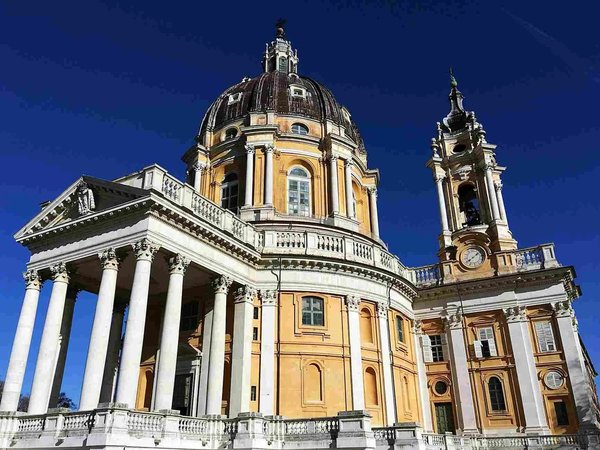
Basilica of Superga in Turin with blue sky and classic architectural details.

Alpine panorama and Savoy royal tombs

Vittorio Amedeo II commissioned Filippo Juvarra to build the Basilica di Superga on this 672-metre hilltop after Turin survived the French siege of . The duke had vowed that if the city held, he would raise a church visible from every street below — and Juvarra delivered. Construction ran from to , producing a circular nave crowned by a dome that remains one of the finest expressions of Piedmontese baroque. The interior is free to enter: pale marble, a ring of Corinthian columns, and a high altar lit by the dome's lantern create a hushed, luminous space that rewards a slow circuit. Outside, the panoramic terrace offers a 360-degree sweep from Monviso in the southwest to Gran Paradiso and Monte Rosa in the north, with the entire Po plain unrolling below. Behind the basilica, a memorial plaque marks the site where the Grande Torino football team's plane crashed into the hillside on , killing all 31 aboard. You can reach Superga by the Sassi-Superga rack railway (ticketed, weekends only in low season) or by a steep but well-marked 3.5-km trail from the Sassi neighbourhood — the walk takes about 50 minutes and is free.
Strada Basilica di Superga, 73, 10132 Turin TO, Italy
Always open
Free

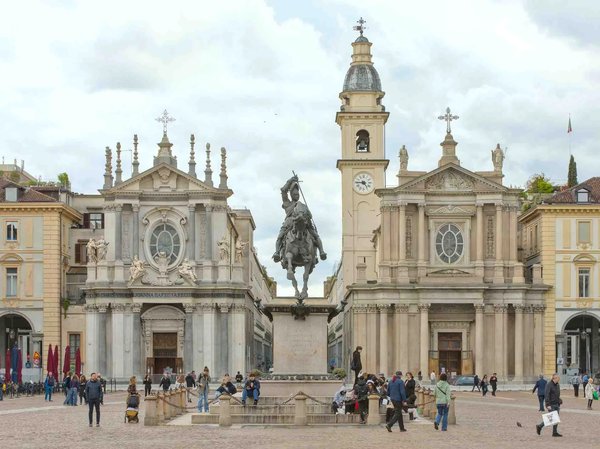
Piazza San Carlo

Piazza San Carlo in Turin with the equestrian statue of Emmanuel Philibert and twin churches in the background.

Turin's baroque drawing room

Locals call Piazza San Carlo the "salotto di Torino" — Turin's living room — and the name fits. The 17th-century rectangle is flanked by matching porticoed facades of pale ochre stone and anchored by the twin churches of San Carlo and Santa Cristina at the southern end, their baroque frontispieces so symmetrical they look like mirror images until you study the details. At the centre, the bronze equestrian statue of Duke Emmanuel Philibert sheathing his sword after the Battle of San Quentin has been a meeting-point landmark since . The square was designed by Carlo di Castellamonte in the as a ceremonial extension of Via Roma, and it still serves that purpose — processions, protests, and New Year celebrations all converge here. Underneath the arcades, historic cafes occupy ground floors that have barely changed in two centuries. Caffè San Carlo (open since ) serves bicerin, the Turinese layered drink of espresso, chocolate, and cream, in a mirrored salon with frescoed ceilings. You can absorb the square's full effect without buying anything — just stand under the portico at the northern end and look south through the columns toward the twin church facades. The framing is deliberate, and it is free.
Piazza San Carlo, 10123 Turin TO, Italy
Always open
Free

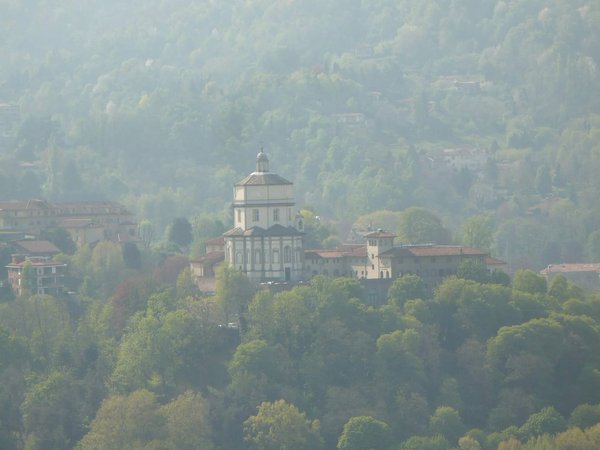
Monte dei Cappuccini

Panoramic view of Monte dei Cappuccini in Turin, surrounded by trees and green hills.

The best sunset viewpoint in the city

Monte dei Cappuccini rises just 284 metres above sea level on the east bank of the Po, but that modest elevation is enough for the finest free panorama in Turin. The skyline spreads left to right — Mole Antonelliana, cathedral dome, the long ridge of the Basilica di Superga, and behind everything the jagged white wall of the Alps from Monviso to Monte Rosa. In late afternoon the mountains catch the last light while the city below settles into blue shadow, and the colour shift happens fast enough to watch in real time. The 17th-century Church of Santa Maria al Monte sits at the summit, founded by Capuchin friars who chose the spot precisely for its commanding view of the Po valley. The church interior is modest — whitewashed walls, a single nave, a wooden crucifix — but its elevated terrace doubles as the main viewing platform and holds about fifty people comfortably. The walk from Piazza Vittorio Veneto takes about 15 minutes uphill along a paved path with benches at intervals and a few hairpin turns shaded by mature oaks. Arrive 30 minutes before sunset for the best light; bring a jacket, because the hilltop catches wind even on warm evenings. There is no entrance fee, no opening hours, and no crowd control. It is simply a hill with a church and the best free view in northern Italy.
Piazzale Monte dei Cappuccini, 10131 Turin TO, Italy
Always open
Free

Galleria Sabauda (Free Entry Days)

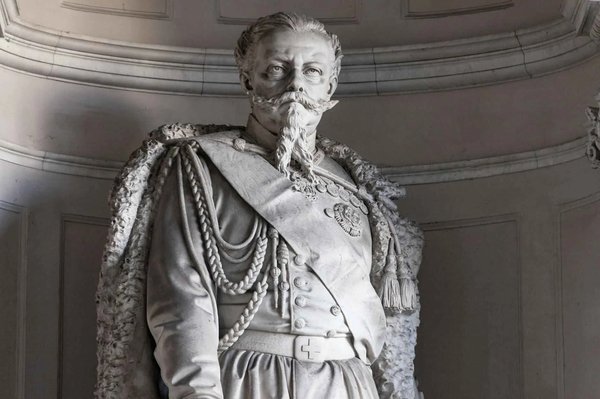
Marble statue with decorative details in the Galleria Sabauda in Turin.

Old Masters in a royal setting

The Galleria Sabauda occupies the upper floors of the Royal Museums complex and holds the Savoy dynasty's personal art collection, assembled since King Carlo Alberto opened it to the public in . The holdings span five centuries of European painting. The Flemish rooms alone justify a visit: Van Dyck's portraits of Genoese aristocrats, Rembrandt's brooding Old Man Sleeping, and a delicate Hans Memling altarpiece that survived the Napoleonic looting of Piedmont's churches. Italian galleries hold works by Mantegna, Botticelli, Veronese, and Orazio Gentileschi, hung in gilded rooms with parquet floors and ceiling mouldings that are themselves worth studying. Regular admission is ticketed, but the gallery opens free on the first Sunday of every month as part of Italy's national "Domenica al Museo" programme. Start on the top floor with the Flemish and Dutch collection and work downward — natural light is strongest in the morning and the upper galleries benefit most from it. On free Sundays the queue forms early at the Piazzetta Reale entrance, so arriving by 8:45 puts you inside within the first wave.
Piazzetta Reale, 1, 10122 Turin TO, Italy
Tuesday - Sunday: 9:00 AM - 7:00 PM
Free every first Sunday of the month

Porta Palazzo Market

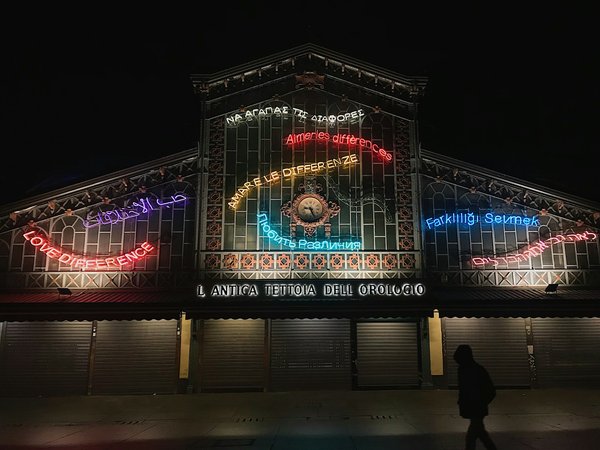
Illuminated facade of Tettoia dell'Orologio at Porta Palazzo Market in Turin with colorful neon signs.

Europe's largest open-air market

Porta Palazzo fills Piazza della Repubblica six mornings a week with roughly 1,000 stalls — the largest open-air market in Europe by vendor count. The market has operated on this square since , and the daily rhythm has barely changed: trucks unload before dawn, vendors build their displays by 7:00, and by 8:30 the aisles are packed with shoppers carrying reusable bags and rolling carts. The outdoor section sells seasonal fruit, vegetables, Piedmontese toma cheese, and cuts of meat laid out on butcher paper. The covered Tettoia dell'Orologio, a cast-iron market hall built in , handles fresh fish and speciality items under a glass-and-steel roof that floods the interior with natural light. Surrounding streets — particularly Via Borgo Dora and Via Andreis — add vintage clothing, household goods, and spices imported from North Africa, the Middle East, and Southeast Asia, reflecting the neighbourhood's position as Turin's most multicultural quarter. Saturday morning is the busiest session and the most photogenic, when the Gran Balon antique stalls extend the market into the Borgo Dora courtyards. Arrive before 9:00 for the best produce selection; by 13:30 vendors start packing up and bargains appear on whatever remains. Bring cash — many stalls do not accept cards — and carry your own bag.
Piazza della Repubblica, 10152 Turin TO, Italy
Monday - Saturday: 7:00 AM - 2:00 PM
Free

Museo Diffuso della Resistenza

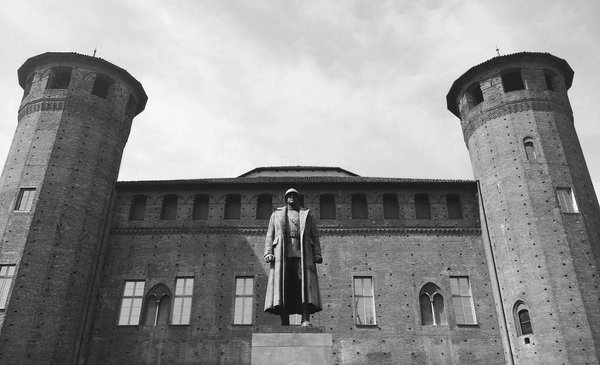
Statue in front of a historic brick building with towers in Turin, in black and white.

Turin's free museum of wartime memory

The Museo Diffuso della Resistenza documents Turin's experience of fascism, Nazi occupation, and partisan liberation through photographs, film footage, personal letters, and audio testimonies recorded by survivors. Turin was Italy's largest industrial city during the war, home to FIAT factories that the regime requisitioned for military production, and the museum explains how that industrial weight shaped both the occupation and the resistance. The permanent exhibition traces events from the racial laws — which forced Jewish professors out of the University of Turin and shuttered Jewish-owned shops along Via Po — through the general strikes of , the German occupation, and the armed partisan liberation of . The focus is on ordinary citizens rather than generals: factory workers who sabotaged production lines, women who ran clandestine courier networks across the Alpine passes, and families who hid Jewish neighbours at personal risk. Admission is always free. The museum occupies a restored palazzo on Via del Carmine in the heart of the Quadrilatero Romano, so you can pair it with a walk through the city's oldest neighbourhood without any detour. Allow about an hour for the permanent collection.
Via del Carmine, 13, 10122 Turin TO, Italy
Tuesday - Sunday: 10:00 AM - 6:00 PM
Free

Recommended Itineraries in Turin

Historic Centre on Foot

Morning — Start at Piazza Castello and walk through the Royal Gardens before cutting south along Via Roma to Piazza San Carlo. Allow 20 minutes to sit under the portico and watch the square wake up.

Afternoon — Continue down Via Roma to Porta Nuova station, then turn east along Via Nizza to reach the Egyptian Museum (free on the first Tuesday). If it is not a free day, double back to Via Po for a porticoed stroll toward Piazza Vittorio Veneto.

Evening — Cross the Po on Ponte Vittorio Emanuele I and climb to Monte dei Cappuccini for a sunset panorama over the city skyline and Alps.

Parks and Riverside Trail

Morning — Enter Parco del Valentino from the northern gate on Corso Vittorio Emanuele II. Follow the riverside path south, stopping at the Borgo Medievale courtyard and the botanical garden (free entry to grounds).

Afternoon — Exit the park's southern end and continue along the Po's west bank toward Parco della Pellerina, Turin's largest urban green space. The flat, tree-lined path is ideal for cycling if you have rented a ToBike.

Evening — Return to the centre via Corso Francia and end at Piazza Statuto, where outdoor cafe tables catch the last light.

Markets and Neighbourhood Walks

Morning — Arrive at Porta Palazzo by 8:00 when the stalls are fully stocked. Walk the outdoor produce rows first, then duck inside the Tettoia dell'Orologio for the fish and cheese vendors.

Afternoon — From the market, walk south into the Quadrilatero Romano. Explore the narrow streets, stop at the Museo della Resistenza (free), and browse the independent bookshops and vintage stores along Via San Domenico.

Evening — End in Piazza Emanuele Filiberto for an aperitivo at one of the neighbourhood bars where locals outnumber tourists.

When to Visit

When to Visit Turin for Free

Spring (April–June) and early autumn (September–October) combine mild weather with manageable crowds. Winter is cold but brings Christmas markets and shorter museum queues on free-entry days.

Peak Season

Summer (June-August) is the peak season, with more tourists and higher prices.

Shoulder Season

Spring and autumn offer a good balance between weather and tourist crowds.

Low Season

Winter (December-February) is the low season, with fewer tourists and more affordable prices.

Tips for Visiting Turin

The MAO — Museum of Oriental Art offers free entry on the first Tuesday of the month. Combine it with the Egyptian Museum on the same day for a full morning of free museums.
Walk the Po's east bank from Ponte Umberto I to Ponte Isabella at sunset — the light on the Mole Antonelliana and the Alps behind it is worth the 25-minute stroll.
The Gran Balon antique market fills Borgo Dora on the second Sunday of every month. The smaller weekly Balon runs every Saturday morning in the same streets.

Local Experiences in Turin

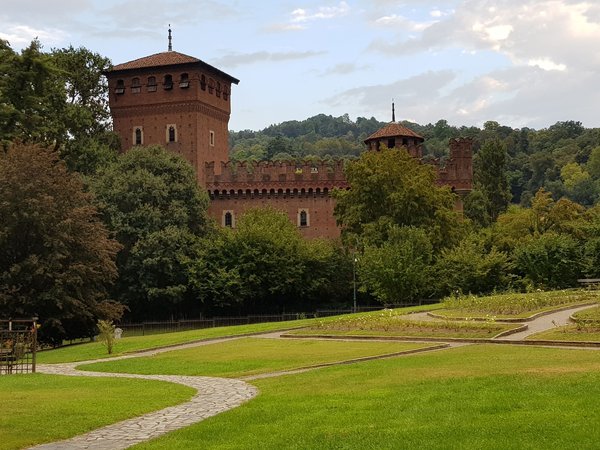
The Rocca fortress of the Borgo Medievale in Parco del Valentino, Turin, surrounded by lawns and trees.

Discover the Medieval Village

Located in Parco del Valentino, the Borgo Medievale is a full-scale reconstruction of a 15th-century Piedmontese village, built for the General Italian Exposition. Cobbled lanes lead past artisan workshops, a frescoed chapel, and the Rocca, a faithful reproduction of a feudal castle. The open-air village and courtyard are free year-round. It is one of the few places where you can grasp how mountain communities in Piedmont and the Aosta Valley actually lived before industrialisation reshaped the region.
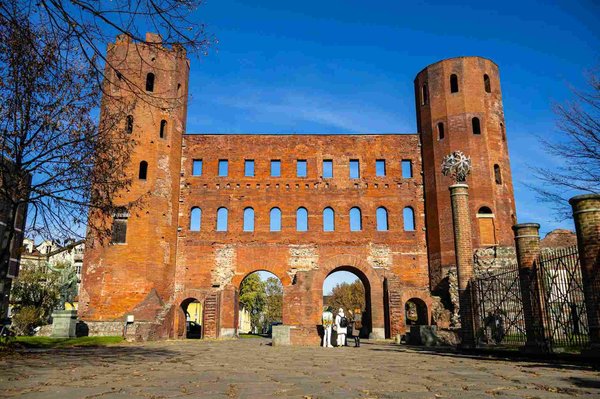
Porta Palatina in Turin with blue sky and visitors in the foreground, a symbol of the Roman Quadrilateral.

Explore the Roman Quadrilateral
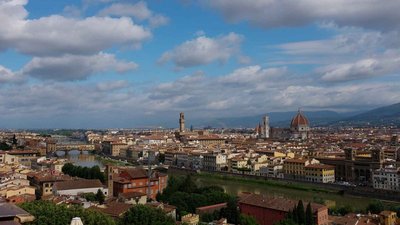
The Quadrilatero Romano is the grid of narrow streets that marks the footprint of Roman Augusta Taurinorum, founded in . Above ground, the best-preserved relic is the Porta Palatina, a red-brick city gate flanked by two 16-sided towers. At street level, the quarter has reinvented itself as Turin's aperitivo hub — wine bars, craft cocktail spots, and trattorie line Via Sant'Agostino and Via delle Orfane. Walk through in the late afternoon when shutters open and the first Negronis appear on outdoor tables.
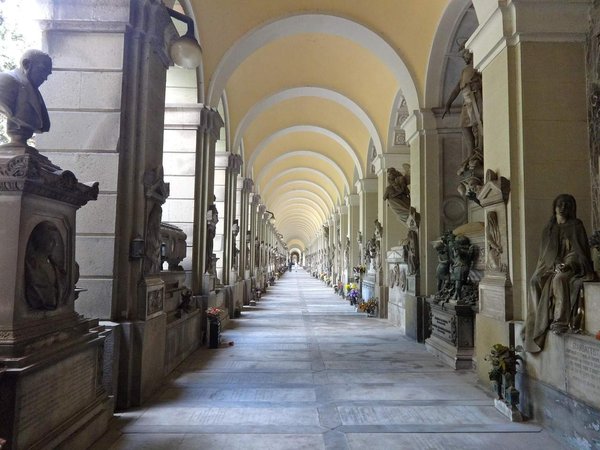
Corridor with arches and sculptures in the Monumental Cemetery of Turin, Italy.

Visit the Monumental Cemetery

The Cimitero Monumentale on Corso Novara is part sculpture gallery, part open-air history lesson. Opened in , it holds the tombs of industrialists, politicians, and artists who shaped modern Turin, each memorial competing in marble ambition. Art Nouveau angels, neoclassical obelisks, and brutalist slabs sit side by side along cypress-lined avenues. The cemetery is free, rarely crowded, and entirely flat — a quiet hour's walk that offers a perspective on the city you will not find in any museum.

Frequently Asked Questions about Turin

Which Turin museums are free every month?

I recommend targeting two key dates. The <strong>Egyptian Museum</strong> and the <strong>MAO — Museum of Oriental Art</strong> are free on the first Tuesday of each month. The <strong>Galleria Sabauda</strong> and other state museums are free on the first Sunday as part of Italy's national "Domenica al Museo" programme.

Is the Mole Antonelliana free to visit?

The exterior and the surrounding piazza are always free, and honestly that is where the best photographs happen. The <strong>National Cinema Museum</strong> inside and the panoramic lift require separate tickets, but I find the view from Monte dei Cappuccini across the river equally impressive — and completely free.

How do I reach the Basilica of Superga without paying?

I walk up from the Sassi neighbourhood. The marked trail is about 3.5 km with a steady uphill grade, and it takes roughly 50 minutes at a comfortable pace. The alternative is the <strong>Sassi-Superga rack railway</strong>, which is scenic but ticketed.

What is the best free viewpoint in Turin?

My favourite is <strong>Monte dei Cappuccini</strong> — it is a 15-minute climb from Piazza Vittorio Veneto and gives you the full skyline with the Mole Antonelliana centred and the Alps behind it. Go 30 minutes before sunset for the best light.

When does the Porta Palazzo market open?

The market runs Monday through Saturday, roughly 7:00 to 14:00. I go on Saturday mornings for the fullest selection and the best atmosphere. Arrive before 9:00 if you want first pick of the seasonal produce.

What is the Balon flea market?

The <strong>Balon</strong> is a weekly flea market every Saturday morning in the Borgo Dora streets behind Porta Palazzo. On the second Sunday of each month, the larger <strong>Gran Balon</strong> adds antique dealers and vintage furniture sellers to the mix. Both are free to browse.

Can I visit the Borgo Medievale for free?

Yes. The open-air village streets and the main courtyard inside Parco del Valentino are free year-round. The <strong>Rocca</strong> fortress interior occasionally charges a small fee for temporary exhibitions, but the exterior and village walkways cost nothing.

Are Turin's churches free to enter?

Almost all of them. The <strong>Cathedral of San Giovanni Battista</strong> (which houses the Chapel of the Holy Shroud), <strong>San Lorenzo</strong> on Piazza Castello, and the <strong>Gran Madre di Dio</strong> across the river are all free. I suggest San Lorenzo for its extraordinary Guarini-designed dome.

Where can I find free events in Turin?

I check the <strong>Torino Cultura</strong> section on the city's official website and the <strong>Musei Torino</strong> events calendar. Both list free concerts, gallery openings, and seasonal festivals. The tourist office on Piazza Castello also posts weekly highlights.

Is Turin walkable for a free day out?

Very much so. The historic centre is compact and almost entirely flat, with 18 km of covered porticoes to keep you sheltered in rain or heat. Every attraction in this guide except the Basilica di Superga is reachable on foot from Piazza Castello within 25 minutes.