Romantic Florence for Couples

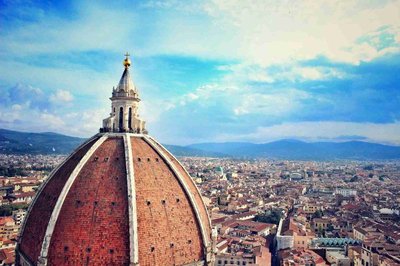
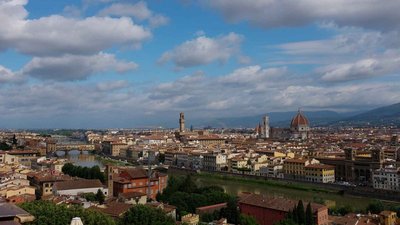
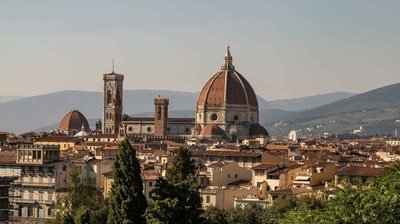
Panoramic view of Florence with the dome of the Cathedral of Santa Maria del Fiore in the foreground and the urban landscape in the background.
Written by travel experts
Regularly updated
Verified on-site

Florence has been a city for lovers since the , when Dante Alighieri wrote his Vita Nuova on its cobblestone streets, turning a chance encounter with Beatrice Portinari near Ponte Santa Trinita into one of literature's great love stories. Seven centuries later the same spell holds: warm light bouncing off ochre facades along the Arno, the scent of jasmine drifting over Oltrarno rooftops, the hush of a Renaissance cloister at dusk.

The Medici shaped this city as a stage for beauty, and beauty is still what couples come here to find. You can share a glass of Vernaccia beneath the loggia of the Uffizi, lose yourselves in the cypress-lined paths of the Boboli Gardens, or watch the skyline turn gold from the steps of San Miniato al Monte — a church that has witnessed proposals, vow renewals, and quiet declarations since .

This guide gathers ten experiences designed for two, from candlelit dinners with a view of Brunelleschi's dome to moonlit boat rides on the Arno. Whether you are celebrating an anniversary, a honeymoon, or simply the pleasure of being together in one of the most beautiful cities on earth, Florence will give you stories worth retelling for the rest of your lives.

Top Things to Do in Florence

Sunset from Piazzale Michelangelo
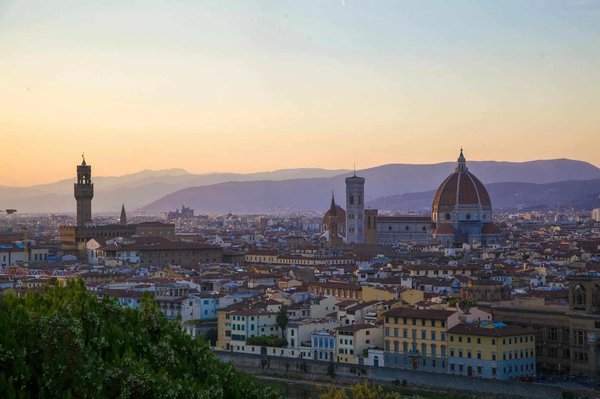
Panoramic view of Florence at sunset from Piazzale Michelangelo with the Duomo and Palazzo Vecchio in focus.

The city's most celebrated panorama, designed for two.

Architect Giuseppe Poggi completed this terrace in as the crowning element of his new hillside promenade, placing a bronze replica of Michelangelo's David at its centre to gaze out over the city that raised him. The engineering was practical — Poggi needed to connect the southern hills to the expanded boulevard system — but the result is pure romance.

From the balustrade you see the entire skyline in a single sweep: Brunelleschi's dome, the crenellated tower of Palazzo Vecchio, the slender spire of Badia Fiorentina, and the silvery curve of the Arno threaded beneath Ponte Vecchio. Arrive about forty-five minutes before sunset to claim a spot on the low stone wall facing west. As the light drops, the terracotta rooftops shift from amber to rose, and the river catches fire. Bring a bottle of Vernaccia and two glasses; the broad steps below the railing form a natural amphitheatre where couples settle in for the show.

After dark the dome and tower are floodlit, and the piazzale quiets down. Walk the short path uphill to San Miniato al Monte for the view in reverse: the city below, the hills behind, and nothing but starlight overhead.
Piazzale Michelangelo, on a hill south of the historic centre of Florence.
Open 24 hours, every day.
Entrance is free.

Hand-in-Hand on Ponte Vecchio

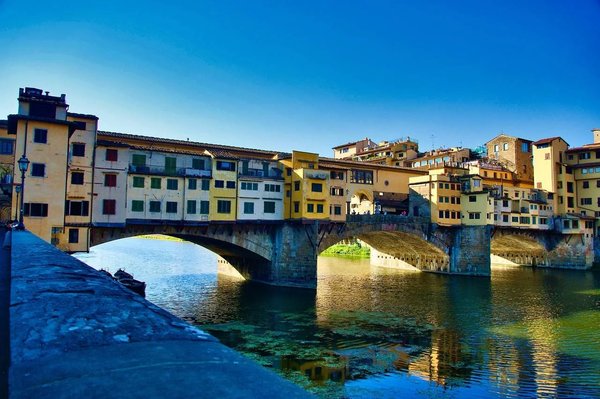
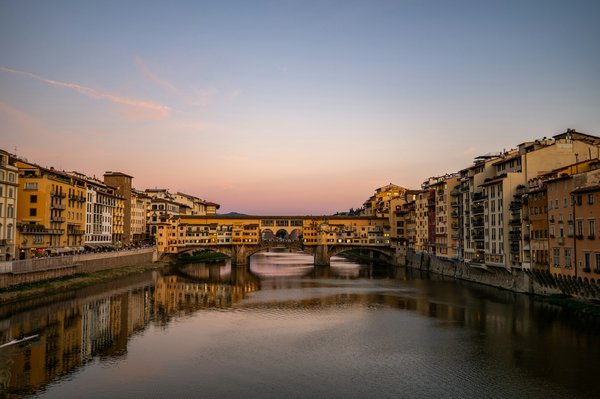
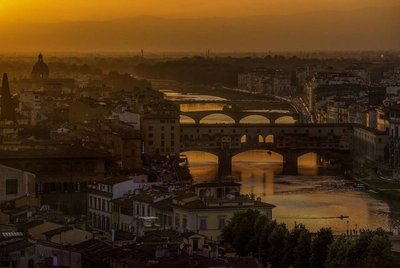
View of the Ponte Vecchio in Florence with reflections on the Arno on a sunny day.

A medieval bridge lined with goldsmith shops since 1593.

The Ponte Vecchio has stood over the Arno since , rebuilt after a devastating flood by the architect Taddeo Gaddi — though some scholars credit Neri di Fioravante. Either way, the three segmental arches were revolutionary for their time, distributing weight so efficiently that the bridge survived the retreating Wehrmacht in when every other Florentine crossing was mined.

Grand Duke Ferdinando I expelled the butchers in and replaced them with goldsmiths, whose tiny workshops still lean over the water today. Browse the windows together: you will find hand-engraved Florentine bands, coral cameos, and filigree pieces made by families who have held the same lease for generations. The central opening between the shops frames a perfect view downstream toward Ponte Santa Trinita.

Above the shops runs the Corridoio Vasariano, the private passageway Giorgio Vasari built in so that Cosimo I could walk from Palazzo Vecchio to Palazzo Pitti without mingling with commoners. The corridor reopened to the public in after a long restoration, and tickets can be booked in advance for an unforgettable elevated stroll.
In the heart of Florence, spanning the Arno between Via Por Santa Maria and Via de' Guicciardini.
Always accessible, day and night.
Crossing is free. Goldsmith shops keep standard retail hours.

Candlelit Dinner Facing the Duomo

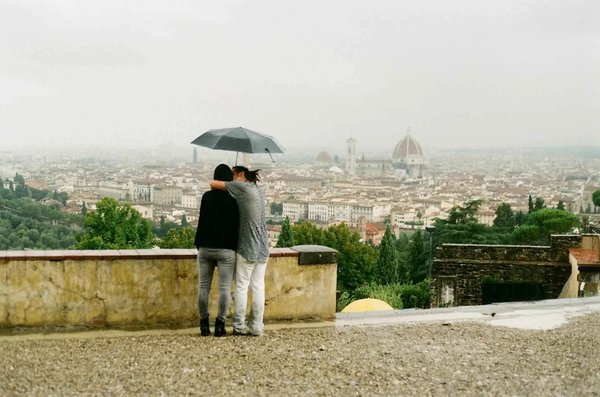
Couple under an umbrella with a view of the Florence Cathedral on a cloudy day.

Tuscan flavours beneath Brunelleschi's dome.

Few dining experiences in Europe rival a terrace table within arm's reach of the Cathedral of Santa Maria del Fiore. The dome that Filippo Brunelleschi raised between and — the largest masonry vault ever built at the time, spanning 45 metres without centering — is even more imposing at night, when floodlights pick out every rib of its herringbone brickwork.

Several rooftop restaurants along Via dei Calzaiuoli and Piazza del Duomo offer this view. Ask for an outside table at dusk and begin with a tagliere toscano of finocchiona salami, aged pecorino, and schiacciata bread drizzled with new-harvest olive oil. Follow with pappardelle al cinghiale — broad ribbons of egg pasta in a slow-cooked wild-boar ragu — or a classic bistecca alla fiorentina for two, a thick T-bone from Chianina cattle grilled over oak embers and finished with nothing but coarse salt and a squeeze of lemon.

Pair everything with a bottle of Brunello di Montalcino or a Chianti Classico Riserva. End with cantucci dipped in Vin Santo, the Tuscan dessert wine aged in small chestnut barrels. The bill will not be modest, but you are paying for the dome as much as the dinner.
Near the Florence Cathedral, in the historic centre.
Most rooftop restaurants open nightly from 7:00 PM to 11:00 PM. Booking is essential.
Expect to spend from €50 to €120 per person depending on the restaurant and wine selection.

A Stroll Through the Boboli Gardens

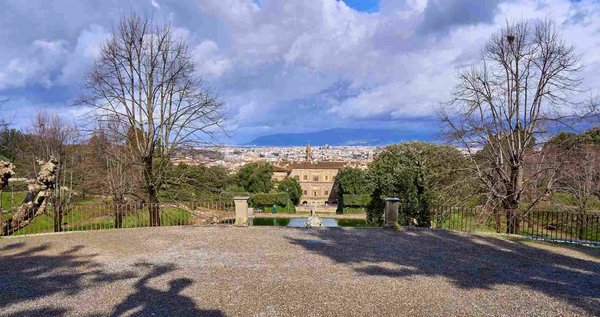
View of the Boboli Gardens in Florence with trees, a fountain, and the city in the background under a cloudy sky.

Sixteen acres of Renaissance landscape art behind Palazzo Pitti.

When Eleonora di Toledo, wife of Cosimo I de' Medici, purchased Palazzo Pitti in , she commissioned Niccolò Tribolo to transform the hillside behind it into a garden worthy of a grand duchy. Tribolo died within a year, and the work passed through the hands of Bartolomeo Ammannati, Bernardo Buontalenti, and Alfonso Parigi the Younger across more than a century of expansion. The result is one of the earliest and most influential Italian formal gardens in existence.

Enter from the Pitti courtyard and follow the central axis uphill past the Fontana del Carciofo (added in ) to the amphitheatre where the Medici staged court spectacles. Beyond it, cypress-lined avenues branch into hidden clearings: the Grotta del Buontalenti, with its surreal stalactite ceiling and copies of Michelangelo's Prisoners; the Viottolone, a long shaded avenue of statuary; and the Isolotto, an island rose garden encircled by citrus trees in terracotta pots.

Follow the upper terraces toward the Kaffeehaus, a Rococo pavilion with sweeping views over the rooftops. Pack a small picnic for one of the stone benches along the Viottolone — the garden is large enough that you can find solitude even in high season.
Piazza de' Pitti, 1, Florence.
Open daily from 8:15 AM. Closing varies seasonally: 4:30 PM in winter, 6:30 PM in spring/autumn, 7:00 PM in summer. Closed first and last Monday of each month.
Full ticket: €10. Free first Sunday of the month. Combined Pitti + Boboli ticket available.

Botticelli and Beyond at the Uffizi

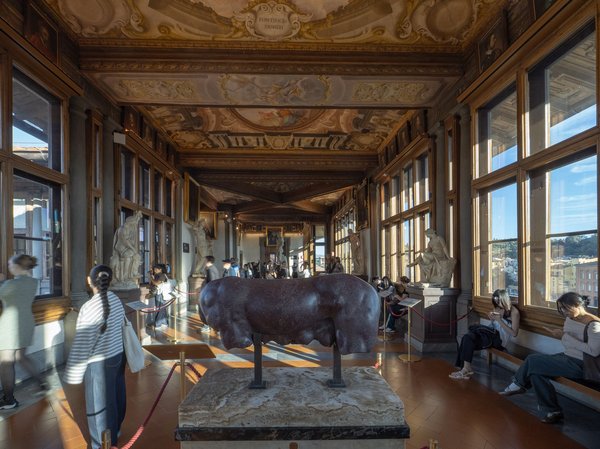
Corridor of the Uffizi Gallery in Florence with statues, a frescoed ceiling, and windows overlooking the city.

Renaissance masterpieces that speak of love and longing.

Giorgio Vasari designed the Uffizi in as administrative offices for Cosimo I, but the top floor quickly became a private gallery for the Medici collection. Today it holds one of the densest concentrations of Renaissance painting on earth, and several of its star works revolve around love, desire, and devotion — perfect fuel for a couples' visit.

Begin in Room 10–14, the Botticelli halls. Sandro Botticelli's Primavera () shows Venus presiding over an allegory of spring where Zephyr pursues the nymph Chloris, transforming her into Flora. Beside it, the Birth of Venus () depicts the goddess arriving on a shell, her hair blown by the winds — a painting so synonymous with beauty that it has become Florence's unofficial emblem. Move to Room 15 for Leonardo da Vinci's unfinished Adoration of the Magi, then to Room 35 for Raphael's Madonna of the Goldfinch, painted as a wedding gift.

On the upper-floor corridor, pause at the east windows: the view frames Ponte Vecchio and the hills of Oltrarno, connecting art on the walls with the living canvas outside. Book a late-afternoon slot — the gallery stays open until 6:50 PM, and the final hour is the quietest.
Piazzale degli Uffizi, 6, Florence.
Open Tuesday to Sunday, 8:15 AM to 6:50 PM. Closed Mondays.
Full ticket: €20 (€25 during temporary exhibitions). Book online to skip the queue.

Boat Ride on the Arno at Sunset

A rowboat on the Arno River at sunset with Ponte Vecchio glowing gold in the background.

Florence from the water, the way Renaissance merchants saw it.

The Arno was Florence's main commercial artery for centuries — wool, silk, and leather moved up and downstream on flat-bottomed barges called barchetti. The trade is long gone, but a handful of renaioli (river boatmen) still operate traditional wooden craft from the banks near Ponte Vecchio, offering couples a vantage point that no terrace or piazza can match.

Departures typically happen in the hour before sunset. As the boat glides beneath the arches of Ponte alle Grazie, Ponte Vecchio, and Ponte Santa Trinita, you see the city's stone facades reflected in the current, their colours deepening as the sun drops behind the western hills. The boatman — often a third- or fourth-generation guide — narrates quietly, pointing out flood marks, hidden boathouses, and the spot where Benvenuto Cellini's bust overlooks the bridge.

Most operators provide a bottle of Prosecco or Tuscan white and a light aperitivo board. The ride lasts roughly forty-five minutes, ending downstream near Parco delle Cascine or looping back to the departure point. This is one of the few experiences in Florence where you will find almost no other tourists — book directly with the boatmen's association for the most authentic outing.
Departure from Lungarno degli Acciaiuoli or Lungarno Torrigiani, central Florence.
Available daily from roughly 6:00 PM until sunset, through . Weather-dependent.
Around €35–50 per person, usually including a glass of wine or Prosecco.

San Miniato al Monte at Twilight

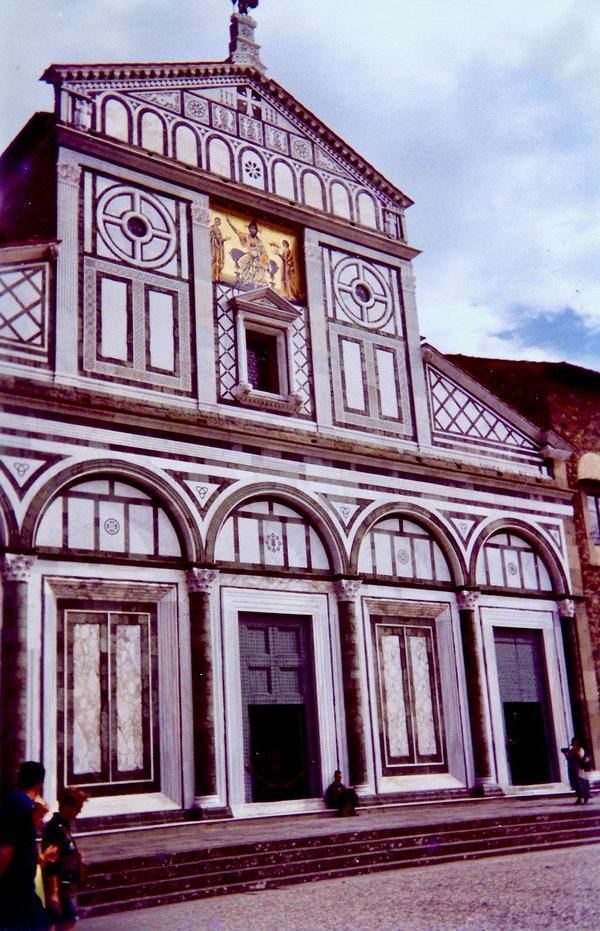
Facade of the Basilica di San Miniato al Monte in Florence, with its geometric marble inlay and mosaic.

A thousand-year-old basilica with the finest view in Florence.

Perched on the highest point south of the Arno, the Basilica di San Miniato al Monte was begun in over the tomb of Saint Minias, an Armenian prince who, according to legend, was martyred under Emperor Decius in the and carried his own severed head up this hill. The facade's geometric marble inlay — white Carrara and green Prato serpentine — established a style that Leon Battista Alberti later echoed on Santa Maria Novella.

Inside, the nave rises in three levels: the crypt below, the main floor with its zodiac-patterned marble pavement, and the raised presbytery with a glittering apse mosaic of Christ enthroned. The Chapel of the Cardinal of Portugal, completed in , is a jewel-box of glazed terracotta by Luca della Robbia. At 5:30 PM each day, the resident Olivetan monks chant Vespers in Gregorian plainchant — an experience that stops time.

Step outside afterward. The terrace cemetery, designed by Niccolò Matas in the , offers a 180-degree panorama at the moment when city lights begin to flicker on. Couples lean on the balustrade here long after the church closes, watching Florence glow below — free and unhurried.
Via delle Porte Sante, 34, Florence.
Open daily: summer 9:30 AM–7:00 PM, winter 9:30 AM–1:00 PM and 3:00–6:00 PM. Vespers at 5:30 PM.
Entrance is free.

Wine Tasting in a Chianti Villa

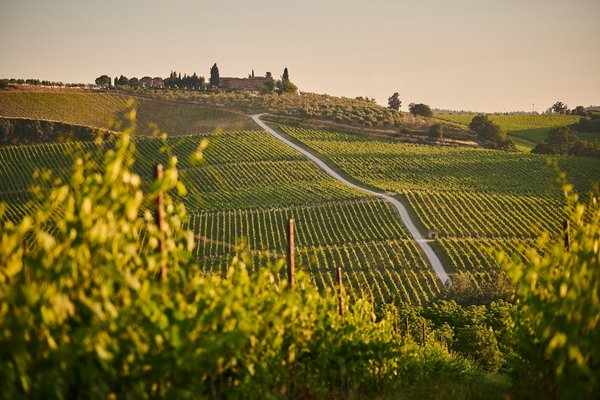
Terraced vineyards on a Chianti hillside with a villa estate on the crest at golden hour.

Sangiovese, olive oil, and rolling hills thirty minutes from the Duomo.

The Chianti wine region begins barely twenty kilometres south of Florence, and a half-day escape into its hills is one of the most romantic things you can do together in Tuscany. The landscape itself — terraced vineyards, silvery olive groves, stone farmhouses topped with terracotta — has barely changed since the Medici established the Lega del Chianti in , making it one of the world's oldest demarcated wine zones.

Dozens of estates welcome couples for private tastings. A typical visit begins with a walk through the vigneto, where the guide explains the differences between Sangiovese clones and the role of elevation and soil (the galestro marl that gives Chianti Classico its mineral backbone). You then move into the cantina — often a vaulted cellar dating to the — to taste a vertical flight: a young Chianti Classico, a Riserva aged at least 24 months, and perhaps a Gran Selezione from the estate's best vineyard. Some producers pair each wine with local bites: crostini with chicken-liver pate, pecorino aged in walnut leaves, schiacciata drizzled with new-press olive oil.

End the afternoon on the estate terrace. The low sun rakes across the Valdipesa or Valdarno, turning every ridge line gold, and you realise that this panorama is the reason the Florentine nobility built their country villas here in the first place.
Multiple estates in the Chianti Classico zone, 20–40 km south of Florence.
Most estates receive visitors by appointment, typically 10:00 AM–5:00 PM.
Tastings range from €25 to €60 per person depending on the estate and number of wines.

An Afternoon in Fiesole

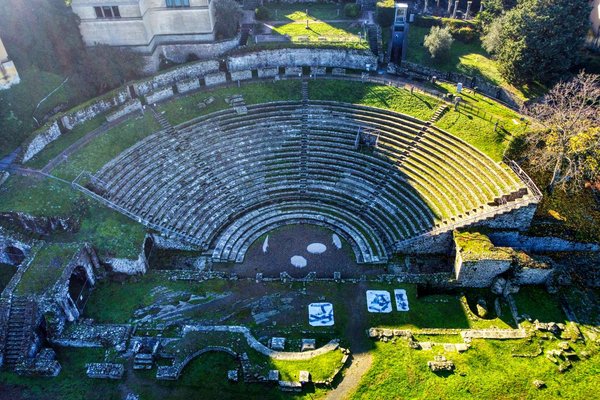
Aerial view of the Roman Theatre of Fiesole, its stone tiers carved into the hillside.

Etruscan hilltop village five kilometres above the city.

Fiesole predates Florence by at least four centuries. The Etruscans built a settlement here around , choosing the hilltop for its commanding views over the Arno valley and its natural defences. The Romans conquered it in and left behind a remarkably intact Teatro Romano — a 3,000-seat amphitheatre carved into the hillside that still hosts summer concerts under the stars.

Take the number 7 bus from Piazza San Marco (twenty minutes, winding through olive groves) and alight in Piazza Mino, the village's main square. From here you can visit the Museo Civico Archeologico, which displays Etruscan bronzes and Roman ceramics found on site, and the Cathedral of San Romolo, founded in . Walk uphill to the Monastery of San Francesco, perched at the very summit, where a tiny cloister garden offers what may be the single most beautiful viewpoint in greater Florence: the entire city laid out below, framed by parasol pines.

Fiesole is small enough to explore in a couple of hours, leaving time for a long lunch at one of the village trattorias. Order the tagliatelle ai porcini in season, sit on the terrace, and watch the afternoon light soften over the valley. The return bus drops you back in central Florence by aperitivo hour.
Fiesole, 5 km northeast of Florence. Bus 7 from Piazza San Marco.
Village accessible year-round. Archaeological area: daily 10:00 AM–6:00 PM (summer), 10:00 AM–3:00 PM (winter).
Archaeological area and museum: €12 combined ticket. Village entry is free.

Couples' Shopping at San Lorenzo Market
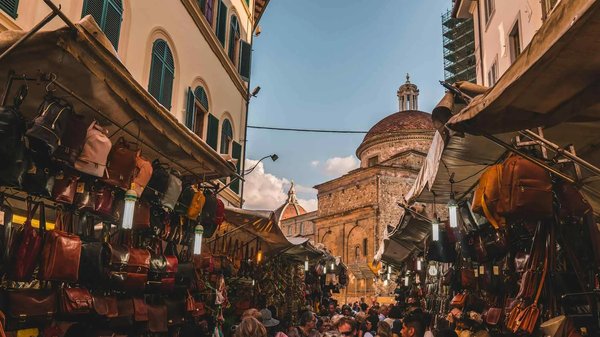
San Lorenzo Market in Florence with leather bag stalls and the Basilica of San Lorenzo in the background.

Leather, truffles, and handmade gifts in Florence's oldest market quarter.

The San Lorenzo Market has occupied the streets around the Basilica di San Lorenzo — the Medici parish church designed by Brunelleschi in — since the . The outdoor stalls fill Via dell'Ariento and the surrounding lanes with leather jackets, bags, belts, silk scarves, and marbled-paper notebooks, while the indoor Mercato Centrale, housed in Giuseppe Mengoni's cast-iron hall of , is a temple of Tuscan food.

For couples, the market is a place to hunt for meaningful souvenirs together. On the ground floor of the Mercato Centrale you will find aged Parmigiano split to order, saffron from San Gimignano, and hand-tied bundles of dried porcini. The leather stalls outside are best approached with a sharp eye — look for full-grain vegetable-tanned hides (the good ones smell of earth, not chemicals) and ask vendors to show the unfinished interior of the leather for proof of quality.

When hunger strikes, step into the first-floor food hall, open daily until midnight, where artisan vendors serve lampredotto panini, fresh pasta, and Chianina burgers. Grab two stools at the wine bar, order a carafe of house Chianti, and watch the theatre of the market below. It is not a quiet experience, but it is an honest one — a working market that has fed Florence for over a century.
Piazza del Mercato Centrale, Florence, near the Medici Chapels.
Outdoor stalls: daily 8:00 AM–7:00 PM. Mercato Centrale ground floor: 7:00 AM–2:00 PM. First floor: 10:00 AM–midnight.
Entry is free. Prices vary by vendor and product.

Recommended Itineraries in Florence

Renaissance Romance on Foot

Morning — Begin at Piazza della Signoria, where the open-air sculpture gallery includes a replica of Michelangelo's David and Cellini's Perseus. Walk through the Loggia dei Lanzi, then enter the Uffizi Gallery at opening time (8:15 AM) to see Botticelli's Birth of Venus and Primavera before the crowds arrive. Allow two hours, then exit toward the river.

Afternoon — Cross Ponte Vecchio, pausing to browse the goldsmith windows. Continue into Oltrarno and have lunch at a quiet trattoria on Piazza Santo Spirito. After eating, enter the Boboli Gardens through the Palazzo Pitti courtyard and follow the cypress-lined Viottolone to the Isolotto rose garden. End at the Kaffeehaus terrace for a coffee with a panoramic view.

Evening — Walk back across the river to Via dei Calzaiuoli for a candlelit dinner on a rooftop terrace facing the Duomo. Finish the night with a gelato from a nearby artisan gelateria, eating it as you stroll through the quieting streets.

Hidden Chapels and Secret Gardens

Morning — Start at the Basilica di Santo Spirito, Brunelleschi's last church, where the serene interior holds a painted crucifix attributed to the young Michelangelo. Walk south to the Bardini Garden, a less-visited alternative to Boboli with a stunning wisteria tunnel in spring and an unobstructed view of the Duomo from its upper terrace.

Afternoon — Return through the San Niccolò neighbourhood, stopping at the medieval Porta San Niccolò gate tower. Climb the narrow lane uphill to the Rose Garden, a free terraced park planted with over 350 varieties and dotted with bronze sculptures by Belgian artist Jean-Michel Folon. Continue upward to San Miniato al Monte and attend Vespers at 5:30 PM if timing allows — Gregorian chant in a thousand-year-old basilica is an experience unlike any other.

Evening — Descend to the San Niccolò quarter for aperitivo at one of its unpretentious wine bars, then dinner in one of the neighbourhood's small restaurants. This part of Florence stays local and lively well after the tourist centre quiets down.

Music, Moonlight, and the Arno

Morning — Visit the Museo dell'Opera del Duomo, home to Ghiberti's original Gates of Paradise and Michelangelo's late Pietà Bandini. The museum is rarely crowded and gives context to the cathedral complex before you see it from above. If you have booked ahead, climb the 463 steps of Brunelleschi's dome for a vertiginous view from the lantern.

Afternoon — Take the bus to Fiesole for a leisurely lunch overlooking the valley, then explore the Roman theatre and the monastery garden at the summit. Return to Florence by late afternoon and stroll through the leather stalls of San Lorenzo Market to find a keepsake of the trip.

Evening — Book a sunset boat ride on the Arno, gliding beneath the arches of Ponte Vecchio with a glass of Prosecco. After disembarking, attend a classical concert at Chiesa di Orsanmichele or the Auditorium di Santo Stefano al Ponte — both host intimate chamber performances in historic settings. End the night on Lungarno Torrigiani, watching moonlight ripple on the river.

When to Visit

When to Visit Florence as a Couple

Spring and early autumn deliver the most romantic conditions: mild temperatures between 17 °C and 24 °C, long golden-hour evenings, and manageable crowds. April through mid-June and September through October let you dine outdoors, stroll gardens in bloom, and photograph the Arno without fighting for space. July and August bring intense heat above 30 °C and peak tourist density. Winter is quiet and affordable, ideal for museum days and cozy trattorias.

Peak Season

From May to July, with warm temperatures and a high number of tourists. Accommodation and attraction prices are higher.

Shoulder Season

April and September-October, with mild weather, less crowding, and a more relaxed atmosphere.

Low Season

From November to February, with fewer tourists and lower prices, but cool temperatures and shorter days.

Tips for Visiting Florence

The San Niccolò quarter south of the Arno has wine bars, craft workshops, and almost no tour groups — locals consider it the most romantic neighbourhood in Florence.
Florence's best artisan gelato is found away from the Duomo: look for shops that keep their gelato in covered steel tubs rather than heaped in colourful mounds, and order seasonal flavours like fig or persimmon.
Cross to Oltrarno and wander Via Maggio and Borgo San Jacopo to discover family-run botteghe — bookbinders, silversmiths, and paper marblers — where you can commission one-of-a-kind gifts for each other.

Local Experiences in Florence

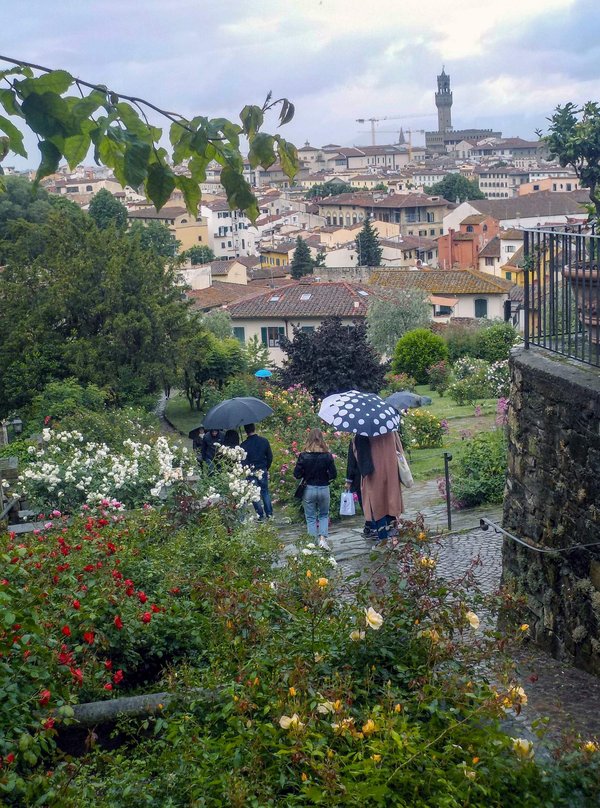
Roses in bloom at the Giardino delle Rose in Florence, with the city skyline and Palazzo Vecchio tower beyond.

Explore the Rose Garden

Tucked into the hillside just below Piazzale Michelangelo, the Giardino delle Rose was created by architect Giuseppe Poggi in as part of the same panoramic project that produced the piazzale above. It holds over 350 rose varieties and a permanent installation of twelve bronze and stone sculptures by the Belgian artist Jean-Michel Folon, whose whimsical figures seem to float among the blooms. Entry is free, the paths are quiet even in high season, and the view of the Duomo through the rose bushes is one of Florence's most photogenic secrets. Visit in or for peak bloom.
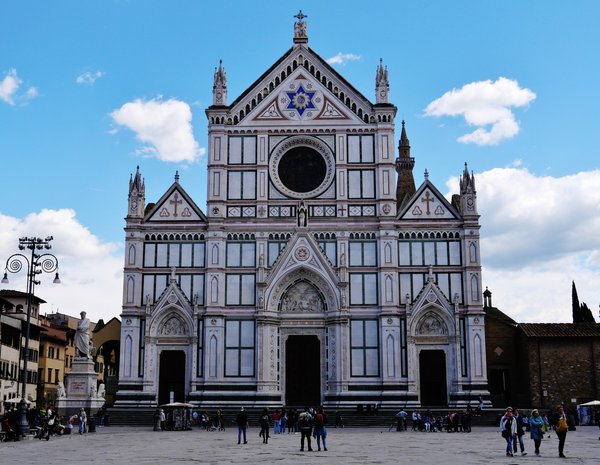
Facade of the Basilica di Santa Croce in Florence, viewed from its piazza.

The Quiet Beauty of Santa Croce
The Basilica di Santa Croce, begun in and attributed to Arnolfo di Cambio, is Florence's Franciscan mother church and the burial place of Michelangelo, Galileo, Machiavelli, and Rossini. Beyond the famous tombs, couples should seek out the Cappella Bardi and Cappella Peruzzi, where Giotto painted scenes from the lives of Saints Francis and John between and — frescoes that revolutionised Western painting. Afterward, sit together on the steps of the piazza with a glass of wine from a nearby enoteca, watching the long afternoon shadows cross the marble facade.
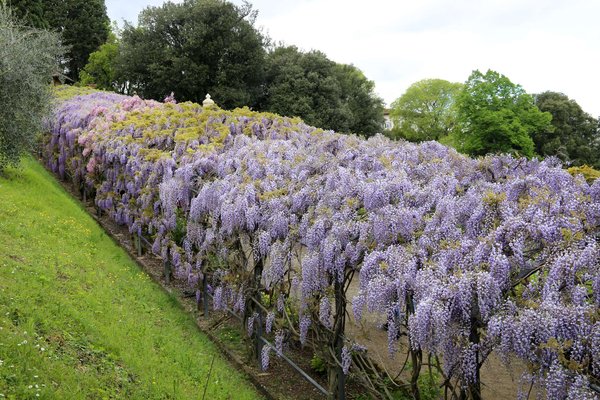
A pergola dripping with blooming purple wisteria at the Giardino Bardini in Florence.

Sunset at Bardini Garden

The Giardino Bardini, restored and reopened in , is the Boboli Gardens' quieter, more intimate neighbour. Its terraced layout climbs the hillside from Costa San Giorgio to the Villa Bardini, passing through a baroque staircase garden, an English woodland section, and a long pergola dripping with wisteria that blooms spectacularly in . The belvedere at the top delivers one of the clearest, most symmetrical views of the Duomo, Palazzo Vecchio, and the surrounding hills. Come an hour before closing to watch the light change — by the time you descend, the nearby San Niccolò quarter is ready for aperitivo.

Frequently Asked Questions about Florence

What is the best time to visit Florence as a couple?

I recommend mid-April through mid-June or September through October. Temperatures hover around 17–24 °C, outdoor terraces are open, gardens are in bloom, and the intense summer crowds have not yet arrived or have already thinned. If you prefer quiet museums and cosy trattorias, January and February are surprisingly charming despite the cool weather.

Are there free romantic activities in Florence?

Plenty. I always suggest the Rose Garden below Piazzale Michelangelo (free entry, 350 rose varieties, Folon sculptures), an evening stroll through the San Niccolò quarter, the terrace of San Miniato al Monte at sunset, and simply walking the Lungarno at dusk when the bridges are lit. The first Sunday of each month, the Boboli Gardens and several state museums are also free.

What are the best romantic restaurants in Florence?

For a Duomo-view rooftop, book well ahead at one of the terraces along Via dei Calzaiuoli. For a quieter, more local atmosphere, I prefer the trattorias of Oltrarno — Piazza Santo Spirito and Borgo San Jacopo both have excellent options with candlelit tables and Tuscan menus. Always ask for an outside table at dusk.

Where can I find a romantic gift in Florence?

I head straight to Oltrarno's artisan workshops. On Via Maggio and the surrounding streets you will find hand-engraved jewellery, marbled-paper journals, handmade leather goods, and small-batch perfumes. For something edible, the ground floor of the Mercato Centrale sells beautifully packaged saffron, truffle products, and aged balsamic.

What are the least crowded romantic spots?

The Bardini Garden sees a fraction of Boboli's visitors and has an equally stunning view. The San Niccolò neighbourhood stays local and quiet year-round. Inside the city, the Basilica di Santo Spirito and the Brancacci Chapel in Santa Maria del Carmine are rarely packed yet hold extraordinary art.

Is it possible to have a romantic picnic in Florence?

Absolutely. I suggest picking up bread, finocchiona salami, pecorino, and a bottle of Chianti from the Mercato Centrale, then heading to the upper terraces of the Boboli Gardens or a quiet bench in the Rose Garden. Both offer views of the city, shade from cypress trees, and enough space to spread out undisturbed.

What are the best evening experiences for couples?

A sunset boat ride on the Arno is my top pick, followed by a classical concert in one of the city's historic churches — Orsanmichele and Santo Stefano al Ponte both host intimate chamber performances. Alternatively, a late-night passeggiata along the Lungarno, ending with a glass of Vin Santo at a wine bar in San Niccolò, is a perfect way to close the day.

Are there romantic tours available in Florence?

Yes. Several local operators offer private sunset walks, Uffizi tours focused on love-themed art, and couples' cooking classes in Oltrarno. I recommend booking through small, locally owned agencies rather than large platforms — the guides tend to be more passionate and the groups smaller.

What is the best way to get around Florence as a couple?

Walking is by far the most romantic option: the historic centre is compact and every street reveals something worth pausing for. For longer distances — say, up to Piazzale Michelangelo or out to Fiesole — use the city buses, which are cheap and scenic. Bicycle rental works well on the flat Lungarno stretches, though the cobblestones in the centre can be rough.

Is Florence a good place for a marriage proposal?

One of the best in Europe. I have seen proposals on the terrace of San Miniato al Monte at sunset, on Ponte Vecchio beside the Cellini bust, in the Bardini Garden overlooking the Duomo, and in the cloisters of Santa Croce. For something private, book a terrace table at a rooftop restaurant and arrange the moment with the staff in advance — they have seen it before and will help make it seamless.