10 Experiences in Capri
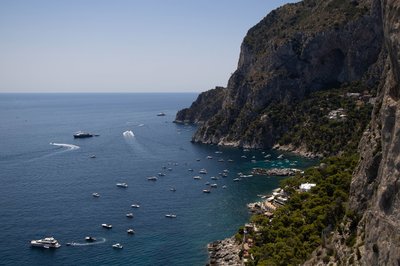
Capri has drawn visitors since , when Emperor Tiberius chose this limestone island as his personal retreat from Rome. Rising from the Bay of Naples between the Sorrentine Peninsula and the open Tyrrhenian Sea, the island spans just 10.4 square kilometres yet packs an extraordinary density of natural and cultural landmarks into its terrain.
The geological drama of Capri is immediately visible: the Faraglioni, three towering sea stacks reaching up to 109 metres, have been carved by millennia of wave erosion from the island's dolomitic limestone. The Blue Grotto, known to ancient Romans who lined its interior with statues, was rediscovered in by German painter August Kopisch and Polish poet Antoni Szymonowicz, reigniting European fascination with the island. Above the shoreline, the terraced landscape supports lemon groves that have produced Capri's famed citrus since at least the .
Two distinct towns divide the island: Capri town clusters around the iconic Piazzetta at 142 metres elevation, while Anacapri sits higher on the western plateau at 286 metres, connected historically by the Scala Fenicia, a stairway of 921 steps carved by Greek colonists around . From the literary salons that hosted Maxim Gorky and Rainer Maria Rilke to the artisan sandal shops that have operated since the , Capri balances its grand past with a living Mediterranean culture.
Top Things to Do in Capri
Visit the Blue Grotto
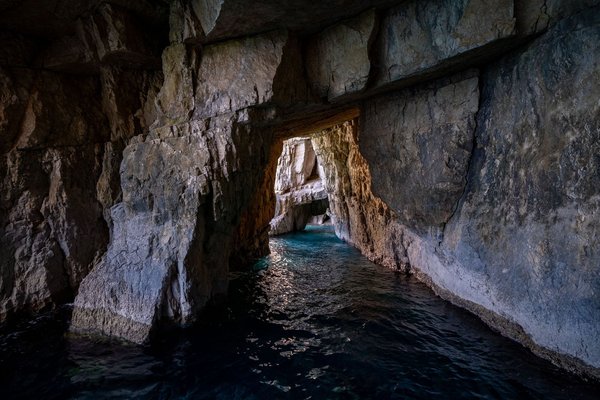
A sea cave lit by refracted sunlight
Access requires transferring into a small wooden rowboat at the cave entrance, where boatmen time their approach with the swell to pass through the 1.3-metre-high opening. Inside, the grotto extends about 60 metres long and 25 metres wide, with a ceiling height of roughly 14 metres. The effect is most intense between and on clear days, when direct sunlight strikes the underwater aperture at the optimal angle. During summer, boats queue from early morning, so arriving by significantly reduces waiting time. Sea conditions must be calm for entry; rough water or high tides close the grotto without notice. The boatmen traditionally sing Neapolitan songs inside the cave, their voices amplified by the limestone dome, a custom that dates back to the first tourist visits in the .
Walk the Gardens of Augustus
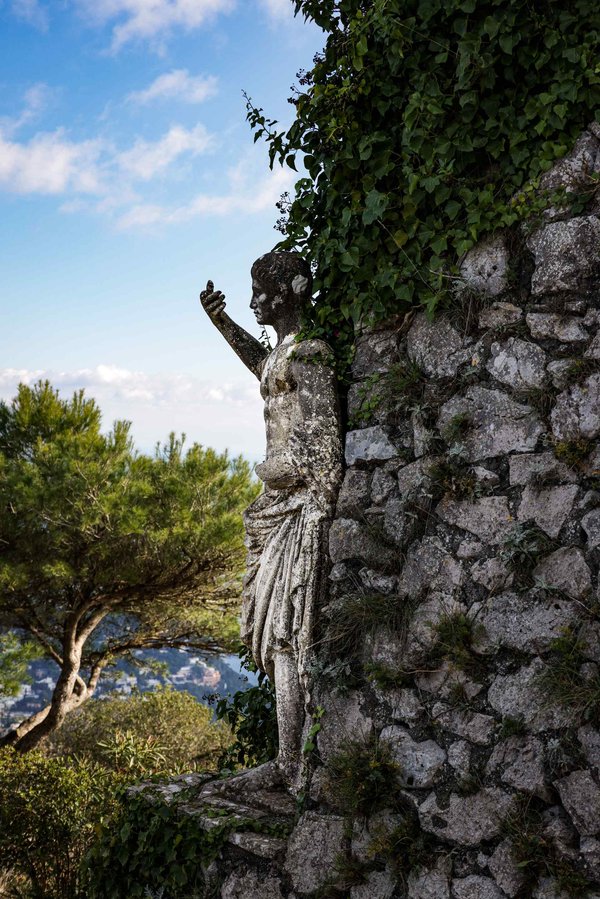
Terraced gardens above the Faraglioni
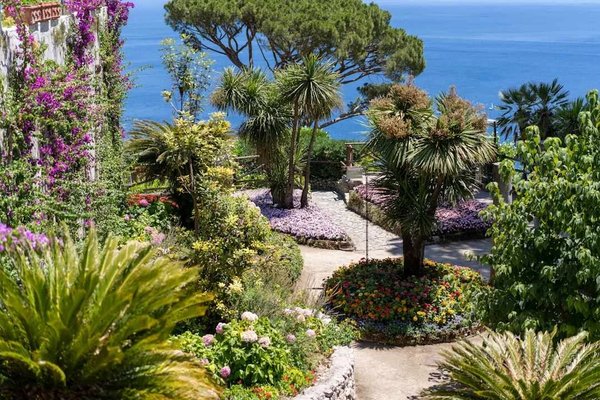
The gardens themselves are compact but richly planted with Mediterranean and subtropical species: Aleppo pines, agaves, dahlias, and bougainvillea arranged along gravel paths with iron railings at the overlooks. The main viewing platform faces south toward the Faraglioni, three limestone sea stacks rising 81 to 109 metres from the water, with a natural arch through the middle stack (Faraglione di Mezzo) large enough for small boats to pass through. On clear days, the view extends east to the Amalfi Coast and west across the Bay of Naples to Ischia. The gardens are small enough to visit in 20-30 minutes but worth lingering in for the light, which shifts dramatically through the afternoon. In , the gardens were renamed from Giardini Krupp to Giardini di Augusto, referencing the first Roman emperor to establish a presence on Capri in , when Augustus traded Ischia to Naples in exchange for this island.
Reach the Summit of Monte Solaro
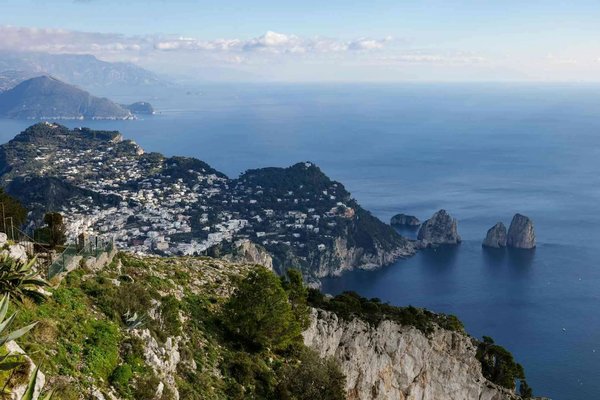
Capri's highest point at 589 metres
A single-seat chairlift built in departs from Piazza Vittoria in Anacapri and covers the 589-metre ascent in about 12 minutes, gliding over terraced vineyards and holm oak forest. The alternative is a hiking trail from Anacapri that takes roughly 50-60 minutes through dense Mediterranean maquis: rosemary, lentisk, and tree heather. At the top, the remains of a small fortification and a simple bar occupy the summit plateau. The descent on foot via the Cetrella hermitage path passes a chapel with frescoes dedicated to Santa Maria di Cetrella and offers a quieter route back to Anacapri through woodland. The hermitage was built by Franciscan monks who chose this isolated spot for its solitude, and the interior retains a marble altarpiece depicting the Madonna and Child.
Explore Villa Jovis
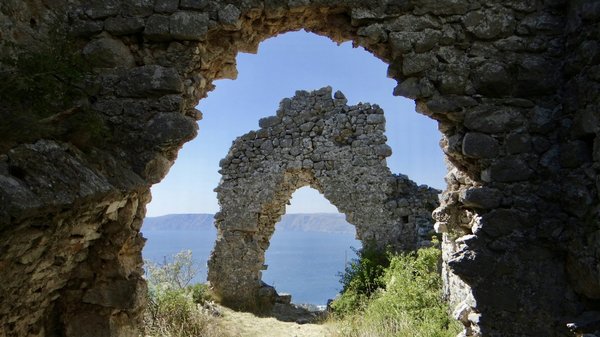
Tiberius' imperial palace on the cliffs
The archaeological layout reveals a sophisticated Roman engineering project: a central system of four interconnected cisterns with a capacity of roughly 8,000 cubic metres collected rainwater for the entire complex. Surrounding these are the imperial apartments, a bathhouse with underfloor heating (hypocaustum), servants' quarters, a loggia with a panoramic terrace, and a corridor leading to the Salto di Tiberio, a sheer 297-metre cliff from which, according to Suetonius, the emperor reportedly had enemies thrown. The walk from Capri town takes about 45 minutes along Via Tiberio, a paved path that climbs steadily through residential gardens past luxury villas and lemon terraces. Pack water, as there is no shade or refreshment at the archaeological site itself. Near the entrance, the Chapel of Santa Maria del Soccorso stands on the cliff edge, added centuries after Tiberius' death but offering the same vertiginous views that the emperor commanded daily.
Browse Via Camerelle
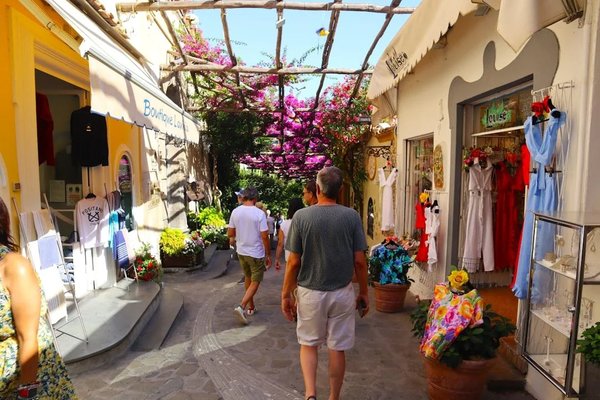
Luxury shopping in converted Roman vaults
Today the 200-metre pedestrian lane runs east from the Piazzetta toward the Tragara belvedere, lined with Italian and international fashion houses. But its character extends beyond luxury retail. Several shops maintain craft traditions specific to Capri: the handmade sandal workshops, where cobblers trace your foot on leather and assemble custom sandali capresi while you wait, have operated here since Capri became a post-war destination for artists and writers. The local perfumeries distill fragrances from island-grown lemons and Mediterranean herbs. Between the boutiques, small bars serve granita di limone made from Capri's IGP-certified lemons, which have thicker, more aromatic skins than mainland varieties. The street is busiest between and during summer, when the evening passeggiata fills the narrow lane.
Visit the Charterhouse of San Giacomo
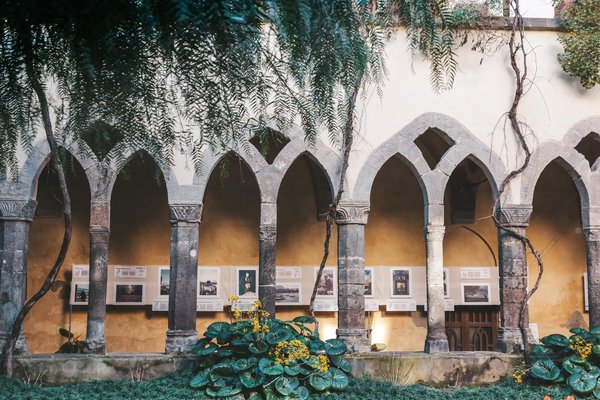
A Carthusian monastery from 1371
The monastery endured a turbulent history. During the plague that devastated Naples, the monks barricaded themselves inside and refused entry to Capri's townspeople seeking refuge, a decision that provoked lasting resentment on the island. The French suppressed the order in , and the buildings served variously as a military barracks, prison, and hospital. Restoration began in the , and today the charterhouse houses the Museo Diefenbach, dedicated to German Symbolist painter Karl Wilhelm Diefenbach, who lived on Capri from until his death in . His monumental canvases, some over 6 metres wide, fill several rooms with dreamlike landscapes and mythological scenes. The church retains fragments of its original fresco cycle, and the larger cloister, with its porticoed arcade of white limestone arches, hosts summer classical concerts under the stars. The smaller cloister, reserved for the prior, preserves a well and a garden layout that reflects the original Carthusian design of silent, self-sufficient enclosure.
Circle the Island by Boat
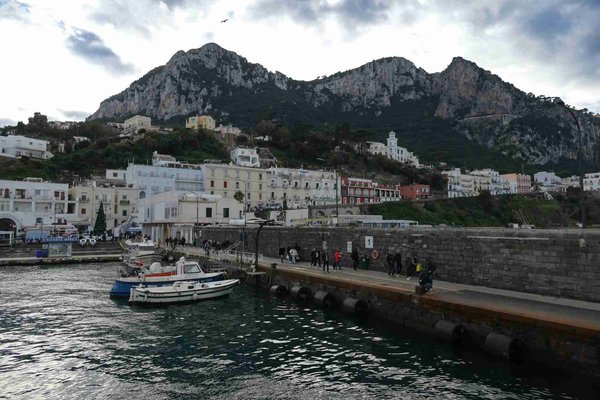
Sea caves, sea stacks, and swimming stops
Boats depart from Marina Grande, and the standard tour circles counterclockwise. The first major stop is typically the Faraglioni, where the boat passes through the natural arch of the middle stack (Faraglione di Mezzo), a tradition said to bring good luck to couples who kiss during the passage. Further south, the Grotta Verde (Green Grotto) offers a different light phenomenon than the Blue Grotto: emerald reflections caused by algae on the submerged rocks. Most tours include 1-2 swimming stops in sheltered coves where the water is transparent to a depth of 10-15 metres. Private boat rentals (gozzo or rubber dinghy) allow you to set your own pace and anchor wherever conditions permit. The most popular operator size is a 7-metre gozzo, which accommodates 4-6 passengers comfortably.
Taste Limoncello at a Local Producer
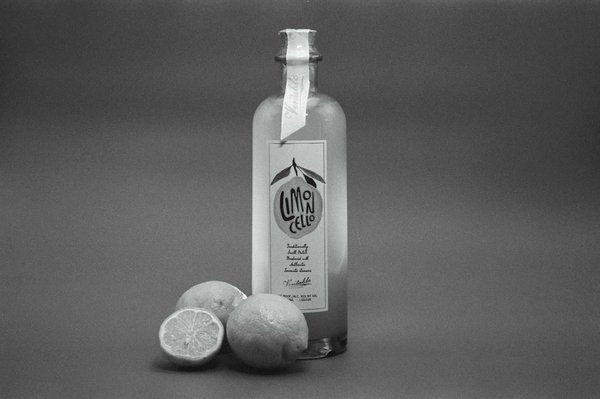
Capri's citrus liqueur since the early 1900s
Several family-run producers on the island offer guided visits to their lemon terraces and production facilities. The process is straightforward but timing-dependent: lemons are hand-picked between and , zested immediately (only the yellow outer layer, never the bitter white pith), and steeped in alcohol for 30-80 days depending on the producer's recipe. The result is filtered, mixed with simple syrup, and bottled without pasteurisation. Tasting sessions typically include the classic limoncello alongside variations: crema di limoncello (blended with cream), limoncello al basilico, and occasionally a fiery limoncello al peperoncino. The best producers also serve their lemons as insalata di limone, sliced thin with oil, salt, and mint, demonstrating the fruit's culinary versatility beyond the liqueur.
Dine on a Terrace at Sunset
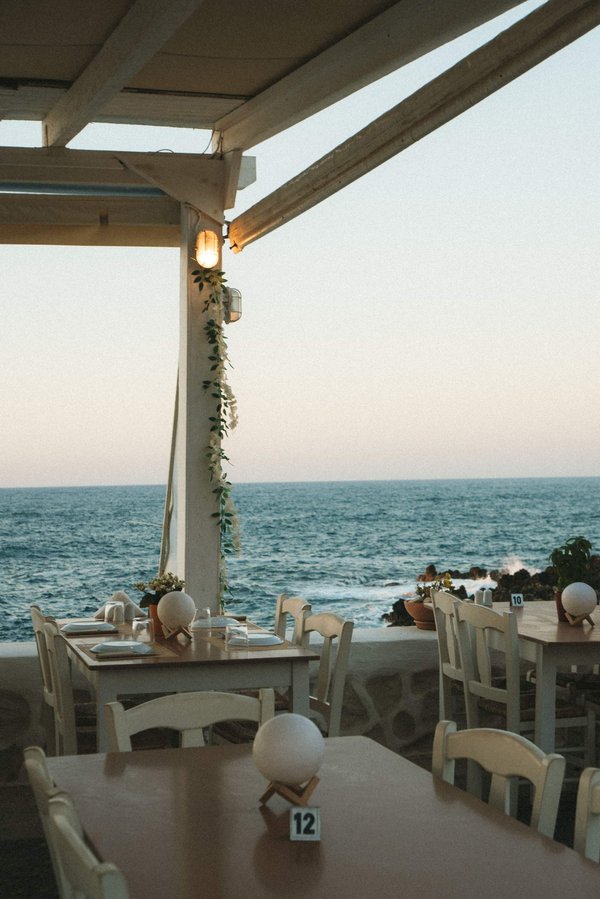
Seafood and local wine above the sea
For a sunset dinner, the restaurants along Via Tragara and the terraces above Marina Piccola face west and southwest, catching the full descent of the sun behind Ischia. Book for in summer to be seated before the light turns golden around . Wine lists typically feature Campanian labels: Falanghina dei Campi Flegrei, Greco di Tufo, and the rare Capri DOC white, produced from Falanghina and Greco grapes grown on the island's terraces, with fewer than 20,000 bottles made annually. End with a torta caprese, the flourless almond and dark chocolate cake invented in the on Capri, reportedly by a baker who forgot to add flour to his cake batter. For a lighter option, ask for delizia al limone, a sponge cake soaked in lemon syrup and filled with lemon cream, which showcases the island's citrus at its purest. Reservations made 2-3 days in advance are essential for terrace seating during peak season.
Admire the Majolica Floor of San Michele
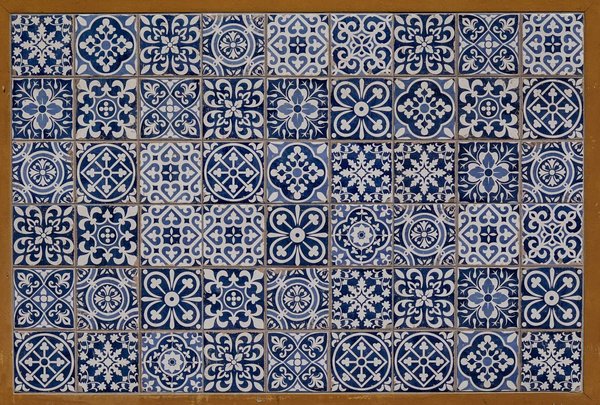
An 18th-century Garden of Eden in ceramic
The tiles were fired at the Chianese workshop in Naples and transported to Anacapri by mule along the Scala Fenicia, since no road connected the two towns at that time. The church itself, built between and on an octagonal plan, was designed by architect Antonio Vaccaro in a restrained Baroque style. Visitors view the floor from a raised wooden walkway around the perimeter and from a small balcony above the entrance, which provides the best vantage for photographing the complete composition. The tiles have been restored twice, in and , and the vivid blues, greens, and yellows remain remarkably well preserved after more than 260 years. The church's octagonal plan, unusual for Campanian religious architecture, creates an intimate space where the floor becomes the primary visual focus rather than the altar. A small organ gallery above the entrance offers the most complete overhead perspective of the composition.
Recommended Itineraries in Capri
Anacapri and Monte Solaro
Afternoon — Visit Villa San Michele, the home-museum of Swedish physician Axel Munthe, built on the ruins of a Tiberian villa. Walk through its gardens with Roman sculpture fragments and views toward Vesuvius. Continue to the Church of San Michele to see the majolica floor, then browse the artisan shops along Via Giuseppe Orlandi.
Evening — Return to Capri town for dinner, or stay in Anacapri for a quieter meal at one of the family-run trattorias along Via Capodimonte.
Beaches and Coastal Swimming
Afternoon — Take the bus or walk to Marina Grande, the island's main harbour beach. The western section near the Torre Saracena offers calmer water. Alternatively, catch a boat to the Bagni di Tiberio, a small beach beneath the ruins of a Roman maritime villa with excellent snorkelling along the submerged foundations.
Evening — End the day with an aperitivo at one of the waterfront bars in Marina Grande, watching the last ferries depart for Naples as the sun drops behind Procida.
History and Art Walk
Afternoon — Follow Via Tiberio uphill to Villa Jovis (45-minute walk), exploring the imperial palace ruins and the panoramic terrace at Salto di Tiberio. On the return, detour to the Arco Naturale, a limestone arch 18 metres high formed by cave erosion, then descend the Pizzolungo trail past the Grotta di Matermania, a cave used as a Roman nymphaeum.
Evening — Visit the Museo Ignazio Cerio in the Piazzetta, which documents the island's geology, fossils, and archaeological finds. Finish with dinner at a terrace restaurant in Capri town.
When to Visit
Spring and Autumn for Mild Weather and Fewer Crowds
Capri's Mediterranean climate delivers mild winters and warm, dry summers. Spring and autumn offer the best balance of comfortable temperatures and manageable visitor numbers, with ferry services running frequently from Naples and Sorrento.
Peak Season
Peak season runs from June through August. Expect daytime highs above 25°C, minimal rain, and heavy ferry traffic. Hotel prices double compared to shoulder months, and the Blue Grotto queue can exceed two hours.
Shoulder Season
The shoulder months of March to May and September to October deliver 14-23°C temperatures with moderate visitor flow. Most services are fully operational, and you can explore trails and grottoes without long waits.
Low Season
Low season spans November to February. Hotel rates drop by 40-60%, but many restaurants and some attractions operate on reduced schedules. The chairlift to Monte Solaro closes for maintenance in January and February.
Compare Destinations
Capri VS Sorrento
Choose Capri for iconic views, turquoise waters and charming hotels; pick Sorrento for a budget-friendly base, quick con...
Capri VS Amalfi
Choose Amalfi for a lower budget, accessible beaches and hikes; choose Capri for iconic views, luxury shopping and night...
Capri VS Positano
Choose Capri for iconic viewpoints, boat trips and luxury hotels; choose Positano for accessible beaches, the Path of th...
Capri VS Ischia
Choose Capri for iconic views, luxury boutiques, and boat trips to the Faraglioni; choose Ischia for thermal spas, wide ...
Capri VS Santorini
Choose Capri for boat trips, luxury shopping, and dramatic cliffs; go for Santorini for Oia sunsets, volcanic beaches, a...
Tips for Visiting Capri
Local Experiences in Capri
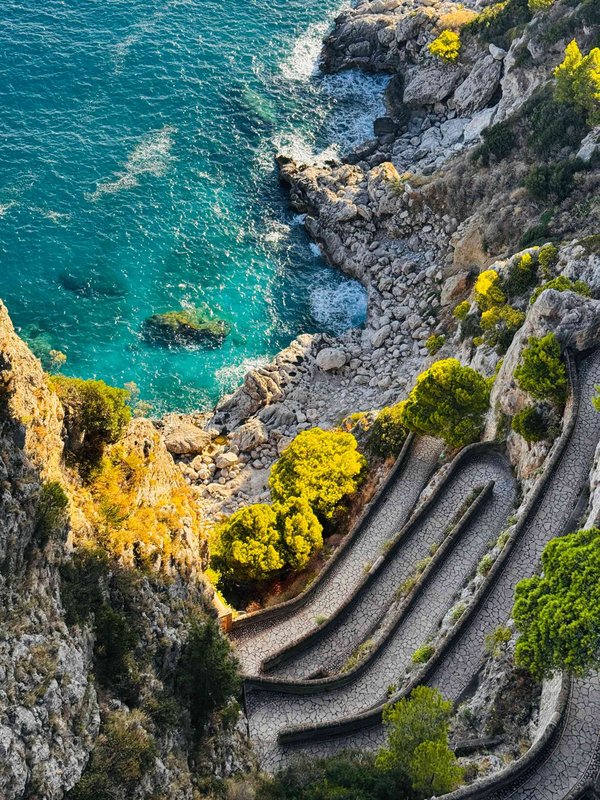
Explore Capri's Hidden Trails
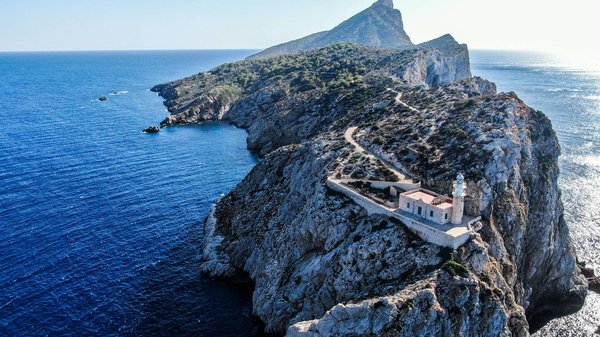
Visit the Punta Carena Lighthouse