10 Activities for Kids in Bologna

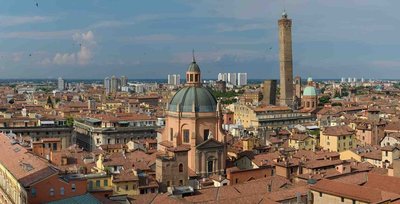
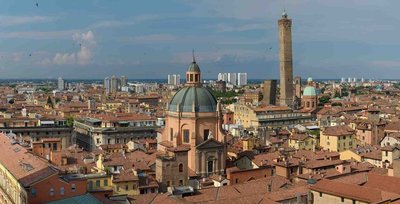
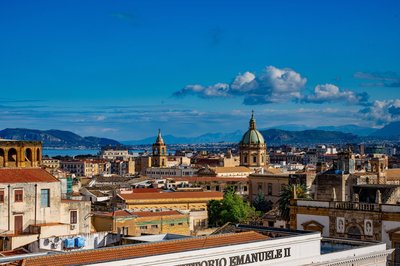
Panoramic view of Bologna with red rooftops and historic architecture under a clear sky.
Written by travel experts
Regularly updated
Verified on-site

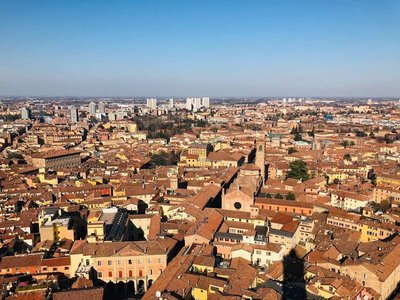
Bologna earned its nickname La Grassa (The Fat One) for its rich food traditions, but families visiting the city quickly discover it deserves a second title: one of Italy's most child-friendly destinations. The porticoes, nearly 40 km of covered walkways recognised by UNESCO in , function as a built-in shelter system. When rain arrives, you just keep walking with the pushchair under cover. When the sun returns, the parks and piazzas fill with local families doing exactly what you came to do. The university, founded in and the oldest in the Western world, shaped a city that genuinely values learning. That shows in its museums: not dusty display cases but hands-on workshops where children make gelato, pull levers on industrial machinery, and press buttons that trigger historical reconstructions. Between museum visits, you can refuel at Mercato delle Erbe or Mercato di Mezzo, both packed with tortellini stalls, fruit vendors, and the kind of controlled chaos that keeps children entertained while adults eat well. This guide covers ten tested activities across the city, from central piazzas to outlying parks, suited to ages 3 and up.

Top Things to Do in Bologna

Museum of the History of Bologna
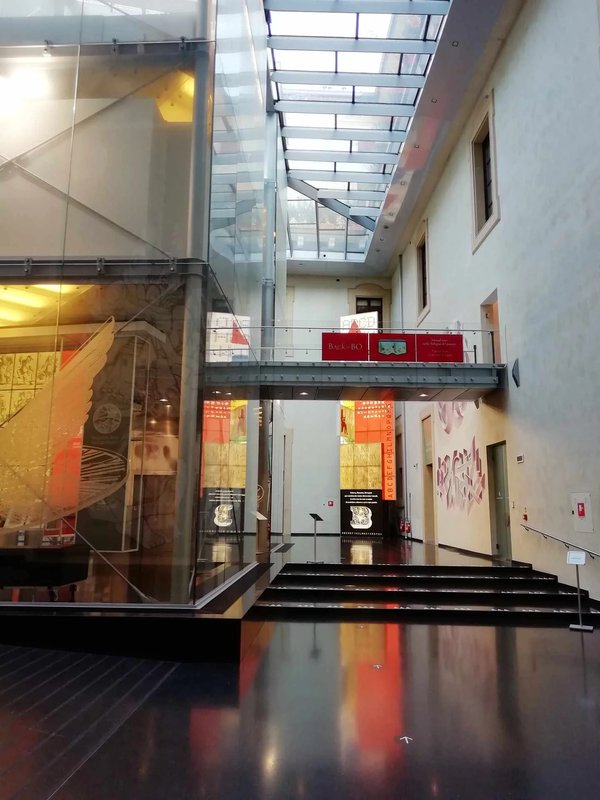
Interior of the Museum of the History of Bologna with modern architecture and displayed exhibits.

Eight centuries compressed into touchscreens

The Museo della Storia di Bologna occupies Palazzo Pepoli Vecchio, a Gothic palace on Via Castiglione. Since opening in , it has earned a reputation as one of Italy's most child-accessible history museums. The permanent exhibition runs chronologically across three floors, from the Etruscan settlement of Felsina through the Roman colony of Bononia and the medieval commune to the modern city. What sets this museum apart for families is the format. Rather than static displays behind glass, rooms use projected animations, scale models you can manipulate, and audio stations narrated by historical characters. Children aged 6 and up can follow a dedicated trail marked with coloured icons. The room reconstructing the medieval canals that once ran through the city, complete with flowing water sounds and a model of the old port, tends to hold children's attention longest. Allow 90 minutes for a focused visit, or two hours if your children want to interact with every station.
Via Castiglione 8, five minutes on foot from Piazza Maggiore.
Open Tuesday to Sunday 10:00 AM to 7:00 PM. Closed Mondays.
Adults 10 EUR, children 6-17 5 EUR, under 6 free.

Montagnola Park

Children's climbing-net playground structure in an urban park.

Bologna's oldest public green space

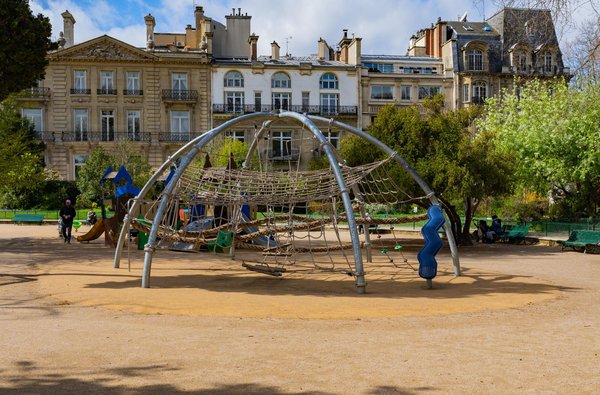
Parco della Montagnola sits on a man-made hill created in when the papal government landscaped rubble from demolished buildings into an elevated garden. Today it is the most central park in Bologna, directly above the bus station and a two-minute walk from Via Indipendenza. The main entrance leads up a monumental staircase designed by architect Antonio Bibiena in . For children, the draw is practical: a large fenced playground with climbing structures, swings, and a rubberised surface for safe falls. The adjacent pond with resident ducks provides a reliable distraction for toddlers. Older children can run the tree-lined gravel paths that loop the park's perimeter. On Friday and Saturday mornings, a large open-air market fills the park's lower terrace with food stalls, clothing, and bric-a-brac. In summer the municipality runs free outdoor cinema screenings and puppet shows on weekend evenings. Bring a picnic blanket and something from the Mercato delle Erbe nearby.
Via Irnerio, directly above Bologna Centrale station.
Open daily, 24 hours. Playground accessible during daylight hours.
Entrance is free.

Museum for the Memory of Ustica

Visitors standing in a dark gallery room lit by circular mirrors and glowing spotlights.

A sombre lesson for older children

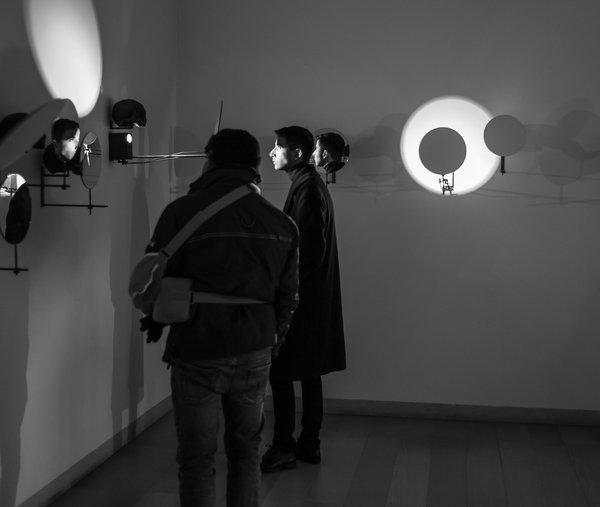
This museum exists to commemorate the 81 victims of Itavia Flight 870, which crashed into the Tyrrhenian Sea on . French-born artist Christian Boltanski designed the permanent installation, which fills a former tram depot with the recovered fuselage of the DC-9 aircraft, surrounded by 81 black mirrors and 81 lamps that flicker on and off in an irregular rhythm. This is not a conventional children's attraction. I recommend it for families with children aged 10 and up who can engage with difficult history. The experience lasts about 40 minutes. The atmosphere is deliberately quiet: dim lighting, whispered voices from speakers recounting passengers' last known words, and the physical wreckage laid out on the floor. For older children studying modern Italian history or interested in aviation, it provides an unforgettable lesson in how a nation processes collective grief. Guided tours in English are available on request and add context about the investigation that lasted over two decades.
Via di Saliceto 3/22, 15 minutes by bus from the centre.
Open Tuesday to Sunday 10:00 AM to 6:00 PM. Closed Mondays.
Entrance is free.

Museum of Industrial Heritage

Interior of the Museum of Industrial Heritage in Bologna with exposed brick walls and historical exhibits.

Levers, gears, and silk looms

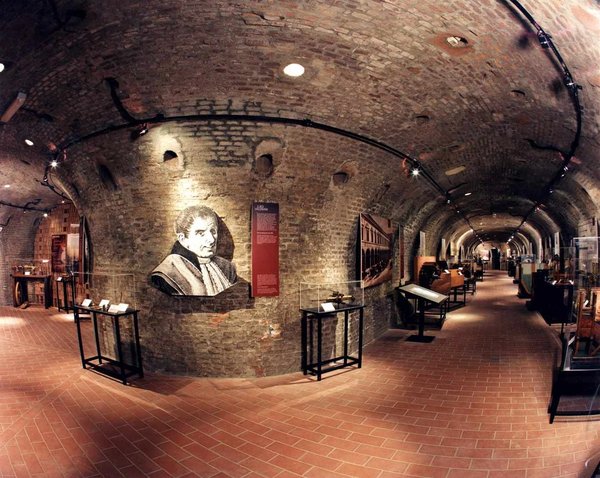
The Museo del Patrimonio Industriale occupies a restored brick furnace on the banks of the Navile Canal, the waterway that powered Bologna's industrial economy from the onward. The museum, established in , tells a story most visitors miss: how Bologna became a manufacturing powerhouse, from medieval silk production to modern packaging machinery. For children, the ground-floor hall is the highlight. Working scale models of hydraulic silk mills can be activated by pressing buttons, and a full-size reconstruction of a canal lock demonstrates how boats navigated the city's underground waterways. The upper floor covers industry with vintage motor scooters, early electronic components, and prototypes from the packaging machines that still form the backbone of Bologna's economy. Weekend workshops for children aged 6-12 run regularly and cover topics like gear mechanics and simple hydraulics. Check the museum website for the current schedule.
Via della Beverara 123, along the Navile Canal. Bus 18 from the centre.
Open Tuesday to Friday 9:00 AM to 1:00 PM, Saturday and Sunday 10:00 AM to 6:30 PM. Closed Mondays.
Adults 5 EUR, children 6-17 3 EUR, under 6 free.

Margherita Gardens

Children running in a park with blooming trees, spring atmosphere in Bologna.

Bologna's largest park since 1879

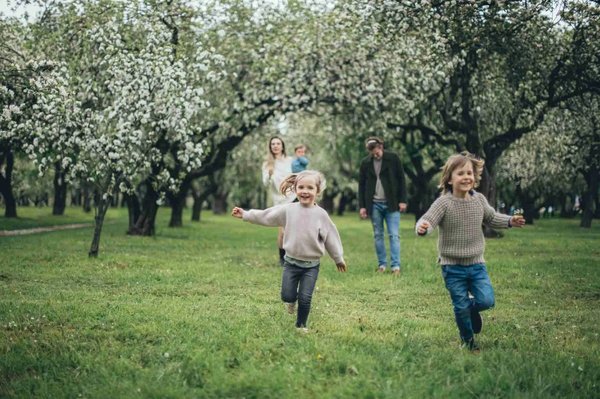
The Giardini Margherita opened in , designed by the Bolognese architect Ernesto Balbo Bertone di Sambuy in the English landscape style then fashionable across continental Europe. Covering 26 hectares on the southern edge of the historic centre, it remains the city's largest and most popular green space. The park works well for families because it offers variety at short distances. The central lake has pedal boats for hire in warm months and a population of turtles that children spot from the wooden bridges. Two separate playground areas serve different age groups: one with low-level equipment for toddlers near the western entrance, another with climbing frames and zip lines for older children near the lake. A paved loop path is suitable for scooters, bikes, and balance bikes. On weekends, the south lawn fills with local families playing football, flying kites, and setting up picnics. Several kiosks sell panini, gelato, and fresh-squeezed juice. During the Festa di San Petronio in early October, the park hosts children's rides and food stalls.
Viale Giovanni Gozzadini, southern edge of the centre. Main entrance at Porta Castiglione.
Open daily from dawn to dusk.
Entrance is free. Pedal boat hire approximately 5 EUR for 30 minutes.

International Museum of Music

Interior of the Museum of Music in Bologna with musical instruments, busts, and paintings on pink walls.

Where children touch instruments from five centuries

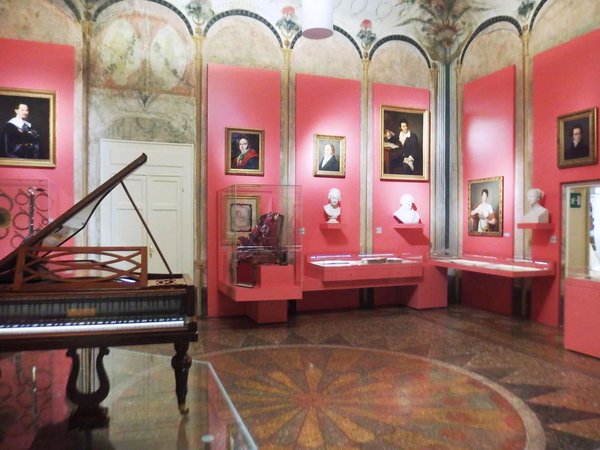
The Museo Internazionale e Biblioteca della Musica is housed inside Palazzo Sanguinetti on Strada Maggiore, a palace whose frescoed ceilings alone justify the visit. The collection spans over 100 historical instruments, from Renaissance lutes and Baroque harpsichords to a set of early woodwinds. Portraits, manuscripts, and scores from Bologna's rich musical tradition, including works by Padre Martini who taught the young Mozart here in , fill the upper rooms. For families, the museum runs regular Sunday workshops where children aged 4-10 explore rhythm, melody, and sound production using replica instruments. Sessions last about an hour and are designed to be playful rather than academic. Even without a workshop booking, children can use the audio stations throughout the museum to hear how each displayed instrument sounds. The rooms are small and the total collection manageable, so a visit takes about an hour, just the right length before restlessness sets in.
Strada Maggiore 34, 10 minutes on foot from Piazza Maggiore.
Open Tuesday to Sunday 10:00 AM to 6:30 PM. Closed Mondays.
Adults 7 EUR, children 6-17 4 EUR, under 6 free.

Carpigiani Gelato Museum

Artisanal gelato with biscuit decorations at the Carpigiani Gelato Museum in Bologna.

Make your own gelato from scratch

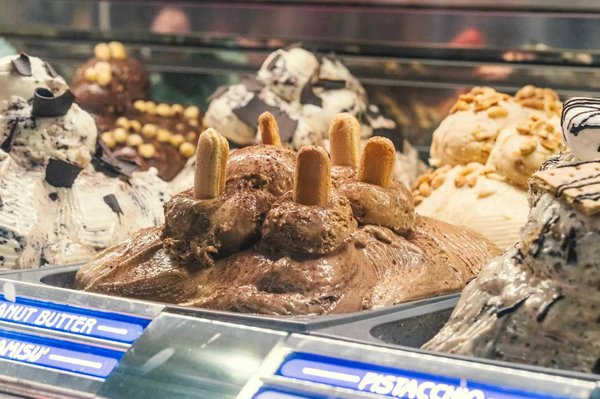
The Gelato Museum Carpigiani, opened in at the headquarters of the world's largest gelato machine manufacturer, traces the frozen dessert from ancient Mesopotamian snow pits through Renaissance sorbetti to the modern industrial gelato machines built in the same factory next door. The permanent exhibition fills 20 rooms with vintage gelato carts, historic moulds, advertising posters, and the original Carpigiani machines from the . But the reason families visit is the hands-on gelato workshop. In a session lasting about two hours, children aged 5 and up learn to pasteurise a base, balance sugar and fat ratios, churn the mixture in a professional batch freezer, and add flavourings. They eat the result at the end. Workshops must be booked in advance through the museum website and run in Italian and English. The museum is in Anzola dell'Emilia, roughly 15 minutes by car or bus from Bologna centre, making it a natural half-day outing.
Via Emilia 45, Anzola dell'Emilia. 15 minutes by car from Bologna centre.
Open Monday to Friday 9:00 AM to 6:00 PM. Workshops by reservation only.
Museum entry 5 EUR. Gelato-making workshop 10 EUR per person (includes tasting).

FICO Eataly World

Entrance of FICO Eataly World in Bologna with visible logo and modern architecture.

An agri-food park built for curious children

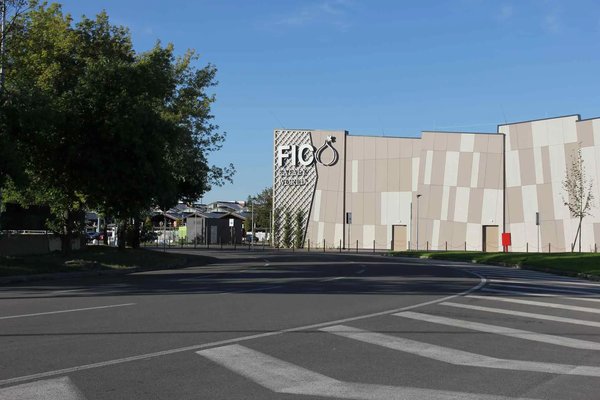
FICO Eataly World opened in as the world's largest agri-food park, occupying a converted wholesale market on the eastern outskirts of Bologna. The 100,000 square-metre site combines working farms, production demonstrations, restaurants, and educational workshops under one roof. Children gravitate first to the animal areas: cows, pigs, goats, chickens, and rabbits housed in open-plan paddocks with low fences designed for viewing. The production stations demonstrate how wheat becomes pasta, milk becomes Parmigiano-Reggiano, and olives become oil. Interactive workshops, bookable on arrival for roughly 10-15 EUR per person, let children roll fresh pasta, stretch mozzarella, or decorate pizzas. The space is flat and fully accessible for pushchairs. A free shuttle runs from Bologna Centrale station to the park entrance. One practical note: the park is enormous. Families with young children do best picking two or three workshops and spending the rest of the time in the farm areas rather than trying to cover everything.
Via Paolo Canali 8, eastern Bologna. Free shuttle from Bologna Centrale.
Open daily 10:00 AM to midnight. Workshop schedules vary seasonally.
Park entry free. Workshops and tastings charged individually, typically 10-15 EUR per person.

Palazzo Poggi Museum

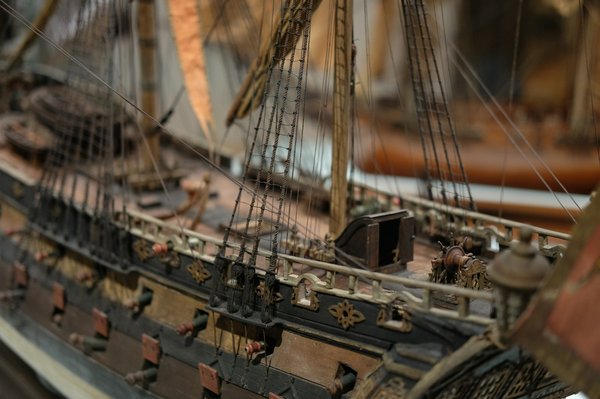
Detail of an antique wooden ship model with rigging, part of a naval architecture collection.

Wax anatomies and giant ship models

The Museo di Palazzo Poggi is the University of Bologna's main museum, housed in a palace that served as the university's scientific headquarters for centuries. The collection spans natural history, anatomy, physics, geography, and military architecture, all displayed in elaborately frescoed rooms. For children, two sections stand out. The Room of Anatomy contains wax models created by Anna Morandi Manzolini and Ercole Lelli in the , originally used to train medical students. The models are startlingly detailed, showing muscles, organs, and veins with scientific precision that fascinates older children (roughly age 8 and up). The Room of Geography holds enormous painted globes from the and a collection of ship models that trace the evolution of naval architecture. Younger children tend to prefer this section. The museum is free, centrally located, and rarely crowded. A visit takes about an hour.
Via Zamboni 33, in the university district, 10 minutes from Piazza Maggiore.
Open Tuesday to Friday 10:00 AM to 4:00 PM, Saturday and Sunday 10:00 AM to 6:00 PM. Closed Mondays.
Entrance is free.

Museum of Anatomical Waxworks

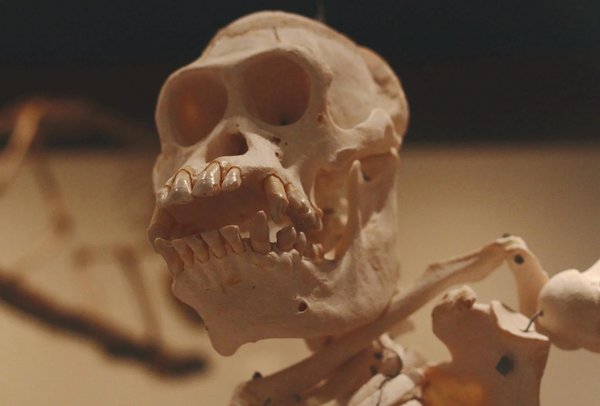
Close-up of a skeletal skull displayed at the Museum of Anatomical Waxworks in Bologna.

Scientific art from the 18th century

The Museo delle Cere Anatomiche Luigi Cattaneo sits within the University of Bologna's medical school complex on Via Irnerio. Founded in , the collection holds over 180 wax anatomical models crafted by some of the finest ceroplastic artists in European history, including works by Giovanni Manzolini and his wife Anna Morandi, one of the first women to hold a university teaching position in Europe. The models were originally created as teaching tools when dissecting real cadavers was limited by law and decay. Each piece is scientifically precise yet artistically composed, with the subjects often posed in classical postures borrowed from Renaissance sculpture. For families, this museum works best with children aged 10 and up who have a genuine interest in science or anatomy. Younger children may find some displays unsettling. The museum is small, requiring about 45 minutes, and free to enter. Pair it with a visit to Palazzo Poggi two blocks south on Via Zamboni for a combined morning of university museum exploration.
Via Irnerio 48, within the university medical school complex.
Open Monday to Friday 9:00 AM to 5:00 PM. Closed weekends and university holidays.
Entrance is free.

Recommended Itineraries in Bologna

Historic Centre with Kids

Morning — Start at Piazza Maggiore by and let the children run the open square while you take in the Basilica of San Petronio and the Fountain of Neptune. Walk under the porticoes to the Two Towers, explaining how Bologna once had over 100 of them. If your children are over 6 and can manage 498 steps, climb the Asinelli Tower for a rooftop view of the red city.

Afternoon — Head to Mercato di Mezzo on Via Clavature for lunch: fresh tortellini, sliced mortadella, and fruit from the stalls. After eating, walk south to the Giardini Margherita for playground time and pedal boats on the lake. End the day with gelato from La Sorbetteria Castiglione on the walk back to the centre.

Parks and Nature Day

Morning — Take bus 20 or walk 25 minutes south of the centre to Villa Ghigi Park, a 30-hectare hillside estate with unpaved trails through woodland, orchards, and open meadows. Children can spot woodpeckers, collect chestnuts in autumn, and explore the ruins of a villa. Pack a picnic, as there are no cafes inside the park.

Afternoon — Return to the centre and spend the rest of the day at Montagnola Park for playground time, duck watching at the pond, and a snack from one of the kiosks along Via Irnerio. In summer, check the municipal calendar for free outdoor puppet shows in the early evening.

Museum and Workshop Day

Morning — Drive or take the bus to the Carpigiani Gelato Museum in Anzola dell'Emilia for a gelato-making workshop (book at least a week ahead). The session lasts about two hours and ends with eating the gelato you made.

Afternoon — Return to Bologna and visit the Museum of Industrial Heritage on the Navile Canal. Children can operate scale models of silk mills and canal locks. The surrounding canal path offers a short, flat walk suitable for pushchairs and scooters. Finish with pizza at one of the trattorias on Via del Pratello.

When to Visit

When to Visit Bologna with Kids

Bologna sits in the Po Valley with hot summers and cold, foggy winters. Spring and early autumn offer mild temperatures ideal for park days and walking. Summer school holidays bring fewer locals but temperatures above 30 °C. Winter is quiet and affordable, with Christmas markets adding family appeal in December.

Peak Season

June through August brings the highest temperatures, university crowds thin out but tourist numbers rise, and accommodation prices peak.

Shoulder Season

April to May and September to October deliver mild weather, manageable visitor numbers, and the full range of open attractions.

Low Season

December through February is cold and foggy, but museums are uncrowded, prices drop, and December Christmas markets bring family-friendly atmosphere.

Tips for Visiting Bologna

I always carry a refillable water bottle for the kids. Bologna's public drinking fountains, called nasoni, are scattered across the centre and dispense clean tap water year-round.
Most trattorias in the centre will prepare a piatto bambino on request, usually plain pasta with butter or tomato sauce, even if it is not on the printed menu.
If you are visiting between June and August, plan outdoor activities before and after . The midday heat in the Po Valley regularly exceeds 35 °C, and shade under the porticoes only helps so much.

Local Experiences in Bologna

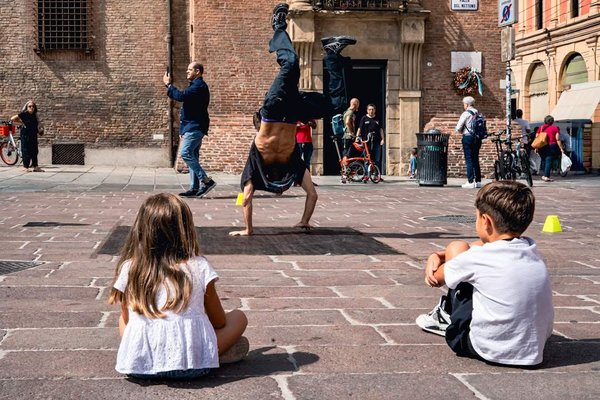
Children sitting in a Bologna square watching a street performer doing acrobatics in front of historic buildings.

Hidden Playgrounds Under the Porticoes
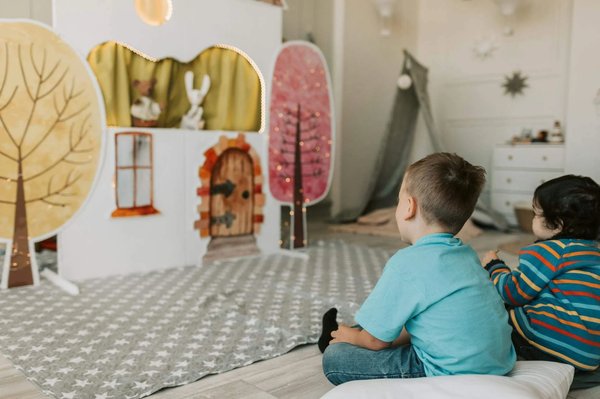
Bologna's residential neighbourhoods hide small playgrounds that never appear in tourist guides. I have found reliable ones in Piazza Aldrovandi (behind the old market), Giardino del Cavaticcio (near MAMbo), and the courtyard behind San Martino church on Via Oberdan. They are fenced, shaded, and used mainly by local families. Ask at any pharmacy or tabaccheria for the nearest giardinetto and they will point you to one within a few minutes' walk.
Children watching a puppet show in a cozy setting, perfect for kids' theater activities.

Teatro Testoni Ragazzi
The Teatro Testoni Ragazzi on Via Matteotti is one of Italy's dedicated children's theatres, run by the La Baracca cooperative since . The programme includes puppet shows, physical theatre, and musical performances calibrated by age group, with separate shows for ages 1-3, 3-6, and 6-10. Performances run on weekends during the season from October through May. Tickets cost about 8 EUR per person and sell out quickly, so I recommend booking online the week before.
Child wearing an astronaut helmet with space illustrations on a blue background, theme Museum of the Sky and the Earth in Bologna.

Museo del Cielo e della Terra

About 25 km northwest of Bologna in San Giovanni in Persiceto, the Museo del Cielo e della Terra runs a planetarium, a botanical garden, an insect collection, and a working astronomical observatory. Weekend workshops for children aged 5-12 cover constellation recognition, insect biology, and plant propagation. The planetarium shows last 45 minutes and project a full dome sky that captivates even toddlers. Reach it by car in 30 minutes or by suburban bus. It makes a solid half-day trip, especially if combined with lunch in the town's small central square.

Frequently Asked Questions about Bologna

What is the best age range for a family trip to Bologna?

I find Bologna works well for children from about age 3 upward. Toddlers enjoy the parks and the flat portico walks. Children aged 6-12 get the most out of the interactive museums and workshops. Teenagers appreciate the food scene and the university quarter atmosphere.

Are restaurants in Bologna welcoming to children?

Yes, overwhelmingly so. I have never been turned away with children, even at busy trattorias. Most places provide high chairs and will prepare a simple pasta dish for children on request. Lunch service between <time datetime="12:30">12:30</time> and <time datetime="13:30">1:30 PM</time> is the busiest, so I aim for <time datetime="12:00">noon</time> or <time datetime="14:00">2:00 PM</time> for a calmer experience.

How walkable is Bologna with a pushchair?

The historic centre is largely flat and the porticoes provide shelter, which helps. Pavements are uneven in places, especially on the older cobblestoned streets around Via Zamboni, so I recommend a pushchair with larger wheels. The main piazzas and shopping streets are smooth and accessible.

Which museums in Bologna are genuinely engaging for children?

I would prioritise the <strong>Museum of the History of Bologna</strong> for its touchscreens and models, the <strong>Gelato Museum</strong> for the hands-on workshop, and the <strong>Museum of Industrial Heritage</strong> for its working machines. For older children with a science interest, <strong>Palazzo Poggi</strong> is excellent and free.

What is the best gelato shop in Bologna for families?

I keep returning to <strong>La Sorbetteria Castiglione</strong> on Via Castiglione for its natural ingredients and fruit-based flavours that suit children. <strong>Cremeria Funivia</strong> near Porta Saragozza is another reliable choice with outdoor seating. Both offer small portions at lower prices.

Is public transport useful for families visiting Bologna?

The bus network run by TPER covers the city well. I use it mainly for reaching the Gelato Museum, FICO Eataly World, and the Museum of Industrial Heritage, all of which sit outside walking distance of the centre. Children under 10 travel free when accompanied by a paying adult. Buy tickets at any tabaccheria.

Are there family events in Bologna during the year?

The <strong>Teatro Testoni Ragazzi</strong> runs a full season of children's theatre from October to May. In June, the municipality organises free outdoor cinema and puppet shows in parks. The <strong>Festa di San Petronio</strong> in early October brings rides and stalls to the Giardini Margherita. December Christmas markets on Piazza Maggiore include a dedicated children's area.

Where can I find up-to-date information on family activities?

I check <strong>Bologna Welcome</strong>, the city's official tourism portal, which maintains a family section with current events. The municipal website lists park activities and free summer programmes. For theatre bookings, the La Baracca cooperative website has the full Testoni Ragazzi season calendar.
Is Bologna safe for families?

I have always felt comfortable walking with children in the centre, even in the evening. The main tourist areas around Piazza Maggiore, Via dell'Indipendenza, and the university quarter are well-lit and busy. Standard precautions about pickpockets in crowded areas apply, but violent crime is rare.

Can I do a day trip from Bologna with kids?

Absolutely. <strong>Ravenna</strong> is 75 minutes by train and its Byzantine mosaics genuinely impress children. <strong>Dozza</strong>, a painted village 30 minutes south by car, has murals on every building and a wine cellar carved into rock. The <strong>Museo del Cielo e della Terra</strong> in San Giovanni in Persiceto is 30 minutes away and runs planetarium shows and nature workshops.