Bologna's Secret Side: 10 Gems

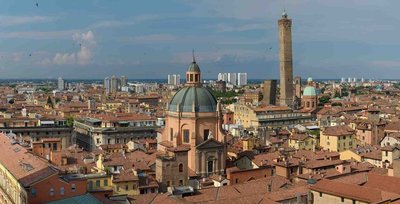
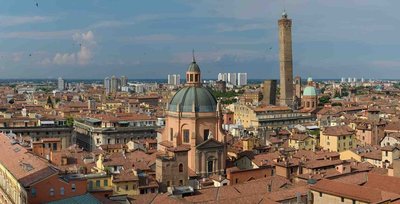
Panoramic view of Bologna with the Two Towers and the city's red rooftops under a clear sky.
Written by travel experts
Regularly updated
Verified on-site

Bologna rewards curiosity. Behind the terracotta facades and 40 kilometres of porticoed streets, there is a city most visitors walk straight past: underground waterways that once powered silk mills, a anatomy theatre carved entirely in cedar wood, and a Cold War-era memorial that turns wreckage into art. This guide skips the postcard version and takes you into the Bologna that locals argue about over tortellini — the hidden courtyards off Via Zamboni, the street-art garden tucked behind the university, and the industrial quarter where brick kilns have become museums. Whether you peer through the tiny window on Via Piella or climb all 498 steps of the Asinelli Tower at opening time, you will see a city that has been reinventing itself since , when it founded the oldest university in the Western world.

Top Things to Do in Bologna

Climbing the Asinelli Tower
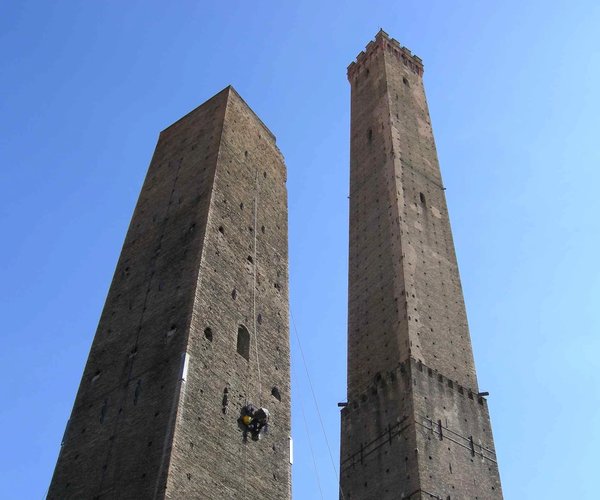
The Asinelli and Garisenda Towers in Bologna under a clear blue sky.

498 steps to the best rooftop panorama in Emilia-Romagna

The Asinelli Tower has dominated Bologna's skyline since , rising nearly 97 metres above Piazza di Porta Ravegnana. Arriving right at the opening avoids the midday queue and gives you the terracotta roofscape almost to yourself. The staircase is narrow, wooden, and deliberately medieval — each flight tilts slightly as the tower leans 2.23 metres off-axis, a fact you feel in your calves long before you reach the top. From the summit the view stretches from the Apennine ridgeline south to the Po plain north, with the leaning Garisenda Tower directly below looking like a scale model. On clear days you can pick out the cranes of the Bologna Fiere fairground and, further east, the bell towers of Ravenna. The climb down is quicker but no less atmospheric: late-morning light pours through the slit windows, striping the worn steps in gold. Budget about 40 minutes for the full round trip and wear shoes with grip — the wooden treads are polished smooth by nine centuries of foot traffic.
Located in Piazza di Porta Ravegnana, at the intersection of Via Rizzoli and Strada Maggiore.
Open daily from to . Last entry 30 minutes before closing.
Entrance ticket: €5. Reduced rates for children and groups. Advance booking recommended in peak season.

The Archiginnasio Anatomy Theatre

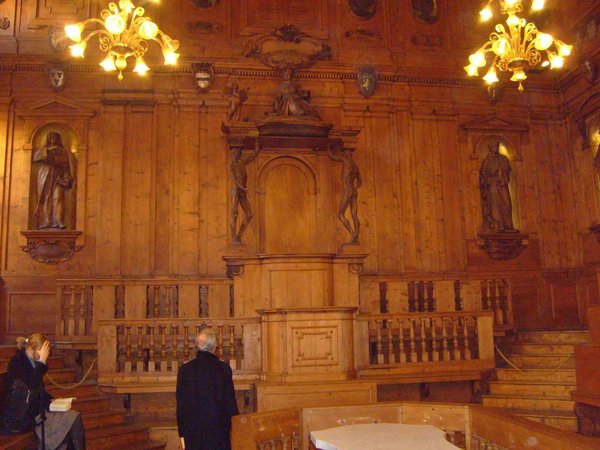
Anatomical Theatre of the Archiginnasio in Bologna with wooden details and statues, illuminated by chandeliers.

A cedar-wood stage where medicine met spectacle

Tucked inside the Palazzo dell'Archiginnasio — once the main building of Europe's oldest university — this anatomy theatre was completed in and feels more like a Baroque jewel box than a lecture hall. Every surface is lined with carved spruce and cedar: fourteen niches hold wooden statues of celebrated physicians from Hippocrates to Mondino de' Liuzzi, while two flayed figures (the famous Spellati) flank the lecturer's canopy, their musculature carved with surgical precision. Public dissections took place here during the winter months, when the cold helped preserve cadavers, and students packed the tiered benches around a rotating marble table that still sits at the centre. The room was heavily damaged by Allied bombing in and painstakingly rebuilt piece by piece from salvaged fragments. Upstairs, the Archiginnasio Library holds over 700,000 volumes, including medieval manuscripts and the original university matriculation rolls. Visit mid-morning on a weekday and you may have the theatre entirely to yourself — a rare chance to study the carved details at your own pace.
Located in Piazza Galvani 1, directly behind Piazza Maggiore.
Open Monday to Friday –, Saturday –. Closed Sundays and public holidays.
Entrance ticket: €3. Free on the first Sunday of each month.

The Secret Window on Via Piella

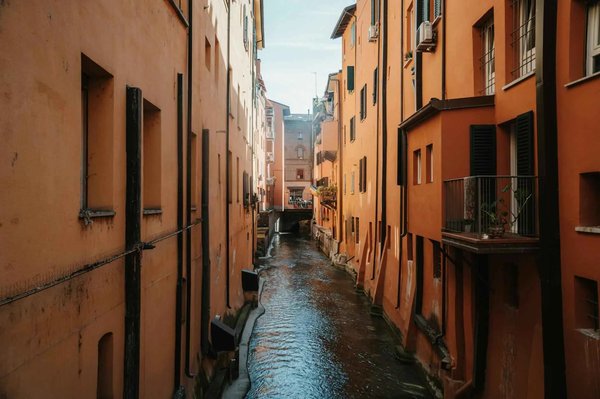
View of the Moline Canal in Bologna with orange buildings and reflections on the water.

A canal hidden behind a brick wall since the Middle Ages

Halfway along Via Piella, an unmarked wooden shutter set into the wall swings open to reveal something that should not logically exist in a landlocked city: a stretch of the Canale delle Moline flowing between the back walls of medieval houses, their plaster faded to ochre and salmon. Bologna once had a canal network rivalling that of many port cities, powering over 300 silk mills by the and making the city one of Europe's wealthiest. Most waterways were covered over in the to make room for roads, but this stretch survived, hidden and almost forgotten. The view through the window is best in late afternoon, when the sun catches the water and throws rippled light onto the brickwork. Walk fifty metres further along Via Piella and turn onto Via Malcontenti for a second, less-known opening that gives an even longer perspective of the canal. The entire detour takes ten minutes but shifts your understanding of the city completely: beneath Bologna's streets, a medieval water network still flows.
Along Via Piella, between Via Oberdan and Via Malcontenti in the historic centre.
Accessible year-round, at any hour. The window is always unlocked.
Entrance is free.

Santa Maria della Vita

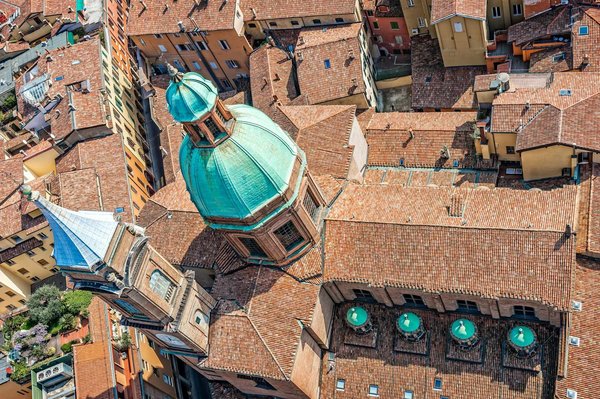
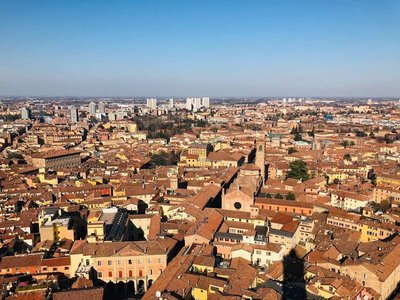
Aerial view of Bologna's terracotta rooftops with a green Baroque church dome.

Renaissance grief sculpted so raw it stops you mid-step

The Sanctuary of Santa Maria della Vita is a small church that punches far above its weight, thanks to one terracotta sculptural group: Niccolo dell'Arca's Lamentation over the Dead Christ, completed around . Six life-sized figures surround the body of Christ, their faces contorted in grief so visceral that the art historian Roberto Longhi described them as a "scream in stone." One figure recoils as if physically struck; another claws at her own cheeks. The detail is extraordinary — individual teeth, tear tracks, the veins on a clenched hand. The church itself dates to and was rebuilt with a Baroque dome in the ; the frescoed interior provides a calmer counterpoint to the raw emotion below. A second sculptural group by Alfonso Lombardi, created about 60 years later, sits in an adjacent room and makes for an interesting stylistic comparison. The sanctuary is just off Via Clavature, one of Bologna's busiest shopping streets, yet most people walk past without noticing the entrance.
At Via Clavature 10, 100 metres from Piazza Maggiore.
Open daily –.
Entrance is free.

The Ustica Memorial Museum

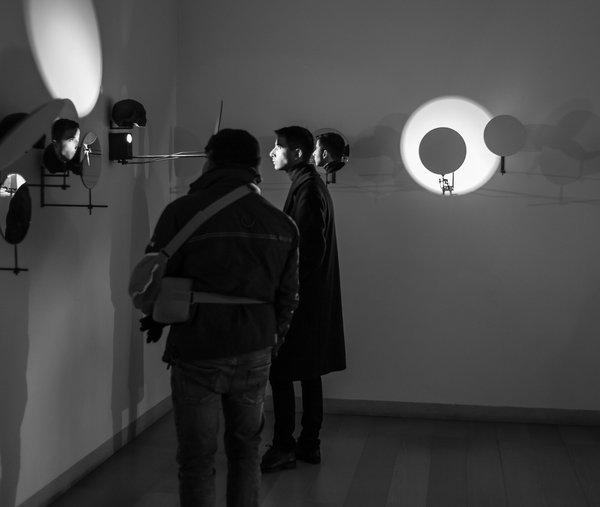
Visitors standing in a dark gallery room lit by circular mirrors and glowing spotlights.

Wreckage transformed into a haunting art installation

On , Itavia Flight 870 crashed into the Tyrrhenian Sea near the island of Ustica, killing all 81 people on board. Decades of investigations, cover-ups, and conspiracy theories followed — Italy's longest-running aviation mystery. In , French artist Christian Boltanski was commissioned to transform the recovered fuselage into a permanent installation inside a former bus depot in Bologna. The aircraft's reassembled skeleton hangs from the ceiling, surrounded by 81 black mirrors — one for each victim — and 81 light bulbs that flicker on and off in an irregular rhythm, simulating breath. Speakers whisper fragments of daily conversation, creating the unsettling impression that the victims are still present. The effect is devastating and deliberately so: this is not a museum that explains, but one that makes you feel. Personal belongings recovered from the wreckage are displayed in simple glass cases along the walls. The space is rarely crowded, and the silence of other visitors becomes part of the experience.
Located at Via di Saliceto 3/22, about 15 minutes by bus from the centre.
Open Friday to Sunday, –.
Entrance is free for all visitors.

Montagnola Park

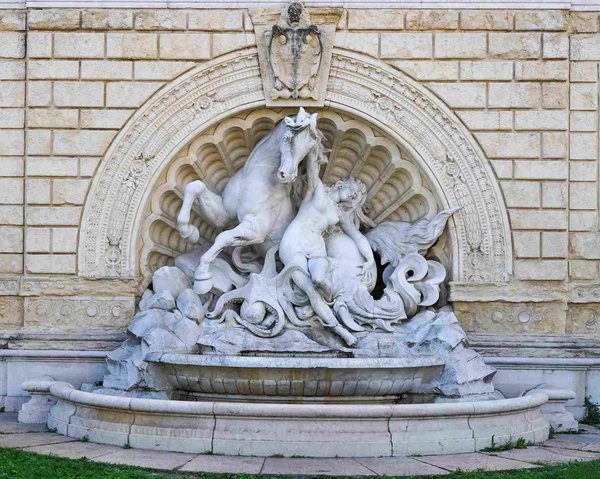
Decorative fountain in Montagnola Park in Bologna, featuring a marble horse and human figure sculpture.

An 18th-century public garden with a Friday flea market

Montagnola Park is Bologna's oldest public garden, laid out in on the ruins of a demolished fortress and redesigned with Neoclassical staircases in . The park sits on an artificial mound — the montagnola — which gives it an elevated, slightly secluded feel despite being just north of Via Indipendenza. The monumental double staircase at the Piazza VIII Agosto entrance was designed by Tito Azzolini and decorated with allegorical sculptures that most people rush past on their way to the bus station. Inside, plane trees form a dense canopy over gravel paths, a central fountain, and benches occupied by chess-playing retirees. Every Friday and Saturday the park hosts the Mercato della Montagnola, one of the oldest open-air markets in Italy, where stalls sell everything from vintage leather jackets to North African spices and secondhand books. Arrive before for the best finds. The park is also the site of a lesser-known curiosity: a stone marker embedded in the pavement near the north exit that records the exact spot where Napoleon addressed the Bolognese citizenry in .
Located at Via Irnerio 2/3, adjacent to the Bologna bus station.
Open 24 hours. Market on Friday and Saturday mornings.
Entrance is free.

The International Museum of Music

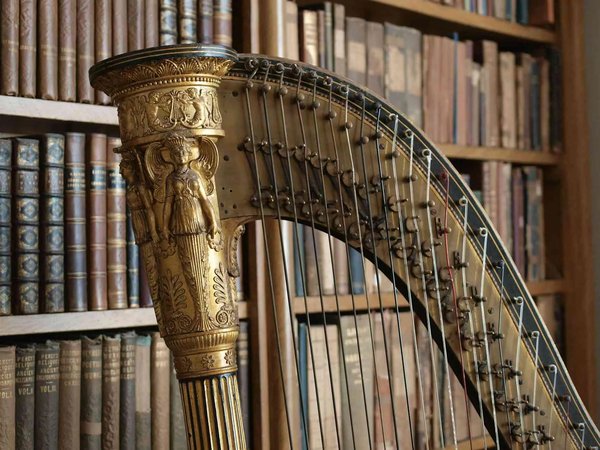
Detail of a decorated harp with a background of bookshelves at the International Museum and Library of Music in Bologna.

Six centuries of instruments inside a frescoed palazzo

The International Museum and Library of Music occupies the piano nobile of Palazzo Sanguinetti, a residence whose frescoed ceilings alone would justify the visit. Bologna earned UNESCO's Creative City of Music designation in , and this museum explains why: over 80 antique instruments fill nine rooms, from a harpsichord decorated with mythological scenes to brass horns used in the city's civic band. The collection of portraits is equally striking — Padre Martini, the Franciscan friar who tutored the 14-year-old Mozart during his Bologna stay in , assembled over 300 composer portraits, many painted from life. A separate room displays original manuscripts by Rossini, who studied at the Liceo Musicale next door. Audio stations let you hear period instruments, and the acoustics of the frescoed rooms add a resonance that headphones cannot replicate. The museum is rarely crowded and makes an excellent rainy-day option. Combine it with a walk down Strada Maggiore afterward, one of Bologna's finest porticoed streets.
At Strada Maggiore 34, a 5-minute walk from the Two Towers.
Open Tuesday to Sunday, –. Closed Mondays.
Entrance ticket: €5. Free with the Bologna Welcome Card.

Mercato di Mezzo

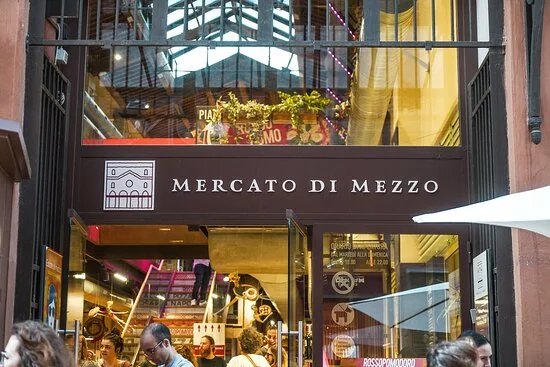
Entrance to the Mercato di Mezzo in Bologna with signage and glass windows, people entering, and visible interior decorations.

A medieval food hall that never stopped trading

The Mercato di Mezzo has operated on the same spot since the Middle Ages, when it sat at the centre of Bologna's commercial district — the Quadrilatero — a grid of narrow streets named after the goods once sold there (Via Drapperie for cloth, Via Pescherie Vecchie for fish). The current building keeps the historical footprint but adds a modern food-hall format: ground-floor counters serve sliced mortadella, fried crescentine, and tigelle filled with squacquerone cheese, while upstairs a mezzanine offers sit-down meals with local wines. Unlike tourist-oriented food halls in other Italian cities, Mercato di Mezzo still draws a largely local crowd, especially at the aperitivo hour between and . The surrounding Quadrilatero streets are worth exploring on their own: fishmongers stack whole swordfish on marble counters, delicatessens hang entire prosciutto legs in the doorway, and pasta shops roll sfoglia by hand in full view of the pavement. The entire area becomes a de facto open-air market, and the best strategy is to graze — a slice here, a glass there — rather than sit down for a full meal.
At Via Clavature 12, in the heart of the Quadrilatero district.
Open daily from to midnight.
Prices vary by vendor. A mortadella sandwich runs about €4–6, a glass of Pignoletto €4.

The Museum of Industrial Heritage

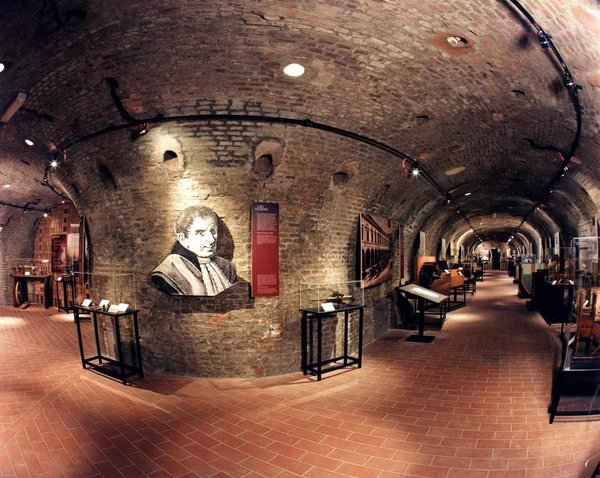
Interior of the Museum of Industrial Heritage in Bologna with exposed bricks and historical exhibits.

Silk machines and motor engines in a former brickworks

Housed inside the Fornace Galotti, a disused brickworks on the western edge of the city, the Museum of Industrial Heritage traces Bologna's transformation from medieval silk capital to modern manufacturing powerhouse. The ground floor reconstructs the city's silk industry in painstaking detail: full-scale models of the hydraulic mills that spun raw thread, powered by the same canal network visible at the Via Piella window. Upstairs, the story shifts to the — Ducati motorcycles, Maserati engines, and ACMA packaging machines, all born in the industrial suburbs of Bologna. The building itself is part of the exhibit: exposed brick kilns, iron beams, and the original chimney stack create an atmosphere that no purpose-built museum could replicate. The museum runs occasional hands-on workshops where you can try operating a printing press or assembling a simple mechanical linkage. It sits along the Navile Canal towpath, and cycling there from the centre (about 20 minutes) turns the journey into a bonus experience.
Located at Via della Beverara 123, reachable by bus 11 or 35 from the centre.
Tuesday to Friday –. Saturday and Sunday –.
Entrance ticket: €5. Reduced rates for students.

The Giardino del Guasto

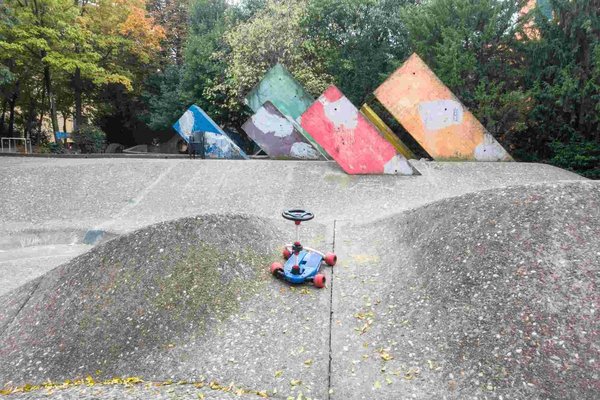
Colorful geometric sculpture in the Guasto Garden in Bologna with a toy in the foreground.

Street art and student life in a reclaimed bomb site

The name says it all: guasto means "ruin" in Italian, and this small garden occupies the footprint of a palazzo destroyed during World War II and never rebuilt. In the , university students and local activists reclaimed the rubble-strewn lot, turning it into an informal public space that has since become one of the most creatively charged corners of Bologna. The surrounding walls serve as a rotating gallery of murals and paste-ups — some sanctioned, some not — that reflect whatever political or cultural issue is currently animating the university quarter. Benches are occupied by students between lectures, buskers set up near the entrance on warm evenings, and a small kiosk sells espresso and spritz. The garden is at its liveliest during the academic year ( to ) and quieter in summer when students leave the city. It sits directly behind the Teatro Comunale opera house, so pairing a daytime visit with an evening performance makes for a good contrast between Bologna's institutional and grassroots cultural lives.
At Via del Guasto, behind the Teatro Comunale in the university district.
Open daily, 24 hours.
Entrance is free.

Recommended Itineraries in Bologna

Underground Bologna

Morning — Start at the Canale delle Moline window on Via Piella, then walk south to the Archiginnasio for the anatomy theatre. Ask at the tourist office in Piazza Maggiore about guided tours of the underground canals beneath Palazzo Re Enzo (usually offered on weekends).

Afternoon — Head to the Crypt of San Zama beneath the church of Santi Naborre e Felice on Via San Mamolo, one of the earliest Christian sites in Bologna dating to the . Finish at the Bagni di Mario, a Renaissance-era cistern carved into the hillside below San Michele in Bosco, accessible by guided tour only.

The Artisan Quarter

Morning — Begin in the Quadrilatero streets around Via Drapperie, where traditional food shops open early. Peek into the pasta laboratories along Via Caprarie, where women still roll sfoglia by hand.

Afternoon — Cross east to Via Fondazza and Via Santo Stefano, where small workshops produce leather goods, ceramics, and restored antique furniture. End at the Giardino del Guasto for a spritz among the murals, then browse the vintage and vinyl shops along Via Zamboni.

Porticoes and Panoramas

Morning — Walk the 3.8-kilometre portico from Porta Saragozza to the Sanctuary of San Luca, the longest continuous portico in the world with 666 arches. The uphill route takes about an hour and the basilica terrace offers the best panoramic view of Bologna.

Afternoon — Return to the centre and explore the lesser-known porticoes along Via Galliera and Via Marsala, where painted ceilings and carved capitals hide above street level. Finish with the Asinelli Tower climb for a sunset panorama.

When to Visit

The Best Time to Visit Bologna

The best time to visit Bologna is during spring (April-June) and autumn (September-October), when the weather is mild and pleasant. Summer can be hot and crowded, while winter offers fewer crowds but cooler temperatures.

Peak Season

Summer (June-August) is the peak season, with more tourists and higher prices.

Shoulder Season

Spring and autumn offer a good balance between weather and tourist crowds.

Low Season

Winter (December-February) is the low season, with fewer tourists and more affordable prices.

Tips for Visiting Bologna

Walk up to Villa Ghigi Park via Via di Gaibola for a trail through olive groves with rooftop views of the city — far quieter than the San Luca portico.
Try the artisanal gelato at Cremeria Santo Stefano on Via Santo Stefano — their Crema Bologna flavour uses zabaglione and local honey.
Visit the Mercato Ritrovato at the Cineteca di Bologna every Saturday morning for zero-kilometre produce, aged balsamic tastings, and local Pignoletto wine.

Local Experiences in Bologna

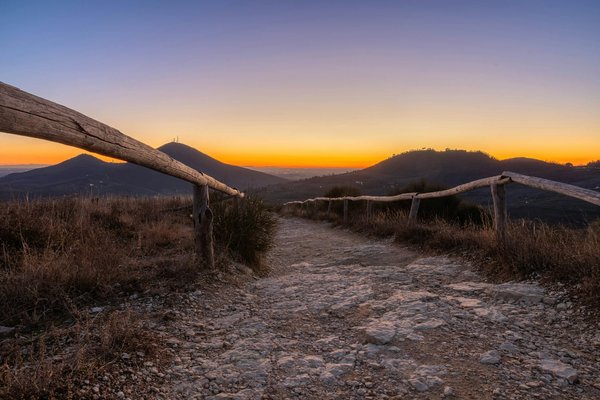
Hiking trail with a wooden fence overlooking a hillside panorama at sunset.

Villa Ghigi Park

While the San Luca portico gets all the attention, Villa Ghigi Park offers a wilder, less manicured escape just south of the historic centre. Enter from Via di Gaibola and follow the main trail uphill through olive groves and holm oaks until you reach the ruined villa at the top. From there, the panorama stretches across the entire city to the Po plain. The park is popular with joggers and dog walkers but rarely feels crowded. On weekday mornings you may not see another person for the entire 45-minute loop.
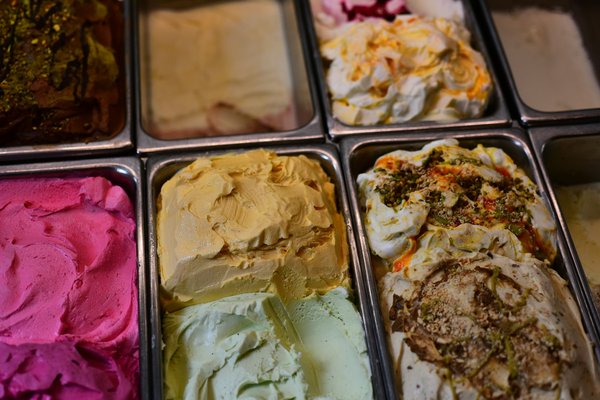
Tubs of colorful artisanal gelato including pistachio and fruit flavors.

Gelato at Cremeria Santo Stefano
Cremeria Santo Stefano keeps its flavour list short and rotates it with the seasons — pistachio from Bronte in winter, white peach in summer. The signature Crema Bologna blends zabaglione, honey, and a trace of cinnamon. The shop sits on a quiet stretch of Via Santo Stefano, away from the main tourist drag, and uses no artificial colours or stabilisers. Portions are generous and the staff will let you taste before committing. Go in the early afternoon to avoid the post-dinner queue.
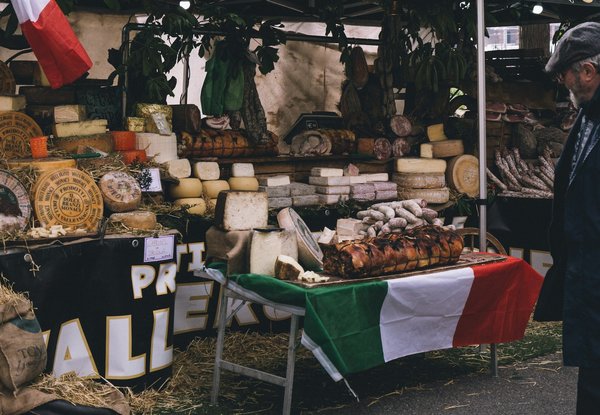
Outdoor market stall with wheels of cheese and cured meats, an Italian flag draped over the table.

Mercato Ritrovato

Every Saturday morning from to , the courtyard of the Cineteca di Bologna transforms into the Mercato Ritrovato, a curated farmers' market where every vendor must be a direct producer. Stalls sell Parmigiano Reggiano aged 36 months, traditional balsamic vinegar from Modena, handmade tortelloni, seasonal fruit, and local Pignoletto wine by the glass. The market also runs occasional cooking demonstrations. Arrive before for the widest selection — the best cheeses and cured meats tend to sell out early.

Frequently Asked Questions about Bologna

When is the best time to visit Bologna for fewer crowds?

I recommend <time datetime="2026-10">October</time> or <time datetime="2026-03">March</time>. The weather is mild enough for long walks, the university is in session so the city feels alive, and you will not compete with summer tour groups for tower tickets or restaurant tables.

Can I explore Bologna entirely on foot?

I do almost everything on foot here. The historic centre is about 2 kilometres across and the porticoes keep you dry in rain. For the Museum of Industrial Heritage or the Ustica Memorial, I take bus 11 or 35 — both run every 15 minutes from the centre.

What should I eat beyond tortellini?

I always point people toward crescentine fritte (fried dough pillows served with cured meats), passatelli in brodo (a breadcrumb-and-Parmigiano pasta in clear broth), and a tagliere of mortadella IGP sliced paper-thin. For dessert, the local certosino cake — a spiced fruit cake — is underrated.

Where can I find unique souvenirs that are not tourist kitsch?

I shop in the Quadrilatero for aged balsamic vinegar and vacuum-packed tortellini. For non-food items, the artisan leather workshops on Via Santo Stefano sell hand-stitched wallets and bags, and the vintage stalls at the Friday Montagnola market have one-of-a-kind finds.
Are the underground canal tours worth doing?

Absolutely — they are one of the most unusual experiences in the city. The association Canali di Bologna runs guided tours on weekends, usually lasting about 90 minutes. I recommend booking at least a week ahead because groups are kept small. The tours depart from Via della Grada.

Do I need to book Asinelli Tower tickets in advance?

In summer and around Easter, I strongly recommend booking online at least a day ahead — the tower limits visitors to small groups for safety. In the off-season I have walked up without a reservation, but arriving at opening time is the safest strategy.

Which neighbourhoods are best for a local atmosphere?

I like the Pratello area (Via del Pratello) for its casual bars and street art, the Santo Stefano quarter for quiet courtyards and boutique shops, and the Bolognina district north of the station for the most diverse food scene — African, Asian, and Middle Eastern grocers line Via Ferrarese.
Are there good day trips from Bologna for unusual experiences?

I take the train to Dozza (40 minutes) to see an entire village covered in murals, or to Brisighella (1 hour) for its elevated medieval walkway carved into the cliff. Closer in, the Rocchetta Mattei castle near Grizzana Morandi is a surreal Moorish Revival fortress that reopened for tours in <time datetime="2015">2015</time>.

Is Bologna safe for solo travellers?

I have walked the city alone at all hours and felt comfortable. The university quarter stays lively late into the night, and the porticoed streets are well-lit. Standard city precautions apply — watch your bag at the train station and on crowded buses.

What local events should I time my visit around?

I plan around Il Cinema Ritrovato in late <time datetime="2026-06">June</time>, when outdoor screens take over Piazza Maggiore for restored classic films. The Bologna Jazz Festival in <time datetime="2026-11">November</time> and Arte Fiera in late <time datetime="2026-01">January</time> are also worth building a trip around.