Rome with Kids: 10 Fun Activities

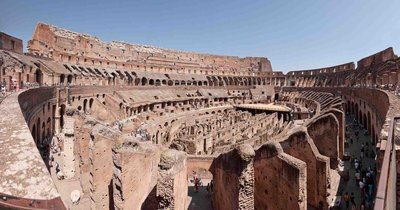
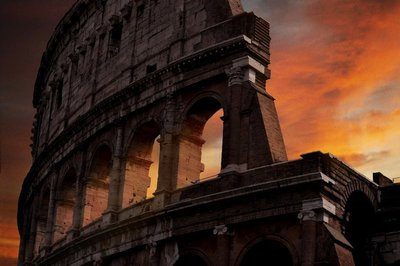
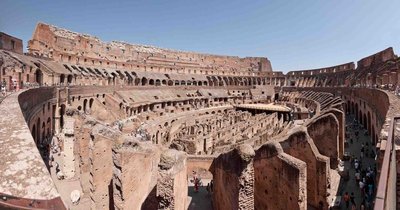
Panoramic view of the interior of the Colosseum in Rome with architectural details and tourists.
Written by travel experts
Regularly updated
Verified on-site

Rome has captivated families for generations, and the city rewards young visitors with a depth of experience that goes far beyond standard sightseeing. The Colosseum, where gladiators once fought before crowds of 50,000, becomes an open-air classroom when children stand on the arena floor and peer down into the underground hypogeum where wild animals were kept. At Piazza Navona, Bernini's Fountain of the Four Rivers turns a gelato stop into an impromptu art history lesson. Beyond the ancient sites, Rome offers genuinely interactive spaces designed for younger minds. The Explora Museum lets children aged 3 to 12 run a miniature supermarket and conduct science experiments, while Villa Borghese provides 80 hectares of cycling paths, rowboat lakes, and shaded playgrounds. Even practical details work in your favor: Italian restaurants welcome children as a matter of culture, and most state museums grant free admission to visitors under 18. I have walked these streets with families who expected tired toddlers and instead found children racing ahead to the next fountain, the next ruin, the next discovery. Rome does that to people of every age.

Top Things to Do in Rome

Bioparco di Roma
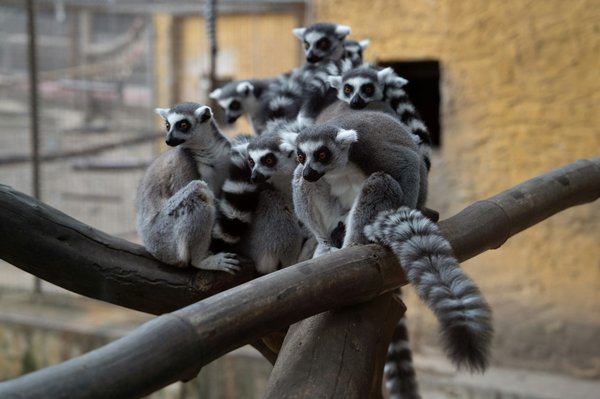
Ring-tailed lemurs perched on a branch in an open-air zoo enclosure.

A century-old zoo inside Villa Borghese

The Bioparco di Roma opened in as the Giardino Zoologico, making it one of the oldest zoological gardens in Europe. Set across 17 hectares within Villa Borghese, the park is home to over 1,200 animals representing more than 200 species, from Sumatran tigers and Asian elephants to pygmy hippos and ring-tailed lemurs. Children gravitate toward the Rettilario, a reptile house built in the with Art Deco detailing, and the interactive feeding sessions where keepers explain each animal's natural habitat and conservation status.

The Bioparco's layout follows shaded, stroller-friendly paths that loop past open-air enclosures designed to replicate natural environments rather than traditional cages. A dedicated play area near the flamingo pond gives younger children a break between exhibits, while the on-site cafeteria serves simple meals at family-appropriate prices. I recommend arriving at opening time on weekdays, when the animals are most active and the crowds thinnest. The park participates in several European Endangered Species Programmes, including breeding efforts for the brown bear and the Amur leopard, so a visit here directly supports real conservation work beyond the entertainment value.
Located at Viale del Giardino Zoologico, 1, inside Villa Borghese, Rome.
Open daily from 9:30 AM to 6:00 PM (extended to 7:00 PM in summer). Last entry one hour before closing.
Adults €18, children aged 4–12 €13. Free for children under 4.

Explora Children's Museum

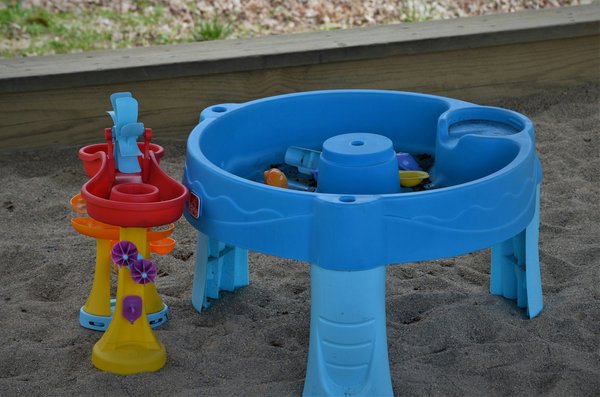
Colorful children's water-play table with a windmill wheel for hands-on hydraulic play.

Hands-on learning for ages 3 to 12

Housed in a converted bus depot near Piazza del Popolo, the Explora Museum opened in as Rome's first dedicated children's museum. The concept draws from the please touch philosophy pioneered by American children's museums in the , adapted to an Italian context where food, design, and community life take center stage. Children run a miniature supermarket complete with checkout scanners and barcode readers, work a child-scaled post office sorting real letters, and experiment with water flow tables that teach basic hydraulic principles through hands-on play.

Each visit is structured into 1-hour-45-minute timed sessions to keep the space comfortable and avoid overcrowding, a detail that matters enormously when you are managing small children in a busy city. The outdoor garden includes a splash area open during the warmer months from May through September, plus a well-stocked bookshop with Italian and English titles on science and nature. I find this museum works best for children between 4 and 9, the sweet spot where the exhibits feel genuinely challenging rather than too simple. Booking online in advance is strongly recommended, especially on weekends and during school holidays when sessions fill up quickly.
Located at Via Flaminia 80/86, a 5-minute walk from Piazza del Popolo, Rome.
Open Tuesday to Sunday with timed sessions at 10:00 AM, 12:00 PM, 3:00 PM, and 5:00 PM.
Adults and children €8 per person. Free for children under 12 months.

Villa Borghese Gardens

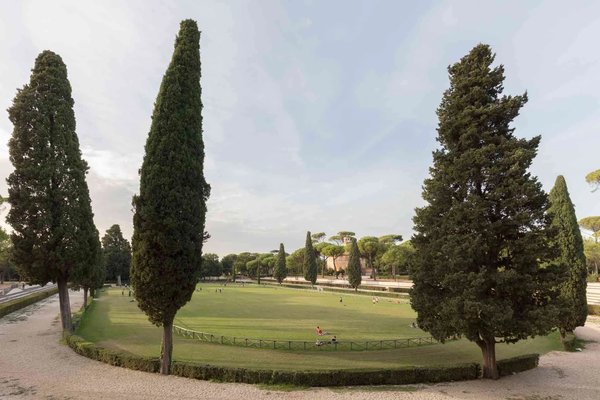
Villa Borghese Gardens in Rome with cypress trees and a wide green lawn.

80 hectares of cycling, boating, and shade

Cardinal Scipione Borghese commissioned these gardens in , hiring architect Flaminio Ponzio and later the Dutch gardener Jeroen van Santen to create a suburban estate that blended formal Italian gardens with wilder English-style parkland. Four centuries later, Villa Borghese remains the green heart of central Rome, stretching across 80 hectares between the Pincian Hill and the Flaminia quarter. For families, the park functions as an all-day destination rather than a quick stop.

Children can rent rowboats on the lake surrounding the Temple of Aesculapius, cycle the traffic-free paths on four-person surrey bikes, or watch a puppet show at the Teatro dei Burattini San Carlino, which has staged commedia dell'arte performances since . The Casina di Raffaello, a dedicated art workshop space for children aged 3 to 10, runs free weekend sessions that fill up fast. Beyond the children's attractions, the Galleria Borghese houses Bernini's Apollo and Daphne and Caravaggio's Boy with a Basket of Fruit, works that even reluctant museum-goers find genuinely arresting. I suggest entering from Porta Pinciana near the Spanish Steps and working your way north toward the Bioparco.
Main entrances at Piazzale Napoleone I and Porta Pinciana, central Rome.
Open daily, 24 hours. Individual attractions within the park have their own schedules.
Park entry is free. Bike rental from €5/hour, rowboats from €3 per 20 minutes.

Hydromania Water Park

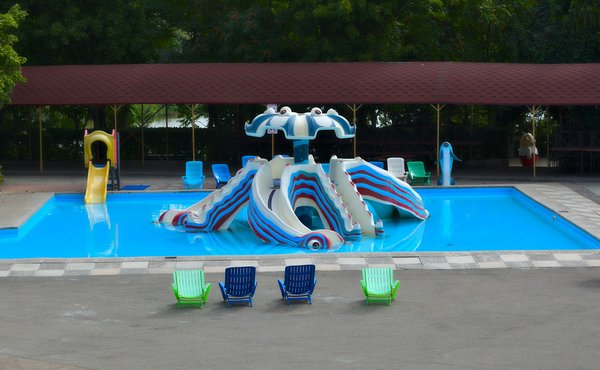
Children's pool with a mushroom-fountain slide structure at a water park.

Rome's summer splash destination

Hydromania has operated on the western outskirts of Rome since , growing from a modest pool complex into a full-scale water park with over 20 slides, a wave pool, and a lazy river that loops through landscaped gardens. For families enduring Rome's July and August heat, when afternoon temperatures regularly exceed 35°C, this park offers genuine relief and hours of entertainment that require no cultural negotiation with tired children.

The park divides neatly into zones by age: a shallow splash area with mushroom fountains and mini-slides for toddlers, intermediate slides for children aged 6 to 10, and adrenaline-heavy tube rides and kamikaze drops for teenagers and adults. Sunbeds and umbrellas are included in the admission price, which sets Hydromania apart from many European water parks that charge extra for basic shade. The on-site restaurant serves pizza, panini, and pasta at reasonable prices, though many families pack a cooler with snacks and fresh fruit for the day. I recommend arriving before 10:00 AM on weekdays to secure sunbeds near the children's area, as the best spots fill quickly by midmorning. The park is reachable by car in about 25 minutes from Trastevere, and a seasonal shuttle service runs from Cornelia metro station during peak summer weeks.
Located at Vicolo del Casale Lumbroso 200, 00166 Rome.
Open daily from June to September, 9:30 AM to 7:00 PM.
Adults €25, children aged 3–12 €20. Free for children under 3.

Roman Forum With Kids

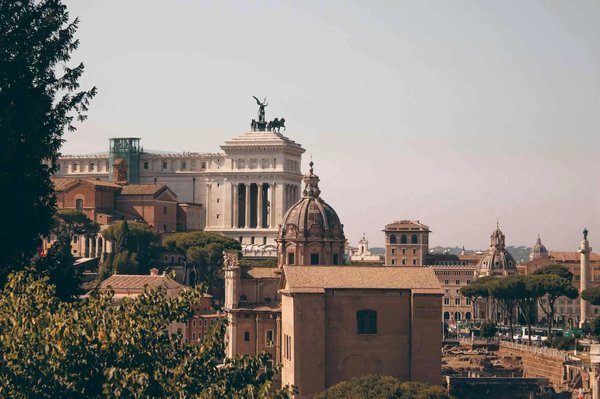
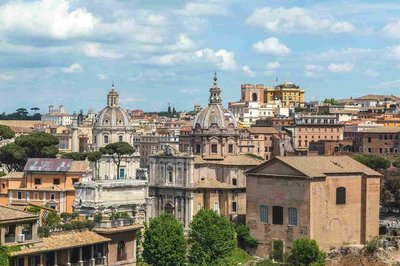
View of the Roman Forum with the Altar of the Fatherland and historic domes in Rome, Italy, on a sunny day.

Walking through the center of an ancient empire

The Roman Forum served as the political, religious, and commercial nucleus of Rome for over a thousand years, from its origins as a marshy meeting ground in the to its abandonment in the early medieval period. For children, the site works best when framed as a real place where real people lived, not an abstract history lesson. Stand at the Rostra, the speaker's platform, and explain that Julius Caesar's funeral eulogy was delivered from this exact spot in . Point out the ruts worn into the stone pavement of the Via Sacra by centuries of cart wheels.

The Temple of Saturn, with its eight surviving granite columns, anchors the western end of the Forum and once held Rome's state treasury. The Arch of Septimius Severus, erected in , still bears detailed relief carvings of military campaigns that children can examine at close range. Practical advice: bring water, wear hats, and avoid the midday heat in summer. The combined ticket covers the Forum, Colosseum, and Palatine Hill, and is valid for two consecutive days, which gives families the freedom to split the visit rather than rushing through in one exhausting session. Children under 18 enter free at all Italian state museums.
Located at Via della Salara Vecchia 5/6, between the Colosseum and Capitoline Hill, Rome.
Open daily from 9:00 AM. Closing time varies by season: 4:30 PM in winter, 7:15 PM in summer.
Combined ticket (Forum + Colosseum + Palatine) €18 for adults. Free for under-18s.

Giardino degli Aranci

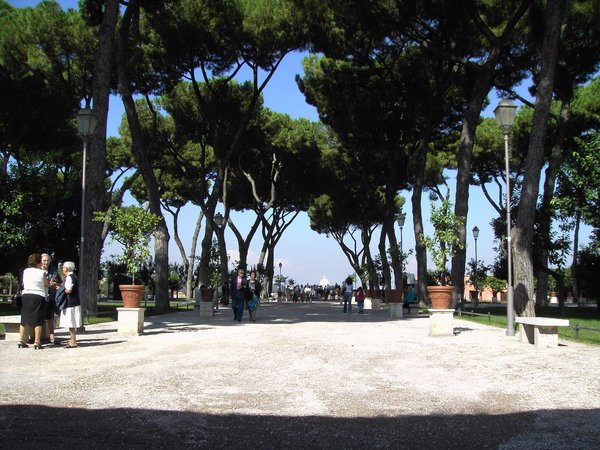
Tree-lined path through the Giardino degli Aranci with potted orange trees and St. Peter's dome visible in the distance.

Panoramic terrace on the Aventine Hill

The Giardino degli Aranci (Orange Garden), formally known as Parco Savello, occupies the site of a fortress built by the Savelli family on the Aventine Hill. Architect Raffaele De Vico redesigned the space as a public garden in , planting the bitter orange trees that give it its popular name and creating the terrace that frames one of the most photographed views in Rome: a sweeping panorama from St. Peter's dome across the Tiber to the Janiculum and Trastevere.

For families, this garden works as a strategic rest stop rather than a primary destination. The walled enclosure is small enough that children can run freely without disappearing from sight, and the benches along the central path offer parents a genuine pause after a morning of cobblestone walking. There is no playground equipment, but children consistently find entertainment in the garden's resident cats, the orange trees low enough to touch, and the keyhole of the nearby Knights of Malta priory door on Piazza dei Cavalieri di Malta, which frames St. Peter's dome perfectly. I recommend visiting in the late afternoon when the western light gilds the cityscape and the worst of the heat has passed. The garden is a 10-minute walk uphill from Circo Massimo metro station.
Located at Piazza Pietro d'Illiria, on the Aventine Hill, Rome.
Open daily from 7:00 AM to 9:00 PM in summer, 7:00 AM to 6:00 PM in winter.
Entry is free.

Cinecittà World Theme Park

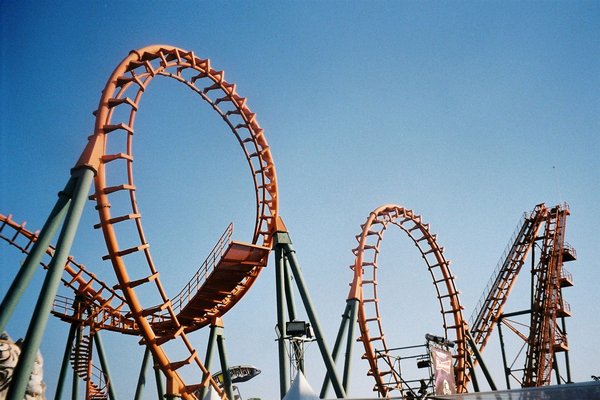
Orange roller coaster loop against a clear blue sky at a theme park.

Rides and shows inspired by Italian cinema

Cinecittà World opened in on land adjacent to the legendary Cinecittà Studios, where Federico Fellini shot La Dolce Vita and 8½, and where the sets for Ben-Hur and Gangs of New York were built. The theme park translates that cinematic heritage into rides, shows, and walk-through attractions spread across themed zones including a Roman village, a western frontier town, and a science fiction sector.

Families with younger children gravitate toward the Sognolabio area, which features gentler rides and a pirate-themed splash zone. Older children and teenagers prefer the high-intensity attractions: a roller coaster that reaches 95 km/h, a free-fall tower, and an indoor dark ride that combines physical sets with projection mapping. Live stunt shows run several times daily, recreating car chases and fight scenes with professional performers. The park also operates an adjacent water park, Aqua World, accessible with a combined ticket during summer months. I suggest allocating a full day rather than trying to combine Cinecittà World with central Rome sightseeing. The park sits about 30 km south of the city center, reachable by shuttle bus from Termini or by car via the Roma-Latina highway.
Located at Via di Castel Romano, 00128 Rome.
Open daily from mid-March to early January. Typical hours: 11:00 AM to 7:00 PM (extended to 11:00 PM on summer weekends).
Adults €28, children (100–140 cm tall) €20. Free for children under 100 cm.

Museo dei Bambini in EUR

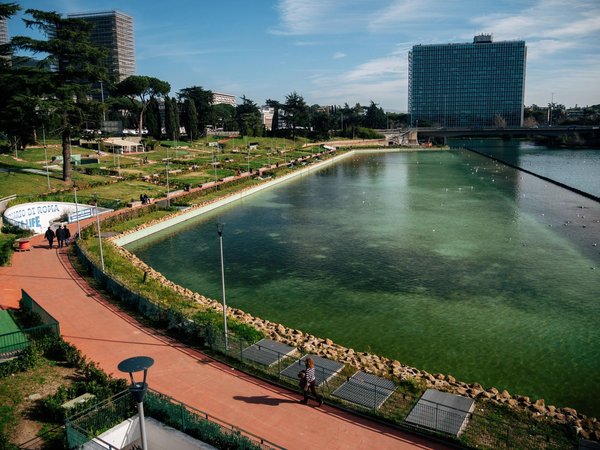
The artificial lake in Rome's EUR district, flanked by rationalist-era architecture.

Science and creativity for young explorers

The Museo dei Bambini occupies a wing of the rationalist-era buildings in Rome's EUR district, an area originally planned by Mussolini for the World's Fair that never took place due to World War II. The museum itself opened in with a mission to make science, ecology, and creative expression accessible to children from infancy through age 12. Its permanent exhibits rotate on a six-month cycle, ensuring repeat visits feel fresh.

The layout divides into zones by age group: a sensory room with soft textures and light installations for toddlers, a construction workshop where children aged 4 to 7 build with recycled materials, and a science lab for older children that covers topics from renewable energy to human anatomy. Timed entry sessions of 75 minutes keep the space from feeling overcrowded, a significant advantage over larger museums where families compete for exhibit access. The EUR district itself is worth exploring with children: the artificial lake offers pedal boat rentals, the Palazzo della Civiltà Italiana provides a striking example of mid-century architecture, and the area's wide sidewalks and low traffic make stroller navigation far easier than the historic center. Metro line B reaches EUR from Termini in about 15 minutes.
In the EUR district, at Via Pietro de Coubertin 30, 00196 Rome.
Open Tuesday to Sunday with timed sessions. Check the website for current session times.
Adults and children €10 per person. Free for children under 12 months.

Guided Bike Tour of the Historic Center
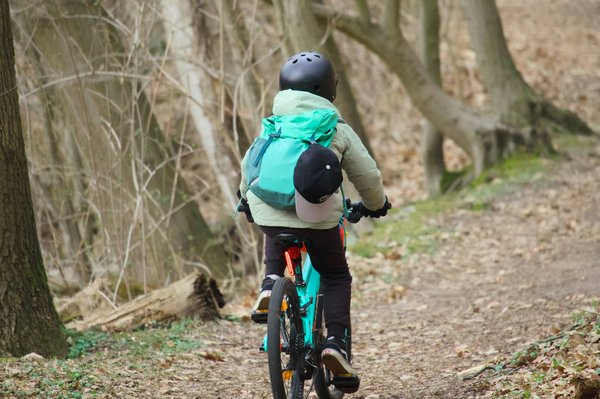
Child wearing a helmet cycling along a tree-lined path.

See more of Rome at a child-friendly pace

A guided bike tour covers ground that would take a family three or four walking sessions to manage, and it transforms the logistics of sightseeing with children from a negotiation into an adventure. Several operators in Rome offer family-specific routes that use electric-assist bikes, child seats, and trail-a-bikes for children aged 4 to 8, with itineraries that thread through Piazza del Popolo, along the Tiber embankment, past Castel Sant'Angelo, and into the quieter streets of Trastevere.

The best family tours avoid heavy traffic by sticking to Rome's expanding network of dedicated cycling lanes and pedestrian zones, particularly the riverside path that runs from Ponte Milvio to Testaccio. Guides typically stop at key landmarks for 5 to 10 minutes, offering context pitched at the youngest riders, which means stories about gladiators and emperors rather than architectural terminology. I recommend booking a morning departure in spring or autumn, when the air is cool and the light flatters every photograph. Most operators provide helmets, water bottles, and child equipment at no extra charge. Tours last approximately 3 hours and cover 12 to 15 km, enough to feel like an accomplishment without exhausting anyone under the age of 10.
Most tours depart from Piazza del Popolo or Piazza Navona, central Rome.
Daily departures, typically at 9:30 AM and 3:00 PM. Advance booking required.
Adults from €45, children under 14 from €30. Bike and helmet included.

Markets of Trajan

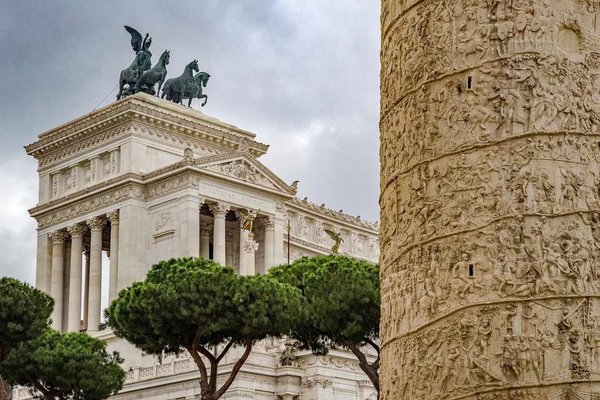
Trajan's Column and the Altar of the Fatherland in Rome with a cloudy sky and pine trees in the foreground.

The world's first shopping mall, built for an emperor

Emperor Trajan commissioned the architect Apollodorus of Damascus to design this semicircular complex of 150 shops and offices in the early , creating what many historians consider the world's first multi-level commercial center. The structure rises in six tiers carved into the Quirinal Hill, and its remarkably well-preserved tabernae (individual shop units) still display the stone counters where merchants sold everything from olive oil to imported silk. For children, the Markets of Trajan offer something rare: an ancient site where the function of each space is immediately obvious and physically tangible.

The complex now houses the Museo dei Fori Imperiali, which uses fragments of colossal statues, architectural models, and video reconstructions to show how the Imperial Forums looked at their peak. Children respond particularly well to the upper gallery, where they can look down into the great hall and imagine the noise and commerce of a Roman market day. The rooftop terrace provides one of the best views of Trajan's Column, its spiral frieze depicting over 2,500 figures from the Dacian Wars in extraordinary detail. I find this site works better than the Forum for younger children because the enclosed spaces feel more comprehensible than open-air ruins, and the museum's multimedia installations hold attention effectively.
Located at Via Quattro Novembre 94, central Rome.
Open daily from 9:30 AM to 7:30 PM. Last entry one hour before closing.
Adults €16. Free for under-18s (EU residents) and under-6s (all nationalities).

Recommended Itineraries in Rome

Ancient Rome in a Family Day

Morning — Start at the Colosseum with pre-booked skip-the-line tickets for the 9:00 AM opening. Walk through the arena floor and underground levels, then cross directly into the Roman Forum via the Arch of Titus entrance. Follow the Via Sacra downhill past the Temple of Saturn to the exit near Piazza Venezia. Allow about 3 hours total for both sites.

Afternoon — Lunch at one of the trattorias on Via dei Serpenti in the Monti neighborhood, where children can eat pasta al pomodoro at outdoor tables on quiet pedestrian streets. After lunch, walk 10 minutes to the Markets of Trajan, where the enclosed museum spaces offer shade and air conditioning. Finish by climbing to the rooftop terrace for close-up views of Trajan's Column, then take the 10-minute downhill walk to the Fontana di Trevi for the obligatory coin toss.

Evening — Gelato at a nearby gelateria, then a slow walk through the historic center back to your accommodation. Children under 7 will likely be tired enough for an early dinner and bed; older children might enjoy watching the street performers at Piazza Navona.

Villa Borghese and the Aventine

Morning — Enter Villa Borghese from Porta Pinciana and rent a surrey bike (four-person pedal car) for a lap around the park's main circuit. Stop at the rowboat lake for 20 minutes on the water, then visit the Bioparco at 10:00 AM when the animal feeding sessions begin. Children under 6 will be content with the zoo alone; older children can add the Casina di Raffaello art workshop if a session is available.

Afternoon — Exit the park from the south side and catch the Metro A from Flaminio to Circo Massimo. Walk uphill for 10 minutes to the Giardino degli Aranci for the panoramic terrace view and a rest on the benches. Continue along Via di Santa Sabina to the Knights of Malta keyhole at Piazza dei Cavalieri di Malta, a guaranteed hit with children who enjoy the surprise of seeing St. Peter's dome perfectly framed through a tiny opening.

Evening — Descend the Aventine to Testaccio, one of Rome's most authentic food neighborhoods. Pizzeria Da Remo serves Roman-style thin-crust pizza at communal tables, and children can watch the pizzaioli work the wood-fired oven.

When to Visit

The Best Time to Visit Rome

The best time to visit Rome is during spring (April-June) and autumn (September-October), when the weather is mild and pleasant. Summer can be hot and crowded, while winter offers fewer crowds but cooler temperatures.

Peak Season

Summer (June-August) is the high season, with more tourists and higher prices.

Shoulder Season

Spring and autumn offer a good balance between weather and tourist crowds.

Low Season

Winter (December-February) is the low season, with fewer tourists and more affordable prices.

Tips for Visiting Rome

Most Italian state museums are free for children under 18. Carry a passport or ID card as proof of age — staff check regularly at the Colosseum and Vatican Museums.
Fill water bottles at Rome's 2,500+ public drinking fountains (nasoni). The water comes from the same ancient aqueduct system that supplied the emperors and is perfectly safe to drink.

Local Experiences in Rome

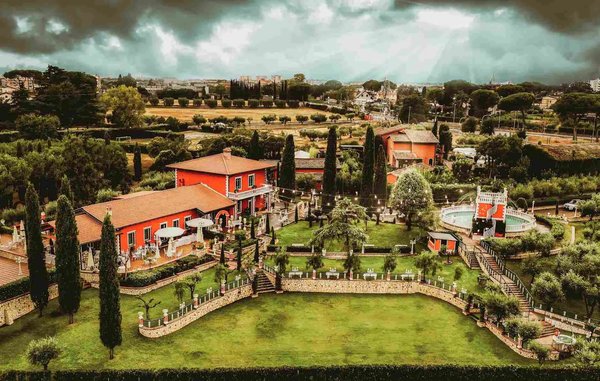
Panoramic view of a green area with red buildings and trees under a cloudy sky.

Cycling at Villa Ada
Villa Ada, the second-largest park in Rome at 160 hectares, was once the private estate of King Vittorio Emanuele III. Today it offers cycling trails that wind through umbrella pine forest, past a small lake, and along paths quiet enough that children can ride without worrying about traffic. Bike rental stands operate near the Via Salaria entrance on weekends and throughout summer. Pack a picnic — the designated areas near the lake have tables and shade, and the nearest restaurants are a 15-minute walk outside the park gates.
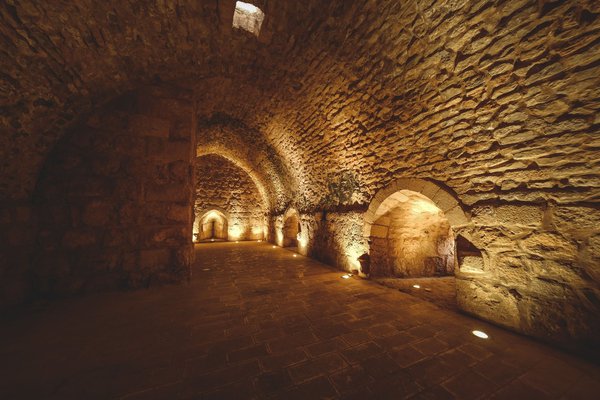
Vaulted stone underground chamber lit by warm lights along the walls.

Underground Layers of San Clemente

The Basilica of San Clemente, a 10-minute walk from the Colosseum, compresses 2,000 years of Roman history into a single building. The current church dates from the , but descend one level and you reach a basilica with faded frescoes still visible on the walls. Go down again and you stand in a Roman house containing a Mithraic temple where soldiers once worshipped by torchlight. Children find the descent genuinely thrilling — each staircase reveals an older, darker, more mysterious layer. The underground is cool even in summer, making this an ideal midday escape from the heat.

Frequently Asked Questions about Rome

What is the best time of year to visit Rome with kids?

I recommend <time datetime="2026-04">April</time> to mid-<time datetime="2026-06">June</time> and <time datetime="2026-09">September</time> to <time datetime="2026-10">October</time>. Temperatures sit between 18°C and 26°C, queues are shorter than peak summer, and outdoor attractions stay open long hours. July and August bring temperatures above 35°C, which makes all-day sightseeing with young children difficult. Winter is mild by northern European standards (7–12°C) and crowds drop significantly, but some outdoor attractions like Hydromania are closed.

Are there playgrounds and green spaces for kids in central Rome?

Yes, several. Villa Borghese has multiple fenced playgrounds, the largest near the Pincio entrance. Villa Doria Pamphili on the Janiculum Hill is even bigger (184 hectares) with dedicated play areas and wide paths for scooters and bikes. In the historic center, Piazza Vittorio Emanuele II has a fenced playground, and the gardens behind Castel Sant'Angelo offer swings and slides with fortress views. I keep a mental list and rotate between them based on which neighborhood we are visiting that day.

Is Rome safe for families with young children?

Rome is generally safe for families. The main concerns are practical rather than criminal: uneven cobblestones challenge strollers, crossing busy streets requires vigilance, and pickpockets operate in crowded tourist areas and on public transport. I always use a crossbody bag, keep passports in the hotel safe, and teach children to memorize the hotel address and my phone number. The emergency number throughout Italy is 112.

What is the best way to get around Rome with kids?

The metro (two main lines, A and B) covers major tourist areas and is stroller-accessible at most stations. Buses fill gaps but can be crowded and confusing for visitors. Trams 3 and 19 are family favorites because children enjoy the ride and they connect useful areas (Trastevere, Testaccio, Villa Borghese). Taxis are affordable for short hops — a ride within the center costs €8–15, and drivers are legally required to have child seats if requested with advance booking. I avoid renting a car within the city.

Where can I find kid-friendly restaurants in Rome?

Italian dining culture welcomes children as standard. Most trattorias serve half portions (mezza porzione) of pasta for children without needing a dedicated kids' menu. Pizza al taglio (pizza by the slice) shops are everywhere and let children choose exactly what they want. For sit-down meals, I look for restaurants with outdoor seating on pedestrian streets — Trastevere and Monti neighborhoods have the highest concentration. High chairs are common; just ask for a seggiolone when you arrive.

Are there guided tours designed for families with children?

Several operators specialize in family tours of Rome. The best ones use storytelling rather than lectures, give children activity booklets or scavenger hunts, and limit group sizes to 8–10 people. I recommend looking for tours of the Colosseum and Vatican that specifically advertise a family format — these typically cost €50–80 per adult and include skip-the-line access, which alone saves 30 to 60 minutes of waiting. Private family tours cost more but let you set the pace entirely around your children's energy levels.

Which attractions in Rome are free for children?

All Italian state museums and archaeological sites, including the Colosseum, Roman Forum, Palatine Hill, and Galleria Borghese, are free for visitors under 18 regardless of nationality. The Vatican Museums charge €8 for children aged 6–18 and are free for children under 6. Parks including Villa Borghese, Villa Ada, and the Giardino degli Aranci are entirely free. Many churches, including St. Peter's Basilica, charge no admission at all.

What educational activities are available for children in Rome?

Beyond formal museums, I recommend the weekend archaeology workshops at the Markets of Trajan, where children handle replica artifacts and learn excavation techniques. The Bioparco runs seasonal educational programs on wildlife conservation. Several private companies offer gladiator school experiences near the Colosseum, where children learn about Roman military training through physical activity rather than passive observation. The Technotown science center in Villa Torlonia has technology workshops for children aged 6 and up.