10 Christmas Experiences in Venice

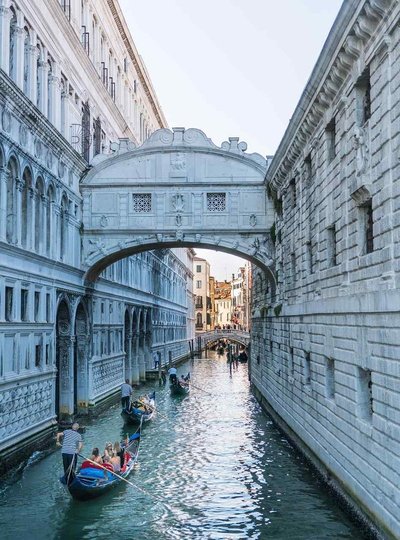
Panoramic view of the Bridge of Sighs in Venice with gondolas on the canal.
Written by travel experts
Regularly updated
Verified on-site

Venice has been staging winter spectacles since the Republic's earliest days. The Doge himself once presided over processions across St. Mark's Square, and fishermen on Murano lit bonfires along the fondamenta to mark the solstice. That appetite for midwinter theatre never faded — it simply moved indoors to candlelit basilicas, spilled into campo markets, and wrapped itself around every bridge with strings of warm light.

Today the city rewards December visitors with something its peak-season crowds never see: fog curling through empty calli at dawn, the Grand Canal glowing amber under holiday garlands, and the scent of vin brulé drifting from a bacaro doorway. Temperatures hover around 5–8 °C, acqua alta adds a surreal mirror effect to the piazzas, and the absence of summer queues means you can stand alone before Titian's Assunta in the Frari.

This guide covers 10 Christmas experiences — from the handicraft stalls of Campo Santo Stefano to midnight mass echoing under Gothic vaults — each rooted in the rituals that have defined Venetian winters for centuries.

Top Things to Do in Venice

Christmas Markets in Campo Santo Stefano
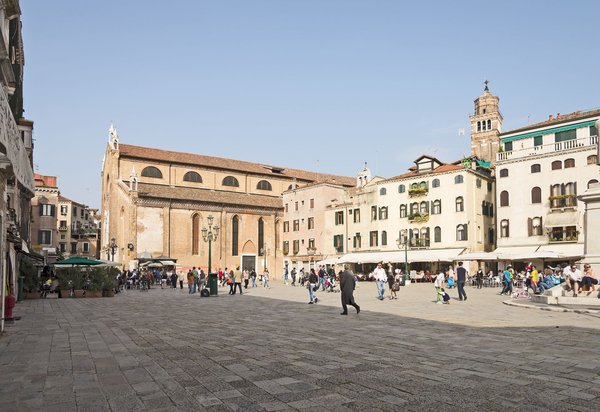
Campo Santo Stefano in Venice, host to the city's Christmas market each December.

Handicrafts and traditional sweets

Venice's oldest surviving Christmas market traces its roots to the , when glassblowers and lace-makers first set up stalls here to sell holiday wares. Today Campo Santo Stefano fills each December with roughly forty wooden chalets arranged beneath the campo's towering plane trees. Artisans from across the Veneto display hand-painted ceramic nativity figures, filigree jewellery made on Burano, and blown-glass ornaments from Murano — the kind of one-off pieces that have no equivalent in a department store.

The food stalls lean hard into Venetian tradition: wedges of soft pandoro dusted with icing sugar, slices of panettone studded with candied citrus, and cups of vin brulé simmered with cinnamon and clove. On colder evenings, vendors ladle out castagne arrosto (roasted chestnuts) from iron drums, their smoke mingling with the glow of fairy lights strung between the Renaissance façades of Palazzo Loredan and Palazzo Pisani. Arrive before noon on weekdays to browse at a leisurely pace; by late afternoon on Saturdays, the campo swells with locals doing their own gift shopping. Live music acts — usually a string trio or a small choir performing carols — set up near the church steps on Friday evenings, adding a soundtrack that drifts across the square and out into the surrounding calli.
In Campo Santo Stefano, San Marco district, a five-minute walk from the Accademia Bridge.
Open daily from to , 10:00 AM – 8:00 PM.
Free entry for all visitors.

Illuminated Gondolas on the Grand Canal
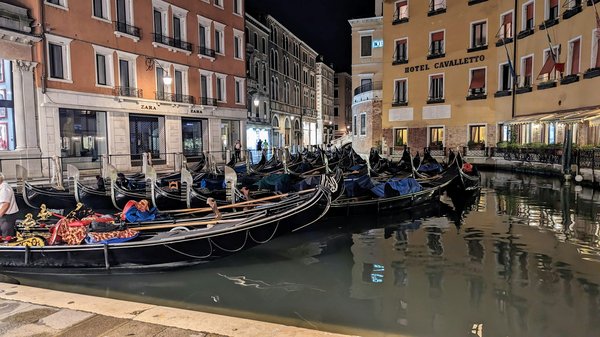
A row of moored gondolas along a Venice canal at night, illuminated by streetlamps.

A holiday ride through liquid light

The tradition of decorated boats in Venice dates to the , when noble families draped their gondolas in silk and lanterns for feast-day regattas. The modern Christmas version is more restrained but no less atmospheric: gondoliers string warm-white LED garlands along the ferro (the iconic iron prow) and the felze canopy, turning each craft into a floating lantern as it glides beneath the Rialto Bridge.

A forty-minute evening ride starting from the Santa Maria del Giglio traghetto typically passes Ca' d'Oro, Ca' Rezzonico, and the fish market at Rialto — all of them lit for the season, their reflections rippling across the dark water. The experience peaks around , when the last daylight fades and the palace windows glow orange. Gondoliers often share stories of how specific palazzi celebrated Christmas in centuries past, adding a layer of oral history to the visual spectacle. On particularly still evenings, the water acts as a near-perfect mirror and the garlands on the gondola's prow double into shimmering streaks of light beneath you. Bring a wool blanket, dress in warm layers, and book at least three days ahead — Christmas-week slots fill fast and weekend departures sell out first.
Departure points along the Grand Canal, including Santa Maria del Giglio and San Tomà.
Available by advance reservation, typically from 4:00 PM until 9:00 PM during December.
From €80 per gondola (up to 6 passengers). Holiday surcharges may apply after .

Christmas Concert at St. Mark's Basilica
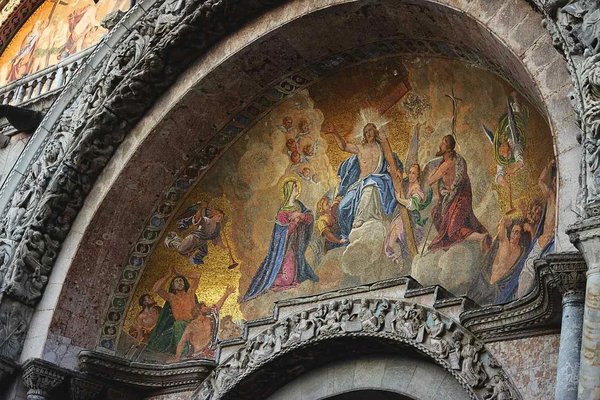
Detailed mosaic on the facade of St. Mark's Basilica in Venice, an iconic symbol of the city.

Sacred polyphony beneath golden mosaics

St. Mark's Basilica has hosted liturgical music since its consecration in , and the Christmas concerts uphold a tradition that once attracted composers like Andrea and Giovanni Gabrieli, who pioneered cori spezzati — split choirs placed in opposite galleries to create a surround-sound effect centuries before the term existed. The basilica's 8,500 square metres of gold-leaf mosaics amplify candlelight into a shimmering dome overhead, making the visual experience as powerful as the acoustic one.

Modern Christmas programmes typically feature Renaissance polyphony, Vivaldi (a native Venetian born just steps away in the Castello district), and traditional carols arranged for organ and chamber choir. The acoustics reward silence: every pianissimo phrase floats upward through the central dome and returns as a soft echo, a phenomenon the Gabrieli brothers exploited to astonishing theatrical effect in the . Seating is limited to around 300 and tickets sell out weeks in advance, so booking online through the Procuratoria di San Marco is essential. Arrive thirty minutes early to pass through security and settle into the nave before the lights dim and the first notes fill the vaulted space above you.
St. Mark's Square, the civic and spiritual heart of Venice since the .
Concert evenings typically run 8:00 PM – 10:00 PM. Check the Procuratoria website for exact dates.
From €30. Concessions available for students and seniors.

Ice Skating in Campo San Polo

Close-up of a figure skate blade on rink ice.

Open-air rink in a Gothic square

Campo San Polo is the largest campo in Venice after St. Mark's Square, and each December its broad pavement disappears beneath a temporary ice rink encircled by food stalls and a tall Christmas tree that towers over the surrounding rooftops. The tradition started in the early and quickly became a family staple: children wobble on rental blades while parents nurse cups of hot chocolate from the kiosk beside the rink's entrance. Historically the campo served as a bullfighting arena in the Republic era and an open-air cinema in the twentieth century — its transformation into a winter wonderland is simply the latest chapter in a long and colourful story of civic reinvention.

The setting is what elevates it beyond any ordinary winter rink. Gothic and Renaissance palazzi line three sides of the campo, their brick façades strung with lights that reflect off the ice after dark. On weekend evenings, a DJ plays holiday music and coloured spotlights sweep the surface, turning the session into an informal disco on ice. The rink surface is synthetic in some years and real ice in others — check the Comune di Venezia website for the current season's setup. Weekday mornings are the quietest slots; Friday and Saturday evenings draw the biggest crowds.
Campo San Polo, San Polo district, a short walk from the Rialto Bridge.
Open daily from to , 10:00 AM – 10:00 PM.
€10 per session, skate rental included.

Christmas Dinner on the Grand Canal

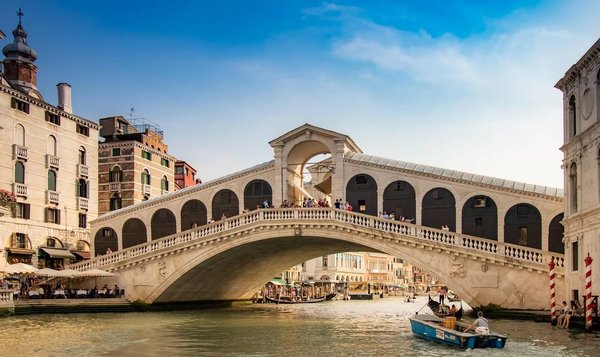
Rialto Bridge on the Grand Canal in Venice with gondolas and restaurants along the canal.

Venetian holiday cuisine with a canalside view

Dining along the Grand Canal on is a ritual that wealthy Venetians have observed for centuries — the Gritti Palace terrace alone has served holiday meals since . Today a handful of restaurants between Rialto and San Marco offer multi-course Christmas menus that draw on the lagoon's seafood traditions: baccalà mantecato whipped to a silken cream, sarde in saor balancing sweetness and vinegar, risotto al nero di seppia, and eel — a Veneto Christmas Eve staple dating to medieval fasting rules that required abstinence from meat before the feast.

The atmosphere matters as much as the menu. A window table at dusk reveals the canal traffic slowing as gondoliers head home, with the last vaporetti casting long reflections across the water. By dessert — typically pandoro with zabaglione cream or a chestnut-flour cake — the canal is almost still, and the palazzi opposite glow faintly in the dark. Reserve at least two weeks ahead; Christmas Eve and seatings fill first. Ask for the cenone (grand supper) menu rather than à la carte for the full festive experience, and request a canalside table specifically — interior dining rooms, though elegant, miss the point entirely.
Restaurants along the Grand Canal between Rialto and San Marco.
Hours vary by restaurant. Reserve well in advance for and .
From €50 per person for holiday tasting menus. Premium venues from €120.

Doge's Palace in Winter Dress

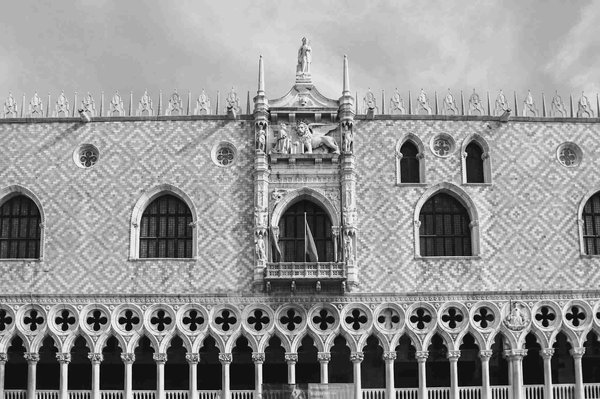
Facade of the Doge's Palace in Venice with Gothic architectural details, captured in black and white.

Gothic grandeur with fewer crowds

The Doge's Palace — seat of Venetian government from the until Napoleon's arrival in — takes on a different character in December. Summer queues vanish, and you can stand alone in the Sala del Maggior Consiglio beneath Tintoretto's Paradise, one of the largest oil paintings in the world at 22 metres wide. The Hall of the Great Council, once packed with over a thousand patricians casting votes, feels vast and silent in winter light filtering through its ogival windows. Veronese's ceiling panels in the neighbouring Sala del Senato are easier to study in the low December crowds, with no queue shuffling you forward.

During the Christmas period the palace occasionally hosts themed evening openings with period music and enhanced lighting in the armoury and prison corridors. The walk across the Bridge of Sighs — connecting the palace to the Prigioni Nuove — gains an extra chill in December, both literal and atmospheric. Combine your visit with the Itinerari Segreti (Secret Itineraries) tour to see the torture chamber, the lead-roof cells where Casanova was imprisoned in , and the Doge's private apartments, all far more evocative without a crowd pressing behind you.
St. Mark's Square, adjacent to the Basilica and the Campanile.
Open daily 9:00 AM – 6:00 PM. Last entry at 5:00 PM. Check for special evening openings in December.
€25 adults. Reduced rates for students, seniors, and children under 14.

Christmas Shopping in Venetian Ateliers
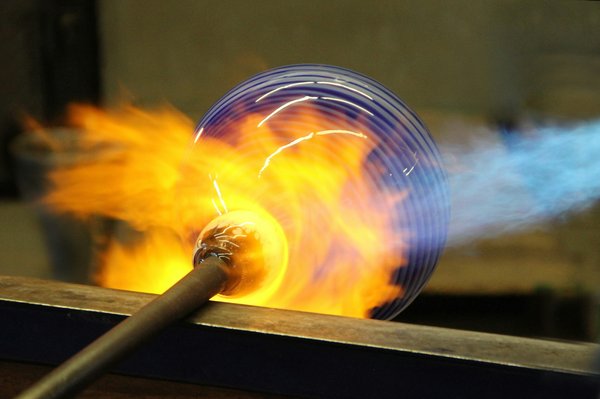
A glassblower shaping molten glass over an open flame, Murano-style.

Murano glass, masks, and handmade gifts

Venice's artisan tradition stretches back to the decree that moved all glassmaking furnaces to Murano to protect the city from fire — and to guard trade secrets under penalty of death. That legacy survives in dozens of small workshops scattered between San Marco, Dorsoduro, and Santa Croce, where you can watch masters blow glass ornaments, gild papier-mâché carnival masks, or hand-print marbled paper using techniques unchanged since the .

During December, many ateliers create limited Christmas collections: tree ornaments in vetro soffiato, miniature nativity scenes in millefiori glass, and leather-bound journals stamped with seasonal motifs. For Murano glass, look for the Vetro Artistico Murano trademark — a guarantee of authentic island production introduced to combat the flood of factory imitations from overseas. Calle Larga XXII Marzo and the streets around Campo San Barnaba concentrate the best independent shops. Prices reflect genuine craftsmanship and hours of hand labour: expect €15–€40 for ornaments, €50–€200 for jewellery, and considerably more for signed sculptural pieces from established maestri.
Workshops throughout San Marco, Dorsoduro, and Santa Croce districts.
Most shops open 10:00 AM – 7:00 PM. Hours vary; some close on Sundays.
Varies by item. Glass ornaments from €15, masks from €30, jewellery from €50.

Christmas Island Tour of Murano and Burano
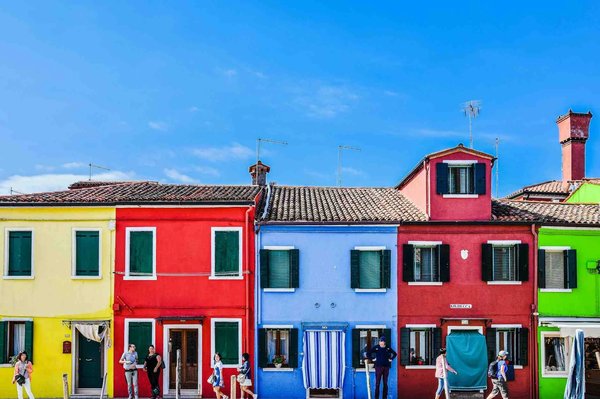
Colorful houses of Burano with a blue sky, an iconic symbol of Venice during the Christmas tour.

Coloured houses and glassblowing in winter light

Murano and Burano are quieter in December than at any other time — and that stillness is precisely their winter appeal. On Murano, the glass furnaces have been burning since the , and a winter visit lets you stand close to the heat of a working fornace while a maestro shapes molten glass into a Christmas bauble. Several workshops offer drop-in demonstrations; Museo del Vetro provides deeper historical context with artefacts dating to Roman times.

A thirty-minute vaporetto hop further, Burano's candy-coloured fishermen's houses look even more vivid against grey December skies. The island's lace-making tradition, documented since the , is showcased at the Museo del Merletto, where needle-lace samples rival the intricacy of any jewellery. Grab a table at a canal-side trattoria for risotto de gò (goby fish risotto), a Burano specialty you will not find in central Venice. The round trip on ACTV line 12 from Fondamente Nove takes about two hours including both islands — add a stop at Torcello to see the Byzantine mosaics in the cathedral, practically deserted in winter.
Depart from Fondamente Nove on ACTV vaporetto line 12.
Vaporetti run approximately every 20 minutes. Museums open 10:00 AM – 5:00 PM (closed Tuesdays).
ACTV day pass €25. Museum entry from €10. Glass demonstrations often free.

Midnight Mass at the Church of the Frari
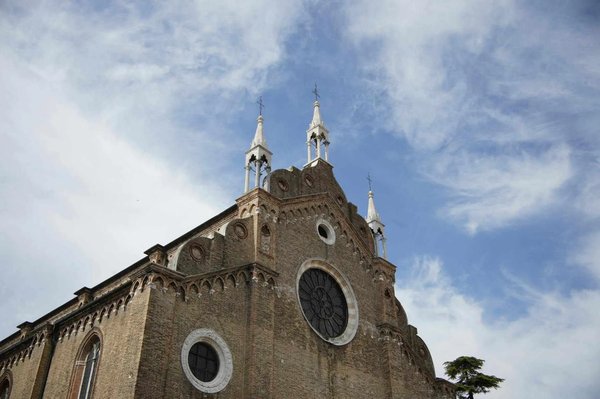
Facade of the Church of the Frari in Venice with a blue sky and Gothic architectural details.

Gothic grandeur on Christmas Eve

The Basilica di Santa Maria Gloriosa dei Frari — known simply as the Frari — was completed by Franciscan friars in and remains Venice's largest church, its nave stretching 102 metres from door to apse. Its Christmas Eve midnight mass is one of the city's most atmospheric services: the nave, normally cool and dim, fills with hundreds of candles whose light catches the gold frame of Titian's Assunta () above the high altar, making the Virgin's ascent seem to glow from within.

The liturgy follows the Roman Rite with a choir singing traditional Latin hymns and Venetian carols. Acoustically, the Frari's brick barrel vault produces a warm, resonant sound quite different from St. Mark's brighter Byzantine echo — voices linger in the air for a full second after each phrase. Arrive by to secure a seat in the nave; the church fills quickly, and standing room along the side aisles near Donatello's wooden St. John the Baptist is the only alternative. After mass, step outside into Campo dei Frari, where the cold night air and the faint sound of bells from neighbouring churches create a fitting close to . No tickets are required, but a small donation to the parish is customary.
Campo dei Frari, San Polo district, a short walk from the San Tomà vaporetto stop.
, doors open at 11:00 PM. Mass begins at midnight.
Free entry. Donations welcome.

Evening Stroll Along the Zattere

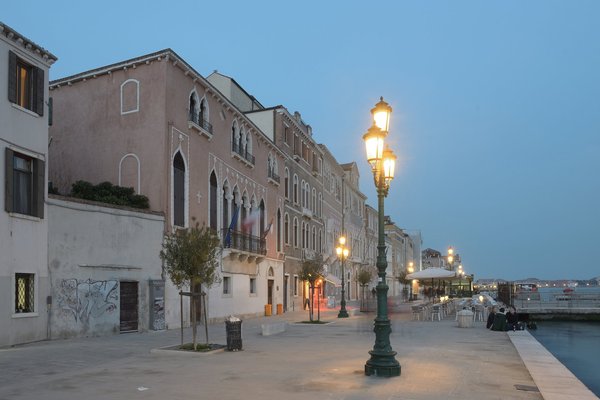
The Zattere promenade in Venice at dusk, with lampposts lit along the Giudecca Canal.

Winter light on the Giudecca Canal

The Zattere — Venice's long south-facing promenade — takes its name from the timber rafts (zattere) that once delivered lumber here from the Dolomites. In December, the wide fondamenta is one of the few places in Venice where you can walk side by side without ducking into a doorway, and the views across the Giudecca Canal to Palladio's Church of the Redentore are especially striking when the low winter sun catches its white Istrian-stone façade.

Christmas lights strung between the lampposts reflect in the canal after dark, creating a double row of warm dots stretching toward the western horizon. Stop at Nico, a gelateria that has occupied its corner since , for a gianduiotto — a frozen praline block served with whipped cream — or ducking into the adjacent bar for a spritz and a plate of tramezzini. The promenade connects the Accademia area to the maritime quarter of San Basilio, a forty-minute walk that passes the Magazzini del Sale (ancient salt warehouses, now a gallery) and the church of Santa Maria della Visitazione. After sunset, the foot traffic thins and the canal settles into a quiet that feels centuries removed from the crowded summer boardwalk.
Along the Giudecca Canal, Dorsoduro district, from Accademia to San Basilio.
Accessible at all hours, year-round.
Free for all visitors.

Recommended Itineraries in Venice

Christmas Lights and Hidden Calli

Morning — Start at St. Mark's Square while the holiday decorations still glow in the early fog, then cross through Calle dei Fabbri to the Rialto Bridge for market-stall browsing and a view of garland-draped palazzi along the Grand Canal. Warm up with a caffè corretto at a local bar near Campo San Bartolomeo.

Afternoon — Walk through the quieter Cannaregio district, where neighbourhood Christmas lights arch over canals too narrow for vaporetti. Pause at Campo Santa Maria Formosa to admire the church's nativity scene, then continue to the Fondamenta della Misericordia for cicchetti and a glass of Prosecco at a canal-side bacaro.

Evening — Return via Campo Santo Stefano to browse the Christmas market under twinkling lights, finishing with a hot vin brulé as the campo empties and the fairy lights reflect off the wet pavement.

Churches, Art, and Nativity Scenes

Morning — Begin at the Church of San Zaccaria to see Giovanni Bellini's altarpiece in winter silence, then visit the adjacent Church of San Giorgio dei Greci for its Byzantine-rite Christmas decorations. Both churches display handcrafted nativity scenes during December.

Afternoon — Take the vaporetto to San Giorgio Maggiore for Palladio's white-marble interior and the panoramic bell-tower view — on a clear December day you can see the Dolomites. Cross back to Dorsoduro and enter the Frari to stand beneath Titian's Assunta before the Christmas Eve crowds arrive.

Evening — Walk to Santa Maria della Salute, the great Baroque church at the Grand Canal's mouth, where candles lit for the holiday season illuminate Tintoretto's ceiling paintings. End the day with dinner in a Dorsoduro trattoria, sampling bigoli in salsa and a carafe of local Soave.

Bacari Crawl with Christmas Flavours

Morning — Start near the Rialto Fish Market, where vendors arrange seasonal produce beside the canal. Duck into All'Arco for your first cicheto — a crostino topped with baccalà mantecato — paired with a small glass of Valpolicella. The market's energy is highest before 11 AM.

Afternoon — Weave through San Polo toward Cannaregio, stopping at three or four bacari along the way. Look for seasonal specials: sarde in saor enriched with pine nuts and raisins (a Christmas Eve tradition), polpette (fried meatballs), and slices of pandoro served with mascarpone. Each bar adds its own twist; regulars are happy to recommend favourites.

Evening — Finish in the Jewish Ghetto, where a handful of quiet bars serve Venetian-Jewish pastries alongside Spritz. The Ghetto's low-key atmosphere and softly lit sottoporteghi offer a gentle wind-down after an afternoon of eating and drinking.

When to Visit

December: The Ideal Month for Christmas in Venice

December is the prime window for holiday Venice. Average highs reach about 8 °C, acqua alta events create photogenic reflections across St. Mark's Square, and Christmas markets run from 1 December through Christmas Eve. Visitor numbers sit well below the spring-summer peak, meaning shorter vaporetto queues and easier restaurant bookings. The trade-off is damp, foggy weather — pack waterproof boots and layers — but that atmospheric mist is precisely what makes the city feel like a Renaissance painting come to life.

Peak Season

Spring and summer, with high prices and large crowds of tourists.

Shoulder Season

September and October, with pleasant weather and moderate crowds.

Low Season

January and November, with fewer tourists and lower prices, but cold and humid weather.

Tips for Visiting Venice

Book a Christmas concert or opera at Teatro La Fenice. The gilt-and-velvet interior, rebuilt after the fire, is at its most theatrical under holiday lighting — and December programmes often include Verdi or Puccini gala evenings.
Order vin brulé at the small bars tucked into side alleys near Rialto rather than in St. Mark's Square. The price drops by half and the spice blends are often house recipes passed down through families.
For unique gifts, seek out carta marmorizzata (marbled paper) workshops in Dorsoduro and San Polo. Artisans hand-dip each sheet using techniques — a notebook or set of cards makes a distinctly Venetian Christmas present.

Local Experiences in Venice

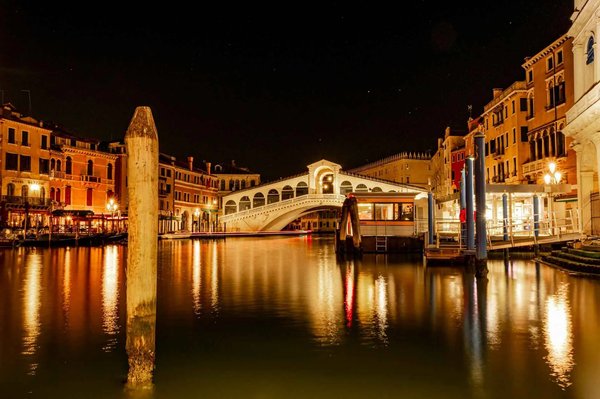
Rialto Bridge illuminated at night in Venice with reflections on the water.

Rialto Bridge After Dark

The Rialto Bridge, completed in after a design competition that counted Michelangelo among the rejected entrants, becomes one of Venice's most photogenic spots on December evenings. Holiday garlands wrap its stone balustrades and warm-white lights trace its famous single arch, all of it doubled in the canal's reflection below. Cross to the centre of the bridge around , when the market stalls have closed and the foot traffic thins, for an unobstructed view of illuminated palazzi stretching toward the railway station on one side and San Marco on the other.
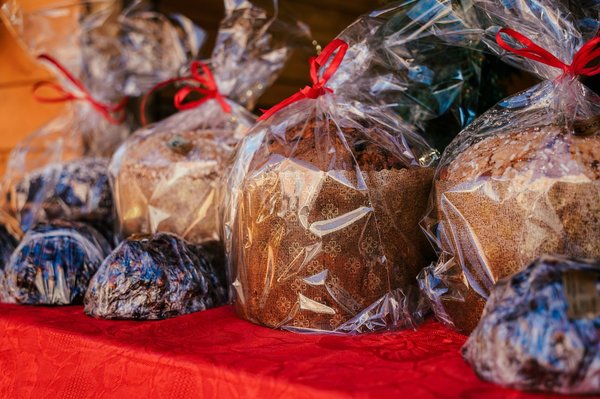
Wrapped panettone and pandoro cakes tied with red ribbon, ready for Christmas.

Venetian Christmas Pastries
Beyond the ubiquitous pandoro (Verona's golden, star-shaped cake adopted across the Veneto), Venice's bakeries turn out seasonal specialities you will not find elsewhere. Look for pinza, a dense cornmeal-and-dried-fruit cake that was once the traditional Epiphany breakfast, and galani, thin fried pastry ribbons dusted with powdered sugar. The historic Pasticceria Tonolo in Dorsoduro has been baking since and draws queues on weekend mornings — arrive early and pair a slice of pandoro with their house zabaglione cream for the full experience.
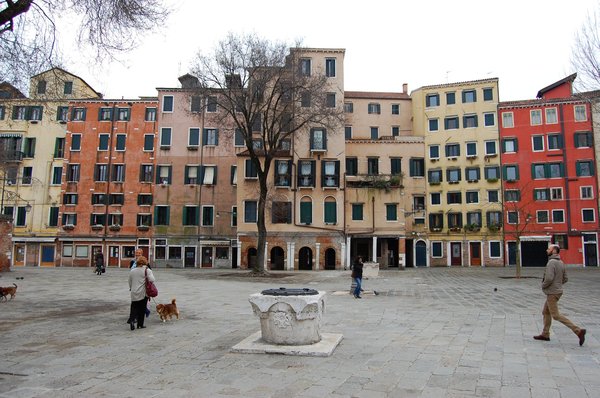
Campo di Ghetto Nuovo in Venice, ringed by unusually tall apartment buildings.

The Jewish Ghetto in December

Venice's Jewish Ghetto — the world's first, established by decree in — occupies a quiet island in Cannaregio where tall tenement buildings rise around a central campo. In December the neighbourhood hosts a parallel celebration: Hanukkah, with a public menorah lighting in Campo del Ghetto Nuovo that often coincides with the Christmas season. The Museo Ebraico offers guided tours of five historic synagogues hidden in the upper floors of the buildings — their opulent interiors come as a surprise given the modest façades. Afterwards, stop at Gam Gam for kosher Venetian-Jewish pastries or a plate of artichoke alla giudia, then browse the bookshops and craft stalls that line the campo's edges.

Frequently Asked Questions about Venice

When is the best time to visit Venice for Christmas?

I recommend arriving in the first or second week of December if you want the full market experience without the peak-holiday crowds. The Campo Santo Stefano market opens on <time datetime="12-01">1 December</time>, and most church concerts and special events are programmed by mid-month. Christmas Eve and Christmas Day are atmospheric but quieter — many restaurants require advance booking and some shops close.

Are there free Christmas events in Venice?

Yes, quite a few. I always start with the Christmas markets in Campo Santo Stefano, which are free to browse. Most churches display nativity scenes at no charge, the Zattere promenade is open around the clock, and the holiday lights across the city are visible to everyone. Midnight mass at the Frari and other churches is also free, though a small donation is customary.

What are the traditional Venetian Christmas sweets?

I always point visitors toward <em>pandoro</em>, the soft golden cake from nearby Verona that every Venetian household serves at Christmas, and <em>pinza</em>, a denser cornmeal cake studded with dried figs and raisins traditionally eaten on Epiphany. You will also find <em>galani</em> (fried pastry ribbons) and <em>panettone</em> in most bakeries. Pasticceria Tonolo in Dorsoduro is my go-to for all of these.

How do I get around Venice during Christmas?

Walking is the primary way — and the most rewarding, since every decorated calle and lit bridge is part of the experience. For longer distances, ACTV vaporetti run throughout the holidays on reduced schedules. I suggest buying a 24- or 48-hour travel pass if you plan to visit Murano, Burano, or the Lido. Water taxis are available but expensive; I reserve those for airport transfers or late-night returns.

Which churches are worth visiting at Christmas?

I would prioritise three: the <strong>Frari</strong> for its midnight mass and Titian's altarpiece, <strong>San Zaccaria</strong> for Bellini's Madonna and its beautifully crafted nativity scene, and <strong>San Giorgio Maggiore</strong> for Palladio's interior and the bell-tower panorama. Santa Maria della Salute is also striking when filled with holiday candles.

Where can I find unique Christmas gifts in Venice?

I steer friends toward three types of artisan shops: Murano glass studios for ornaments and jewellery (look for the Vetro Artistico Murano trademark), marbled-paper workshops in Dorsoduro for journals and stationery, and mask-making ateliers near San Polo for hand-painted carnival masks. All are distinctly Venetian and impossible to replicate with a generic online order.

Are there activities for children during Christmas in Venice?

Absolutely. The ice-skating rink at Campo San Polo is the biggest draw for kids, open daily through <time datetime="01-06">6 January</time>. Glass-blowing demonstrations on Murano fascinate children of all ages, and many churches set up life-size nativity scenes that younger visitors find captivating. On weekends, the Campo Santo Stefano market sometimes hosts craft workshops for families.

What are the traditional Venetian dishes for Christmas dinner?

Christmas Eve centres on seafood, following the old Catholic fasting custom: <em>baccalà mantecato</em>, <em>sarde in saor</em>, and eel are the classics. Christmas Day is heartier — <em>bollito misto</em> (mixed boiled meats) with <em>pearà</em> sauce or <em>bigoli in salsa</em> (thick spaghetti with anchovy and onion). Both meals close with <em>pandoro</em> or <em>panettone</em>. I recommend booking a <em>cenone</em> (grand supper) at a canal-side restaurant for the full experience.

Is Venice crowded at Christmas?

Noticeably less than in summer. December visitor numbers are roughly a third of peak-season levels, which means shorter museum queues and more breathing room in the calli. That said, St. Mark's Square and the Rialto area still draw steady foot traffic on weekends. For real quiet, I explore Cannaregio and Dorsoduro on weekday mornings.

What are the best neighbourhoods for a Christmas walk?

I have three favourites. <strong>Dorsoduro</strong> for the Zattere promenade and its canal-side cafés. <strong>Cannaregio</strong> for the atmospheric Fondamenta della Misericordia, the Jewish Ghetto's menorah lighting, and the quietest decorated bridges in the city. And <strong>San Polo</strong> for the Frari, the Rialto market, and the ice rink at Campo San Polo — three highlights within a ten-minute walk of each other.