Naples with Kids: 10 Fun Ideas

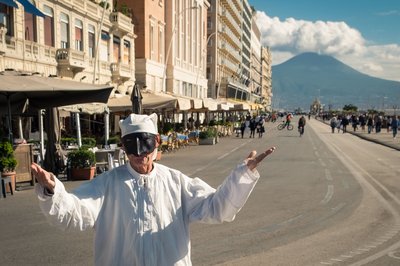
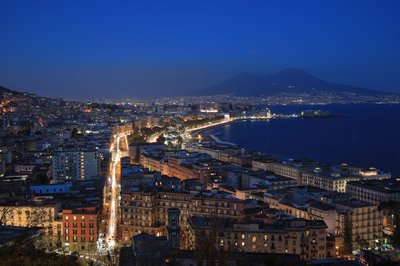
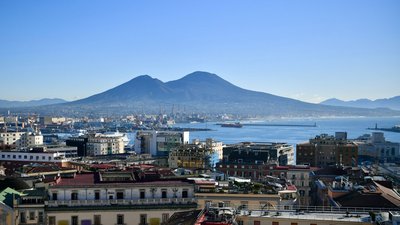
Pulcinella in white mask on Naples waterfront with Mount Vesuvius in the background.
Written by travel experts
Regularly updated
Verified on-site

Naples has been captivating families since the days when Bourbon princes played in the gardens of Capodimonte. Beneath the city's famously chaotic surface lies a place purpose-built for wonder: Greek tunnels that double as time machines, a aquarium where jellyfish drift through rooms older than your great-grandparents, and piazzas where children chase pigeons under the same sky that Virgil once described.

The city's genius for entertaining young visitors runs deeper than guidebook lists. Neapolitan culture is inherently theatrical — street vendors perform, pizza-makers toss dough like acrobats, and every neighborhood has a patron saint whose festival fills the streets with fireworks and sugar-dusted zeppole. Children don't just visit Naples; they participate in it.

This guide maps 10 tested activities across the city, from the volcanic casts of Pompeii's citizens at the Archaeological Museum to the roller coasters of Edenlandia, Italy's oldest amusement park. Each entry includes practical details — hours, prices, directions — so you spend less time planning and more time watching your kids fall in love with a city that has never grown up.

Top Things to Do in Naples

National Archaeological Museum of Naples
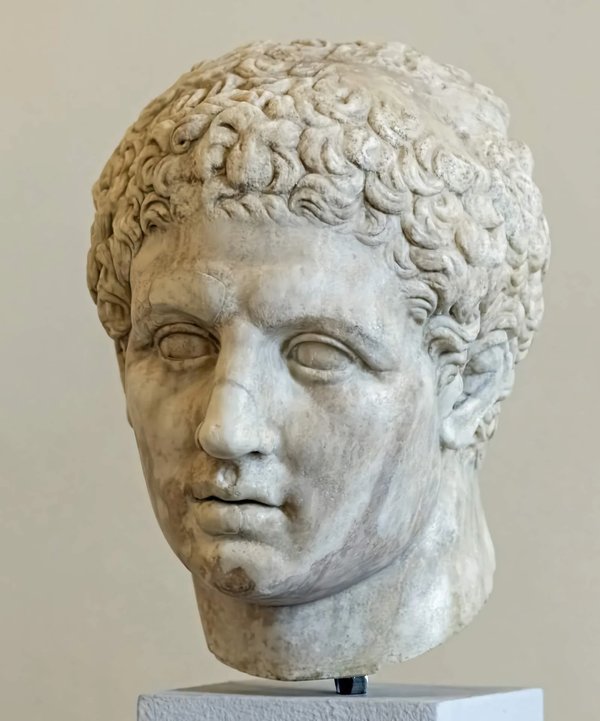
Classical marble sculpture displayed at the National Archaeological Museum of Naples.

Where Pompeii Comes Alive for Young Explorers

The National Archaeological Museum of Naples (MANN) opened its doors in inside a former cavalry barracks built for the Spanish viceroys in the . Today it holds the world's largest collection of artifacts from Pompeii and Herculaneum, the two cities buried by Vesuvius in . Children tend to gravitate immediately toward the plaster casts of Pompeii's final residents — figures frozen mid-stride, crouching, or shielding loved ones — which make ancient history viscerally real in a way no textbook can.

The Secret Cabinet on the mezzanine draws nervous giggles from older kids, while the Egyptian collection — one of Europe's finest outside Turin — holds mummies, canopic jars, and a wooden sarcophagus still bearing traces of original paint. The Farnese Bull, carved from a single block of marble and standing over three meters tall, is the largest surviving sculpture group from antiquity. MANN runs dedicated family audio guides and a Saturday workshop series where children reconstruct Roman mosaics from colored tiles. Allow at least two hours; the mosaic halls alone contain more than 15,000 tesserae-covered panels from Pompeii's House of the Faun.
In the heart of Naples, at Piazza Museo 19, easily accessible by metro, Museo stop.
Open every day from 9:00 AM to 7:30 PM.
Entrance ticket: €15 for adults, €5 for children.

Citta della Scienza

A child examines a detailed anatomical model, part of the Corporea human-body exhibition.

Hands-On Science in a Former Factory

Citta della Scienza rose from the industrial ruins of Bagnoli's Italsider steelworks, opening in as southern Italy's first interactive science museum. An arson fire in destroyed much of the original complex, but the rebuilt campus — completed in — is larger, smarter, and more child-friendly than ever. The permanent Corporea exhibition, Europe's first museum dedicated entirely to the human body, lets children walk through a giant beating heart, test their reflexes on digital stations, and watch 3D projections of blood flowing through arteries.

The planetarium, seating 120 under a 10-meter dome, runs 30-minute shows projected in 8K resolution that map the Neapolitan night sky, trace satellite orbits, and simulate the surface of Mars. Younger visitors (ages 0 to 6) have their own section — Officina dei Piccoli — with water tables, building blocks scaled to toddler hands, and sensory tunnels. Weekend workshops rotate monthly: recent themes included volcano chemistry, robot programming, and forensic science for ages 8 to 12. The outdoor terrace overlooks the Gulf of Pozzuoli, and a cafeteria serves kid-approved pasta and panini. Budget half a day; most families find it difficult to drag children away.
Located at Via Coroglio 57, in the lively district of Bagnoli, just a few kilometers from the center of Naples.
Open Tuesday to Sunday from 9:00 AM to 5:00 PM. Closed on Mondays.
Entrance ticket: €10 for adults, €7 for children. Discounts available for families.

Virgiliano Park

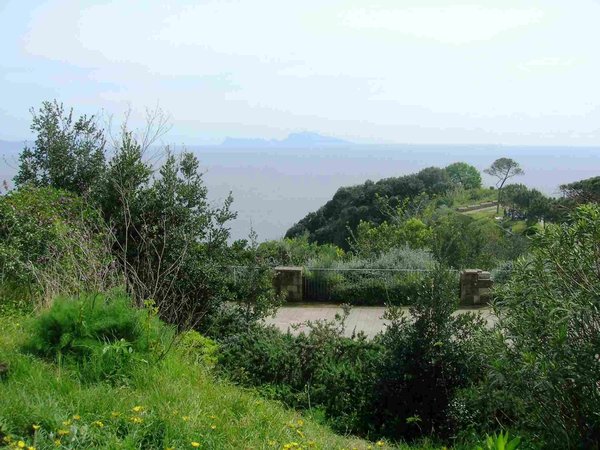
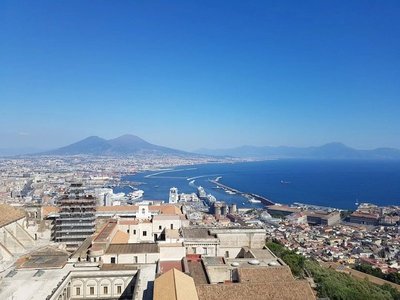
Panoramic view of Virgiliano Park in Naples with vegetation and the sea in the background.

Gulf Views and Open Space on Posillipo Hill

Virgiliano Park — officially Parco della Rimembranza — was inaugurated in on the highest point of the Posillipo promontory, a ridge that the ancient Greeks named Pausilypon ("respite from worry"). The park occupies the site where, according to medieval Neapolitan legend, the poet Virgil was buried before his remains were moved; a commemorative stone near the eastern belvedere marks the traditional spot.

For families the appeal is simpler: this is one of the few large green spaces in Naples where children can run freely on flat grass while parents take in a 360-degree panorama — Vesuvius to the east, Capri and Ischia to the south, the Campi Flegrei volcanic fields to the west. Paved paths loop through umbrella pines and holm oaks, making the park accessible even with strollers. A small playground near the main entrance has swings and a climbing frame. On clear mornings the islands appear so close that children insist they could swim to them. Pack a picnic — there are stone benches along the cliff edge — and plan your visit for the golden hour before sunset, when the light turns the gulf copper and the fishing boats of Marechiaro flicker below like fireflies.
Located at Viale Virgilio, on the Posillipo hill in Naples, with spectacular views of the Gulf.
Open every day from 7:00 AM to 10:00 PM, ideal for a visit at any time of the day.
Entrance is free, an unmissable opportunity to enjoy a day outdoors at no cost.

Naples Zoo

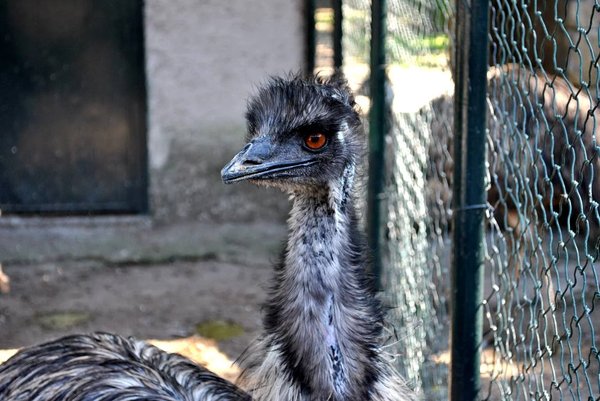
Close-up of an emu in an enclosure at Naples Zoo.

Animals and Shade in Fuorigrotta

The Naples Zoo — formally the Giardino Zoologico di Napoli — was established in inside the grounds of the Mostra d'Oltremare exhibition complex, making it one of Italy's oldest zoological gardens. After decades of decline, a major renovation program begun in has transformed enclosures into more naturalistic habitats and introduced conservation breeding programs for endangered Mediterranean species.

The collection today includes around 200 animals from five continents: ring-tailed lemurs, Asian small-clawed otters, African grey parrots, and a pair of Nile crocodiles that never fail to press children's noses against the glass. The fattoria didattica (educational farm) occupies a shaded corner where kids can brush miniature donkeys, hand-feed pygmy goats, and collect eggs from the henhouse under staff supervision. Weekend programs — billed as "Zookeeper for a Day" — let children aged 6 to 12 help prepare animal meals and learn about habitat enrichment. The zoo sits directly beside Edenlandia amusement park, making a combined visit an easy full-day plan. Bring hats and sunscreen in summer; the paths are partly exposed, though mature pines provide welcome canopy along the northern loop.
In the Fuorigrotta district, at Viale John Fitzgerald Kennedy 76, just minutes from the center of Naples.
Open every day from 9:30 AM to 6:00 PM, ideal for a visit any day of the week.
Entrance ticket: €10 for adults, €7 for children. Discounts available for groups and families.

Castel dell'Ovo

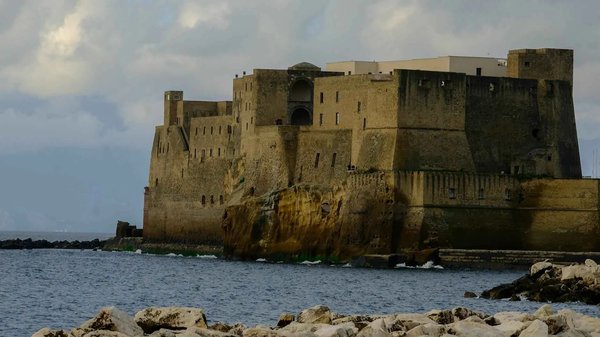
Castel dell'Ovo in Naples with cloudy sky and sea in the foreground.

Sea Fortress with a Legendary Egg

Castel dell'Ovo occupies the tiny island of Megaride, the exact point where Greek colonists from Cumae founded Parthenope — the settlement that would become Naples — around . The Roman general Lucullus built a villa here in the ; the Normans raised the current fortress in the ; and Angevin kings expanded it into the imposing stone mass that children see today. The name comes from a medieval legend: the poet Virgil supposedly hid a magical egg in the castle's foundations, and as long as it remains intact, Naples will survive.

For kids, the castle works as a free-admission adventure playground disguised as history. Narrow staircases wind through barrel-vaulted chambers, arrow slits frame snapshots of Vesuvius, and the rooftop terraces — the highest point on the Santa Lucia waterfront — offer panoramic views that make every child feel like a lookout on a pirate ship. There are no formal exhibits, which paradoxically makes it better for young visitors: they can explore at their own pace without "don't touch" signs. Afterward, walk across the causeway to the Borgo Marinari below the castle walls, where fishing boats bob beside waterfront restaurants serving fried calamari and pizza fritta that kids devour standing up.
Located at Via Eldorado, 3, in the heart of Naples' waterfront, with a unique view of the Gulf.
Open every day from 9:00 AM to 6:00 PM.
Entrance is free for all visitors.

Capodimonte Museum and Royal Park

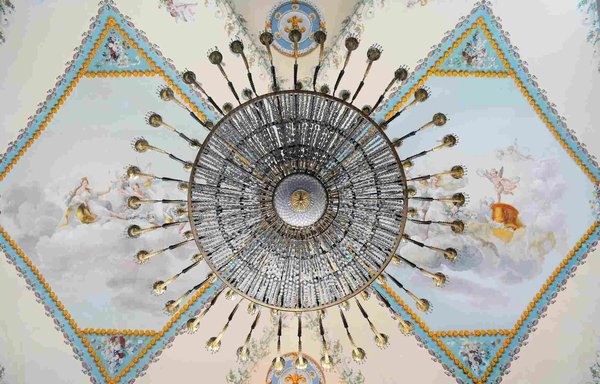
Decorative chandelier and frescoes on the ceiling of the Capodimonte Museum in Naples, artistic details and vibrant colors.

Bourbon Art Palace with a Forest Backyard

King Charles VII of Bourbon commissioned the Capodimonte Palace in as a hunting lodge and gallery for the Farnese art collection he had inherited from his mother. The result, completed over four decades on a hilltop north of the city, is one of Italy's largest museums — 126 galleries spread across three floors — holding works by Caravaggio, Titian, Raphael, and a room-sized Annunciation by Simone Martini that stops visitors in their tracks.

Children, however, tend to prefer the Royal Park surrounding the palace: 134 hectares of ancient oaks, camellias, and lime-tree alleys originally planted as a royal hunting reserve. Peacocks strut freely across the lawns, and a small pond near the eastern gate attracts turtles and frogs. The museum runs "Domenica al Museo" family workshops on the first Sunday of each month — free with admission — where kids paint in the style of Neapolitan Baroque masters using period pigments. A combined visit works well: spend an hour in the galleries (the armory room and porcelain collection hold children's attention best), then release energy in the park with a football or a Frisbee. The museum cafe serves fresh sfogliatelle and fruit juice, and the view from the rear terrace stretches across the entire Bay of Naples.
Located at Via Miano 2, on the Capodimonte hill, just minutes from the center of Naples.
Open every day from 8:30 AM to 7:30 PM. Last entry allowed at 6:30 PM.
Entrance ticket: €12 for adults, €6 for children. Discounts available for groups and students.

Napoli Sotterranea

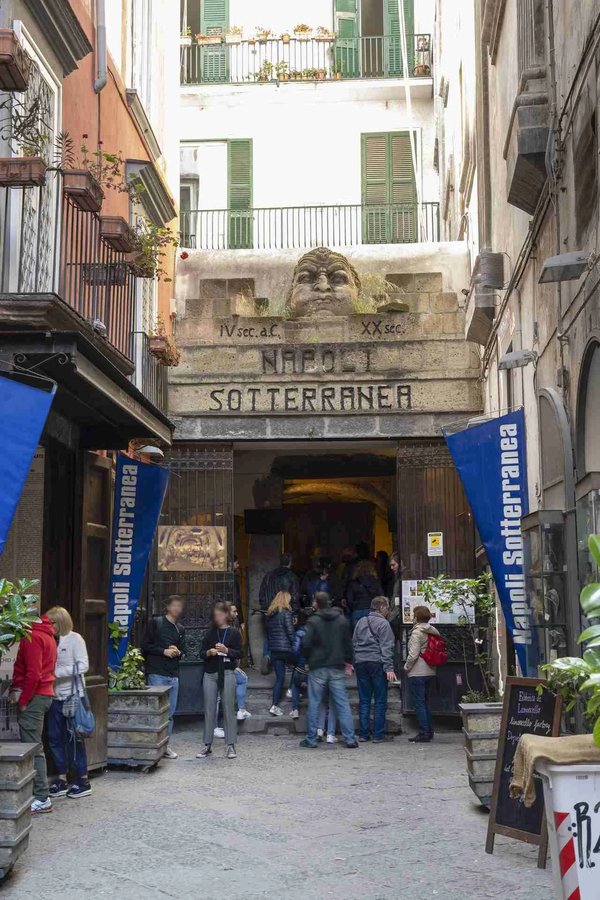
Entrance to Naples Underground with visitors and blue signs, an iconic underground attraction in Naples.

Greek Tunnels Forty Meters Below the Streets

Napoli Sotterranea takes families 40 meters beneath Piazza San Gaetano into a network of tunnels carved by Greek settlers around to quarry the soft yellow tuff stone that built their city of Neapolis. Over the centuries the same cavities served as Roman aqueducts, early Christian catacombs, and — during — bomb shelters for 200,000 Neapolitans during Allied air raids. Faded chalk drawings on shelter walls, left by children hiding from the bombs, remain visible under guide torchlight.

The standard 90-minute tour threads through cisterns where water still pools on ancient stone, a buried Roman theater discovered inside a resident's basement (you literally enter through someone's bed-sitting room), and a narrow candlelit passage — roughly 50 centimeters wide and 30 meters long — that children find thrilling and some adults find challenging. Guides pitch their commentary to the youngest member of each group, often handing children the flashlight to "lead the expedition." Temperature underground holds steady at around 18°C year-round, making this an ideal escape from summer heat or a rainy-day alternative. Wear closed-toe shoes. Tours depart every hour; the last leaves at 5:00 PM.
In the heart of Naples' historic center, at Piazza San Gaetano 68, easily reachable on foot.
Open every day from 10:00 AM to 6:00 PM.
Entrance ticket: €10 for adults, €6 for children.

Stazione Zoologica Anton Dohrn

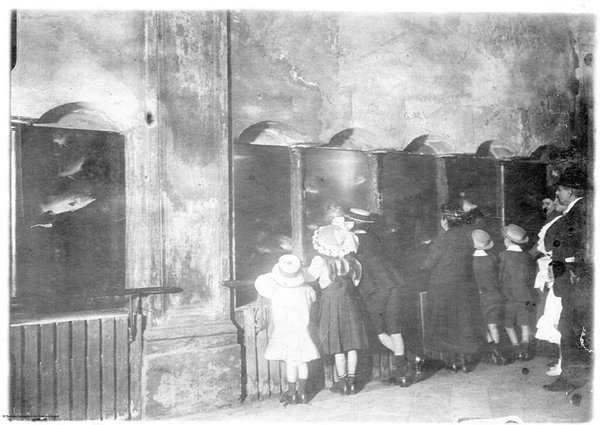
Historic photo of visitors observing fish tanks at the Naples Aquarium.

Europe's Oldest Marine Research Aquarium

The Stazione Zoologica Anton Dohrn — commonly called the Naples Aquarium — was founded in by the German naturalist Anton Dohrn and opened to the public in , making it the oldest continuously operating aquarium in the world. The building sits inside the Villa Comunale, the seafront park designed by Luigi Vanvitelli in , and its facade still bears the original neo-Renaissance stonework that Victorian-era travelers admired.

Inside, 23 display tanks hold species from the Gulf of Naples ecosystem: moray eels threading through rocky crevices, seahorses clinging to posidonia grass, octopuses solving puzzle boxes during feeding demonstrations, and the mesmerizing moon jellyfish whose bioluminescent pulses transfix children for minutes at a stretch. The institution is primarily a working marine biology laboratory — Darwin, Haeckel, and dozens of Nobel laureates have conducted research here — and the educational displays explain ongoing projects in coral restoration and Mediterranean biodiversity monitoring. A visit takes about 45 minutes, making it an easy slot between a morning at Castel dell'Ovo and lunch on the waterfront. Check for the Saturday "Young Marine Biologists" program, where children aged 7 to 11 use microscopes to examine plankton samples collected that morning from the harbor.
Located in the splendid Villa Comunale, on Via Caracciolo, in the heart of Naples.
Open every day from 9:00 AM to 5:00 PM.
Entrance ticket: €8 for adults, €5 for children.

Edenlandia

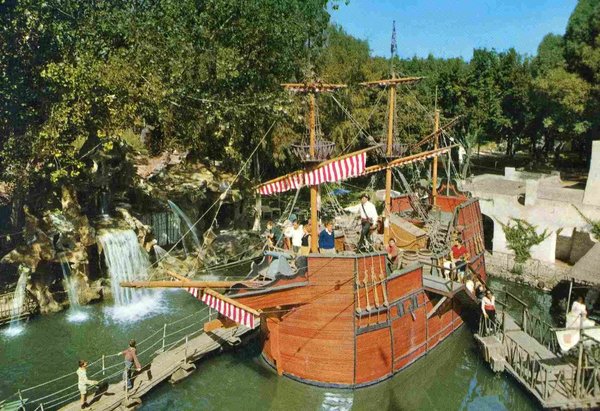
Attraction with a pirate ship and waterfall at Edenlandia amusement park in Naples.

Italy's Oldest Amusement Park

Edenlandia opened on in Fuorigrotta, becoming Italy's first permanent amusement park and predating Gardaland by a full decade. At its peak it drew over a million visitors a year; after a long closure for renovation, it reopened in with a mix of restored vintage rides and new attractions, preserving the retro charm that makes older Neapolitans misty-eyed while adding the safety standards that modern parents expect.

The park divides into three zones. Adventure Land holds the headline rides: a spinning coaster, bumper cars, and a log flume that soaks everyone on hot days. Fantasy Land targets children under 8 with a carousel, a miniature train, and a mirror maze. Show Land stages live character performances and seasonal events — a Halloween "Haunted Edenlandia" in October and a Christmas village in December with snow machines and Santa's grotto. Ticket prices are low by European theme-park standards, and a wristband system lets families ride all day without queueing for individual tokens. The food court inside the gates serves Neapolitan street food: fried pizza, arancini, and granita. Arrive after 4:00 PM for shorter queues and cooler temperatures, and stay for the illuminated fountain show at closing time.
In the heart of the Fuorigrotta district, at Viale John Fitzgerald Kennedy 76, Naples.
Open every day from 10:00 AM to 10:00 PM, ideal for a full day of fun.
Entrance ticket: €15 for adults and €10 for children.

Teatro dei Piccoli

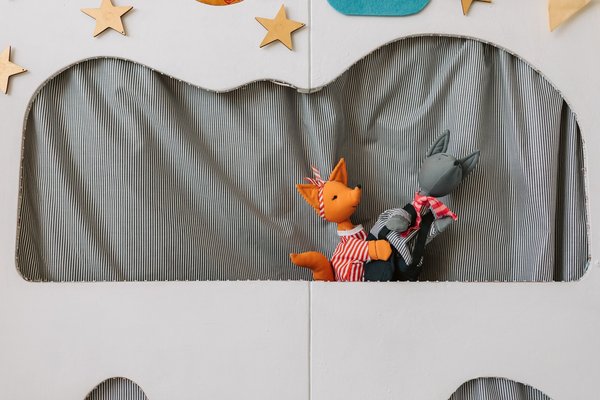
A fox and wolf puppet perform together on a colorful puppet-theater stage.

Puppet Shows in a Historic Playhouse

The Teatro dei Piccoli was established in inside the Mostra d'Oltremare exhibition complex, part of the cultural reconstruction effort in post-war Naples. For nearly 80 years it has staged puppet shows, marionette operas, and children's theater in a 300-seat auditorium designed with raked seating that gives even toddlers a clear sightline to the stage.

The repertoire rotates monthly and balances Neapolitan traditions — Pulcinella puppet plays descended from the commedia dell'arte — with modern adaptations of fairy tales, musical performances, and shadow-theater productions imported from international festivals. Pulcinella, the hook-nosed trickster born in Naples around , remains the perennial star: children shriek warnings to him when the crocodile appears, a ritual unchanged since Bourbon-era street puppeteers first performed the routine. During the Christmas season, a special "Natale al Teatro" program runs daily with a rotating lineup of holiday shows, craft workshops, and a visit from La Befana (the Italian gift-giving witch of Epiphany). Performances typically last 50 to 60 minutes — just right for young attention spans. Book online in advance for weekend shows, which regularly sell out.
Located at Via Antonio Usodimare, in the heart of the Mostra d'Oltremare in Naples.
Variable hours depending on the shows: it is recommended to check the official website for updated details.
Tickets: €10 for adults, €7 for children.

Recommended Itineraries in Naples

Waterfront and Castle Day

Morning — Start at Castel dell'Ovo when it opens at 9:00 AM, before tour groups arrive. Let the kids explore the towers and rooftop terraces at their own pace — the panoramic views of Vesuvius and Capri make the climb worthwhile. Afterward, walk through the Borgo Marinari fishing village below the castle for a mid-morning pizza fritta from one of the waterfront kiosks.

Afternoon — Follow the Lungomare Caracciolo promenade west toward the Villa Comunale gardens. Stop at the Stazione Zoologica aquarium to watch the jellyfish tanks and octopus feeding, then let children run in the park's shaded playground. End the walk at Piazza Vittoria, where you can catch bus C25 back to the city center or continue on foot to the Chiaia shopping district for gelato at one of the neighborhood's artisan gelaterias.

Science and Thrills in Fuorigrotta

Morning — Take the Cumana train to Bagnoli and spend the morning at Citta della Scienza. Head straight to the Corporea human-body exhibition before it fills up, then move to the planetarium for the 11:00 AM show. The outdoor terrace cafe serves a decent lunch with gulf views, saving you the hunt for a kid-friendly restaurant nearby.

Afternoon — Catch bus C9 (or a short taxi ride) to Edenlandia and the Naples Zoo, which sit side by side on Viale Kennedy. Visit the zoo first while energy levels are high, then transition to Edenlandia's rides as the afternoon cools. Stay for the illuminated fountain show at closing if your children are still standing.

Underground and Ancient History

Morning — Begin at Napoli Sotterranea on Piazza San Gaetano for the 10:00 AM guided tour. The 90-minute underground walk holds a constant 18°C — a relief in summer and a novelty in winter. Emerge blinking into the sunlight and walk five minutes along Via dei Tribunali, stopping at a friggitoria for crocche (fried potato croquettes) that kids eat like sweets.

Afternoon — Continue to the National Archaeological Museum, a 10-minute walk north. Focus on the Pompeii mosaic halls and the plaster casts for maximum child impact; skip the upper-floor painting galleries unless your kids are older. End the day with a gelato on Piazza Bellini, where university students strum guitars on the steps of the ancient Greek city wall — a fitting soundtrack for a day spent 2,500 years in the past.

When to Visit

The Best Time to Visit Naples

The best time to visit Naples is during spring (April-June) and autumn (September-October), when the weather is mild and pleasant. Summer can be hot and crowded, while winter offers fewer crowds but cooler temperatures.

Peak Season

Summer (June-August) is the peak season, with more tourists and higher prices.

Shoulder Season

Spring and autumn offer a good balance between weather and tourist crowds.

Low Season

Winter (December-February) is the low season, with fewer tourists and more affordable prices.

Tips for Visiting Naples

I always carry a refillable water bottle for each child — Naples has public drinking fountains (nasoni) scattered across the historic center, but the walk between them can feel long in July heat.
I pack flat-soled sneakers for the kids rather than sandals. The basalt cobblestones in Spaccanapoli and the Spanish Quarter are uneven and slippery after rain, and the underground tour requires closed-toe shoes.
I schedule the big-ticket indoor attractions — the Archaeological Museum, Napoli Sotterranea, the aquarium — for the morning slot between 9:00 and 11:00 AM, when queues are shortest and the air-conditioned galleries feel like a reward before the midday heat.

Local Experiences in Naples

Children sitting on grass in a park, showing temporary tattoos on their arms.

Discover Floridiana Park

Floridiana Park, perched in the Vomero neighborhood at an elevation of 150 meters, was originally the private garden of Lucia Migliaccio, Duchess of Floridia and morganatic wife of King Ferdinand I. Opened to the public in , the park spans six hectares of English-style landscaping with gravel paths, Mediterranean pines, and a belvedere terrace offering one of Naples' widest views — from Posillipo to Vesuvius. I bring my kids here specifically for the flat central lawn, large enough for a proper kickabout, and the shaded benches where you can sit with a book while they explore. The Duca di Martina ceramics museum inside the villa is small enough for a 20-minute visit with children, and the Vomero funicular station is a five-minute walk away.
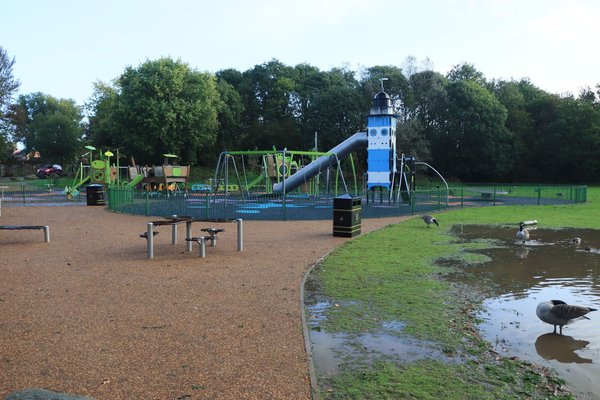
A colorful playground with a slide tower beside a pond where ducks gather.

Trip to Poggio Park

Poggio Park (Parco del Poggio) sits in the Pianura hills west of the city center, occupying a ridge that once formed part of a Bourbon-era hunting estate. The playground here is better equipped than most Neapolitan parks — spring riders, climbing nets, and a rubberized surface — and a small duck pond at the western edge gives children an excuse to carry stale bread. On clear days the view from the hilltop benches extends across the Campi Flegrei caldera to the island of Procida. I find it less crowded than the Vomero parks, especially on weekday mornings, and there is free parking along Via Comunale del Poggio for families arriving by car.
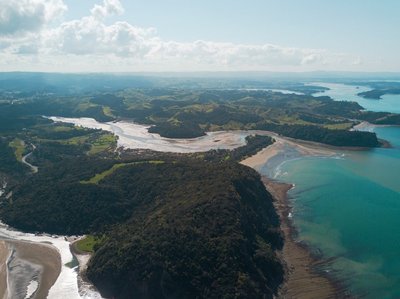
A wide dirt trail winds through a hillside oak forest, ideal for walking or biking.

Visit Camaldoli Park

At 457 meters above sea level, Camaldoli Park is the highest point in Naples and the largest urban green space in the city, covering over 200 hectares of chestnut and oak forest. The Camaldolese monks established a hermitage here in , and the convent church — still active — offers a rooftop terrace with what is arguably the single finest panorama in Campania: a 270-degree sweep from the Sorrentine Peninsula to the islands of Ischia and Capri. For children, the draw is simpler — wide dirt trails suitable for bikes, clearings for picnics, and enough woodland to play hide-and-seek for hours. I recommend driving up (bus 168 is infrequent) and packing lunch, as there are no cafes inside the park.

Frequently Asked Questions about Naples

What is the best time to visit Naples with kids?

I recommend <time datetime="2026-04">April</time> through <time datetime="2026-06">June</time> and <time datetime="2026-09">September</time> through <time datetime="2026-10">October</time>. Temperatures hover between 18°C and 25°C, outdoor attractions are comfortable, and school-term timing means shorter queues at the Archaeological Museum and Napoli Sotterranea. July and August are hot (30°C+) and crowded, though the aquarium and underground tunnels stay cool.

Are there kid-friendly restaurants in Naples?

I have never had trouble feeding children in Naples. Neapolitan pizzerias are inherently family-friendly — margherita arrives in under 10 minutes, portions are large enough to split, and most places along Via dei Tribunali welcome kids without reservation. For sit-down meals, trattorias in the Vomero neighborhood tend to have high chairs and calmer atmospheres than the historic center.

What are the best beaches for kids near Naples?

I take my kids to the Bagno Elena lido below Posillipo, which has a shallow protected cove and a waterfront cafe. For a sandy beach, the Lido di Lucrino near Pozzuoli (20 minutes by Cumana train) has gentle waves and lifeguard service. Avoid the Mappatella Beach near Mergellina on weekends — it gets extremely crowded and has no facilities.

Are there museums suitable for kids in Naples?

I find three work particularly well for children: the <strong>National Archaeological Museum</strong> (plaster casts and mosaics hold attention better than paintings), <strong>Citta della Scienza</strong> (purpose-built for hands-on exploration), and the <strong>Stazione Zoologica</strong> aquarium (small enough to finish before restlessness sets in). The Capodimonte Museum also runs family workshops on the first Sunday of each month.

What are the best outdoor activities for kids in Naples?

I suggest starting with the Lungomare Caracciolo waterfront walk (flat, car-free, with ice cream stops), then exploring Virgiliano Park for gulf views and green space. For older children, a guided hike to the crater rim of Vesuvius (accessible from age 6 or 7 with good shoes) makes an unforgettable half-day trip — buses run from Ercolano station on the Circumvesuviana line.

How can I get around Naples with kids?

I rely on the Metro Line 1, which connects the main family attractions: Museo station (Archaeological Museum), Toledo (waterfront access), and Dante (historic center). The three funiculars — Centrale, Montesanto, and Chiaia — are a ride in themselves and thrill children who have never been on an incline railway. Taxis are affordable for short hops; agree on the fare before departure, or insist on the meter.

Are there special events for kids in Naples?

I look forward to the Christmas season most, when Via San Gregorio Armeno fills with nativity-scene stalls and the Teatro dei Piccoli runs daily holiday shows. The Maggio dei Monumenti festival (May) opens normally closed churches and palaces with free family guided tours. In summer, outdoor cinema screenings in Capodimonte Park and the Mostra d'Oltremare grounds run almost nightly.

Where can I find playgrounds for kids in Naples?

I use Floridiana Park in Vomero for its central lawn and proximity to the funicular, Poggio Park in Pianura for its purpose-built playground equipment, and the Villa Comunale along the waterfront for a quick swing-set stop between attractions. The playground at Virgiliano Park is smaller but comes with the best view in the city.

What are the best gelaterias in Naples for kids?

I always return to <strong>Gay-Odin</strong> on Via Toledo for their dark-chocolate gelato (a Neapolitan institution since <time datetime="1894">1894</time>), <strong>Casa Infante</strong> in Piazza Municipio for classic fruit flavors, and <strong>Mennella</strong> on the Vomero hill for their pistachio. Most gelaterias offer a <em>cono piccolo</em> (small cone) for around €2.50, which is the right size for children under 8.

Is it safe to visit Naples with kids?

I have walked Naples with small children for years and feel entirely comfortable doing so. The main tourist areas — waterfront, historic center, Vomero, Chiaia — are well-patrolled and busy with families. Standard city precautions apply: keep phones in inside pockets, avoid flashing expensive cameras in narrow alleys, and hold children's hands when crossing streets, because Neapolitan drivers treat red lights as suggestions.