10 Hidden Gems in Naples

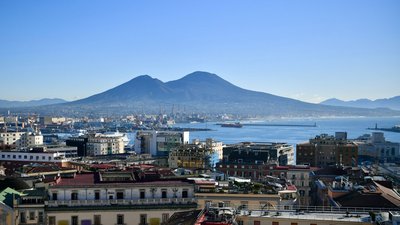
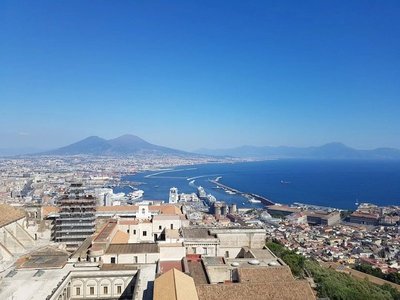
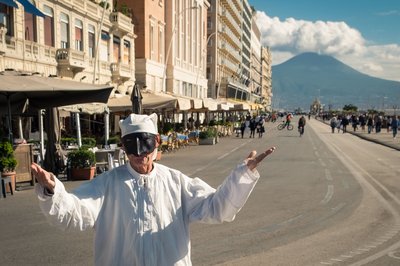
Panoramic daytime view of Naples with Mount Vesuvius, the harbor, and the Gulf of Naples.
Written by travel experts
Regularly updated
Verified on-site

Beneath the pizza joints and postcard views, Naples guards a parallel city that most travelers never see. Its Greek founders called it Neapolis — the New City — yet some of its most extraordinary spaces are millennia old, hidden underground or tucked behind crumbling facades in neighborhoods where tour buses cannot fit.

The places in this guide span roughly of continuous use: 2nd-century catacombs still lit by votive candles, a 17th-century ossuary where Neapolitans once adopted skulls as guardian spirits, and a 19th-century royal escape tunnel that sheltered thousands during World War II. Between them lie Baroque staircases designed to resemble hawk wings, a Renaissance pharmacy lined with hand-painted majolica, and a chapel whose marble veil has baffled sculptors for .

This is Naples at its most unguarded — a city where every locked door, every unmarked staircase, and every overgrown courtyard conceals a story that the main boulevards simply cannot tell.

Top Things to Do in Naples

Catacombs of San Gennaro
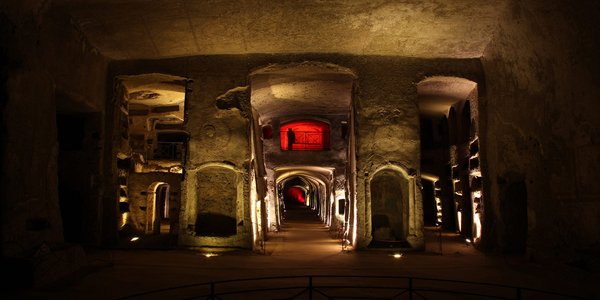
Interior of the Catacombs of San Gennaro in Naples, featuring dramatic lighting and underground architecture.

Two thousand years beneath the tuff

Carved into the soft volcanic tuff of the Capodimonte hill, the Catacombs of San Gennaro are the largest early-Christian underground burial site in southern Italy. The oldest galleries date to the , but the complex expanded dramatically after the remains of Naples' patron saint were transferred here in the , turning the site into a major pilgrimage destination.

Two levels of tunnels stretch across roughly 5,600 square metres. The upper catacomb preserves remarkably vivid frescoes and mosaics — including one of the earliest known portraits of San Gennaro, painted directly onto the tuff around . The lower level, reached by a steep original staircase, contains family crypts with arched niches carved into the rock. Guided tours, run by the La Paranza cooperative — a local social enterprise that reclaimed the site from decades of neglect in — last about one hour and reveal how these tunnels served as quarry, cemetery, church, and wartime refuge across the centuries. The cool underground temperature (around 16 °C year-round) makes this a welcome escape from Naples' summer heat.
Located at Via Capodimonte, 13, in the Rione Sanita district of Naples.
Open every day from 10:00 AM to 5:00 PM. Guided tours depart hourly.
Entrance ticket: €9. Combined ticket with Catacombs of San Gaudioso available.

Fontanelle Cemetery

Rows of human skulls arranged along a cave wall, evoking the Fontanelle ossuary's cult of the anime pezzentelle.

An ossuary born from plague and devotion

Inside a vast natural cavern in the tuff hillside of the Materdei quarter, the Fontanelle Cemetery holds the anonymous bones of an estimated 40,000 people — victims of the devastating plague of and the cholera epidemics that followed. The cavern had served as a tufa quarry since Greek times, and when Naples' churches ran out of burial space, the dead were carried here in carts and left in enormous heaps.

In , a parish priest organised local women to sort and stack the bones, giving rise to the extraordinary sight visible today: neat rows of skulls and femurs arranged along the cave walls with an almost geometric precision. Out of this grim order grew the cult of the anime pezzentelle (forsaken souls), in which Neapolitans "adopted" individual skulls, polishing them, placing them in small wooden boxes, and praying for grace in return. The Catholic Church officially banned the practice in , yet you can still spot fresh flowers and handwritten notes beside certain skulls. The cavern's eerie silence and cool, damp air create an atmosphere unlike any other site in the city.
Located at Via Fontanelle, 80, in the heart of the Sanita district of Naples.
Open every day from 10:00 AM to 5:00 PM.
Free entry. One of Naples' most powerful experiences at no cost.

Rione Sanita on Foot

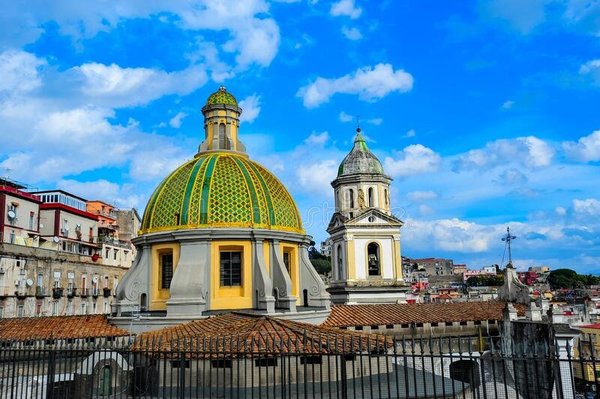
Dome of the Basilica of Santa Maria della Sanità in Naples with blue sky and surrounding buildings.

The valley the aristocrats forgot

Wedged into a natural depression between the Capodimonte and Stella hills, the Rione Sanita was once a Greek-era necropolis before becoming, in the , a prestigious address for Neapolitan nobility. When the construction of the Ponte della Sanita in routed traffic over the neighborhood rather than through it, the area was effectively cut off from the rest of the city and fell into steep decline.

Today, a grassroots cultural revival — led by parish priest Don Antonio Loffredo and cooperatives like La Paranza — has transformed the quarter without erasing its rough edges. Walk past the birthplace of comedian Toto at Via Santa Maria Antesaecula 109, duck into artisan workshops where third-generation craftsmen restore wooden saints, and pause before large-scale murals by street artists including Jorit, whose photorealistic faces cover entire building facades. The neighbourhood's Baroque churches, particularly the Basilica di Santa Maria della Sanita with its Vaccaro-designed altar raised over a 5th-century catacomb, rival anything on the main tourist circuit — without the queues.
In the heart of Naples, the Rione Sanita is centred around Piazza Sanita, accessible via the Ponte della Sanita.
Always accessible. Best explored on weekday mornings when markets and workshops are active.
Free to walk. Guided neighbourhood tours from approximately €15.

Cappella Sansevero

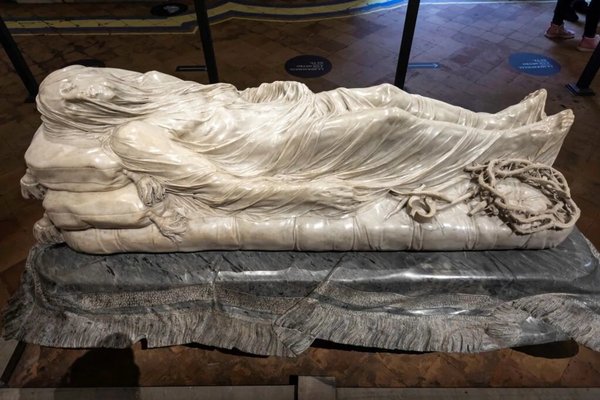
Veiled Christ sculpture in Cappella Sansevero, Naples, renowned for its realistic marble veil details.

Where alchemy meets marble

Tucked down a narrow side street just off Spaccanapoli, the Cappella Sansevero is a small private chapel that contains one of the most technically astonishing sculptures ever carved. The Cristo Velato (Veiled Christ), completed by Giuseppe Sanmartino in , depicts Christ's body beneath a translucent marble shroud so impossibly thin that visitors have debated for centuries whether the veil was chemically treated — it was not.

The chapel was the obsession of Raimondo di Sangro, Prince of Sansevero (–), an Enlightenment polymath, Grand Master of Neapolitan Freemasonry, and amateur alchemist whose experiments scandalised the Church. Every sculpture in the room carries coded allegorical meaning: Disinganno (Release from Deception) shows a man freeing himself from a net carved entirely from a single marble block; Pudicizia (Modesty) is draped in stone so fine it clings like wet silk. In the underground crypt, two anatomical machines — human skeletons with perfectly preserved arterial systems — remain unexplained to this day. Book tickets online: the chapel admits only a limited number of visitors at a time.
In the heart of Naples, at Via Francesco de Sanctis 19/21, a short walk from Spaccanapoli.
Open Wednesday to Monday from 9:00 AM to 7:00 PM. Closed Tuesdays. Last entry at 6:30 PM.
Entrance ticket: €10. Online booking strongly recommended to avoid long queues.

Bourbon Tunnel

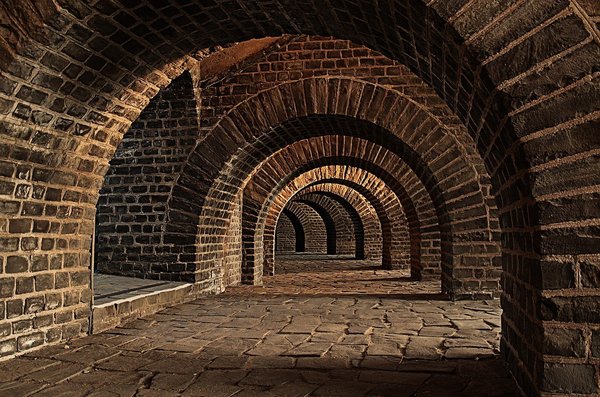
A vaulted brick tunnel receding into the darkness, evoking the underground passages of the Bourbon Tunnel.

A royal escape route turned wartime shelter

In , King Ferdinand II of Bourbon ordered the excavation of a secret underground passage connecting the Royal Palace to the military barracks near the waterfront — an escape route in case of revolution. The tunnel was never finished; the Bourbon dynasty fell just . But the network of caves, cisterns, and corridors it exposed would serve a far more dramatic purpose.

During World War II, the unfinished galleries became an enormous air-raid shelter for thousands of Neapolitans fleeing Allied bombing raids. Families lived underground for days at a time, and the evidence remains: children's graffiti scratched into the walls, rusted bed frames, ceramic water jugs, and even vintage cars and motorcycles from the that were later dumped here when the tunnels were used as an impound lot. Today three different tour routes explore the site — the Adventure Route includes wading through a subterranean aqueduct by torchlight and squeezing through narrow passages cut in the . Wear sturdy shoes and bring a light jacket; temperatures underground hover around 16 °C.
Located at Vico del Grottone, 4, in the historic centre of Naples, near the seafront.
Open Friday to Sunday, from 10:00 AM to 5:00 PM. Additional weekday tours in high season.
Standard route: €10. Adventure route: €15. Discounts for children and groups.

Parco Vergiliano a Piedigrotta

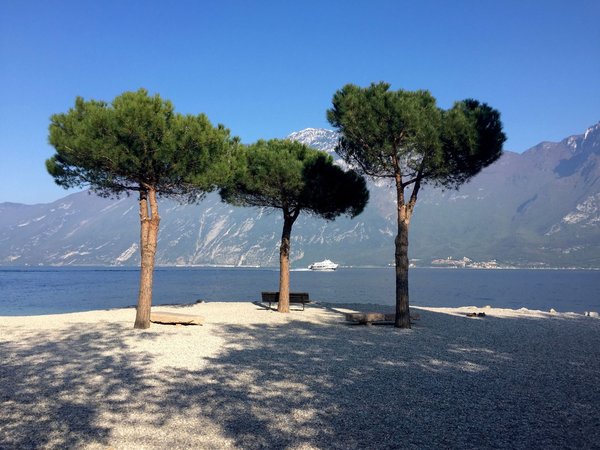
A quiet, pine-shaded park bench overlooking calm water, evoking the elevated views of Parco Vergiliano.

Where Virgil and Leopardi rest side by side

Squeezed between the mouth of the ancient Crypta Neapolitana tunnel and the Mergellina hillside, this small terraced park shelters two of Italy's most venerated literary tombs. The sepulchre attributed to Virgil — a Roman columbarium that medieval pilgrims believed held the poet's ashes — sits atop the hill amid laurel trees, the same species that crowned poets in antiquity. Below it, relocated here in by order of Mussolini, lies the tomb of Giacomo Leopardi, Italy's greatest Romantic poet, who died in Naples during the .

The park's real hidden treasure is the entrance to the Crypta Neapolitana, a nearly 700-metre tunnel cut through the Posillipo hill in the to connect Naples to the port of Puteoli (modern Pozzuoli). Though the tunnel is currently closed for restoration, peering into its enormous mouth — roughly 5 metres wide and 20 metres high at the entrance — gives a visceral sense of Roman engineering ambition. The park itself is rarely crowded, and its elevated benches offer unexpected views over the Gulf of Naples and the harbour of Mergellina.
Located at Salita della Grotta, 20, in the Piedigrotta neighbourhood, near Mergellina station.
Open every day from 9:00 AM to one hour before sunset.
Free entry for all visitors.

Treasure of San Gennaro Museum

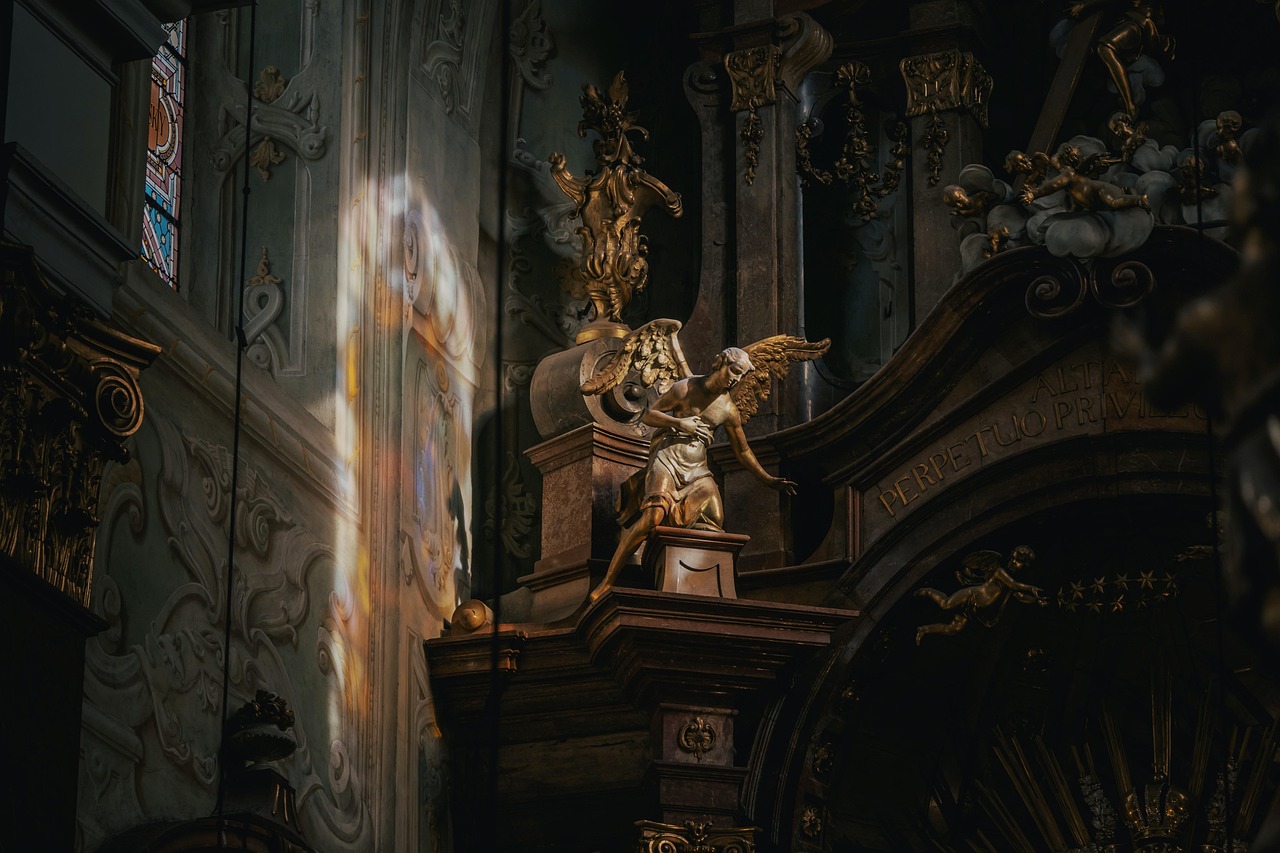
A gilded Baroque angel sculpture catches the light inside an ornate church interior, evoking the opulence of Naples' sacred treasuries.

A collection that outvalues the Crown Jewels

Housed in rooms adjacent to the Duomo, the Treasure of San Gennaro is a collection so valuable that art historians have estimated its worth exceeds that of the British Crown Jewels and the Russian imperial treasures combined. Unlike those royal hoards, however, this treasure belongs not to a state but to the Deputazione della Cappella del Tesoro, a lay committee of Neapolitan citizens that has guarded it without interruption since .

The centrepiece is the Mitra di San Gennaro, a bishop's mitre encrusted with 3,694 precious stones — diamonds, emeralds, and rubies — completed in by the goldsmith Matteo Treglia. Nearby rests the Collana di San Gennaro, a monumental necklace assembled over four centuries to which each successive Bourbon king, and later Napoleon himself, added a jewelled cross. The museum also displays chalices, silver busts, and embroidered vestments donated by popes, queens, and ordinary Neapolitans across of devotion. Visiting immediately after witnessing the biannual liquefaction of San Gennaro's blood (in May and September) adds an unforgettable layer of context.
Located at Via Duomo, 149, in the historic heart of Naples, adjacent to the Duomo.
Open Monday to Saturday from 9:00 AM to 5:00 PM. Sunday from 9:00 AM to 1:30 PM.
Entrance ticket: €6. Combined ticket with Duomo available.

Cloister of Santa Chiara

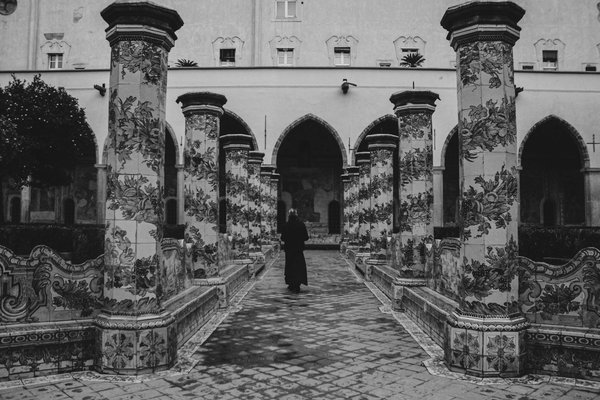
Cloister with majolica-decorated columns in the Monumental Complex of Santa Chiara in Naples, in black and white.

A majolica garden frozen in the 18th century

While most visitors to the Monumental Complex of Santa Chiara head straight for the Gothic church, the real revelation lies behind it: a cloister redesigned by Domenico Antonio Vaccaro into one of the most photogenic spaces in southern Italy. Sixty-four octagonal columns, each wrapped in hand-painted majolica tiles depicting pastoral landscapes, fruit garlands, and mythological scenes, divide the garden into vine-covered walkways that frame citrus trees, fountains, and benches tiled in matching patterns.

The original convent was founded in by Queen Sancha of Majorca and her husband Robert of Anjou as the largest Clarissan monastery in the kingdom. Allied bombing in devastated the church, destroying priceless Giotto-school frescoes, but the cloister survived largely intact. A small on-site museum displays fragments of the lost frescoes, Roman archaeological finds unearthed during reconstruction, and documents tracing the convent's role as a centre of learning for Neapolitan noblewomen. Early morning visits, before tour groups arrive, let you experience the cloister's silence as the nuns themselves once did.
In the heart of Naples, at Via Santa Chiara 49/C, a short walk from Spaccanapoli.
Open Monday to Saturday from 9:30 AM to 5:30 PM. Sunday from 10:00 AM to 2:30 PM.
Cloister and museum: €6. Church entry is free.

MANN Secret Cabinet

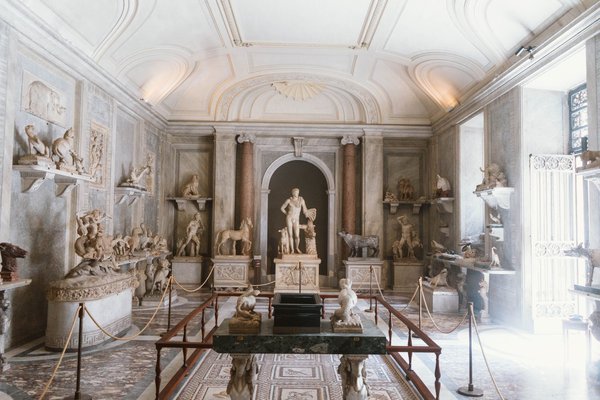
A gallery of ancient Roman marble sculptures displayed in an archaeological museum.

The locked room of Pompeian erotica

The National Archaeological Museum of Naples (MANN) is world-famous for its Pompeii collections, but its most unusual room spent most of the last two centuries locked, censored, or restricted to "persons of mature age and respected morals." The Gabinetto Segreto (Secret Cabinet) houses over 250 erotic objects recovered from Pompeii and Herculaneum — marble sculptures, bronze wind chimes shaped as phalluses, frescoes from brothel walls, and oil lamps in anatomically explicit forms.

First assembled under the Bourbons in , the collection was repeatedly sealed and reopened as political regimes changed. It was walled shut under the Savoy monarchy, briefly accessible under Garibaldi, locked again, and not permanently opened to the public until . Far from mere curiosity, the objects reveal how sexuality, religion, and commerce intersected in Roman daily life: phallic symbols were protective talismans hung above shop doors, and explicit frescoes served as menus in Pompeii's lupanare (brothels). The room is included in the general museum ticket and is freely accessible — a remarkable shift from the centuries of moral panic it once provoked.
Located at Piazza Museo, 19, in the centre of Naples.
Open Wednesday to Monday from 9:00 AM to 7:30 PM. Closed Tuesdays. Last entry at 6:30 PM.
Included in the MANN general ticket: €15. Free first Sunday of each month.

Palazzo dello Spagnolo

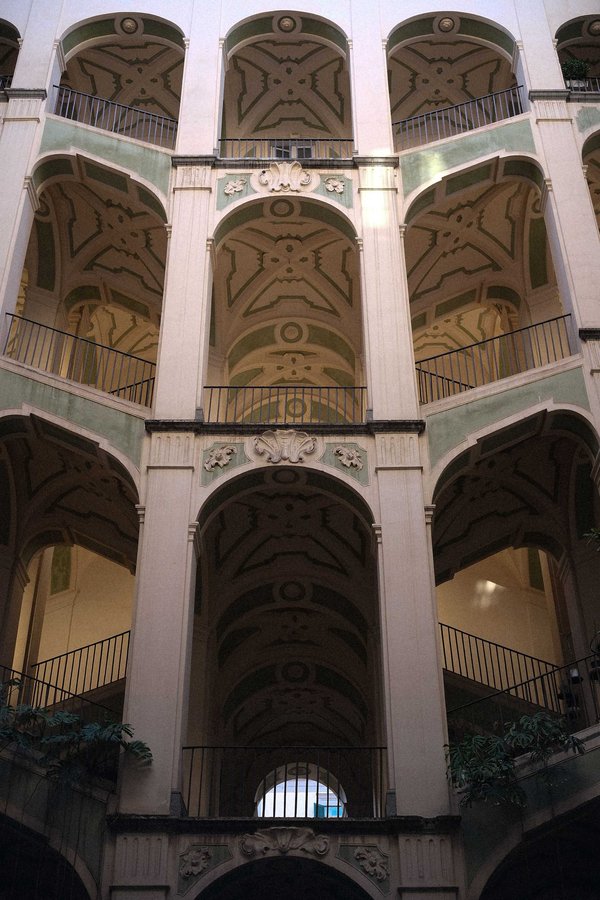
Interior view of Palazzo dello Spagnolo in Naples with Baroque arches and decorative details.

A Baroque staircase shaped like hawk wings

Rising from a modest courtyard on Via Vergini, the double-ramp staircase of Palazzo dello Spagnolo is one of the most theatrical architectural gestures in all of Naples. Designed by Ferdinando Sanfelice around for the Marquis Nicola Moscati, the open staircase features two flights that diverge and converge across five storeys in a pattern Neapolitans call ad ali di falco — hawk's wings. The effect is both functional (maximising light and ventilation in the deep courtyard) and spectacularly scenic.

Sanfelice, who lived nearby and built a similar staircase in his own palazzo, was obsessed with the idea that architecture should perform like theatre — each landing frames the climbers as if on a stage, visible from the courtyard below. The arched vaults are decorated with elaborate stucco reliefs of garlands, cherubs, and scrollwork that have survived remarkably well despite centuries of weathering. The palazzo is a functioning residential building — tenants hang laundry from the very balustrades Sanfelice sculpted — which makes visiting it feel less like entering a museum and more like stepping through a time slip into Naples. Entry is free and the courtyard is always open, but visit during daylight hours for the full play of light on stone.
In the Sanita District of Naples, at Via Vergini 19.
Courtyard open daily during daylight hours.
Free entry for all visitors.

Recommended Itineraries in Naples

Underground Naples in Half a Day

Morning — Begin at the Catacombs of San Gennaro (book the 10:00 AM tour), then walk downhill into the Rione Sanita to see the Fontanelle Cemetery and the courtyard of Palazzo dello Spagnolo. Grab a coffee at Bar Pasticceria Poppella on Via Arena alla Sanita, famous for its fiocco di neve cream puffs.

Afternoon — Take the Sanita bridge stairs down to Via dei Tribunali and walk to the Cappella Sansevero (pre-booked ticket essential). End the loop at the Bourbon Tunnel entrance near Piazza del Plebiscito, choosing the standard or adventure route depending on your stamina.

Market Stalls and Street Shrines

Morning — Start at the Porta Nolana fish market, where fishermen sell the morning catch directly from crates of ice. Follow Via Sopramuro toward the Pignasecca market, Naples' oldest open-air food market, pausing to photograph the small votive shrines (edicole votive) embedded in the walls above fruit stalls.

Afternoon — Continue west to Piazzetta Montesanto and climb Via Pignasecca to the Church of Santa Maria di Montesanto. Finish at the Quartieri Spagnoli — the narrow alleyways between Via Toledo and Corso Vittorio Emanuele are lined with Maradona murals, homemade pasta shops, and neighbourhood bars where espresso still costs one euro.

Art Stations and Literary Tombs

Morning — Ride Metro Line 1 from Garibaldi to Toledo station, ranked among Europe's most beautiful metro stops for its Robert Wilson light installation and mosaic seascapes by William Kentridge. Exit and walk to the Universita and Dante stations, exploring the platform-level art at each.

Afternoon — Take the metro to Mergellina and walk up to the Parco Vergiliano a Piedigrotta to visit the tombs of Virgil and Leopardi. Descend to the Mergellina waterfront for a late lunch of fried seafood and a view across the bay to Capri as the afternoon light softens.

When to Visit

The Best Time to Visit Naples

The best time to visit Naples is during spring (April-June) and autumn (September-October), when the weather is mild and pleasant. Summer can be hot and crowded, while winter offers fewer crowds but cooler temperatures.

Peak Season

Summer (June-August) is the peak season, with more tourists and higher prices.

Shoulder Season

Spring and autumn offer a good balance between weather and tourist crowds.

Low Season

Winter (December-February) is the low season, with fewer tourists and more affordable prices.

Tips for Visiting Naples

Order a sfogliatella riccia at Pasticceria Attanasio, just outside the Stazione Centrale — they bake them every twenty minutes and serve them almost too hot to hold.
Visit San Gregorio Armeno in November rather than December. The nativity-scene workshops are in full production, artisans are happy to talk, and the street is not yet shoulder-to-shoulder with Christmas shoppers.
Walk the Lungomare Caracciolo at sunset heading east toward Castel dell'Ovo. Vesuvius catches the last light while the city behind you turns gold — this is the view Neapolitans themselves come out for.

Local Experiences in Naples

Interior of the Pharmacy of the Incurables in Naples with antique jars and ornate decorations.

Discover the Pharmacy of the Incurables
Hidden behind a locked door inside the working Ospedale degli Incurabili on Via Maria Longo, this pharmacy is one of the finest Baroque interiors in Naples. Two rooms are lined floor-to-ceiling with walnut shelving holding over 400 hand-painted majolica jars from the Donnaregina workshop, each labelled with the remedy it once contained — opium, theriac, powdered viper. The ceiling frescoes depict the healing saints, and a central marble table was used for compounding medicines well into the . Visits are by appointment only through the hospital administration; ask at the porter's lodge.
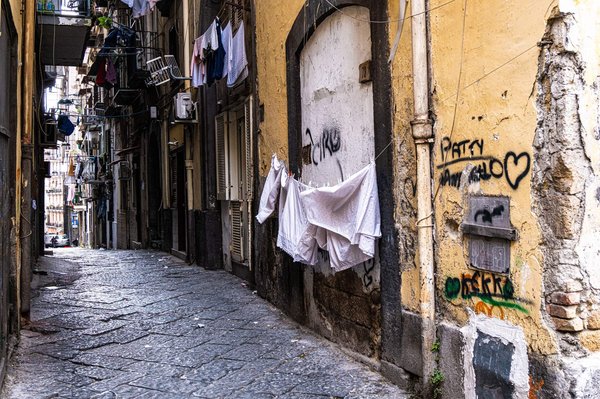
A narrow historic Naples street lined with faded facades and laundry hanging between balconies.

Explore the Borgo dei Vergini
Running parallel to Via Sanita, the Borgo dei Vergini takes its name from a vanished Greek temple to the Sirens — the vergini (virgins) of local legend. Today the narrow street is lined with noble palazzi in various states of faded grandeur, their courtyards often open and unguarded. Look for the Palazzo Sanfelice, where architect Ferdinando Sanfelice built his own experimental staircase, and the Church of Santa Maria dei Vergini, whose richly stuccoed interior is almost always empty. This is one of the few streets in central Naples where you can walk for ten minutes without encountering another tourist.

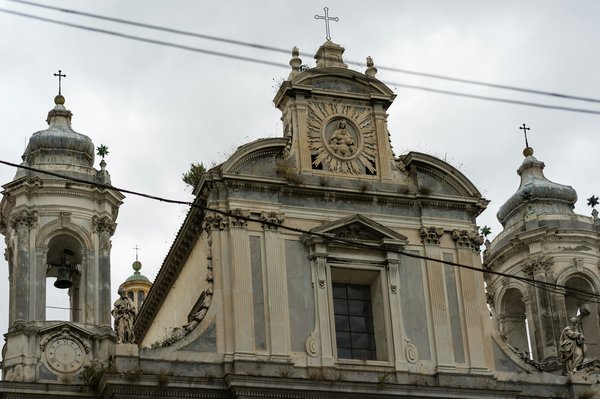
Facade of the Church of Sant'Anna dei Lombardi in Naples with historic architectural details and cloudy sky.

Visit the Church of Sant'Anna dei Lombardi

Steps from Piazza Monteoliveto, the Church of Sant'Anna dei Lombardi (originally Monteoliveto) is a Renaissance treasure that most Naples guidebooks mention only in passing. Its highlight is Guido Mazzoni's Lamentation over the Dead Christ: eight life-size terracotta figures with portrait faces modelled on members of the Aragonese court, their expressions so raw they still startle. The Piccolomini Chapel contains a marble relief of the Nativity by Antonio Rossellino, and the sacristy preserves ceiling frescoes by Giorgio Vasari — one of his few works outside Tuscany. The church opens sporadically; morning visits between 9:30 and 12:00 offer the best chance of finding the doors unlocked.

Frequently Asked Questions about Naples

What is the best time to visit unusual Naples?

I recommend <time datetime="2026-04">April</time> to <time datetime="2026-06">June</time> and <time datetime="2026-09">September</time> to <time datetime="2026-10">October</time>. The underground sites stay cool year-round, but the above-ground walking between them is far more pleasant when temperatures are in the 18–25 °C range and summer crowds have not yet peaked.

Are the underground sites suitable for claustrophobic visitors?

The Catacombs of San Gennaro and Fontanelle Cemetery are large, well-lit caverns where I've never felt confined. The Bourbon Tunnel standard route is also spacious. However, I'd avoid the Bourbon Tunnel adventure route if tight spaces bother you — it includes a narrow passage where you wade through water in semi-darkness.

How do I get around between these hidden sites?

I walk between most of them. The Sanita district sites (Catacombs, Fontanelle, Palazzo dello Spagnolo) are all within a 10-minute walk of each other. For longer hops, Naples' Metro Line 1 connects the centre to Mergellina. I avoid taxis in the old town — the alleys are too narrow and traffic too unpredictable.

Do I need to book tickets in advance?

I always book the Cappella Sansevero and Bourbon Tunnel online — both have strict capacity limits and sell out on weekends. The Catacombs run on a first-come schedule, but arriving by 10:00 AM guarantees a spot. All other sites on this list are walk-in.

What typical dishes should I try in the Sanita neighbourhood?

I never leave Sanita without a <em>fiocco di neve</em> (snow puff) from Poppella and a <em>pizza fritta</em> from one of the street vendors near Piazza Sanita. For a proper sit-down meal, Concettina ai Tre Santi serves outstanding fried pizza starters and classic Neapolitan ragu.

Is the Sanita neighbourhood safe to visit?

I've walked through Sanita many times, including in the evening, without any problems. The neighbourhood has changed enormously since the cultural cooperatives arrived. I do keep my phone in a zipped pocket and stay on well-lit streets after dark, as I would anywhere in a large city.

Can I visit the Pharmacy of the Incurables without a reservation?

No. The pharmacy is inside a functioning hospital, so access is by appointment only. I contact the hospital administration at least a week in advance. Small-group cultural associations sometimes organise Saturday morning visits — check Napoli Unplugged or Associazione Culturale Celanapoli for upcoming dates.

What are the closest beaches to Naples?

The nearest swimmable spots are the rocky coves below <strong>Parco Sommerso di Gaiola</strong> in Posillipo, about 20 minutes by bus from the centre. I also like the tiny beach at Marechiaro, reachable by the C21 bus. For sand, take the Circumvesuviana train to Castellammare di Stabia.

What are the best panoramic viewpoints in Naples?

My favourite is the terrace of <strong>Castel Sant'Elmo</strong> on the Vomero hill — it gives a full 360-degree view from Vesuvius to Posillipo. The belvedere at San Martino, just below, is almost as good and free. For a sunset spot, I head to the Virgiliano park in Posillipo.

What are the recommended day trips from Naples?

I always suggest Pompeii and Herculaneum first — both under 40 minutes by Circumvesuviana train. The Amalfi Coast is stunning but requires a full day. For something unusual, take the metro to Pozzuoli and visit the <strong>Flavian Amphitheatre</strong>, the third-largest Roman arena, where you can walk through the intact underground passages beneath the arena floor.